





Hibino moves into virtual production with 12G solutions from Blackmagic Design
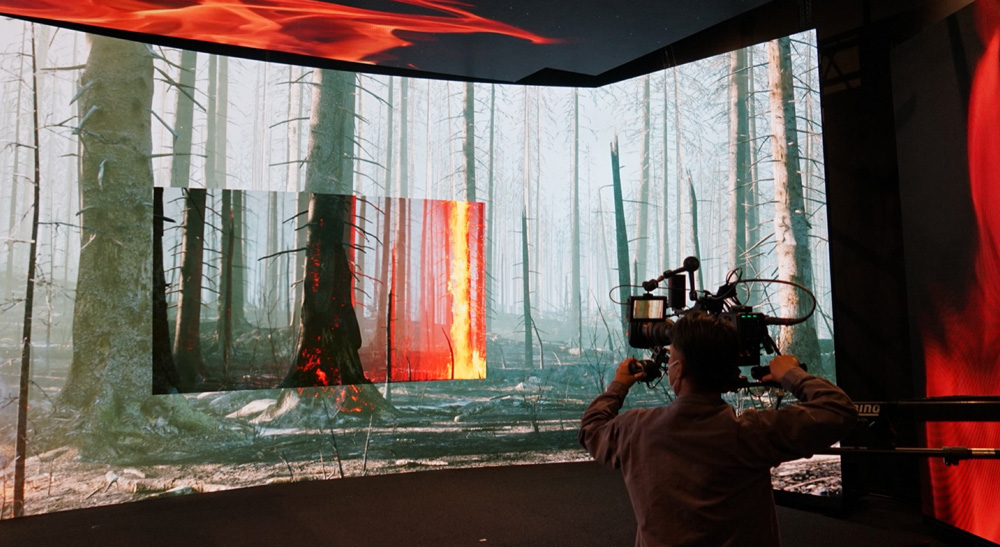
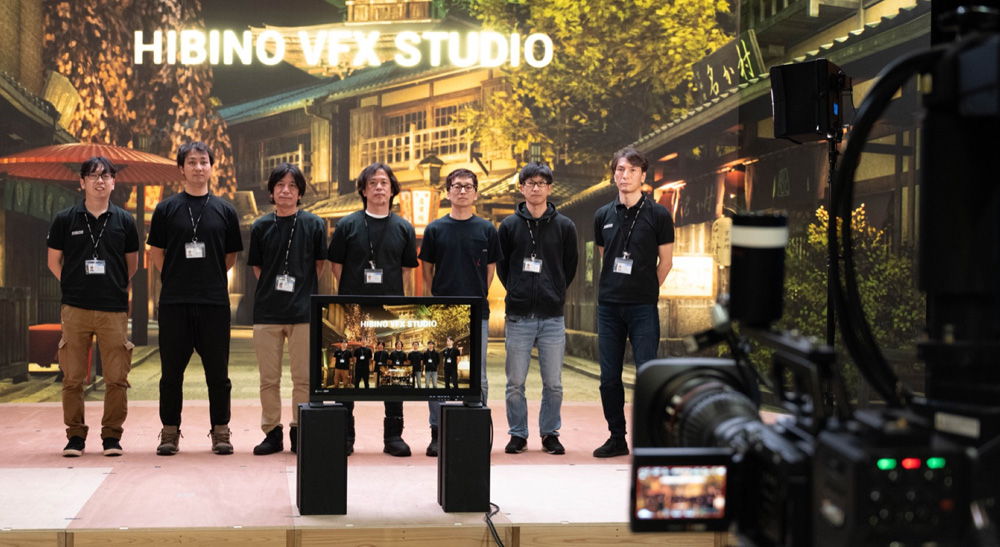
The japanese company Hibino Corporation has implemented a workflow based on Blackmagic Design products with 12G technology in its new virtual studio Hibino VFX Studio.
Hibino offers services for live productions, such as planning, equipment rental or management of audiovisual systems for concerts and live events, in addition to importing and selling industry products. Its latest offering, Hibino VFX Studio, seeks to establish itself as one of the most advanced virtual production studios in Japan.
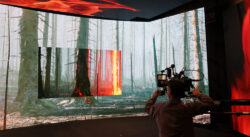
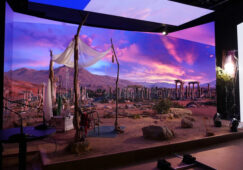
The infrastructure features a large number of high-resolution ROE Visual LED screens, which are installed at the top, front and sides of the stages. URSA Mini Pro 4.6K G2 cameras are responsible for capturing virtual images. A camera tracking system installed on this model sends position information, as well as focal length and focus information from the lens, to a server that detects the camera’s location in the virtual space. The studio then uses Unreal Engine for real-time rendering of the 3D computer graphics background.
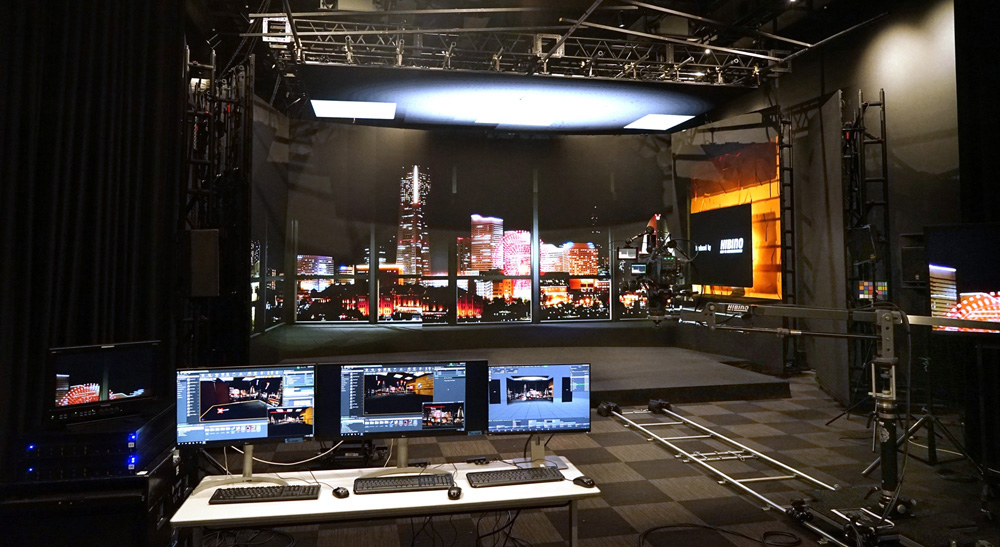
12G solutions
The Hibino studio, based on 12G technology and fiber optics, has been built around Blackmagic Design solutions. The signal from the URSA Mini Pro 4.6K G2 camera is sent to a Smart Videohub 40×40 matrix via an ATEM Television Studio 4K mixer. The signals are then transmitted to various monitors, such as the Video Assist 12G HDR and SmartView 4K models, while the images are color corrected in real time using an ATEM Camera Control Panel device. Other Blackmagic products such as Studio Fiber Converter units, Camera Fiber Converter, Teranex Mini SDI to HDMI 12G converters and DaVinci Resolve Studio, which is also used on the software side.
Shigenori Kikuch, Studio Producer at Hibino, explains why he chose the Blackmagic URSA Mini Pro 4.6K G2: “To be compatible with our virtual system, we needed a camera that supported native 24p/30p/60p, so we chose the URSA Mini Pro 4.6K G2. Also, the camera supports various lens mounts, which is why we decided to use it as our ancillary equipment so customers can bring any lenses they like. As RedSpy’s camera tracking system supports various cameras and lenses, customers sometimes bring their own cameras.”
¿Te gustó este artículo?
Suscríbete a nuestro NEWSLETTER y no te perderás nada.
Artículos relacionados
 Bull moves to a UHD post-production workflow with Blackmagic
 EWTN Hungary renovates studio with Blackmagic Design solutions
 PBS shoots and grades ‘When We Were Shuttle’ with Blackmagic Design solutions
 Broadcast Solutions leads design and production of three UHD OB Vehicles for SRG
 UUUM builds its RUUUM studios around Blackmagic Design solutions
 PLG creates eSports content from new virtual studio with Blackmagic Design solutions
 Japanese production company Kan-Nari relies on Blackmagic Design solutions
 Youtuber Jigmé enriches his production with Blackmagic Design
 More than 60 Fall 2021 series have been created with Blackmagic Design solutions
 ESL upgrades eSports production studios with Blackmagic Design solutions
 Hibino se lanza a la producción virtual con soluciones 12G de Blackmagic Design
 Dash Media launches new TV studio with Blackmagic Design solutions
 Summer movie lineup benefits from Blackmagic Design solutions
 Disguise featured in Hibino’s new virtual production studio