





RTVE breaks barriers in virtual production with Unreal Engine
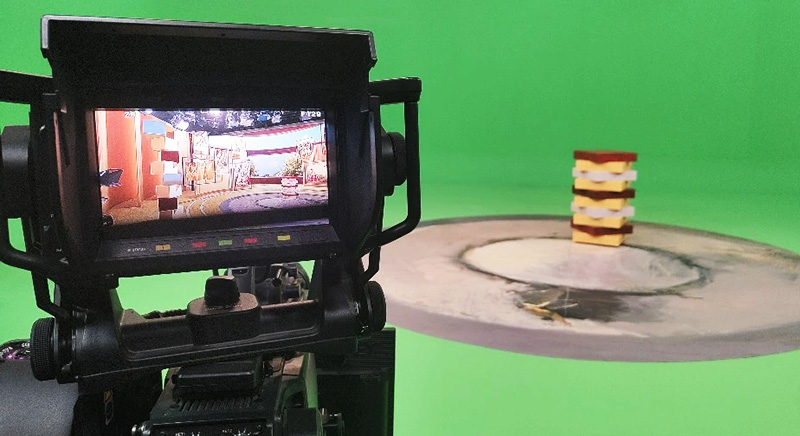
Rubén Gómez, head of the virtual production and implementation unit RTVE, analyzes the latest milestone in the Corporation: production in multi-camera virtual scenery with Unreal Engine 5.5 in 'Tendido Cero', a development that will provide great opportunities for television programs.
The virtual scenery It has been accompanying television in Spain for several decades with uneven results. Limited 3D environments, with a limited capacity for interaction in content and insertion of talent, offered an alternative to the construction of sets, allowing for efficient management. efficient resources provided and managed by third party systems.
The first of these developments, according to Ibanez-Garcia y Castelli in his work “CloudClass: virtual communication for teaching innovation”, was promoted by Antenna 3 in 1994, when television created a first live 3D virtual set for the presentation of Mike Oldfield's album 'Songs of the Distant Earth'. To undertake this initiative, the chain relied on the technology of the Valencian company Brainstorm, which was also in charge of helping the chain carry out the first 3D weather information program in our country.
After hundreds of implementations of this type of systems, the umpteenth evolution of these environments has come through virtual scenarios based on the Epic Games video game engine: Unreal Engine. Channeled through middle layers, broadcasters have taken a leap in quality to their productions through improvements such as Dynamic lighting, reflections or shadows in real time, enabled by camera positioning systems.
Ruben Gomez, after belonging to RTVE's virtual production team for the last 15 years, took over as head of the unit just recently. 7 months. Accompanied by his team, he set himself the challenge of establishing a live broadcast production system multicam in real time, stable, without resorting to plugins dedicated and working directly with Unreal tools. Now, the project is already a reality.
Using Unreal Engine first hand
When analyzing the opportunities in the virtual production market, Gómez and the RTVE virtual production area proposed modify the engines of render used in the house. Not because of a question of “distrust” in these previous solutions, which continued to offer notable performance in all types of formats, but with the aim of betting on a extra versatility by working directly with Unreal Engine.
“The engineers themselves Epic Games they told us that we were crazy”.
To undertake this objective, the area contacted the Epic Games, who were forceful when discovering RTVE's intentions: “The engineers themselves told us that we were crazy, since there are tools from brands such as Brainstorm, Pixotope or AJA that would allow us to save configuring the inputs
The path to achieving a stable system, especially in the part of calibration, was especially complex. Not even the Unreal Engine team itself could shape a solution designed for real-time broadcast environments. "We had to normalize the zoom path to go from 0 to 1. What was happening? That when we turned off the cameras and turned them on again, the path had changed," says Gómez, who worked intensely with his team until they found the solution: "We saw that we could limit it and give the values ourselves. The whole time it has been a process of trial and error."
 The opportunities of self-management
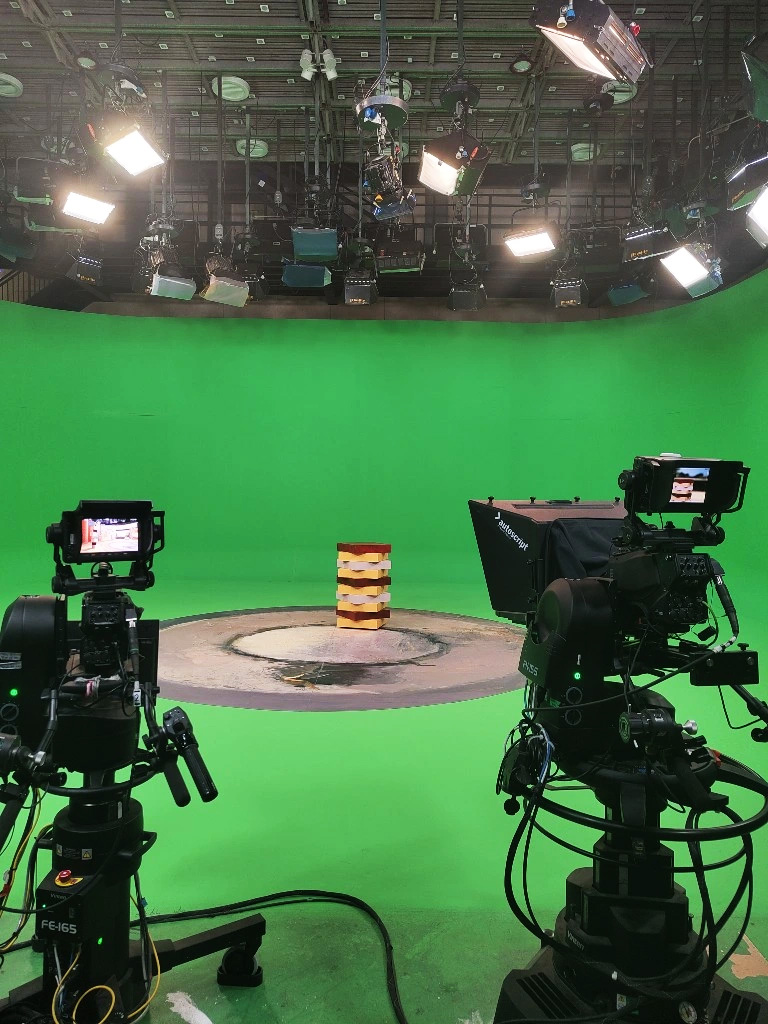
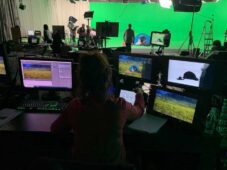
After resolving all issues related to zoom curves, focus or lens distortion, RTVE's virtual production team managed to establish a multi-camera workflow based on four video capture solutions. Sony whose location in space is carried out through a combination of solutions of Mon-Sys y Vinten managed with the protocol FreeD. These solutions capture in real time a virtual environment generated directly from Unreal Engine and managed by a self-developed layer of RTVE, which grants great opportunities to the Entity's human team.
"We have developed our own management applications to control the four machines from a PC, which allows us to change elements such as the sky or the rain. With this system, the operator does not have to have knowledge of Unreal or production. He only has a button panel within reach that we can completely customize," explains Gómez, aware that the age gap existing in RTVE requires adaptable solutions to all types of profiles: “It is much easier to have a personalized tool that is “screen up” or “screen down” than having to touch Unreal's own interface.”
Designing the scenery of Zero Laying
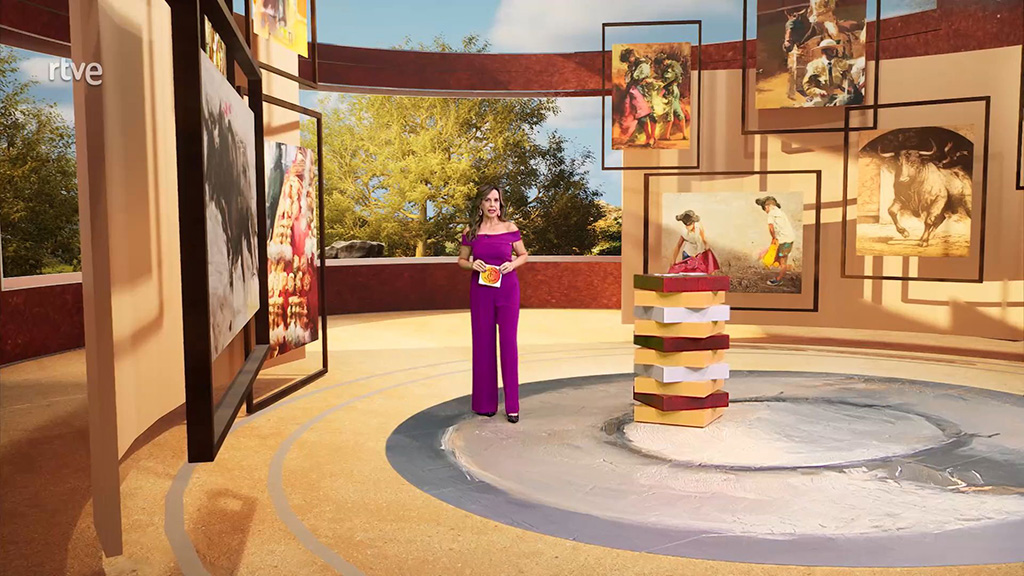
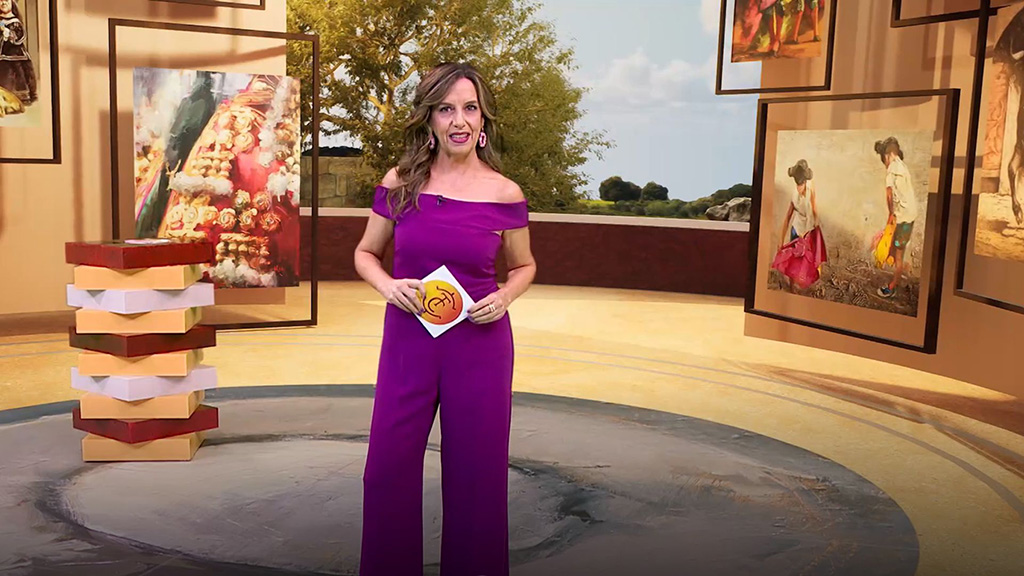
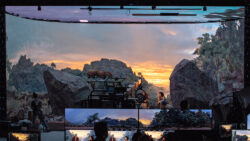
Zero Laying, veteran bullfighting information program that will celebrate its 40th anniversary in 2026, has been the format chosen to start with the multi-camera workflow in virtual production designed by Gómez and his team. To achieve this, it has opted for a bright environment what a mix physical scenography with virtual, with an integrated natural environment that is interrelated with an open bullring and mobile and floating elements.
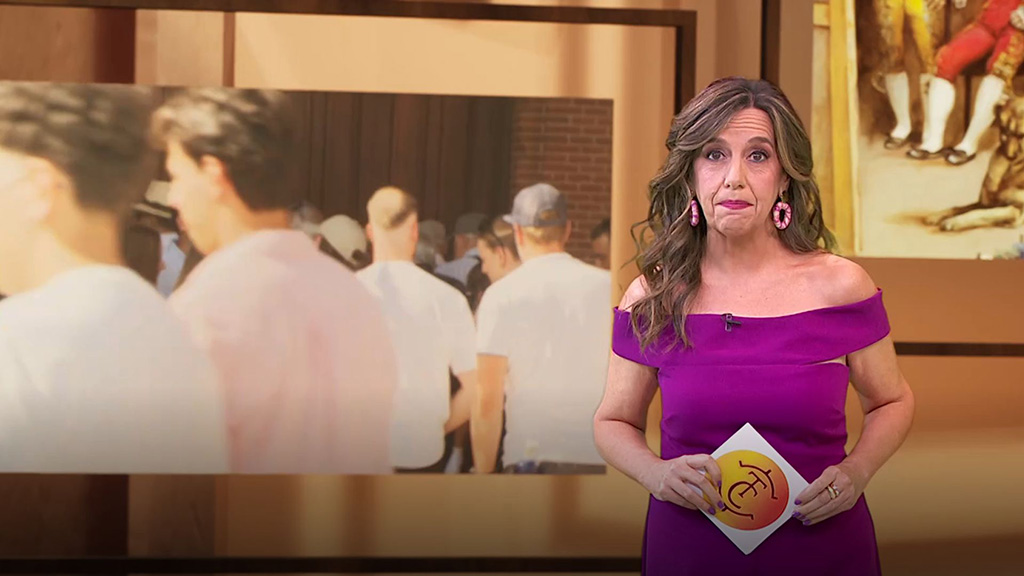 The entire design of this virtual scenario was carried out by the department of virtual scenery, an area dependent on the scenography division itself, in close collaboration with the production area. virtual production: "We have always been two islands: they designed and we implemented. In this process, we have collaborated to show him all the possibilities we had."
This collaboration creative-technical results in the modification of the meteorological phenomena of space, the integration of oaks that move with the wind and the ability to “choose the time” to which is filmed in this environment, which is represented with the location of the sun and its respective shadows.
“He has also been involved robotics area, to orient ourselves on the limitations of the cameras or how the change from the F4 protocol from Mo-Sys to FreeD affected us,” adds Gómez, who anticipates that the next step will be to include a hot head to the selection of format capture solutions.
 A leap in quality available to RTVE programs
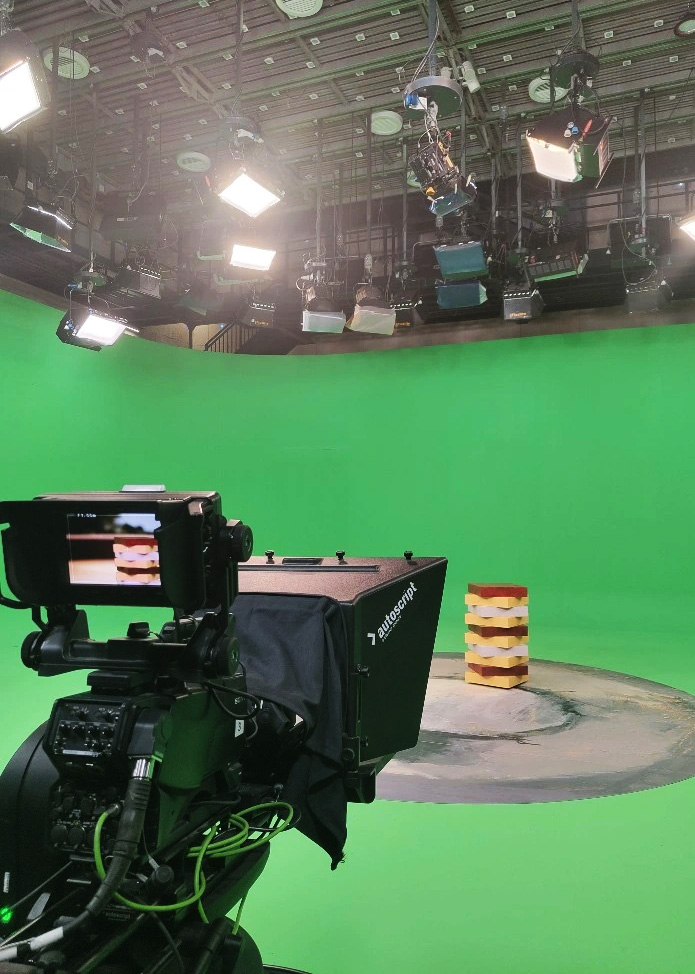
The multi-camera workflow implemented by RTVE's virtual production area, in Gómez's words, will provide a “quality leap” compared to the old rendering engines deployed by solutions intermediate, which did not allow us to reach “real time with acceptable quality” and had “limitations in the designs.” "Now we can design a crystal and all the effects will be realistic. We are not so limited in the design section, but it will depend on the machine's ability to render it," he explains about this workflow built around the version 5.5 of Unreal Engine.
After checking the solvency of the system in Zero Laying, the objective of the virtual production team is to “demonstrate” that there are productions that could be changed to virtual “surpassing the quality we already had before"To do this, the first step will be update virtual production studios of Torrespaña y King's Prado to this new system. Afterwards, everything will depend on the address of each program, who will be the one to decide if the narrative and visual opportunities of virtual production are the solution they need.
A report by Sergio Julián Gómez
Did you like this article?
Subscribe to our NEWSLETTER and you won't miss anything.
Related articles
 Unreal Engine 5 defines the future of Zero Density at NAB 2025
 Suite 6.1 and its integration with Unreal Engine 5.4, Brainstorm's main novelty at IBC 2024
 AJA brings 12G-SDI signals from WePlay to Unreal Engine 5 to bridge real and virtual worlds
AJA brings WePlay's 12G-SDI signals to Unreal Engine 5 to bridge the real and virtual world
AJA brings 12G-SDI signals from WePlay to Unreal Engine 5 to bridge real and virtual worlds
AJA brings WePlay's 12G-SDI signals to Unreal Engine 5 to bridge the real and virtual world
 Tangram Solutions will give the keys to virtual production and Unreal Engine 5 at Weird Market
 Unreal Engine releases version 4.27, packed with new features for virtual production
Unreal Engine launches its version 4.27, full of new features for virtual production
Unreal Engine releases version 4.27, packed with new features for virtual production
Unreal Engine launches its version 4.27, full of new features for virtual production
 Unreal Engine 5: A new era for virtual production in broadcast?
 Mexico’s XR Tales uses Ultimatte 12 and Unreal Engine in its virtual productions with AR
 Xite Labs creates virtual worlds based on Unreal Engine with Disguise xR
 Unreal Training Hub, new official Unreal Engine center opens its doors in Zaragoza
 Unreal Engine now supports DeckLink capture cards
 AJA Kona and Corvid I/O cards add support for Unreal Engine
 ChyronHego will offer powerful graphics capabilities thanks to an agreement with Unreal Engine