





MediaHyperium (California) dives into immersive audio with Neumann
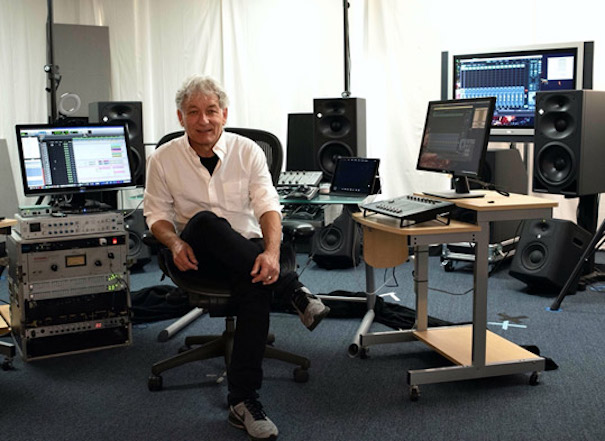
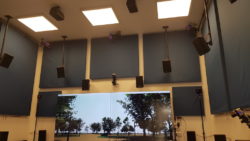
A principios de 2020, viendo que la pandemia del coronavirus se iba extendiendo por el sur de California, Herbert Waltl, pionero en audio espacial, trasladó las operaciones de su empresa de producción audiovisual MediaHyperium a una escuela de música abandonada, en la que equipó un antiguo auditorio con un sistema de monitorización de estudio formado por 18 altavoces de la gama Neumann KH.
El sistema alterna fácilmente entre los formatos de música inmersiva Dolby Atmos y Sony 360 Reality Audio, sin necesidad de cambiar la posición de los altavoces gracias a la combinación de nueve altavoces en altura y tres de suelo con distribución 7.1.
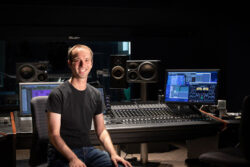
Herbert Waltl, galardonado productor, músico y adalid de la tecnología, fundó MediaHyperium en 1996 y ya estaba planeando montar un nuevo estudio antes de la pandemia. Llevaba años centrado en su trabajo en Skywalker Sound, en el Área de la Bahía de San Francisco, donde los últimos cinco años colaboró con Eric Schilling, ingeniero de grabación y mezclador de audio para broadcast que ha recibido numerosos premios Grammy y Emmy. Pero cuando el nuevo virus obligó a todo el mundo a confinarse y cerró la escuela de música, “pensamos que lo mejor, lo más seguro, por la pandemia, era trabajar desde aquí”, afirma Waltl.
Configuración 7.1
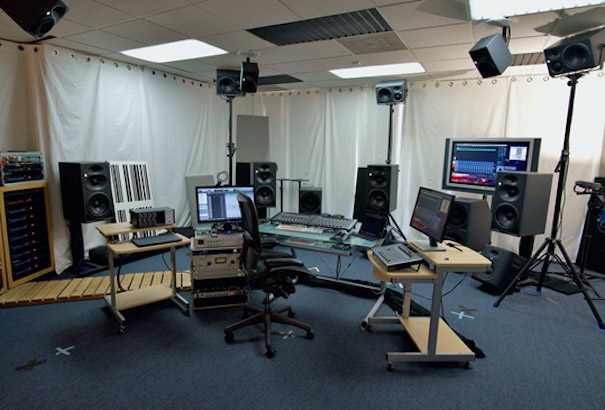
La configuración de monitores 7.1 se compone de siete Neumann KH 420 triamplificados de campo medio y de un par de subgraves Neumann KH 870 con gestión de bajos. Cinco monitores Neumann KH 310 triamplificados de campo cercano montados en soportes (tres en la parte delantera, y los canales izquierdo y derecho en altura) reproducen los canales aéreos del sistema basado en objetos 360 Reality Audio de Sony. Colgados del techo y situados un poco más cerca de la posición de mezcla, tal como recomienda Dolby Laboratories, cuatro altavoces biamplificados de campo cercano Neumann KH 120 reproducen la zona aérea de las mezclas de Dolby Atmos.
En cierto modo, Waltl hizo un acto de fe al elegir el sistema Neumann para MediaHyperium, aunque no sin fundamento, ya que había pasado muchas horas trabajando con un modelo concreto en varios proyectos. “Ya había oído los KH 310 en Skywalker y en otros estudios en los que trabajé con ellos. Me impresionaron mucho”, afirma.
“Yo nunca había utilizado los grandes, los KH 420”, comenta Schilling. Al igual que Waltl, añade “Antes solo había utilizado los 310. En esta sala estoy más o menos a dos metros y medio de los altavoces. Lo que más me gusta del sistema es que tiene un gran nivel de detalle y no hace falta reproducirlo a todo volumen para oírlo. Trabajo con una ganancia bastante moderada la mayor parte del día. Si no, me cansaría demasiado. Estoy utilizando el sistema aproximadamente al 20 % de su capacidad en términos de volumen, lo que me deja mucho margen. Y está muy bien tener dos subgraves, porque así los bajos son algo más uniformes. Es decir, es un sistema que no cansa y que posee gran riqueza de detalle”.
Una reproducción fiel
Hasta ahora, las iniciativas para introducir formatos más allá del estéreo han fracasado a nivel comercial debido a la reticencia o a la imposibilidad de los consumidores de instalar muchos altavoces en sus hogares. Sin embargo, hoy en día, los fabricantes ofrecen soluciones sencillas y de bajo coste, como las barras de sonido y los altavoces inteligentes capaces de ofrecer una reproducción inmersiva. Y por ello, dice Waltl: “Tenemos otra sala, una sala de audición, en la que hemos puesto una barra de sonido Ambeo of Sennheiser. Ahora oímos cómo se reproduce el audio en una barra de sonido”.
Y aunque el formato inmersivo de Sony, basado en la tecnología MPEG-H de Fraunhofer, se concibió inicialmente para reproducir música 3D en los auriculares, “La barra de sonido AMBEO de Sennheiser ya es compatible con el formato Sony 360, y hay receptores que enviarán la señal a un sistema de altavoces”, describe Schilling.
Como también señala Waltl, “El formato de Sony exige tres altavoces en el suelo en la parte delantera, pero es imposible obtener una representación precisa y fiel si hay muebles o mesas de mezclas de por medio. Por eso montamos esta sala, específicamente para el sonido inmersivo”, explica. La sala cuenta solo con el mobiliario imprescindible para colocar los controles de mezcla y las pantallas de visualización Pro Tools.
“Mezclar música inmersiva en una sala de control estéreo supone un reto, porque hay una consola enorme entre el subgraves y tú”, coincide Schilling. “No es que sea imposible, pero exige mucho más trabajo para determinar dónde situar cada cosa. Esta sala se parece mucho más a una sala de masterización, porque mi controlador ocupa muy poco espacio”.
Schilling añade que “Nos planteamos instalar un sistema de barras en el que pudiéramos mover los altavoces aéreos, pero es más eficiente y más rápido tener sets de altavoces diferentes”. Schilling ha creado plantillas para enrutar y cambiar rápidamente entre los formatos inmersivos de Dolby y de Sony en la sala de mezclas de mediaHyperium.
“La sala estaba prácticamente lista para su uso”, constata Waltl. “Las paredes y el techo ya tenían tratamiento acústico, porque había sido un auditorio”. Dicho eso, Schilling recomendó un tratamiento adicional que incluía trampas de graves. Ahora, concluye Waltl, “El sonido de la sala es magnífico”.
Grabando con los grandes
Schilling ha estado trabajando en la mezcla del repertorio de Alicia Keys, en los formatos Sony 360 Reality Audio y Dolby Atmos, en colaboración con el productor e ingeniero George Massenburg y bajo la dirección de Ann Mincieli, ingeniera que lleva muchos años con Alicia. “He grabado casi 30 canciones para ellos en esta sala”, cuenta Schilling. “Empezamos con la más reciente, Alicia, y hemos ido retrocediendo en el tiempo. Hicimos el álbum entero Here, de 2016; recién masterizado. El siguiente proyecto era Songs in a Minor, pero tuvimos que acabar el otro primero, porque en junio se cumplía el 20º aniversario de su lanzamiento”.
Schilling continúa: “Para el primer álbum de Alicia Keys, tuve que utilizar equipos externos porque sin ellos no era capaz de conseguir ciertos sonidos. Tuve que utilizar compresores externos. Los complementos son fantásticos, pero no funcionan exactamente igual. Pero entre los dos tenemos una buena cantidad de equipos que puedo utilizar cuando me haga falta, así que es una sala más bien híbrida”.
Según Waltl, otros éxitos de Sony 360 Reality Audio salidos de MediaHyperium incluyen el álbum de salsa de Víctor Manuelle 25/7, del año 2018 y premiado con un Grammy; dos álbumes con obras para órgano de Bach; y Hauder Plays Morricone, un álbum homenaje al trabajo del compositor cinematográfico Ennio Morricone, transcrito para violonchelo y orquesta e interpretado por Stjepan Hauser.
“Siempre queremos ser fieles al lanzamiento original en estéreo”, explica Waltl, que ha pasado los últimos 20 años remezclando música para formatos envolventes e inmersivos. “Nuestro lema siempre ha sido que queremos generar la misma sensación que la mezcla en estéreo. No quiero que sorprenda, no es un remix de DJ. Sin embargo, tenemos que aprovechar las posibilidades que nos ofrece el espacio, y no quiero ser demasiado conservador con los conceptos inmersivos. Tenemos toda una serie de herramientas creativas a mano y desarrollamos la visión original. Por lo tanto, la mezcla inmersiva debería ser una auténtica experiencia auditiva alternativa a la versión en estéreo. Hay que mantener la mente abierta y explorar a fondo. Es una posibilidad que todos deberíamos aprovechar”, concluye.
Did you like this article?
Subscribe to our NEWSLETTER and you won't miss anything.
Related articles
 Neumann improves the treatment of immersive audio via headphones with version 1.5 of RIME
 Neumann RIME: an integrated solution for immersive audio monitoring in headphones
 Focusrite acquires Innovate Audio to make TiMax the benchmark for immersive audio
 Audio-Technica BP3600 microphone now compatible with SPAT Revolution immersive audio software
 Immersive audio pickup comes to NAB 2023 with Audio-Technica's BP3600
 Audio-Technica presents the BP3600, an immersive audio microphone with eight modules
 Dorna Sports bets on immersive audio in MotoGP with the 8.0 Concept microphones from Audio-Technica
 Bauer Studios (Germany) enters immersive audio with Dolby and Neumann
 Axis Audio studios (Nashville) are committed to immersive audio with Neumann monitors
 Audio Lisbon immerses itself in immersive audio with Genelec
 La escuela de artes escénicas LIPA (liverpool) elige el audio de última generación de Neumann
 Martin Audio helps researchers at the University of Campania experiment with immersive audio
 Sennheiser and Neumann enhance virtual and augmented reality with the best immersive audio
 Sennheiser and Neumann debut audio solutions at NAB