





La realización remota de CyLTV: conexión inmediata Madrid – Valladolid
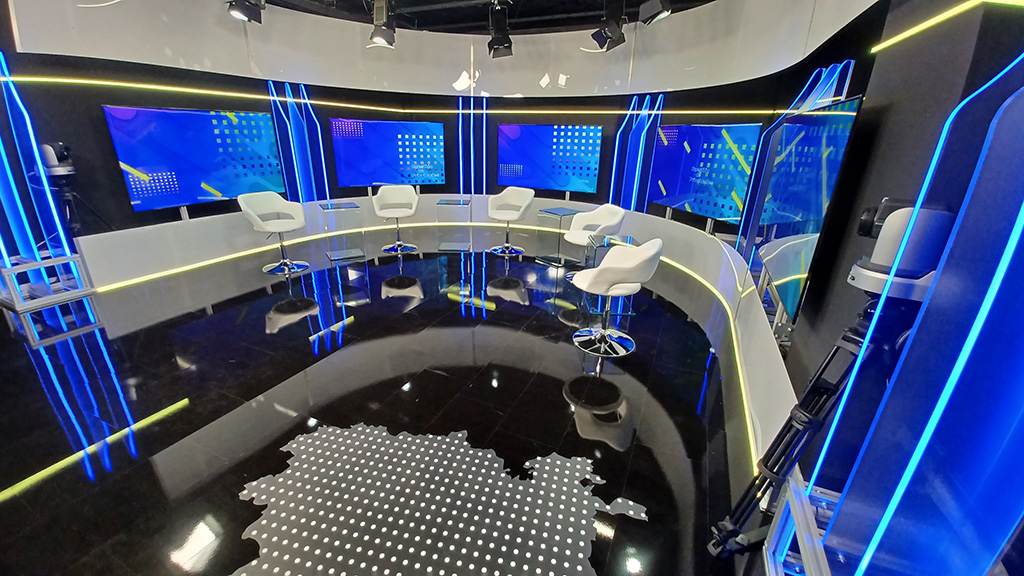

Desde hace varios meses, Castilla y León Television (CyLTV) produce semanalmente un episodio del programa informativo diario ‘Cuestión de prioridades’ en un plató ubicado en el corazón de Madrid. Lo hace bajo un modelo de realización remota gestionada desde sus estudios de Valladolid. Antonio Rodríguez, director técnico de programas, y Mario López, director técnico de informativos, trasladan la génesis y analizan el rendimiento de este interesante modelo de producción.
Año 2021. En plena pandemia, CyLTV toma la decisión de acometer el traslado de su delegación en Madrid. No lo hace con el objetivo de reducir costes ni de mudarse a otra zona diferente de la ciudad, siempre castigada por sus alquileres. Al contrario, la televisión autonómica de Castilla y León ejecuta un ejercicio de ambición. Y es que este traslado no solo incluye más facilidades para los medios humanos y técnicos de su delegación madrileña, sino espacio para la construcción de un plató polivalente de 70 metros cuadrados.
Este estudio se diseña con un doble propósito: poder ofrecerlo a la industria para su contratación, de modo que cualquier interesado puede contar con unas instalaciones en pleno barrio de Salamanca con toda la tecnología necesaria para hacer su evento o retransmisión, y producir semanalmente un episodio del magazín informativo por antonomasia de la televisión castellanoleonesa: Cuestión de prioridades. El objetivo de esta edición madrileña del programa pasa por poder contar con más frecuencia con invitados y tertulianos cercanos a la actualidad política y social nacional.
Que una televisión de alcance autonómico y local cree un estudio en una delegación no es nada excepcional. Sin embargo, sí lo es la decisión que Antonio Rodríguez y Mario López tomaron a la hora de dar forma al esqueleto técnico de este espacio.
Realización remota: una oportunidad
La gestión de recursos es una máxima a seguir en el siempre constante mundo de technological evolution en la industria broadcast. La obsolescencia de los equipos, acelerada por una technological evolution sin visos de levantar el pie del acelerador, obliga a televisiones y radios a estudiar inversiones, amortizaciones u oportunidades que impliquen un aprovechamiento más inteligente de los recursos.
“Hemos hecho un modelo de realización remota a la medida de nuestras necesidades con unos costes muy ajustados”.
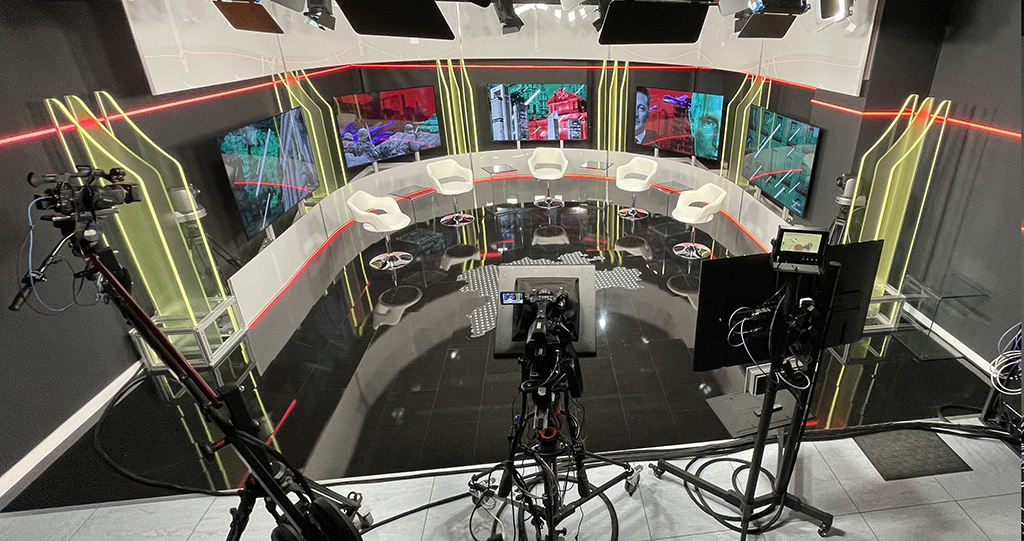
A este respecto, CyLTV tomó la decisión de crear un plató que prescindiera de equipos locales de mezcla o grafismo, para que estos fueran gestionados externamente desde sus estudios centrales en Valladolid. Rodríguez traslada más detalles: “Hemos hecho un modelo de realización remota a la medida de nuestras necesidades con unos costes muy ajustados. Aun así, el diseño de ingeniería fue muy versátil, de modo que este espacio puede ser escalable en el futuro, incluyendo sistemas locales de mezcla o más sistemas de cámaras y microfonía”.
Este planteamiento, según López, incluye beneficios operativos y presupuestarios, ya que ha permitido a la televisión no tener que recurrir a una ampliación de personal o tener que adquirir hierros adicionales que, inevitablemente, requerirían actualizaciones a medio plazo: “Lo que hemos construido es un estudio completo de televisión, pero no una realización. Para eso, aprovechamos los equipos de realización de nuestros estudios centrales”.
La tecnología del estudio de CyLTV
El plató de Madrid de CyLTV parte de un diseño de Rodríguez y López en el que se apuntaron las necesidades y objetivos, si bien Telefónica Broadcast Services fue la compañía encargada de realizar la planimetría y ejecutar la obra.
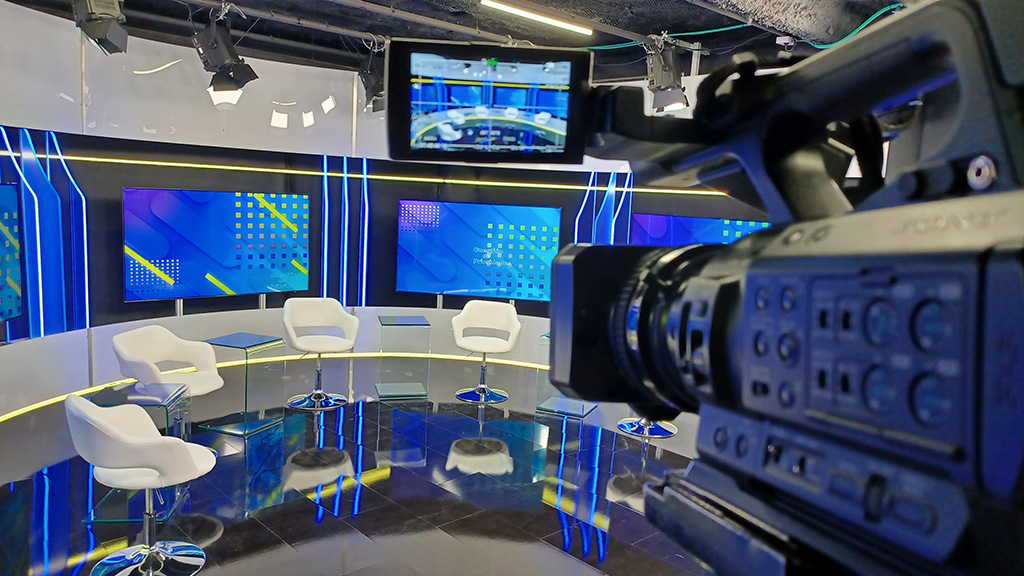
El espacio escénico apuesta por una escenografía “versátil” apoyada por diferentes paneles de metacrilato con tiras LED y diferentes monitores Samsung QLED 75Q60T de 75 pulgadas, elementos que ayudan a aportar una sensación de profundidad a pesar de lo reducido de las dimensiones del plató. Todo queda captado a través de cuatro cámaras: dos PTZ Sony BRC-H900, controladas desde la sala de control con el panel RM-IP500, así como dos Sony PXW-Z280, una de ellas sobre un pedestal hidráulico equipado con un prompter de 17” de TVPrompt y otra sobre una grúa ligera manual de 2,35 metros. Ambos modelos cuentan con el mismo tipo de sensor, lo que, tras un ajuste de negros y colorimetría, ha permitido asegurar una continuidad visual sin necesidad de realizar grandes ajustes en producción. El audio, por otro lado, se maneja en torno a un sistema de microfonía inalámbrica Sony MB-X6 con micrófonos Sony UTZ-M03.
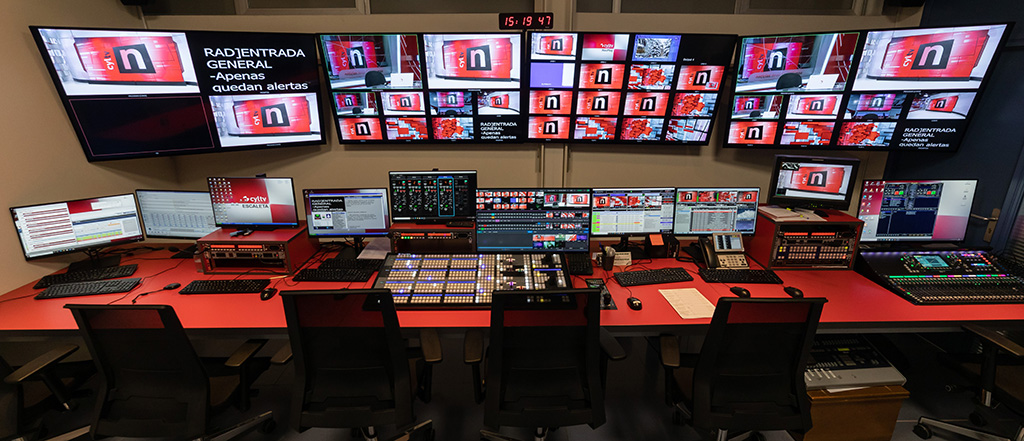
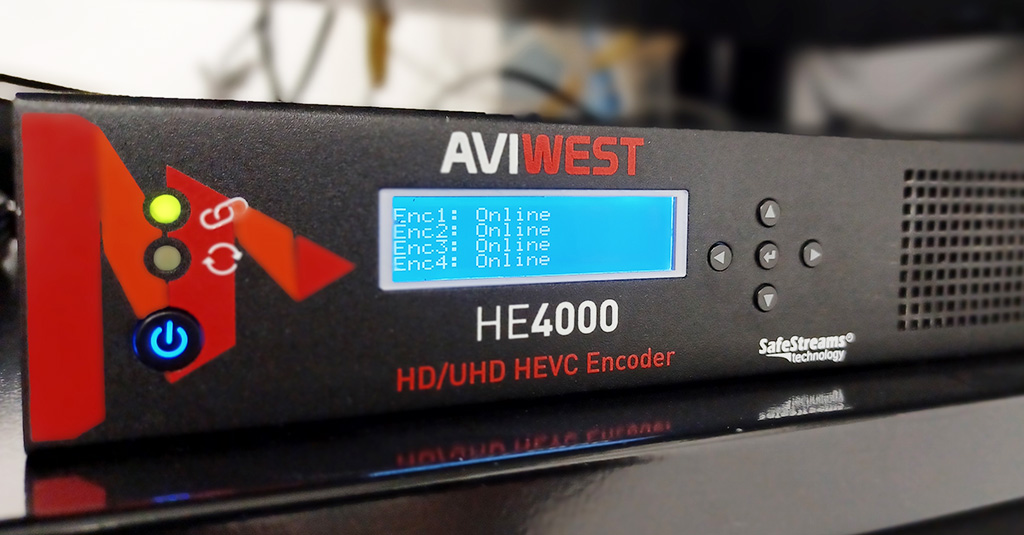
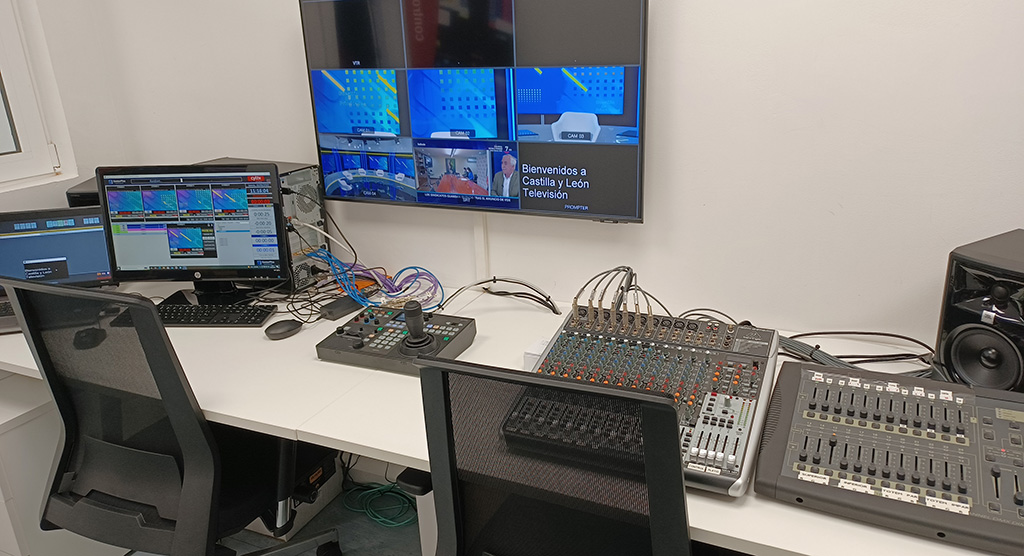 La sala de control carece de equipos clave para la producción, dada la decisión de apostar por la realización remota desde Valladolid, si bien cuenta con todo el equipamiento técnico necesario para producir independientemente previa adaptación. Hasta que llegue ese momento, el equipo de CyLTV cuenta con una mesa de audio de 24 canales de Behringer, dos monitores autoamplificados JBL 85W, un multipantalla de Blackmagic, una mesa de control de iluminación DMX de 24 canales, el grabador HyperDeck Studio de Blackmagic, electrónica de distribución y tratamiento de audio Albalah y un decodificador SRT para el retorno de vídeo. Este equipamiento se completa con una solución central para el modelo de realización remota de Castilla y León Televisión: el encoder Aviwest AW-HE4000 H.265 de cuatro entradas.
¿Cómo funciona la realización remota?
Cada lunes, Cuestión de prioridades entra en directo apoyándose en los sistemas de realización remota de CyLTV. El equipo de tecnología de la televisión privada utiliza el encoder Aviwest AW-HE4000 para enviar las señales de las cuatro codificadas en una única señal UHD que, posteriormente, vuelve a dividirse en cuatro canales HD a la llegada al estudio central de los Servicios Informativos de la televisión en Valladolid. En paralelo, el uso de tarjetas embebedoras de Albalah permite transportar los paquetes de audio.
“Hemos llegado a un nivel de sincronización con el equipo que resulta en una realización tremendamente ágil”.
En los estudios de Valladolid, la señal llega directamente a los decodificadores Aviwest que, de hecho, se encuentran desplegados en todos y cada uno de los centros territoriales de la cadena. Esto permitiría que, en el caso de que fuera estrictamente necesario, se podría replicar este modelo de realización remota en otro centro diferente. Para el retorno del vídeo y del audio se utiliza la tecnología SRT, siempre bajo el objetivo, comenta Rodríguez, de reducir el retorno lo máximo posible. Para ello, el equipo de ingeniería de CyLTV se apoya en equipos codificadores y decodificadores of Kiloview.
Este modelo de realización remota solo requiere a tres técnicos desde el plató de Madrid: dos operadores de cámara (para el plano máster y para la grúa) y un tercer técnico en control manejando las cámaras robotizadas. El resto de la producción se realiza con personal técnico ubicado en Valladolid; el mismo, por cierto, que se encarga de realizar el formato habitual diario. De esta forma, se garantiza una continuidad en tiempo y forma del formato: dobles o triples ventanas, imágenes para contextualizar las temáticas, instrucciones desde realización a los operadores de cámara, inclusión de grafismo e incluso elementos de realidad aumentada.
Los desafíos: latencia, sincronización…
En la actualidad, CyLTV ha podido construir un workflow fiable que permite realizar cada programa en tiempo real, logro que ha requerido de un periodo de adaptación a procesos otrora inéditos para el equipo técnico de la televisión.
López considera que el mayor reto a la hora de establecer estos procesos de realización remota corresponde al transporte del audio. En sus propias palabras: “Al contrario de lo que pueda parecer, la sincronización del vídeo no supuso grandes problemas. Si hay un frame de desfase en el vídeo no lo vamos a notar, pero el audio no soporta ese margen. Requirió tiempo de ajuste, pero finalmente logramos solucionar el problema empaquetando todos los audios en una sola señal de vídeo. (…) No obstante, los técnicos de sonido emplazados en Valladolid tienen una serie de herramientas de delay a su disposición por si en algunas de las pruebas iniciales vemos algún desfase mayor”.
Otras cuestiones que preocuparon al equipo de Castilla y León Televisión fueron el delay of the órdenes, sumado a los 0,8 segundos de retardo que tarda la señal de la cámara en modo VBR en llegar a Valladolid. Este tiempo, señala López, es lo “mínimo” que permite Aviwest para contar con un “pequeño buffer” que asegurará que la señal de las cámaras “no caiga”. La adaptación de técnicos y operadores a esta circunstancia ha requerido un periodo de adaptación; a día de hoy, López considera que todos los problemas han sido solventados: “Hemos llegado a un nivel de sincronización con el equipo que resulta en una realización tremendamente ágil”.
Por ahora, se ha decidido que el control de las cámaras PTZ siga realizándose desde Madrid por operabilidad y ahorrar unos segundos de retardo en el transporte de las órdenes. No obstante, la propuesta de realización remota de CyLTV sigue avanzando y tanto López como Rodríguez no descartan que, en el futuro, estas cámaras robotizadas puedan ser manejadas desde sus estudios, ya que todos los elementos de la sede madrileña de la televisión están incluidos en su MacroLAN.
Producción remota y virtualización de sistemas: nuevas vías
La producción remota ha cambiado el paradigma de gran parte de las televisiones españolas. De hecho, fue la flexibilidad en las coberturas externas con soluciones de Aviwest uno de los motivos principales que llevó al equipo técnico de CyLTV a probar la posibilidad de establecer el modelo de realización remota aplicado a su delegación en Madrid.
El equipo de tecnología de la televisión castellanoleonesa sigue de cerca tendencias como la IP technology en el mundo broadcast, el 5G, he uso de la nube o to virtualización de tecnologías, síntomas de una industria en transformación hacia la escalabilidad y flexibilidad de sus soluciones. “Por ahora, tener comunicación en tiempo real en los estudios nos aporta ventajas operativas, pero, sin duda, la industria apunta hacia la reducción de recursos manteniendo o incluso incrementando las posibilidades”, señala Rodríguez al ser cuestionado sobre si el modelo de control remoto de estudio desde unos estudios de realización centrales podría extenderse a otros espacios de producción de la televisión autonómica de Castilla y León.
"The irrupción del IP con unos resultados bastantes razonables ha hecho repensar el papel of the sistemas en las televisiones”.
La decisión de saltar o adoptar cualquiera de los flujos de trabajo o tecnologías previamente mencionadas deberá venir acompañada de garantías en cuanto a fiabilidad o estabilidad. Sin embargo, López también subraya que la decisión no solo tendrá que venir del apartado de la ingeniería, sino que también tendrá una importante voz en las decisiones los equipos de administración y gestión de cada televisión: “Entiendo que invertir en equipos de producción, máxime a la velocidad a la que se renuevan los equipos broadcast, requiere pensárselo bien. ¿Qué sucede? Que la irrupción del IP con unos resultados bastantes razonables ha hecho repensar el papel de los sistemas en las televisiones”.
“En el futuro, surgirán nuevos proyectos, y en todos ellos pensaremos cuál es la mejor y más rentable forma de producción. Desde luego, tenemos claro que hemos encontrado la solución más acertada para nuestro plató de Madrid”, sentencia el equipo de tecnología de CyLTV.
A report by Sergio Julián Gómez
Did you like this article?
Subscribe to our NEWSLETTER and you won't miss anything.
Related articles
 Veset simplifies access to Nimbus with an immediate subscription and self-service model
 Marcos A. Cabezas joins CyLTV to lead the digital strategy and development area
 Madrid hosts Red Bull Batalla, remote Dolby Atmos multichannel production with TVU Networks
 Moncada promotes a meeting to discover streaming and remote production workflows with Teradek
 Castilla y León Televisión installs an AEQ intercom in its central studios in Valladolid
 Telefónica promotes remote realization in edge computing with Real Madrid TV
 Dejero offers immediate connectivity from the Pyeongchang Winter Olympics
 Switzerland's Channel 9 uses Aviwest solutions to reach its audience immediately
 Newtek Advanced IP Workflow: una puerta de acceso inmediata al mundo IP
 In his speech, Enrique González Macho asks for an immediate reduction in the “damned cultural VAT”
 MagicFrames llevó a cabo la realización audiovisual de la convención del PP en Valladolid
 TDF proposes a tool for immediate video publishing from Google Glass
 Sony adds wireless connection to its line of professional camcorders
 Sony proposes a structured framework for connecting devices and services