





EVS mostrará en NAB una completa gama de soluciones basadas en su tecnología Instant Tapeless
EVS mostrará en su stand en NAB 2010 su innovadora propuesta de Instant Tapeless Technology encaminada a optimizar los flujos de trabajo tanto por parte de broadcasters como de productores. Pensando en producción en directo desde unidades móviles, EVS expande ahora su gama de servidores y sistemas de software.
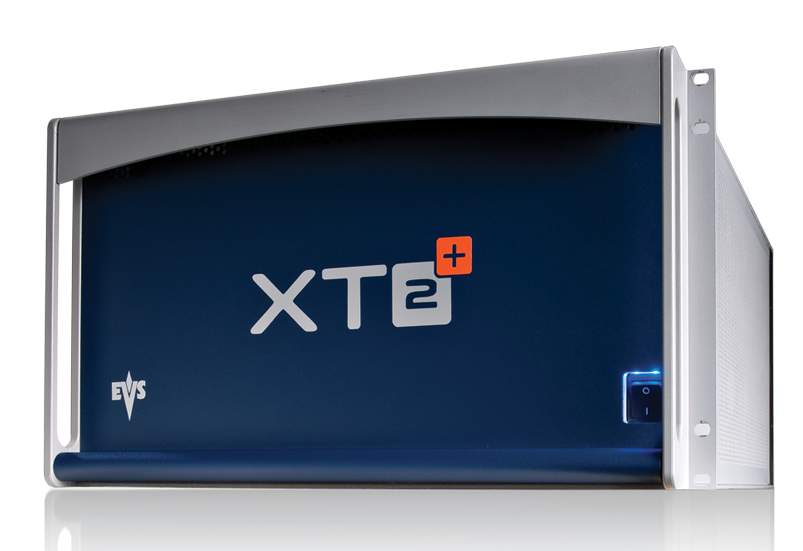 Con dos nuevos servidores y soluciones para edición on-the-fly y grafismo integral, EVS ofrecerá en NAB 2010 una tecnología de última generación completamente integrada en los flujos de trabajo existentes, mejorándolos, acelerándolos y dotándoles de mayor seguridad para entornos de directo.
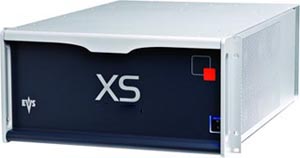
En estudio, EVS ha hecho realidad, que tanto en almacenamiento de material como en playout, pocos se acuerden ya de la cintay los VTRs. En este terreno, EVS mostrará en NAB 2010 el XS, su servidor de alto rendimiento para grabación y emisión que garantiza su intregración con sistemas de terceras partes con la mayor fiabilidad y robustez.
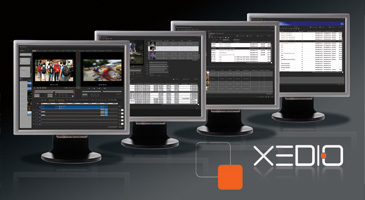
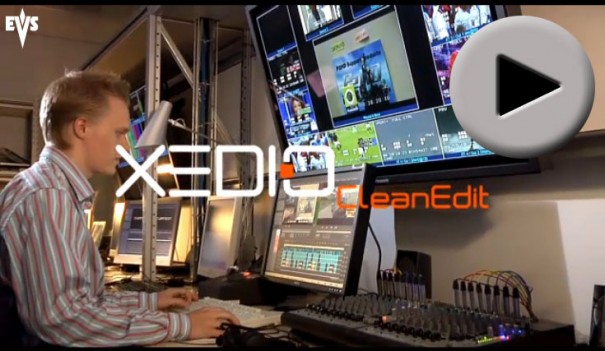
 En cuanto a redacciones digitales, en Las Vegas podremos ver en acción la solución de EVS basada en software Xedio encaminada a mejorar y acelerar la producción de informativos y deportivos, adaptándose a todo tipo de flujo de trabajo multiformato HD/SD, incluyendo adquisición de fuentes, ingesta de ficheros sin transcodificación, producción virtual y edición, gestión central de media, y play out directo sin necesidad alguna de renderizado. Xedio otorga un nivel único de integración con sistemas de terceros adaptándose con facilidad a cualquier infraestructura existente.
 Estereoscopía y servidores
Como no podía ser de otra forma, la empresa belga no ha perdido pie en los nuevos entornos estereográficos y mostrará en NAB 2010 las posibilidades que sus servidores de producción XT[2] ofrecen en cuanto a repetición, edición y slowmotion en retransmisiones en directo en 3D.
A tener muy en cuenta en la visita al stand de EVS en NAB 2010 será el nuevo servidor XT[2]+, pensado para entornos de directo con capacidades de almacenamiento escalables, con hasta 20 TB por servidor. Está disponible tanto para SD como para HD en configuraciones de 6, 4 y 2 canales, destacando los nuevos controladores de discos SAS, sus nuevas capacidades para dual networking y los nuevos arrays para almacenamiento externo.
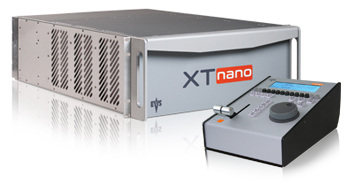
También será novedad el nuevo sistema de servidor replay de entrada de nivel XT Nano, destinado a ofrecer repeticiones en slow motion con cuatro canales HD/SD. Esta solución resulta ideal para producciones deportivas con flujos de trabajo muy sencillos en las que se requiere inmediatez absoluta sin mayores complicaciones.
Destacar, por otro lado, el servidor XS para grabación de loop en aplicaciones de estudio. El XS es el último servidor multiformato con grabación peerless e ingesta de múltiples fuentes A/V y control de playout. El XD está disponible en 2 y 4 configuraciones flexibles de canal tanto en SD como en HD, estando optimizado para control de terceras partes, incluyendo sistemas de automatización, editores lineales o híbridos, mezcladores y controladores.
En lo que al sistema IP Edit se refiere incorpora ahora el modo de playout Edit-While, que permite continuar editando material al mismo tiempo que se van sacando piezas al aire, optimizando así la edición de versiones de programas o su emisión multizona.
Otra novedad importante en NAB 2010 será una solución de análisis para grafismo en deportes, integrable en el sistema LSM XT[2]+ para control en directo de slow motion y la creación de gráficos controlables desde un sencillo remoto.
 MPlay
MPlay
En Las Vegas convendrá no perder de vista el nuevo controlador multicanal para playout MPlay de EVS. Se trata de un control remoto muy intuitivo utilizado para playout de clios, playlist y grafismo. Mediante una sencilla operativa. el MPlay puede controlar hasta cuatro canales simultáneamente. Está pensado para producciones en directo, garantizando la velocidad de los procesos y un eficiente roll-out de las operaciones, configurables todas ellas con el software IP Director.
Por último, reseñar la nueva solución de EVS para edición virtual e importación de ficheros en entornos ENG. El Xedio Dispatcher ofrece la posibilidad de tomar el material procedente de un camcorder ENG (XDCAM, P2) y mostrarlo en una interfaz de browsing intuitiva acelerando así la selección de las imagénes o la subdivisión de los clips. Una vez seleccionados o creados, los clips son consolidados y transferidos directamente a cualquier servidor EVS para integrarlos en las operaciones de producción o postproducción.
Did you like this article?
Subscribe to our NEWSLETTER and you won't miss anything.
Related articles
 TVU mostrará en IBC su ecosistema integral de soluciones basadas en la nube e IP
 7thSense uses Phabrix technology to test its ST 2110-based solutions
 Radio de Cabo Verde completa su transición a tecnología IP con soluciones de AEQ
 Sony provides its range of IP-based PTZ cameras with NDI/HX capability
 Clear-Com demuestra en NAB soluciones de intercomunicación basadas en IP
 EVS will present the new generation of XT servers and its solutions based on artificial intelligence at NAB
 Lawo will show its proposals for IP-based audio and video infrastructures at ISE
 SSL desarrolla su gama de interfaces para red IP de audio basadas en Dante
 Dalet Digital Media Systems completa su oferta de soluciones MAM con la tecnología de AmberFin
 EVS will exhibit a complete range of solutions for enriched production at IBC
 Brainstorm mostrará en NAB toda su gama de soluciones para gráficos 3D en tiempo real, estudios virtuales y playout
 Sony presenta en Broadcast IT’11 una completa gama de soluciones para HD
 Datavideo mostrará en ISE sus soluciones de teleprompter basadas en iPad e iPhone
 Tedial acudirá a Broadcast’09 con una completa gama de soluciones para gestión de media