





La BBC experimenta con el estado de ánimo para ayudar en la navegación en televisión
BBC Research & Development trabaja en el desarrollo de un interesante sistema de navegación que ayudaría al espectador a elegir contenidos según su estado de ánimo.
¿Es posible navegar entre una oferta de contenidos televisivos según el estado de ánimo del espectador en cada momento? Aunque parezca ciencia ficción, quizás no esté tan lejos en vista del proyecto Multimedia Classification project (Archives Research), que BBC Research & Development está llevando a cabo.
Habitualmente, cuando navegamos en una EPG, nos encontramos con contenidos clasificados por géneros de forma muy rígida y estanca con búsquedas, en muchas ocasiones, restringida a los metadatos como título o el director.
Ahora la BBC está experimentando con un sistema que iría más allá y sería capaz de analizar los contenidos según algunas características del vídeo y el audio como la luminosidad, la risa o la acción.
El sistema valoraría cada contenido en una escala de valores, pudiendo así comparar entre programas. Así, si un contenido se puntúa alto en cuando movimiento pero bajo en risa, estaríamos ante una producción de acción, mientras que, si por el contrario, predomina la risa, se trataría de un espacio con predominancia del humor.
La ventaja aquí es que entonces es posible comparar los distintos programas basados en los resultados del estado de ánimo, lo que le permite, por ejemplo, la búsqueda de algo un contenido más emocionante, por ejemplo. Además, la combinación de las puntuaciones de cada escala le da al programa una especie de huella digital del estado de ánimo, por lo que el sistema podría recomendar programas según los criterios que el espectador marcase en cada momento.
Interactuar con el usuario
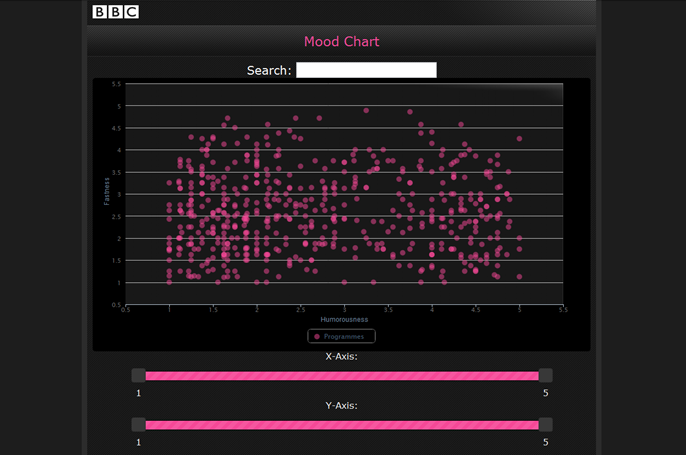
El reto es ahora investigar cómo los usuarios pueden interactuar con estos datos según el estado de ánimo. Para ello, actualmente la BBC está en proceso de desarrollar un prototipo de interfaz API de control universal representado en un gráfico de dispersión de 2 dimensiones, en el que en cada eje representaría una escala de estado de ánimo.
Esto permitiría a los usuarios ver el estado de ánimo respecto de los programas en forma de puntos trazados en el gráfico. Esta interfaz se integrará próximamente con la BBC Redux (una herramienta de investigación interna de la BBC) como un ensayo preliminar para ver cómo la gente encuentra útil este tipo de interfaz afectiva.
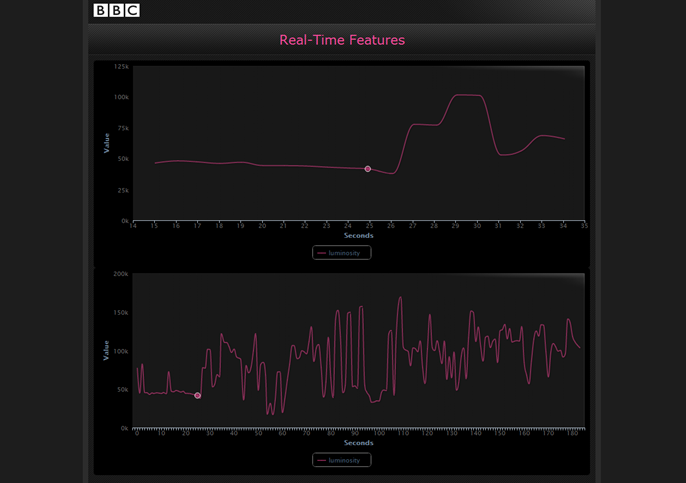
Otra área de interés es cómo el estado de ánimo varía a lo largo de un programa. BBC ha diseñado un prototipo de sistema utilizando una API de control universal que permite a los usuarios ver un gráfico dinámico de datos de estado de ánimo en una segunda pantalla (por ejemplo, un Tablet PC o teléfono inteligente) sincronizada con la emisión.
More information, here.
Did you like this article?
Subscribe to our NEWSLETTER and you won't miss anything.
Related articles
 Sergio Amuchastegui (Provys): “We have the best software technology to help monetize all resources”
 MediaKind proposes solutions to help broadcasters increase their profitability at NAB 2023
 Ateme presents a solution to help drive sustainable streaming
 Prime Video donates one million euros to help recover the Spanish audiovisual industry
 Sony will present its latest technologies to help enhance creativity at an online event
 Matrox y SBG Sports se unen para ayudar a equipos de todo el mundo a mejorar el rendimiento deportivo
 World Television Day celebrates the good health of the medium around the world
 Miguel Cardenal, ex Secretario de Estado para el Deporte, se incorpora al grupo Mediapro
 Television is not dead... it is in excellent health
 La chilena SmartBoxTv experimenta con la venta de comida por televisión
 State Lotteries and Betting renews its trust in Panasonic for its dynamic channel
 CineDeck HD Extreme, solid state recording for digital cinema
 Focus FS-H200, un grabador de estado sólido para camcorders DV y HDV
 Eight new Animo TV screens