





La mayor cámara digital del mundo investiga la materia oscura del universo
Localizada en lo alto de una de las montañas más altas de Chile, es capaz de recoger manchas seis veces mayores que la luna llena, en exposiciones individuales.
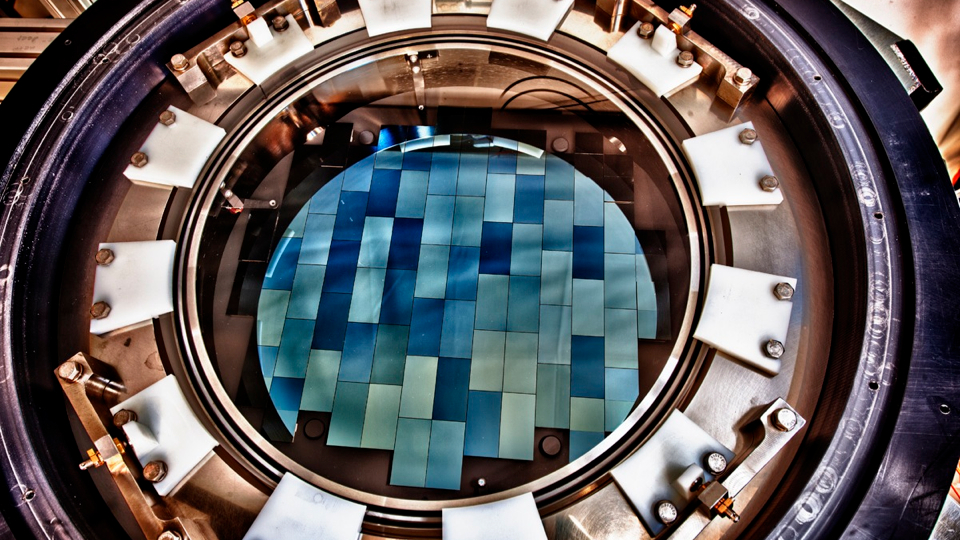
La mayor cámara digital del mundo, con unos increíbles 570 megapíxeles, la DECAM abre su interior para mostrar su funcionamiento.
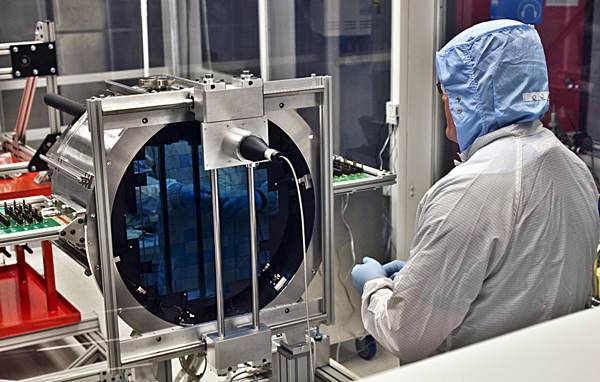
Localizada en la cima de una de las montañas más altas del Chile andino, Dark Energy es del tamaño de una cabina telefónica y utiliza 63 sensores separados CCD y un espejo de captación de luz con casi cuatro metros de altura.
Tras ocho años de construcción, la cámara se ha instalado en el Cerro Tololo Inter-American Observatory, en Chile, para descubrir los secretos del universo siendo capaz de fotografiar manchas seis veces mayores que la luna llena, en exposiciones individuales.
El objetivo principal de esta instalación es investigar el problema de materia oscura y su papel en la expansión del universo.
Las primeras imágenes recogidas por la cámara muestran el conjunto de galaxias Formax que están a casi 60 millones de años luz de la Tierra.
Historia del proyecto
En 1998, dos equipos de astrónomos que estudiaban supernovas lejanas realizaron un asombroso descubrimiento: el Universo se está expandiendo aceleradamente. Sin embargo, de acuerdo con la teoría de la relatividad general de Einstein, la gravedad debería estar frenando dicha expansión. Para explicar la aceleración cósmica, los cosmólogos se enfrentaban a dos posibilidades: o bien el 75% del Universo está compuesto de un nuevo y exótico componente denominado energía oscura, con características gravitatorias opuestas a la materia ordinaria, o bien la relatividad general debe ser reemplazada por una nueva teoría de la gravedad a escalas cosmólogicas.
El Dark Energy Survey (DES) ha sido diseñado para desentrañar el origen de la aceleración del Universo y la naturaleza de la energía oscura, observando la evolución de la expansión cósmica a lo largo sus 14 mil millones de años de existencia con gran precisión. Más de 120 científicos de 23 instituciones de Estados Unidos, Brasil, Alemania, España y Reino Unido trabajan en el proyecto.
Did you like this article?
Subscribe to our NEWSLETTER and you won't miss anything.
Related articles
 NFL Media pone en marcha la mayor red de audio Dante del mundo
 BBC Wales despliega la mayor red IP SMPTE 2110 del mundo con tecnología de Grass Valley
 Technicolor utiliza Baselight en el etalonaje de la serie de HBO ‘La materia oscura’
 Emili Planas: “Mediapro es la compañía en todo el mundo con mayor experiencia en directos con HDR”
 México estrena el mayor múltiplex del mundo con proyectores ‘láser puro’ de Christie
 The Cinecittà complex in Nuremberg: the largest Christie Vive Audio installation in the world
 Leyard deja con la boca abierta en NAB a productoras y televisiones con el mayor LEDwall en 8K del mundo
 Telecinco launches 'Got Talent Spain', one of the most successful formats in the world
 RTVE lanza la mayor web de documentales en castellano del mundo, con más de 5.000 títulos digitalizados
 ProTv y Mediapro retransmiten el mayor espectáculo pirotécnico del mundo
 Sam Raimi y su equipo crean un universo fantástico en el plató de ‘Oz. Un mundo de fantasía’
 La cámara instalada a mayor altitud del mundo trae el Everest a Internet
 RTVE lanza el mayor proyecto ‘A la carta’ del mundo hispano
 La nueva televisión digital en el universo multimedia