





La Academia reconoce a Concha Velasco toda una vida dedicada al cine
La artista vallisoletana ha protagonizado uno de los momentos más emotivos de la noche al recibir el galardón de manos de su sobrina, la también actriz, Manuela Velasco.
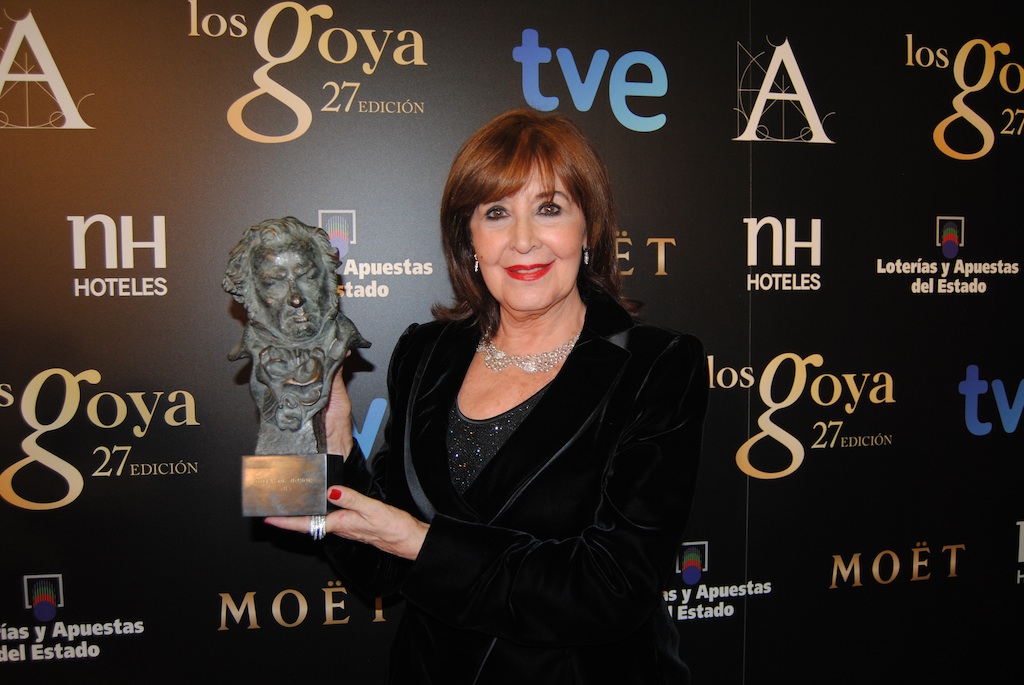
La actriz Concha Velasco ha recogido esta noche el Premio Goya de Honor en la Gala de la 27 edición de estos galardones, que ha tenido lugar en el auditorio Príncipe Felipe de Madrid. La artista vallisoletana ha protagonizado uno de los momentos más emotivos de la noche al recibir el galardón de manos de su sobrina, la también actriz, Manuela Velasco.
Concha Velasco, artista inconfundible y necesaria para entender la producción cinematográfica de los últimos cincuenta años, ha agradecido el premio en clave de humor, recordando una anécdota personal en otra gala de los Goya en la que estaba nominada por su interpretación en Más allá del jardín, y en la que estaba convencida de que lo ganaría a pesar de que su amigo y autor de la obra en la que se inspiraba la película, Antonio Gala, le advirtió de que no sería para ella. Ese año la gran triunfadora de la gala fue El Perro del Hortelano.
Concha Velasco, entró a formar parte de la Academia el 29 de mayo de 1986 y es, desde hace varias décadas, uno de los rostros más populares y queridos del mundo del espectáculo en nuestro país. Con más de ochenta películas, numerosas obras de teatro y musicales, discos, y grandes éxitos en la pequeña pantalla, ‘la Velasco’ cuenta con uno de los currículos más extensos de la profesión.
Velasco, al enterarse de la concesión del reconocimiento por unanimidad de la Junta Directiva de la Academia, no se olvidó de sus compañeros –“los actores españoles, en todas las épocas, han tenido una calidad inmensa, y no siempre reconocida. Hablo tanto de los secundarios, que han sostenido y sostienen nuestro cine, como de los protagonistas, porque la fábrica de sueños necesita de ellos”–. Recordó tras estas palabras a Tony Leblanc –“un amigo al que le debo todo”–; Manolo Escobar –“las cinco películas que hicimos juntos están a la altura de las que hizo Katherine Hepburn con Spencer Tracy”–; López Vázquez; Alfredo Landa; Manolo Gómez Bur; y Fernando Fernán Gómez.
Pim, pam, pum…, ¡fuego!, de Pedro Olea, y Teresa de Jesús, a las órdenes de Josefina Molina, son los trabajos de los que se siente más satisfecha Concha Velasco, que se quitó la espinita de trabajar con Berlanga en la última cinta que dirigió el maestro valenciano. “No soy de las que espero en casa a que suene el teléfono, he perseguido a directores y productores cuando me he enterado de que había un papel que me gustaría hacer”
Tuvo palabras para las que han sido sus predecesoras en el galardón: Rafaela Aparicio –“he trabajado con ella toda mi vida, era mi amiga y la he visto actuar enferma”; Imperio Argentina –“era la actriz preferida de mi madre, yo quería ser ella cuando veía cine, y de ella aprendí a reírme hasta cuando estoy haciendo drama”–; y Josefina Molina –“es maravillosa, gracias a ella hice Teresa de Jesús”–.

Una vida dedicada a la interpretación
Concepción Velasco Varona (Valladolid, 1939) debutó en el cine con La reina mora (1954), de Raúl Alfonso; pero será en 1958 con Las chicas de la Cruz Roja, de Rafael J. Salvia, cuando la pucelana se convierta en representante de la nueva comedia española, que rompió moldes con el cine de posguerra. Según el Diccionario del Cine Español, dirigido por José Luis Borau, la “entonces Conchita Velasco encarnaba la imagen de muchacha moderna pero honrada, simpática y no casquivana, redicha, pícara, con sentido común y respetuosa del orden, es decir, una perfecta novia”.
Tras éste vendrían un sinfín de títulos: El día de los enamorados, de Fernando Palacios; Los tramposos, de Pedro Lazaga; La verbena de la Paloma, de José Luis Sáenz de Heredia; Las que tienen que servir, de José María Forqué; En un lugar de la manga, de Mariano Ozores; Tormento, de Pedro Olea; y La colmena, de Mario Camus, entre otros muchos. Alfredo Landa, José Luis López Vázquez y, sobre todo, Tony Leblanc y Manolo Escobar, fueron algunas de las parejas profesionales de esta intérprete, cuyas últimas apariciones en el celuloide han sido Rabia, de Sebastián Cordero; Enloquecidas, de Juan Luis Iborra;Chuecatown, de Juan Flahn; Bienvenido a casa, de David Trueba; y El oro de Moscú, de Jesús Bonilla. También coprotagonizó junto a Michel Piccoli Paris Tombuctú, última película de Luis García Berlanga.
La actriz, que en 1987 recibió la Medalla de Oro de las Bellas Artes y en 2003 la Medalla de Oro de la Academia, ha sido candidata dos veces al Premio Goya: en 1989 como Mejor Actriz de Reparto, por Esquilache; y en 1996 como Mejor Actriz Protagonista, por Más allá del jardín. También ha presentado la gala de estos galardones en dos ocasiones: en 2006, junto a Antonio Resines, y en 2001, junto a Loles León y María Barranco, entre otros.
Muchos de sus éxitos le vinieron en el teatro donde ha trabajado en más de una treintena de obras, entre las que destacan Filomena Marturano, Yo me bajo en la próxima, ¿y usted?, La truhana, Don Juan Tenorio, Inés desabrochada, La vida por delante, y Concha, yo lo que quiero es bailar, obra que relata sus 50 años de carrera y representa en estos momentos en el Teatro La Latina de Madrid, bajo la dirección de José María Pou. Ha desarrollado también una carrera paralela en el medio televisivo, donde trabajó junto a Josefina Molina en Teresa de Jesús. También ha participado en ¡Mamá, quiero ser artista!;Yo, una mujer; Compañeros; Motivos personales; Herederos; Las chicas de oro, y en la actualidad Gran Hotel. Desde enero de 2011 presenta el programa ‘Cine de barrio’.
Did you like this article?
Subscribe to our NEWSLETTER and you won't miss anything.
Related articles
 The Film Academy recognizes Belén Atienza's career as a producer with the Elías Querejeta Award
 La Academia reconoce a Sigourney Weaver con el Goya Internacional 2024
 La Academia de Cine Europeo reconoce la trayectoria de Isabel Coixet con el European Achievement in world Cinema
 El Festival de San Sebastián reconoce con una Concha de Plata honorífica la labor de SADE Cines
 La Academia de Cine Europea reconoce el desierto de Tabernas como Tesoro de la Cultura Cinematográfica Europea
 Fernando Navarrete, Premio Panorama a Toda una Vida
 Xavier Sardá, Premio Toda una Vida de la Academia de Televisión
 IABM reconoce a Ole Peter Clausen con el Premio de Honor a Toda una Vida
 Paloma Gómez Borrero, Premio Toda una Vida de la Academia de Televisión
 Chema Prado, Premio Panorama a Toda una Vida
 Fernando García de la Vega, Premio Toda una Vida de la Academia de Televisión
 La Academia reconoce la trayectoria de seis profesionales del cine
 Manolo Romero, Premio Panorama a Toda una Vida
 José María Íñigo, Lifetime Achievement Award from the Academy