





Mexico is committed to the development of nanosatellites
The National Institute of Astrophysics, Optics and Electronics intends to launch Ulysses I, a small nanosatellite, into space.
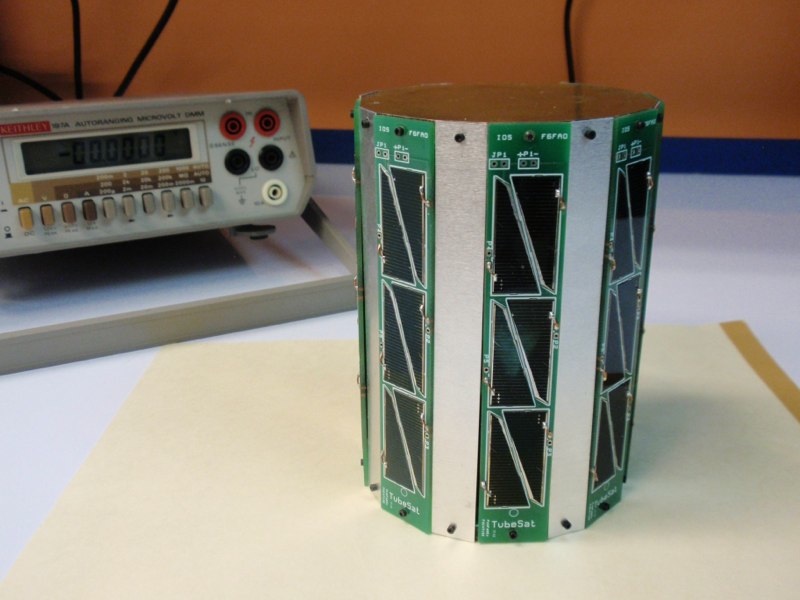
The National Institute of Astrophysics, Optics and Electronics (INAOE) has presented Ulises I, a nanosatellite named after the character from the Iliad and the Odyssey will orbit the Earth in a unique mission that aims to unite science, technology and art.
This novel initiative emerged as a proposal from the Mexican Space Collective (CEM), made up of prominent Mexican artists and led by the renowned photographer Juan José Díaz Infante. Ulises I has been fully integrated into the INAOE, specifically in the Radiofrequency and Fiber Optic Communications Laboratory, directed by Celso Gutiérrez.
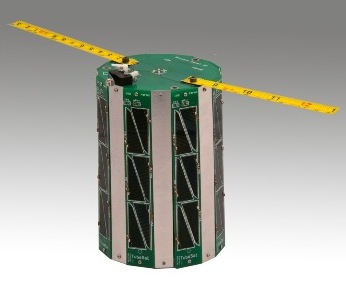 Gutiérrez has highlighted that "the purpose of Ulises I is to open the way for our country in space. Ulises I is a nanosatellite similar to the so-called 10 by 10 centimeter cubesat, but it is shaped like a tube, they are called tubesat, and it is also small and light. It is intended to travel around the Earth in the polar orbit at 300 kilometers high."
In recent months, the INAOE has carried out the assembly of the electrical power subsystem, made up of solar cells; the control module, the radio communications module and what is the physical integration of the nanosatellite.
Once in orbit, Ulysses I will experimentally emit a signal with musical pieces. According to the Mexican Space Collective, Ulises I was conceived as an artistic work whose main mission will be to emit pieces of sound art from space; The pieces have been generated by eleven composers and will be broadcast periodically over a radio frequency link to Mexico and around the world. The Collective was integrated in 2010 when eleven Mexican artists grouped together with the purpose of bringing samples of Mexican art to the space and inserting Mexico into the sphere of the use of space.
Ulysses I has caught the attention of the international art community and has attracted the support of experts such as Robert la Frenais, Nicola Triscott, Roger Malina, Edward Finn, Daragh Byrne and Nahum Mantra. It has also received support from the International Astronautical Federation and has been presented in exhibitions in different countries around the world.
Did you like this article?
Subscribe to our NEWSLETTER and you won't miss anything.
Related articles
 Eutelsat will launch twenty-five nanosatellites in three years
 MTV Trax, VIMN's new commitment to the continuous development of its digital strategy
 Ericsson bets with innovative solutions on the development of the Internet of Television
 Argentina and Mexico lead the development of DTT in Latin America
 Barco México presents digital cinema technology for the exhibition industry in Mexico
 Mexico City hosts the world premiere of 'Noé'
 Soria presents to the European Commission his commitment to increasing spending on the development of ICT
 Cinegy expands in Mexico with ARTEC
Mexico proposes a more efficient use of the 700 MHz band
Cinegy expands in Mexico with ARTEC
Mexico proposes a more efficient use of the 700 MHz band
 Televen is committed to the development of social networks in sync with its broadcast
MVS questions the digital TV agreement in Mexico
Televen is committed to the development of social networks in sync with its broadcast
MVS questions the digital TV agreement in Mexico
 3D Innovation Centers, Panasonic's commitment to the development of 3D
 Appointment with broadcast technology in Mexico
 New Fox Sport studios in Mexico City