





The Government approves the Royal Decree that develops the new film financing system
It regulates, among other issues, the certificate of Spanish nationality of works, the age rating, the co-production regime with foreign companies and the regulation of film exhibition.
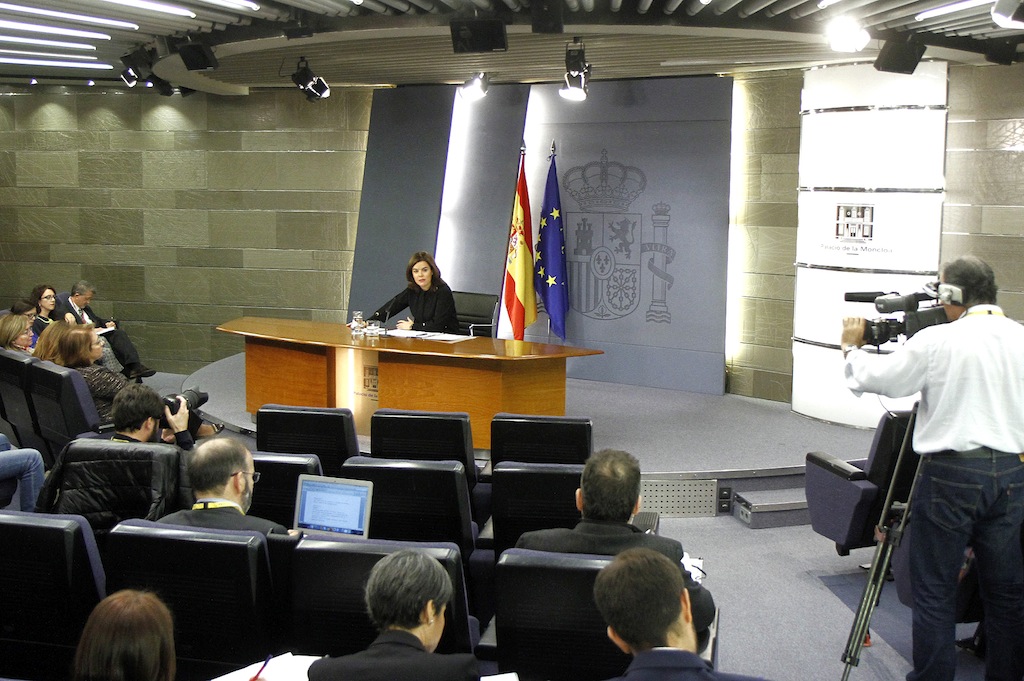
The Council of Ministers, at the proposal of the Minister of Education, Culture and Sports, approved this Friday the Royal Decree by which the recent reform of the Film Law of 2007 is developed, through which the implementation of the new model of aid for feature films to projects is continued, which replaces aid for amortization.
The main novelties introduced by the Royal Decree approved today involve the simplification of administrative intervention in the chain of cinematographic production, distribution and exhibition, regulating, among other issues, the certificate of Spanish nationality of works, the age rating, the co-production regime with foreign companies and the regulation of cinematographic exhibition.
In relation to the Spanish nationality of cinematographic and audiovisual works, the procedure for the recognition of the Spanish nationality of television series is regulated. In addition, the requirement to obtain a nationality certificate as a requirement to access aid is reinforced.
Regarding the age rating, it is simplified by establishing a single rating for the distribution of the film on any medium, eliminating the need to request a new certificate for distribution on videographic support. The requirement that the qualification be obtained before the marketing, dissemination or advertising of the film or audiovisual work is also reinforced.
Regarding the co-production regime with foreign companies, the requirement is reinforced that the request for approval of the co-production project must be made before the start of filming. It is specified that, in cases of Spanish minority participation in the co-production, the effective participation of the staff is proportional to the percentage of Spanish participation in the co-production.
It also regulates what is considered a “difficult audiovisual work” (relevant when determining the maximum amount of aid to be received). These are productions directed by a new director with a production budget of no more than 300,000 euros; the short films; and works filmed in co-official languages other than Spanish. The percentage of aid intensity cannot exceed 70%, 75% and 65%, respectively.
To update the conditions for the commercialization of works, the requirement that conditioned the granting of aid to the non-commercialization of films through videographic support in certain periods of time after their commercial release in exhibition halls is eliminated.
Likewise, the procedures for distribution are simplified, by eliminating the distribution certificate required until now as a prerequisite for the commercialization of films for exhibition in cinemas.
After the approval of this Royal Decree, the change in the film financing model will culminate with the upcoming approval of two ministerial orders, that of recognition of costs and investment of the producer and that of regulatory bases for aid, regulations on which we have been working in close collaboration with the sector.
Reaction from FAPAE
The FAPAE producer federation understands that the approval of this regulation is the culmination of a path that began with the creation three years ago of the so-called “Joint Commission” in which all agents in the sector and the Government had the opportunity to debate at length about the business model. However, "they regret that the changes to the model are closed in haste and especially at a time so close to the end of the legislature. The reform does not address an overall regulatory change, but rather its modifications arise from a minimal reform to the Film Law, while maintaining certain aspects of the 2009 Ministerial Order in force. As we proposed to the Administration, we expected that this reform would be part of a more courageous modernization of the aid system and that it would better align us with the countries of our environment.”
FAPAE does not want to carry out a comprehensive assessment of the new regulations, until it is published in the Official State Gazette and “we have the opportunity to analyze its content in detail, but we verify that two modifications have already been incorporated to the definition of “difficult work”, a text that the Administration made available due to the public information process that took place in the month of August and, specifically, in two aspects: the increase in the budget for works by new directors and the percentage of aid intensity for works in co-official languages. different from Spanish.”
"With regard to the first aspect, the budget set is now 300,000 euros (in its original version it was 100,000 euros), which FAPAE continues to consider very low. If the final objective is to promote the incorporation of new filmmakers into the sector, they must also be given the opportunity to participate in top-level content, especially when the very definition of a new filmmaker (two productions) limits the enjoyment of these differentiated conditions," they say.
Regarding the second, FAPAE appreciates that the percentage of intensity is increased over the first version of the document (from 60% to 65%), but considers that the Central Administration should have left this consideration to the Autonomous Administrations with co-official languages other than Spanish, "in the certainty that they could assess in each case with much better criteria the complexity of the use of the same, as a vehicular language of an audiovisual production and graduate, consequently, the intensity of the aid that should be admitted.”
Did you like this article?
Subscribe to our NEWSLETTER and you won't miss anything.
Related articles
 The BOE publishes the National Technical Plan for DTT and the Royal Decree of Aid for Antenization
 The Government approves the new National Technical Plan for Digital Terrestrial Television
 The CNMC takes positions on the draft royal decree of the new National Technical Plan for DTT
 The Government approves the call for two 5G technology pilot projects worth 20 million euros
 The Government approves the improvement of the regulation of the obligation of advance financing of European audiovisual works
 Advance financing of European works: a Royal Decree Project
 The Government approves the Royal Decree of aid to communities of owners for the adaptation of collective DTT antennas
 The Government approves the new National Technical Plan for DTT
 FAPAE urges the Government to implement new financing measures for cinema and audiovisuals
The Government approves the new General Telecommunications Law
FAPAE urges the Government to implement new financing measures for cinema and audiovisuals
The Government approves the new General Telecommunications Law
 Seoul University develops new autostereoscopy system
Barco develops its open Theater Management system for digital cinema
Seoul University develops new autostereoscopy system
Barco develops its open Theater Management system for digital cinema
 The Government approves the Audiovisual Law project
 DTT, regulated by royal decree law and without consensus