





La CNMC toma posiciones ante el proyecto de real decreto del nuevo Plan Técnico Nacional de la TDT
En este Plan se regulan aspectos clave para la liberación del segundo dividendo digital que dejará libre la banda de 700 MHz. La TDT representa actualmente el 76% de la cuota de pantalla en España.
The CNMC acaba de publicar un informe sobre el proyecto de real decreto por el que se aprueba el nuevo Plan Técnico Nacional de la TDT. En este Plan se regulan aspectos clave para la liberación del segundo dividendo digital que dejará libre la banda de 700 MHz actualmente ocupada por la TDT.
El Gobierno ha decidido dar tramitación de urgencia para la aprobación de este real decreto. La mudanza de las frecuencias asignadas a la TDT tiene que producirse, según la determinación de las instituciones comunitarias, antes de junio de 2020. Esta banda se destinará principalmente a los servicios avanzados de comunicaciones electrónicas para impulsar los servicios de telefonía móvil de quinta generación (5G).
The CNMC valora positivamente en su informe tanto la liberalización de la banda de los 700 MHz como la garantía de continuidad de todas las licencias.
Además, la CNMC también considera positivo que se prevea, en línea con la normativa comunitaria, que la banda 470-694 MHz sea utilizada para la prestación del servicio de TDT, al menos hasta 2030. En esta banda se mantendrá la oferta de canales existentes en la actualidad. Cada múltiple digital tendrá capacidad para integrar cuatro canales de televisión en alta definición, al tiempo que podrá continuar las emisiones actuales en definición estándar hasta 2023, momento en que deberán evolucionar a alta definición. Las cadenas podrán recurrir durante un tiempo al llamado simulcast, una emisión simultánea en la antigua y la nueva banda, hasta que se muden definitivamente de frecuencia.
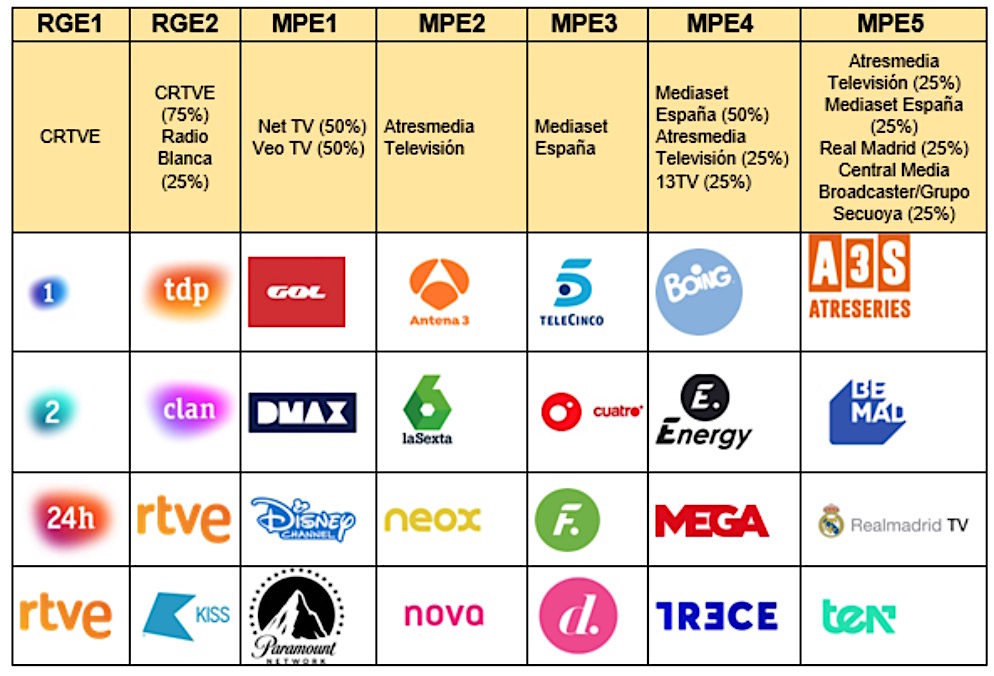
Partiendo de la oferta actual de canales de los operadores de ámbito nacional, los múltiples podrían quedar así tras la mudanza (naturalmente la oferta podrá variar en función de los planes de los difusores, especialmente CRTVE que obtendrá capacidad adicional, y según evolucionen los acuerdos actuales entre difusores).
TDT y satélite
En este informe, la CNMC propone que, para evitar que se discrimine a plataformas de difusión distintas a la TDT (como por ejemplo las satelitales), se modifiquen las condiciones que deben cumplir las iniciativas públicas en la extensión de la cobertura de la TDT, de modo que las Administraciones públicas puedan obtener la conformidad de los radiodifusores de TDT para difundir sus canales y contenidos (y ello con anterioridad a que culminen los procedimientos de contratación), y que estos servicios de extensión de cobertura se presten sin contraprestación económica por parte de los radiodifusores, en cualquier plataforma tecnológica.
Asimismo, la CNMC entiende que la explotación de redes de comunicaciones electrónicas que sirven de soporte para la difusión del servicio de televisión digital en zonas donde no exista cobertura del servicio de TDT debe ser calificada como una actividad “no disponible al público en general” y no en régimen de la autoprestación.
Did you like this article?
Subscribe to our NEWSLETTER and you won't miss anything.
Related articles
 España adopta el estándar DVB-T2 con UHD en su nuevo Plan Técnico Nacional de la Televisión Digital Terrestre
 El BOE publica el Plan Técnico Nacional de la TDT y el Real Decreto de Ayudas a la Antenización
 El Gobierno aprueba el nuevo Plan Técnico Nacional de la Televisión Digital Terrestre
 Televisión Abierta considera ineludible y urgente el Plan Técnico Nacional de TDT y la regulación del segundo dividendo digital
 El Gobierno hace público el marco que regirá el nuevo Plan Nacional TDT que regula el segundo dividendo digital
 Los fabricantes toman posiciones ante el 4K con HDR
 El Supremo desestima el recurso del Gobierno de Canarias contra el Plan Técnico Nacional de la TDT
 SAM toma posiciones ante el desarrollo del 4K, IP, HDR, virtualización y monitorización de flujos de trabajo
 El Gobierno aprueba el Real Decreto que desarrolla el nuevo sistema de financiación del cine
 La financiación anticipada de obras europeas: un Proyecto de Real Decreto
 El Gobierno aprueba el nuevo Plan Técnico Nacional de TDT
 UTECA takes positions regarding the project of the new National Technical Plan for DTT
 The satellite takes positions against non-linear television with VoD or PVR services
 La UER toma posiciones ante el despliegue del DVB-T2