




The new era of innovation at RTVE: open platforms, automatic writing, the data empire...

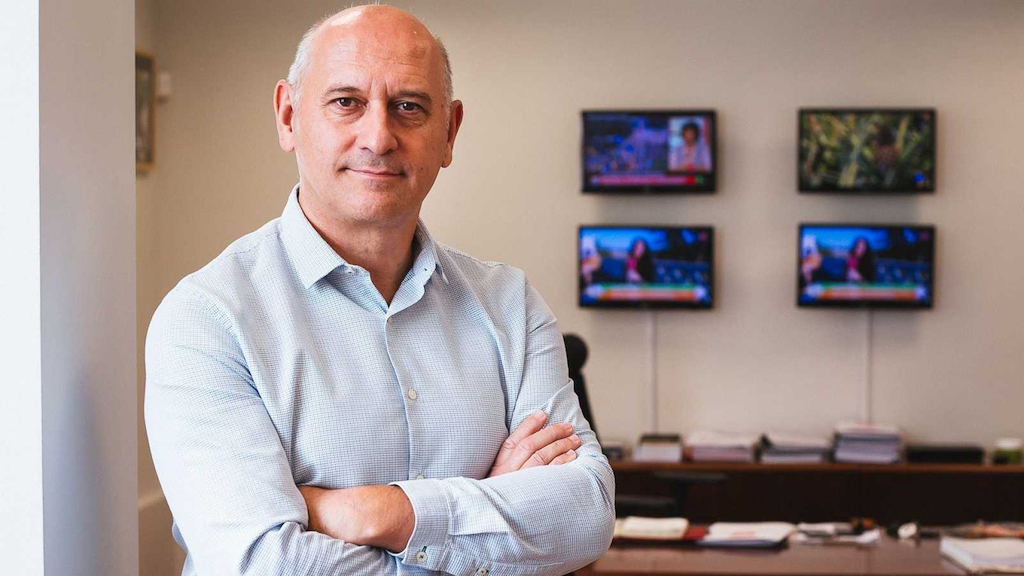
Urbano García Alonso, director of innovation and digital at RTVE, addresses in an extensive conversation the present and future of public radio and television, which will revolve around a transversal strategy that will put the user at the center and in which technological or visual fidelity will not be so relevant.
The pandemic has marked a before and after in technological innovation. The consolidation of new distribution channels as well as content creation has made the quality in visual terms is no longer a priority among television engineering teams. Two years are a world; even more so, if in the meantime there has been a rethinking strategies following an unprecedented situation in our contemporary history.
 Los alternative channels of audiovisual content, as well as VOD platforms in all its dimensions, consumed from all types of mobile devices, provide a new playing field. The televisions begin a path to become content generators for all types of audiences and windows, leaving the linear window as just another window among many others. On the other hand, the low visual fidelity caused by connections such as videoconferencing it doesn't seem to matter to a user accustomed to getting information or viewing content from a screen of just 6.5 inches.
Today, innovation efforts go through adapt to this new mentality digital first and in implementing all kinds of organizational, technical or new business model resources. To achieve this, innovation will be an essential tool, whether with IA that streamline or automate processes; with technology 5G, to offer unprecedented ubiquity and speed of access (and at low cost); or with the platform optimization as RTVE Play, prepared to become authentic hubs of the Spanish and Spanish-speaking public media ecosystem. Urbano Garcia, director of innovation and digital at RTVE, opens the doors to the philosophy that marks the present and will define the future of our television.
 From television to multimedia factory
Currently, how is RTVE organized in terms of innovation?
Right now, our structure includes a part of technological innovation which is directed by Pere Vila himself, and a part of innovation and digital. Our objective in this second direction is coordinate all innovative processes that occur within the company, guide our digital transformation and spread across the entire organization a corporate culture change. One of our objectives is to channel our operations towards new uses and consumption of communication, having to the user in the center of the activity with the digital and the mobile as neuralgic.
We seek to internalize the need for transformation that the president himself expressed internally shortly after beginning to lead the Corporation. I usually say, a little jokingly, that The maximum aspiration of this direction is to cease to exist in a short time. This would imply that both innovation and digital are so infiltrated in the organization that it would not be necessary for this transformation to be directed.
 What is the diagnosis they have made, in terms of digital transformation, of RTVE?
Starting from the analysis of the media ecosystem in which we are, which is very fickle, changing and there are obvious paradigm shifts both in audiovisual production and consumption, we have the need to ensure that a company of this volume can adapt quickly to changes taking place in the market.
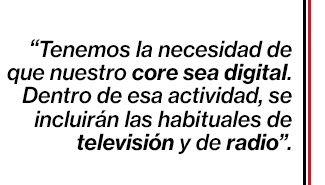
Until now, we have been a radio and television broadcast company that also penetrated the digital field. Now we have the need for our core sea digital. Within this activity, the usual television and radio broadcasting activities will be included. To achieve this, we clearly believe in an innovation process that is inside-out: I believe that it is not the supposedly “enlightened” managers who innovate or we do not innovate, but rather colleagues who are fascinated, seduced or motivated by an idea or a project. And I think that project is as simple as continue to be relevant to Spanish society in general and occupy a different role than the one we have had until now. That is to say: go from being a conventional radio and television broadcast company to be a multimedia factory that generates content for all media, formats, devices, platforms and age groups.
Chasing relevance
What steps should RTVE take to reduce that distance between what the corporation currently is and what it should be to “remain relevant” in the midst of digital transformation?
In order to carry out this path, the first thing we have to do is listen to them. For this reason, we launched the “The great consultation” campaign, which has no precedent in our country. In any case, we consider that to achieve this relevance it is essential to achieve transversality, which is to be present in all processes and structures, as well as break down vertical silos: television, radio and digital/interactive media. In this way, we can inoculate that innovative and digital gene in any area and scope of the corporation.
One of our main areas of study, analysis and implementation is audience participation so that it truly becomes a community. We are in a moment in which we fight for attention and trust, but also for loyalty. And we have a problem, and that is that when the public leaves Clan, the audience leaves us and does not return until almost maturity. Now, our target is all audiences: An audience that is mobile, social and located requires us to make our perception, products and services mobile, social and ubiquitous.
 You mentioned the term “participation.” Does it differentiate it from interaction? Is interaction necessary in an area like television?
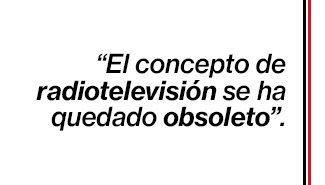
At this point, I think we are clear about two things. First of all, that we have to be a 360º means of communication. For us it is very important that the story we handle has a emotional resonance and that with it we can reach the public through any platform and language. The concept of radio and television has become obsolete and now we have many windows to offer all kinds of stories. We are also clear about something else: in these circumstances, Only those media that maintain a permanent, active and direct conversation with the audience will survive. to turn it into community. Previously, participation was reduced to a person calling the RTVE switchboard and expressing their negative or positive opinion about the program that was being broadcast at that moment. Now, via social networks or content creation, the concept of participation is very broad.
We have had recent examples such as the Benidorm Fest. A community that we had participated in it. practically numb and it has worked very well for us on various platforms. We believe a lot in that broad concept which even goes from the governance of our environment to the active participation in content production.
 The data as a true audience meter
In this regard, is RTVE considering implementing mechanisms to carry out greater control, review or management of suggestions that may arrive through social networks?
That's how it is. we are trying go deeper into that monitoring. We all know that audience data is very much in the spotlight and is very controversial because The formula cannot be found to make a real record of this multimodal audience that we have today. But the truth is that we are in the data empire.
One way that we will have to obtain direct data from the audience will be through what is currently called RTVE Play, a platform that has had a rapid and hasty evolution, but with very good will on the occasion of the last Olympic Games. Our evolution will lead to this platform continuing forward and, in a few years, the entire company will be working to upload content there. With the growing user registration We will be able to have more data with which to make decisions. In the end, the data is essential to really know what the spanish want, what they demand, what they need and how they want to see their problems reflected in the programming of all our platforms.
 Many large media groups continue to rely on an obsolete system to quantify their audience. How do you defend the relevance of multimodal data when much of the industry continues to move in the opposite direction?
It is something very difficult, especially if one submits to the tyranny of metrics that currently exists. In Spain there is what Amando de Miguel defined as “bad television conscience.” When street surveys previously asked what program Spaniards watched, everyone answered the La 2 documentaries. It was a lie: if that were the case, the audience ratings would be much higher.
We are clear about what we are doing authentic public service content, like The three doors o The keys to the 21st century. They are necessary content, because to give the public what the public wants you have to give a lot of what the public needs. That's why we are a public service. But we are also aware that a public service without a public is less of a service. What's happening? That everyone is realizing little by little interest and quality What we are looking for with these contents, which are not only consumables in linear television programming. This is going to cost us, because the audience is lost in spurts, but it is recovered drop by drop.
I'm not just talking about television. In order to achieve our objectives, we have to enter other fields in which until now we have not been excessively profuse: we must fully enter the field of podcast, understood beyond what an on-demand radio service is; and we must enter into the generation of content in Twitch o Youtube. In both we have interesting experiences, but we have to go deeper, because one of the objectives is, logically, approach the young audience.
And I don't say attract, since I think it is a mistake try to attract the audience to something he's never been to. There are many living rooms in which there is no television. We have to go look for young people where they are: Instagram, TikTok, YouTube, Twitch…And you have to do it with your own languages y narrative formulas. That is a job that we have ahead of us.
Each spectator in their place
From what he tells me, it seems that, in this purpose of meeting and communicating with the most digital viewer in their own contexts, they are choosing to reserve linear programming for another type of audience. Is there a project to channel these digital audiences so that they also have their space and representation on Spanish Television?
In no case do we want to leave our conventional audience behind. What happens is that we cannot limit ourselves to an audience of 60 years old and from rural areas. It is not about treating today's young people as tomorrow's consumers, but about Treat you like today's consumer, right where you are.
Television continues to be a medium of mass consumption and radio continues to have its place. The objective is to diversify in order to reach and take advantage of all the windows that we currently have available. But, to do this, we have to ask ourselves the big question: What are we? A radio and television that also does digital? Or a company core digital whose activities include radio and television? Today, the way the market works, we have to be social before radio and television.
We do not want to leave any age group behind, but we also do not want young people to systematically, or even out of rebellion, abandon us. We don't even want there to be niches or cells. We understand that the public is absolutely transmedia and knows how to locate what he wants.
 What platforms or technologies are being used to reach the place where consumers are?
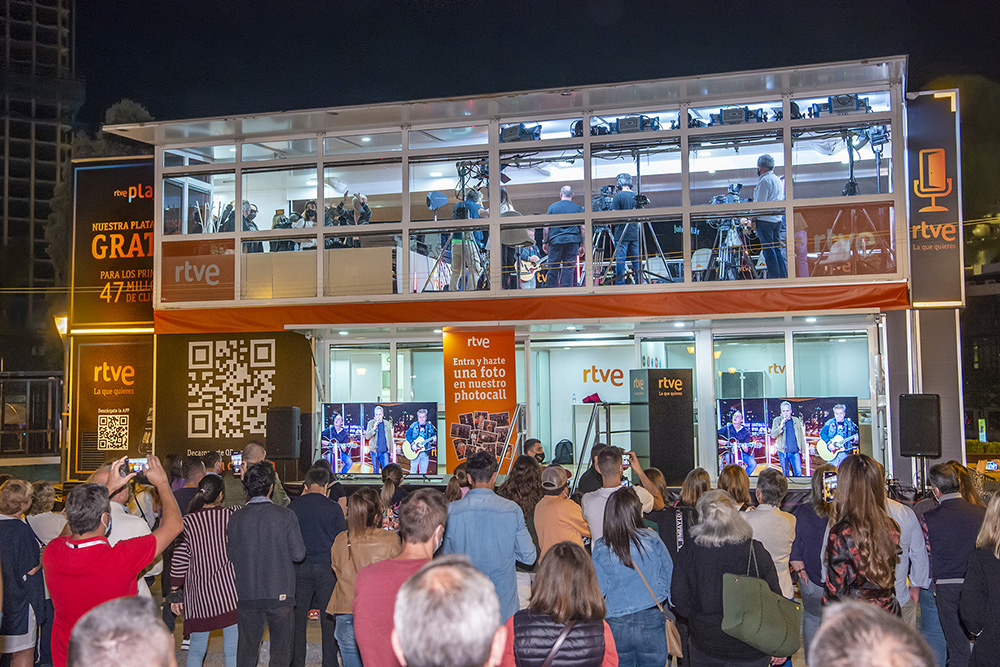
Currently, we are delving into platforms such as YouTube o Twitch from our new media direction. For example, last week we did a program on Twitch which will have a weekly periodicity about Eurovision that managed to reach 150,000 users, which seems like a quite interesting number to us. Another example is the case of RTVE News in YouTube, which has worked very well as a result of the war period. We also want to move forward within TikTok to know what our role is and how we can reach our audience beyond the use made in other media.
These are some of the tools we are working on, although, logically, we are also approaching new technologies and processes that are becoming established. For example, we want to use the artificial intelligence. In fact, we are doing a lot of pilot testing and working with a lot of universities in that regard. We are also working with everything that has to do with blockchain and our positioning in the metaverso.
RTVE Play: the definitive meta-platform?
Returning to RTVE Play, what is RTVE's assessment of this launch? How do you plan to continue moving forward throughout this year?
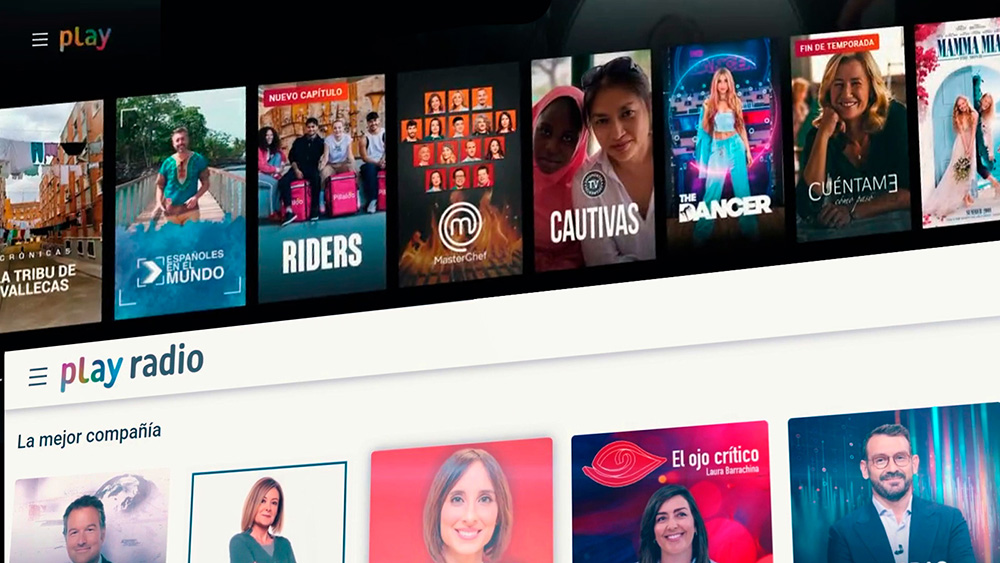
Despite its hasty launch, we understand that The public reaction has been very positive., not only because it has been a free platform, but because we We are not looking for direct competition with monsters like Netflix or Disney, with billions of dollars in budget. We offer a complementary offer with other values, ranging from our documentary collections to the contributions of our territorial centers, which make us a differential element within this media war.
 Currently, we are on a path of evolutionary development of this platform. We understand that users have needs that go beyond information, entertainment, fiction or lifestyle. In that sense, the platform will be progressively expanded to include concepts that have to do with health, culture or training in digital skills For all ages, especially for the elderly. What we currently know as RTVE Play will be heading towards a metaplataforma in which even there will be the possibility of entry of third parties.
 RTVE and the metaverse
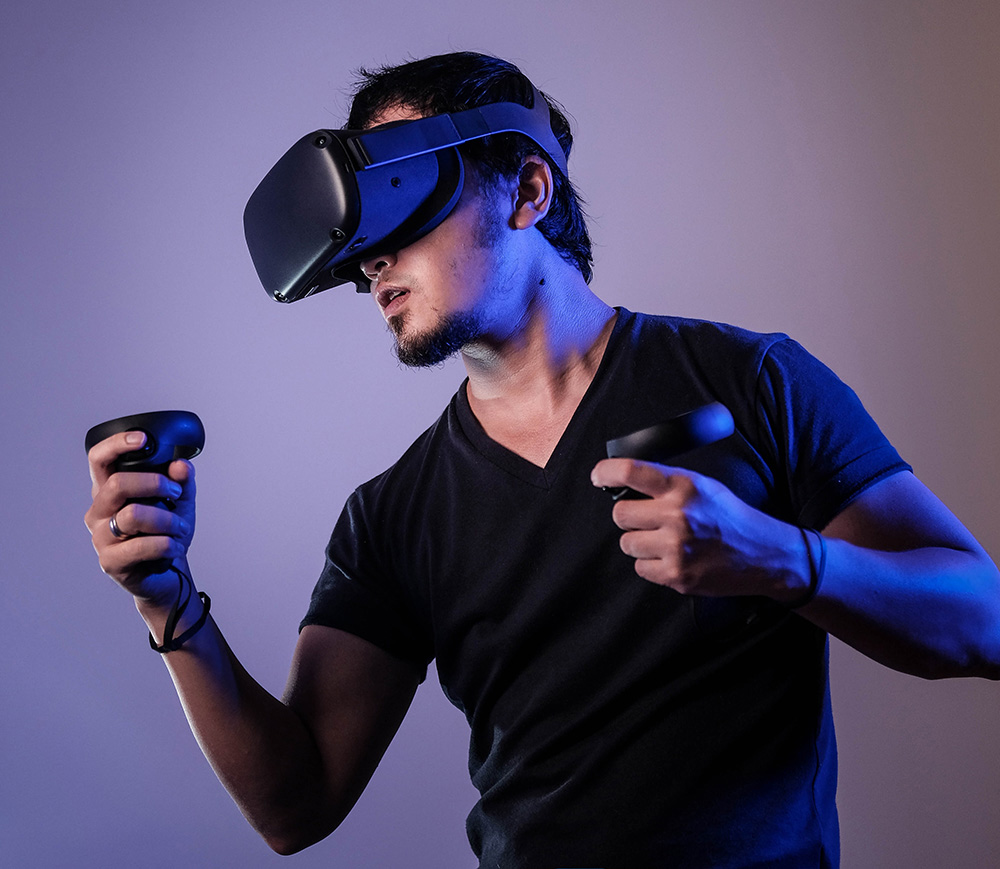
Another key that has previously mentioned is exploring RTVE's role in the metaverse. How are the corporation's first steps in this field going?
Currently we are in an embryonic moment, waiting for its development and to see What role will we have?. For this reason, I cannot go into excessive detail either, since we must take into account that it will take between five and ten years to consolidate. Nevertheless, it is convenient to be located.
 Should the role of public television stations like RTVE be to integrate into an already existing metaverse or create their own independent universe?
Perhaps, in terms of accessibility for the audience, the path will go through establish ourselves as an entity. Even so, that also makes us have to be where the citizen is. This forces us to think about how to create and develop new formats or decide where we are. We can even consider integrating the references of our audiences into our ecosystem: we cannot be distant from the current content creators or streamers nor deny that reality. We have to be smart when it comes to integrating ourselves into everything we want to do, including metaverso. Even so, I insist, we are in a very embryonic period.
 A new concept of quality
Just a few years ago, televisions were immersed in a technological race to capture the attention of users, advertising terminology such as HD, HDR or 4K. However, these efforts have faded when it comes to promoting this technology as a value. What has changed?
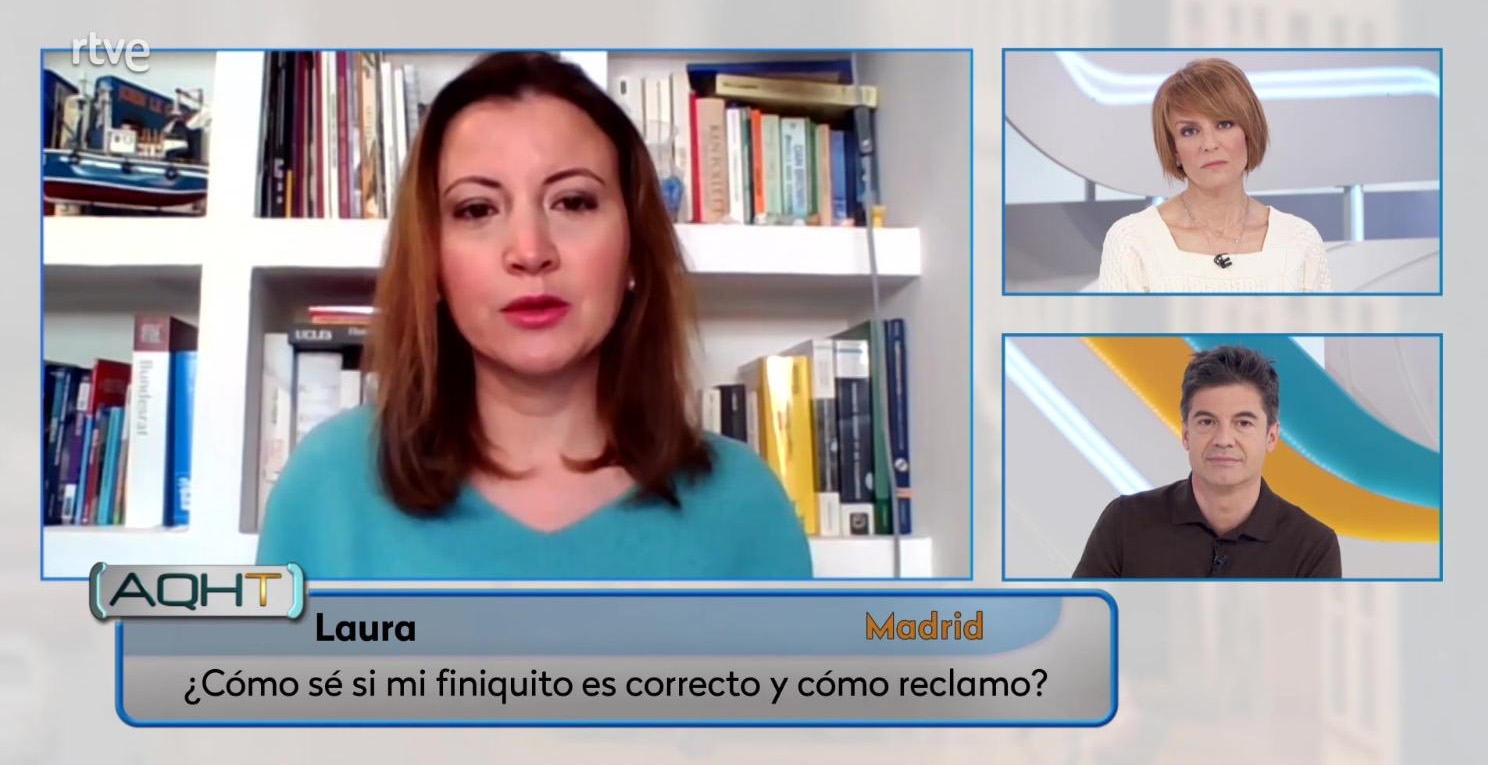
Let's talk about the concept of quality. I consider that Quality is defined by the receiver of a service, not the sender.. We were used to being the ones who said what was and what was not quality. With the arrival of the pandemic, nature has been given to realities that were unthinkable on television. Enter an interview by Zoom on a news program it was prohibited, and now we take it completely normally. The public is the one who defines that quality. We, without giving up the highest standards, have to accept what the public indicates from there.
What we have to do now is embrace and accept change. If one of these changes is that the public has assimilated a certain level of quality as good, without us giving up the search for quality, we have to assume it and integrate it. If not, we run the risk that the public will opt for other options and that we will remain as a kind of spiritual reserve of the highest quality.
So, does the user determine much of the change at all levels?
What we want to do is put the user at the center. For this, we have to transform. The media, especially the traditional ones, have behaved like a dinosaur that sees the meteorite coming that is going to end its existence, let's call it social networks, the internet or platforms. And yet, we have been a type of dinosaur that said: “I am calm because here, by my side, it is not going to impact.” The reality is that it has already had an impact and that forces us to react very quickly by implementing that leadership and building a data-driven strategy.
What elements do we have to combine in search of transformation? We have already talked about it throughout our conversation: agility, management based on trust, transversality, collaboration, innovation, and a fundamental term for me: omnichannel. When people ask me where I work, I mischievously mention “RTVE” and not “Spanish Radiotelevision”. For me, the concepts of radio and television are a bit outdated. Although they exist and will exist very strongly, with this statement I want to imply that we have to be much more than the mere concepts of radio and television.
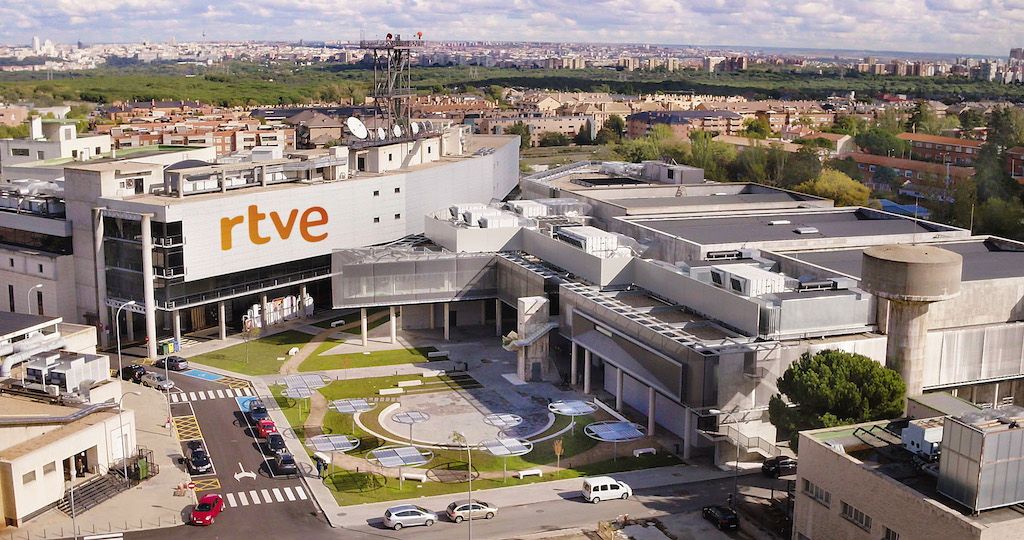
RTVE as a unifier of Spanish audiovisual
We have talked about paths of internal renewal within RTVE to promote innovation. However, RTVE has carried out some very interesting work collaborating with other agents in the Spanish media ecosystem. At this time when RTVE is reclaiming its identity and its ability to reach the Spanish population, how are collective initiatives, such as LovesTv, continuing to work?
One of those points would be our platform, RTVE Play. We believe that, beyond being the RTVE platform, it becomes a reference window in which third parties can enter, especially for the entire Latin American area. In some ways, our goal is to be concentrators, fundamentally, of the Spanish audiovisual public sector. We claim that role. Last year we reached an agreement with FORCE and we do not rule out that regional channels can enter that metaplatform culture which we are talking about.
Is RTVE currently in effective talks to make this project a reality?
Yes, because, although we are still in a evolutionary development period of the platform, we already included that possibility. We are not only carrying out technological improvements that have to do with the user experience, but we are entering a period in which we open our fan and we no longer offer the brand itself, but the possibility that this platform serves as a launch for many media y many Spanish content generators in the Latin American market.
An interview by Sergio Julián Gómez
Did you like this article?
Subscribe to our NEWSLETTER and you won't miss anything.
Related articles
 'The last night of Sonia Martínez', best audience data for a documentary on RTVE Play in 2024
 TSA will renew the news editorial office of Torrespaña (RTVE)
 ATG Danmon designs and integrates the new newsroom and editing rooms at Alaraby Tv
 RTVE and Video-MOS will carry out automatic signal monitoring tests based on AI
 2020, a year of Artificial Intelligence in RTVE Innovation
 Playz surpasses its historical record on YouTube and achieves its best data in a year on RTVE.es
 New version of CaptionMaker subtitling software supports more than a hundred languages and automatic transcription
 Globo inaugurates new newsroom with an original staging in its news
 RTVE launches an innovative centralized editorial system in the territorial center of Castilla-La Mancha
 RTVE inaugurates the digitalized newsroom of its news services in Seville
 Pere Vila assumes the new Directorate of Technology, Innovation and Systems at RTVE
 Raycom Media bases its new editorial office on Edius Pro 6.5
 Avid reinforces its commitment to open interoperable platforms
 The new unified Telecinco-Cuatro news editorial team is underway