





These are the commitments of the World Radiocommunication Conference 2023 for the coming years
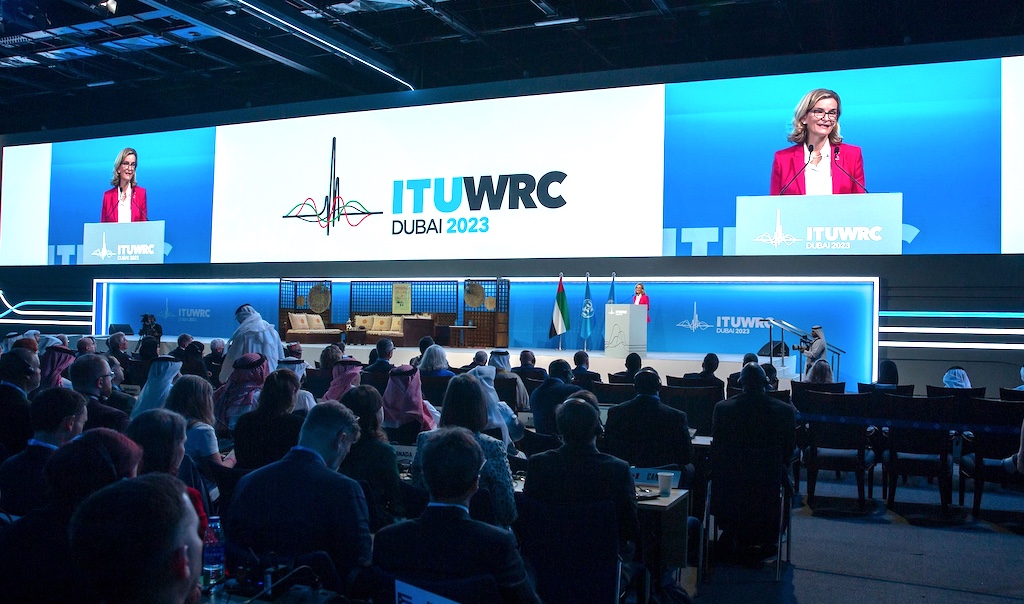
Los Estados Miembros de la Unión Internacional de Telecomunicaciones (UIT) acordaron en el trascurso de la Conferencia Mundial de Radiocomunicaciones 2023 (CMR-23), celebrada durante las últimas semanas en Dubai (EAU) asignar la banda superior de 6 GHz y armonizar la banda de 3,5 GHz para servicios de telecomunicaciones móviles internacionales (IMT) y atribuir la banda UHF (de 470 a 694 MHz) a los servicios móviles al tiempo que se aprueban nuevos estudios sobre otras posibles bandas.
En conjunto, la CMR-23 aprobó 43 nuevas resoluciones, revisó 56 existentes y suprimió 33 resoluciones. El acuerdo sobre las actualizaciones del Reglamento de Radiocomunicaciones identifica nuevos recursos del espectro para apoyar la innovación tecnológica, profundizar la conectividad mundial, aumentar el acceso y el uso equitativo de los recursos radioeléctricos basados en el espacio y mejorar la seguridad en el mar, en el aire y en tierra.
Doreen Bogdan-Martin, secretaria general de la UIT, declaró que “la CMR-23 sitúa al mundo en una sólida senda hacia un futuro digital más conectado, sostenible, equitativo e integrador para todos. Los logros reglamentarios clave sobre el espectro para el espacio, la ciencia y los servicios de radiocomunicaciones terrenales aprovechan el impulso de la labor en curso de la UIT para lograr la conectividad universal y la transformación digital sostenible”.
A total of 151 Estados Miembros firmaron las Actas Finales de la CMR-23 que constituyen un registro de las decisiones tomadas en la conferencia, incluidas las disposiciones nuevas y revisadas del Reglamento de Radiocomunicaciones, todos los Apéndices y las Resoluciones y Recomendaciones UIT-R nuevas y revisadas incorporadas por referencia al tratado por la conferencia.
“Los acuerdos alcanzados en la CMR-23 son testimonio del inquebrantable espíritu de cooperación y compromiso entre todos nuestros miembros”, señaló Mario Maniewicz, director de la Oficina de Radiocomunicaciones de la UIT. “Navegar por las complejidades de la compartición del espectro para actualizar el Reglamento de Radiocomunicaciones nos ha ayudado a forjar un camino que proporciona un entorno reglamentario estable y predecible, esencial para el desarrollo de servicios de radiocomunicaciones innovadores para todos”.
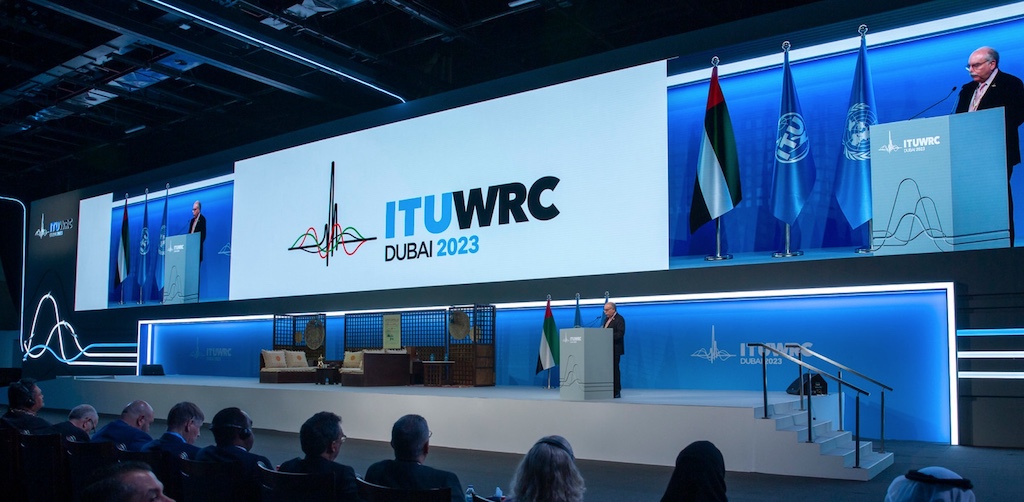
Revisiones del Reglamento de la UIT
Entre las decisiones, la CMR-23 identificó espectro para las Telecomunicaciones Móviles Internacionales (IMT), que será crucial para ampliar la conectividad de banda ancha y desarrollar servicios móviles IMT, también conocidos como 4G, 5G y, en el futuro, 6G. Ese nuevo espectro incluye las bandas de frecuencias de 3 300-3 400 megahercios (MHz), 3.600-3.800 MHz, 4.800-4.990 MHz y 6.425-7.125 MHz en varios países y regiones.
La CMR-23 también identificó las bandas de 2 GHz y 2,6 GHz para utilizar estaciones de plataforma de gran altitud como estaciones base IMT (HIBS) y estableció normas para su funcionamiento. Esta tecnología ofrece una nueva plataforma para proporcionar banda ancha móvil con una infraestructura mínima utilizando las mismas frecuencias y dispositivos que las redes móviles IMT. Las HIBS pueden contribuir a colmar la brecha digital en zonas remotas y rurales y mantener la conectividad durante las catástrofes.
En cuanto al servicio fijo por satélite no geoestacionario Estaciones Terrenas en Movimiento (ESIM), la conferencia identificó nuevas frecuencias para ofrecer banda ancha de alta velocidad a bordo de aviones, barcos, trenes y vehículos. Estos servicios por satélite también son fundamentales en caso de catástrofe, cuando las infraestructuras de comunicación locales resultan dañadas o destruidas.
Se incluyeron disposiciones para proteger las estaciones de servicios móviles de buques y aeronaves situadas en el espacio aéreo y las aguas internacionales frente a otras estaciones situadas en territorios nacionales.
Para apoyar la modernización del Sistema Mundial de Socorro y Seguridad Marítimos (SMSSM), la CMR-23 adoptó medidas reglamentarias que incluyen la implantación de sistemas de navegación electrónica para mejorar las comunicaciones de socorro y seguridad en el mar.
La conferencia reconoció provisionalmente el Sistema de Servicio de Mensajería por Satélite BeiDou para su uso en el SMSSM, siempre que se complete con éxito la coordinación con las redes existentes y se eliminen las interferencias. También se aprobó la asignación de frecuencias adicionales para servicios pasivos de exploración de la Tierra por satélite que permitan mediciones avanzadas de las nubes de hielo para mejorar las previsiones meteorológicas y la vigilancia del clima, así como nuevas frecuencias a la industria aeronáutica para servicios móviles aeronáuticos por satélite (117,975-137 MHz).
Otro aspecto a destacar es la aprobación de una recomendación de la Junta del Reglamento de Radiocomunicaciones para permitir a 41 países adquirir nuevos recursos orbitales utilizables para la radiodifusión por satélite. Estos países no han podido utilizar en los últimos años las franjas orbitales que tenían asignadas debido a factores como la falta de coordinación y las interferencias de otras redes de satélites. La decisión pretende permitir a los países implantar sistemas subregionales de satélites.

Respuesta de la UER
La Unión Europea de Radiodifusión (UER) ha destacado que el acuerdo final de la CMR-23 mantiene la atribución primaria a los servicios de radiodifusión en la banda de 470-694 MHz en la Región 1 (CEI, África y Oriente Medio al oeste de Irán) y ofrece una oportunidad para los servicios móviles a escala nacional.
Por otro lado, también ha subrayado que la situación reglamentaria de las aplicaciones PMSE (creación de programas y eventos especiales), como los micrófonos inalámbricos, permanece inalterada.
En las Regiones 2 y 3 (respectivamente América y Asia Oriental, incluidos China, Corea, Japón, Irán, el subcontinente indio y Oceanía), la radiodifusión compartirá este espectro UHF con otras aplicaciones. En la Región 2 (América), la radiodifusión será el único servicio primario en la banda de 512-609 MHz, mientras que no se utilizará ningún espectro en la banda de 608-614 MHz para la radiodifusión. En la Región 3, la radiodifusión compartirá espectro con aplicaciones inalámbricas móviles y fijas.
Antonio Arcidiacono, director de Tecnología e Innovación de la UER, reconoce que “se trata de un resultado positivo para los miembros de la UER, ya que tiene en cuenta los elementos clave de la posición de la UER. La mayoría de los miembros de la UER utilizan la TDT (televisión digital terrestre) y todos ellos utilizan PMSE, y la banda UHF es el único espectro disponible a escala mundial para estos servicios. La decisión de la CMR-23 garantiza el acceso continuo al espectro y condiciones regulatorias estables, que son esenciales para las inversiones y la evolución de la TDT y PMSE, incluyendo la introducción de nuevas tecnologías como UHDTV, 5G Broadcast y WMAS (sistemas inalámbricos de audio multicanal)”.
Did you like this article?
Subscribe to our NEWSLETTER and you won't miss anything.
Related articles
 Liferay advances three predictions on digital experience for the coming years
 These are the next Netflix reality shows with a Spanish seal
 La CNMC prorroga por tres años los compromisos que impuso a la concentración de Telefónica y DTS
 La Conferencia Mundial de Radiocomunicaciones 2019 identifica bandas de frecuencias adicionales para el 5G
 The South American Football Confederation (CONMEBOL) entrusts Mediapro with its production hub for the next four years
 The Junta de Andalucía allocates 418.5 million to Canal Sur for the next three years
 The Basque Government will finance EiTB with 473 million for the next four years
 La Conferencia Mundial de Radiocomunicaciones garantiza finalmente el uso del espectro sub-700 Mhz para radiodifusión
 La Conferencia Mundial de Radiocomunicaciones (CMR-15) dibuja en Ginebra el futuro del sector
 Ericsson closes an agreement with BBC for the provision of broadcast services for the next seven years
 TVE acquires the rights to the Mutua Madrid Tennis Open for the next four years
 TVE renews its satellite broadcasts for Africa and Asia-Oceania for the next two years
 ITV relies on Altabox to manage its digital signage in the next three years
 The Government values the paid DTT business at around 5,000 million for the next four years