





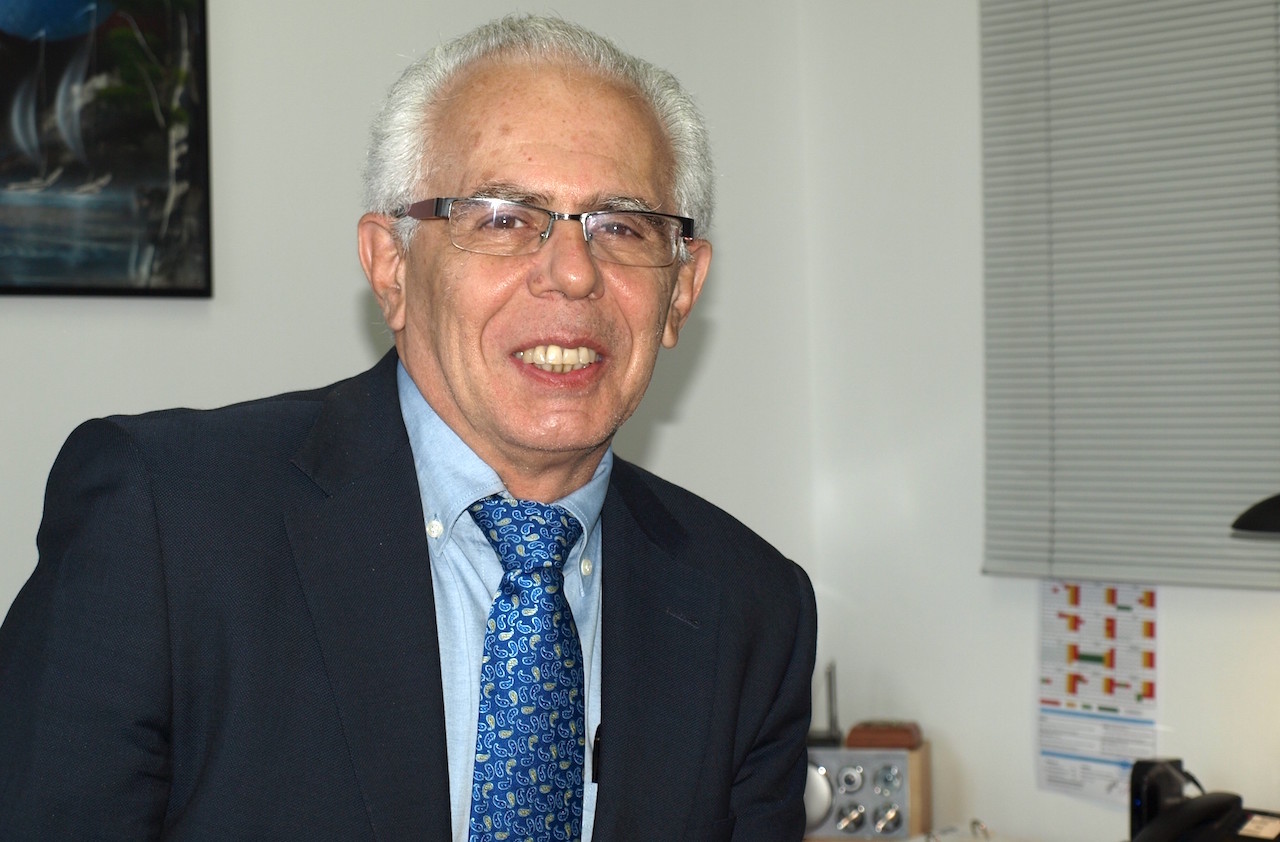
Miguel Angel Cristóbal, PDG de Sapec : « Nous pouvons être fiers de ces 45 années d'histoire et de la confiance que nos clients accordent à nos solutions. »
Parler de solutions pour le transport de signaux de télévision de la plus haute qualité, c'est parler de l'entreprise espagnole Sapec, qui fête en 2021 ses 45 ans d'existence. Ses clients comprennent les principaux opérateurs de télécommunications, diffuseurs et fournisseurs de services de transport vidéo du monde entier.
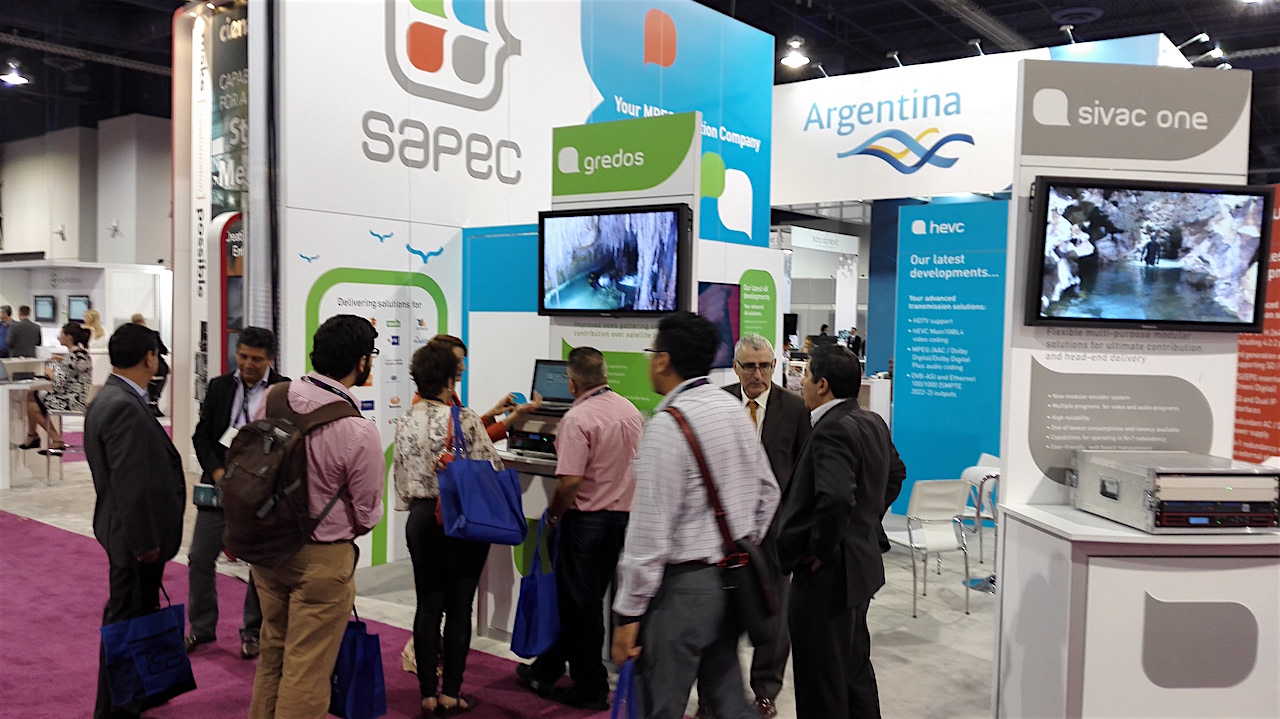
 Depuis la mi-2006, Sapec a commencé son expansion commerciale internationale, en concluant des accords de distribution avec des entreprises locales dans chaque pays. Elle possède actuellement des bureaux au Mexique et en Colombie ; et compte plus d'une vingtaine de distributeurs dans le monde, principalement en Amérique latine où ils maintiennent une présence active avec le soutien d'entreprises locales.
Actuellement, c'est la seule entreprise espagnole avec une vaste expérience dans le monde de la « contribution vidéo » dans les environnements professionnels à travers des produits développés en interne et en concurrence avec de grandes entreprises industrielles.
Le PDG de Sapec, Miguel Angel Cristóbal, ingénieur senior en télécommunications à l'Université Polytechnique de Madrid et référence sur le marché audiovisuel depuis le début de sa carrière professionnelle chez Pesa Electrónica, revient sur ces 45 années de succès et envisage l'avenir avec optimisme.
En remontant dans le temps, quel bilan faites-vous aujourd’hui de ce près d’un demi-siècle d’histoire de la Sapec ?
Je pense que nous pouvons dire que c'est un bilan positif, il peut toujours être amélioré, mais nous sommes en première ligne et nous pouvons être fiers de tout ce que nous avons fait au cours des 45 dernières années. Sapec a évidemment 45 ans car les clients nous ont fait confiance tout au long de l'histoire et continuent de compter sur Sapec, ce pour quoi nous leur sommes extrêmement reconnaissants.
Le pays est passé d'une dictature à une démocratie. Dans le monde : les frontières et la géopolitique ne ressemblent même pas à ce que nous avons étudié. La technologie a connu plusieurs révolutions : la numérisation, Internet, la téléphonie mobile… Avant, nous étions attachés à un fil pour parler au téléphone ; nous écoutions de la musique sur un tourne-disque, puis sur le baladeur, puis sur le CD, puis sur le MP3 et maintenant sur le téléphone portable ; avant, nous n'avions que deux chaînes de télévision et nous les voyions toutes ensemble dans le salon et maintenant nous pouvons voir ce que nous voulons, quand nous voulons et où nous voulons.
Sapec a essayé de s'adapter autant que possible à ces révolutions pour devenir ce que nous sommes aujourd'hui. Je pense qu’« une entreprise qui n’évolue pas et ne s’adapte pas aux conditions du marché disparaît ». À cet égard, Sapec a gardé sa place sur le marché depuis 45 ans, je pense que cela démontre sa capacité « caméléon » à s’adapter et à survivre.
Comment se sont passés les débuts ?
Depuis le début, je ne peux parler que par les références qui m'ont été données par les professionnels qui étaient ici à mon arrivée il y a vingt ans.
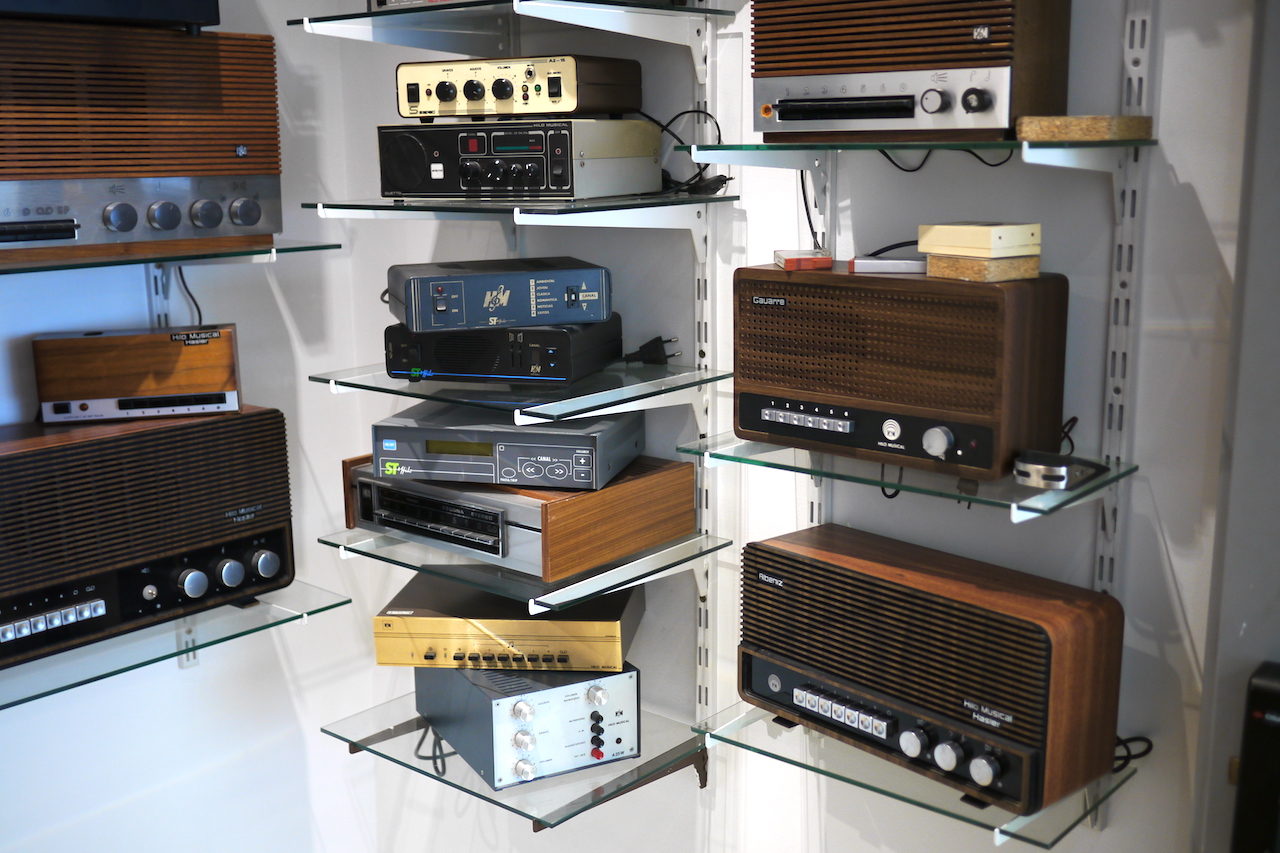
L'entreprise a été fondée en 1976 pour fabriquer, installer et prendre en charge le service Hilo Musical (alias musique d'ambiance ou communément « Elevator Music ») vendu par Telefónica par l'intermédiaire de l'une de ses filiales, Cosesa. Sapec fabrique depuis plus de 25 ans tous les récepteurs et équipements centraux de Hilo Musical utilisés en Espagne pour recevoir ce service musical 24h/24 et 7j/7. Au cours de ces années, non seulement les équipements étaient fabriqués et installés, mais les équipements endommagés étaient également réparés ou recyclés. Au début du siècle, il y avait encore plus de 60 000 clients actifs de ce service en Espagne.
Dans les années 1980, la Sapec a commencé à concevoir de nouveaux équipements destinés à ce service. Dans les années 1990, avec le processus de numérisation des réseaux téléphoniques, Sapec a conçu ses premiers encodeurs/compresseurs audio pour la distribution de musique d'ambiance sur ces réseaux et, dans les années 2000, a fourni les nouveaux récepteurs numériques avec connexion Internet pour le même service.
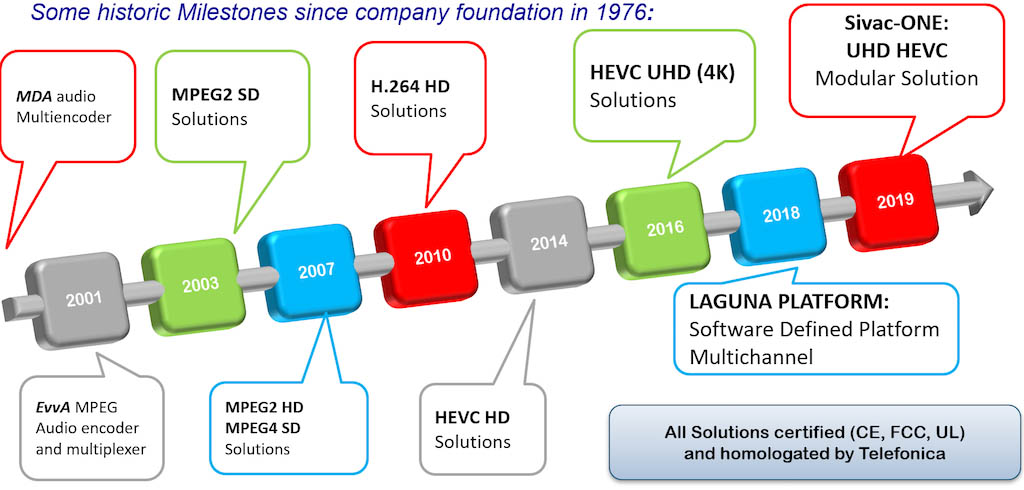
De plus, au début de ce siècle, Sapec a conçu sa première famille de systèmes intégrés vidéo et audio compressés (SIVAC en espagnol). Ces codecs furent heureusement un succès sur ce marché concurrentiel : ils offraient la consommation la plus faible, les dimensions les plus réduites et la plus grande variété d'interfaces du marché à l'époque.
SIVAC a ainsi marqué le début de l’histoire actuelle avec ses évolutions : Xavic, Altum, Avantos, Laguna et la nouvelle génération de Sivac-ONE.
 L’entreprise a-t-elle toujours eu le même actionnariat ?
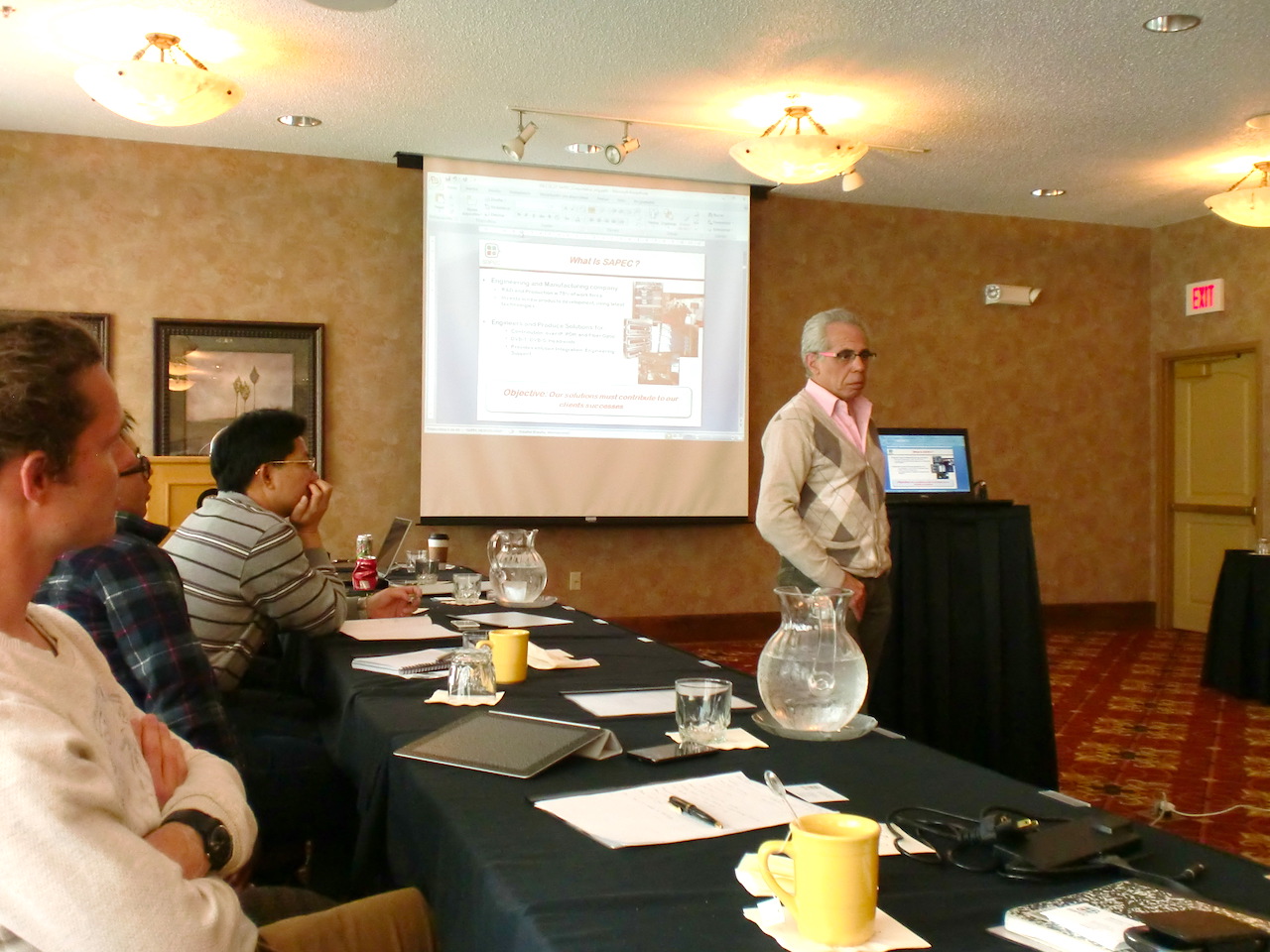
Pas tout à fait, les associés fondateurs ont changé progressivement jusqu’en 2000, date à laquelle la Sapec a été rachetée par la plupart des associés actuels. Cela lui confère une grande stabilité actionnariale. Ces partenaires sont des personnes physiques (et non des sociétés holding), originaires d’Espagne, qui ont investi dans Sapec à titre privé et ont opéré un changement radical dans la stratégie de l’entreprise.
With these partners, one of Sapec’s transformations begins from a single-client, single-product company to a company with two basic components in its DNA: R&D and Internationalization. All the benefits generated by Sapec are permanently reinvested in the development of new products and access to new markets.
L’année dernière, deux de ces associés ont pris leur retraite et leurs actions ont été rachetées par les dirigeants de l’entreprise, de sorte qu’aujourd’hui, un peu plus de 25 % sont détenus par la direction de Sapec.
As a Spanish company, is the R&D effort without strong public support a titanic task?
Undoubtedly, R&D is part of our idiosyncrasy and is totally embedded in our strategy. Sapec spends between 18 and 25% of its turnover on R&D investment. And if we could, we’d invest even more. Because on the team there are great generators of new ideas, products, and solutions, but unfortunately, we cannot address all the ideas, and many have to be put in standby.
Sapec, which is labeled an “Innovative Small/Medium Enterprise” by the Ministry of Science, has more than 40% of the staff dedicated to R&D, and at times 60%. The whole company participates in one way or another in R&D: commercially detecting customer needs, operations suggesting improvements in processes and verifying new products, etc…
Sapec has participated in both national and European R&D support programs. Since the time of the MINER program in the 1990s, to the AESSDs of the past decade, through CDTI-funded projects, and participating in European Eureka, ITEA or Catrene projects…
But it is true that these programs are based on economical support with a strong proportion of Credits that must be returned to the administration. This creates two problems in the small business: On the one hand, to receive the credit advance guarantees are needed, which are difficult to obtain from the banking sector and in many cases force the partners themselves to guarantee their assets. On the other hand, let us not forget that we are talking about R&D projects to generate new products to market, which always carries a risk factor. When the funded project is accompanied by commercial success, there is no problem and resources are generated. But when the R&D project is not accompanied by this commercial success, the repayment of appropriations is a greater effort for SMEs.
For example, we all remember the years where 3D television solutions were researched and developed, where in the end there has been no market and Sapec invested more than 3 years in a European project.
Some problems with R&D tax breaks are also being seen in recent years, where despite obtaining binding reports, discrepancies are occurring between the report and the opinions of the inspection and the evaluators.
 In a highly competitive international market, what differential value does Sapec bring against other manufacturers in the market?
Perhaps that question should be asked to our customers, and prospects. In today’s world the differences in product features are smaller every day and I think a company like ours should provide an added value and differentiation in other aspects.
As a company, I believe that one of our differentiation is the proximity and accompaniment to the customer. Sapec has always been characterized by a high quality the service support by the customers, not only in our products, but also in the whole solution where Sapec product fits. We often say that the client is just a simple call away from talking to the product designer.
It should also be noted that in Sapec we focus on an specific type of products, so for the sake of all Sapec workers we must do our best, because if we are wrong, we will not be able to bring the bread to our children’s table at night.
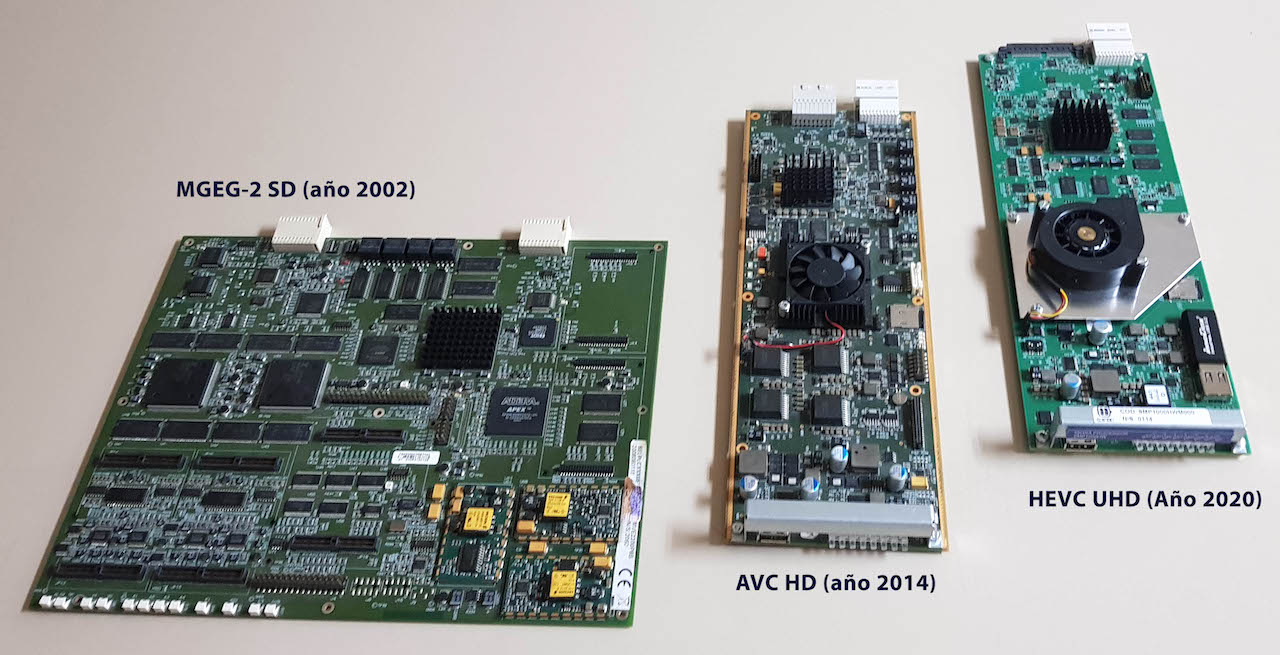
How has the evolution of coding standards evolved with the years?
We could say that in recent years, this evolution has been metheoric. If memory does not fail me, the MPEG2 standard (ITU-H262) facilitated digital television to be introduced in 1993-95. Then came MPEG4/AVC (ITU-H264) which helped the development of HDTV, and IPTV (released in 2005-06). In 2013-14 the HEVC standard (ITU H-265) was published. And when the market has not yet developed in full HEVC, a new VVC (ITU-H266) was published last year. All this, regardless of other encoding formats that have looming up as AV1 by the AOM (Alliance for Open Media).
If we consider that the goal of each new standard is to reduce the bitrate to 50% while maintaining video quality, we can get an idea of the evolution.
That is in the video, but if you see the evolution of audio from stereo sound to current sound by objects and immersive, we can also be amazed.
 During these years, how has Sapec accompanied this technological evolution?
Sapec arrived in the MPEG2 market in 2001-2002, and in the rest of the technologies has been very present since its publications presenting in 2008 Altum for H264 in HD, Avantos for HEVC in HD in 2015 and in 2018, Sivac-ONE for UHD.
In addition, our solutions are completely agnostic in terms of digital television standards: DVB-T/T2, ISDB-T and ATSC.
 How has Sapec contributed to the development of coding techniques over the past few decades?
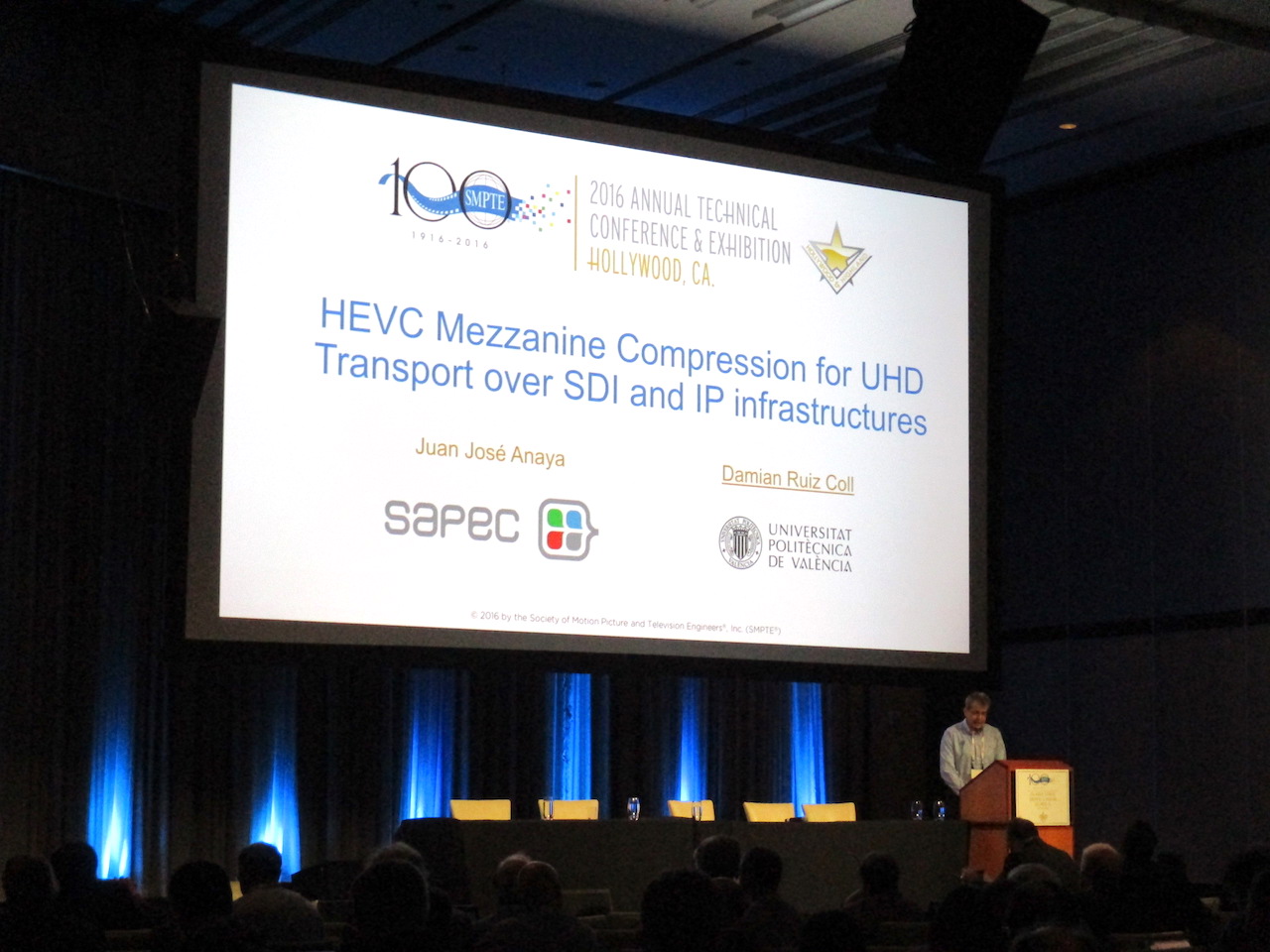
Sapec has collaborated very intensively with different Universities in Spain: UPM, University of Cantabria, URJC, Polytechnic University of Valencia, through which papers have been presented to different technical journals and congresses.
For example, we are very proud that the SMPTE has selected for 4 years in a row the papers we present (the university and Sapec) and that it has allowed us to present them at its annual congress held in Los Angeles (USA). Subsequently these papers have been published in the SMPTE journal.
 In a picture, how is Sapec’s portfolio articulated?
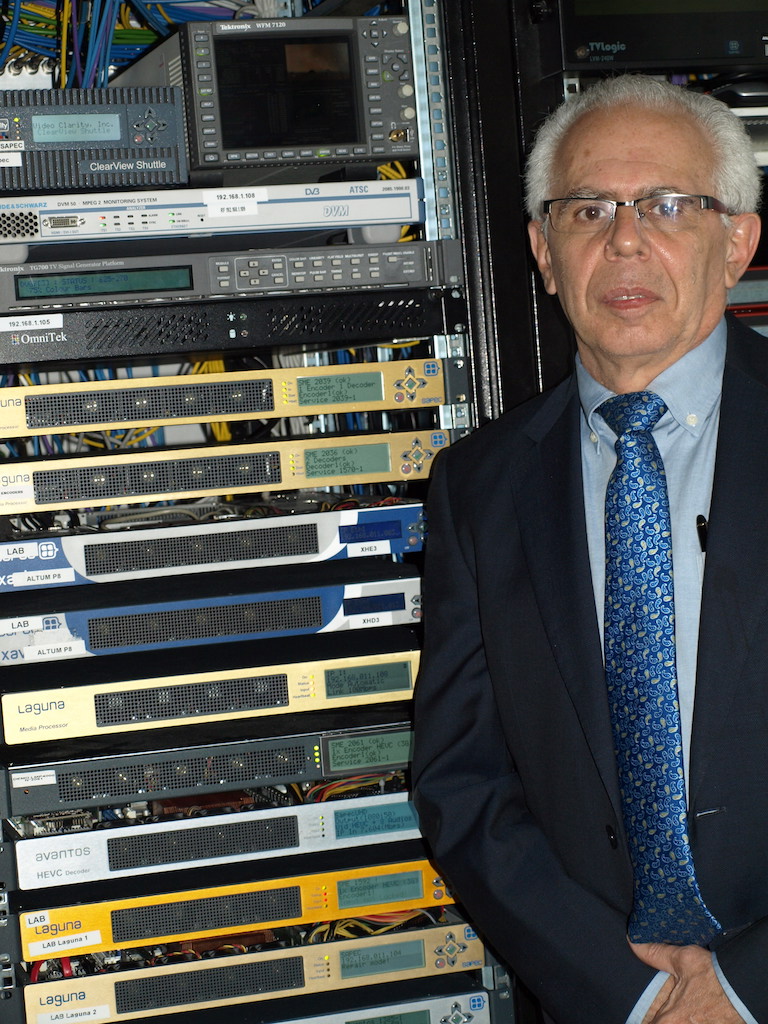
We have two solutions that evolve and generate new products within your family: one oriented to the transport of HD signals, and with great versatility: Laguna; and the other oriented to UHD transport and modularity: Sivac-ONE.
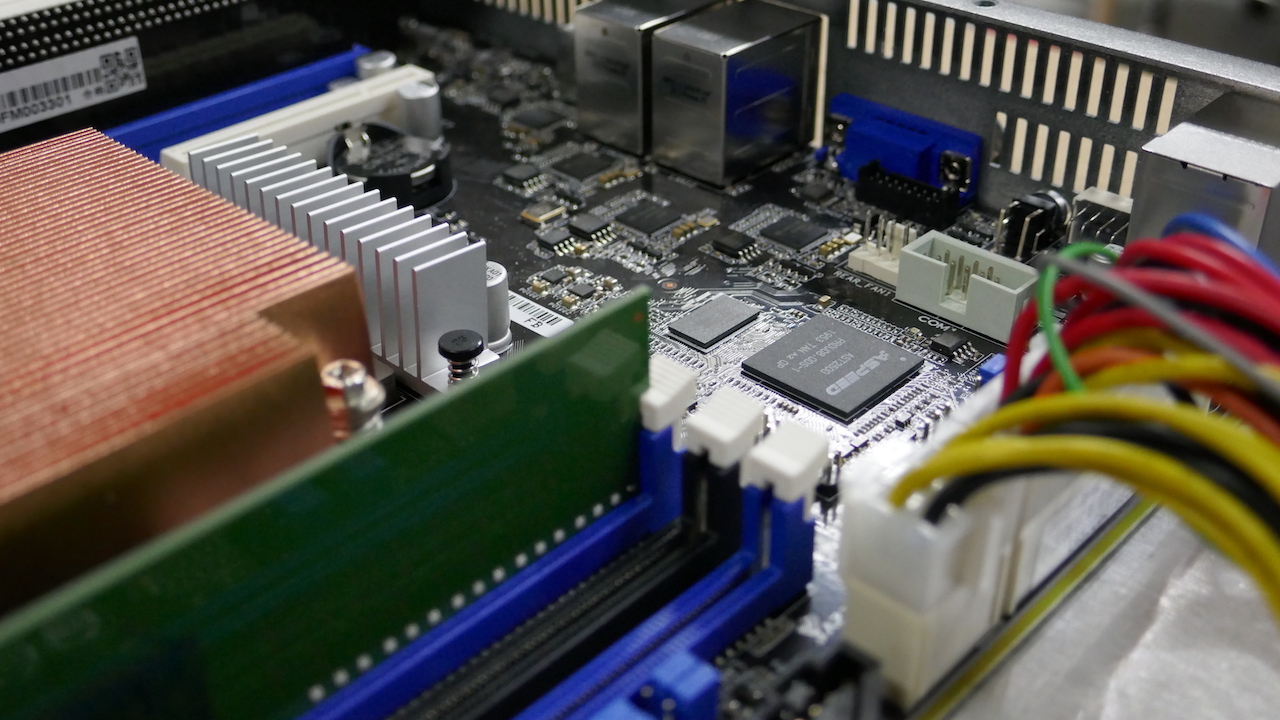
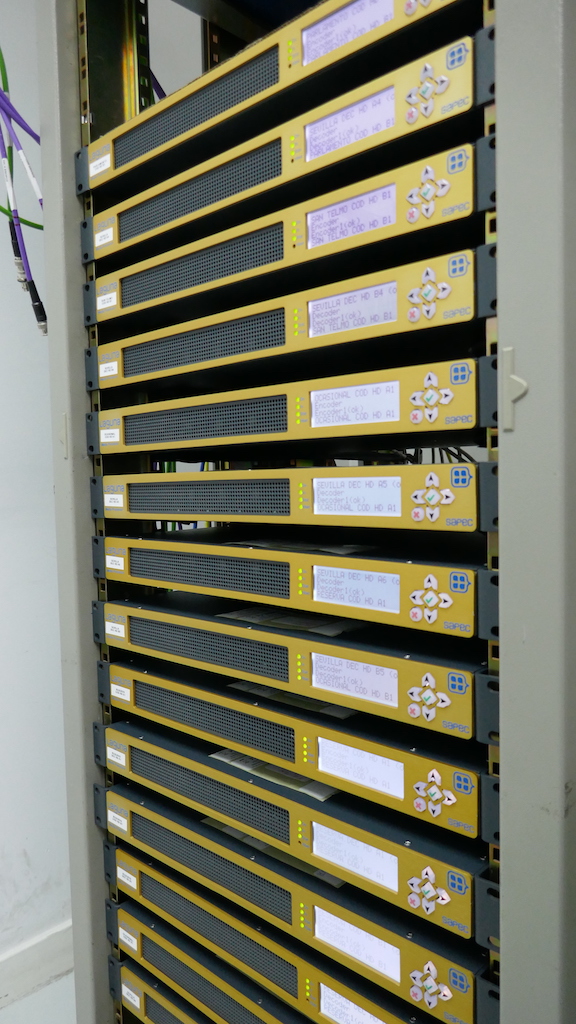
As for Laguna, it is a HW platform adapted for professional broadcast environments where functionality is defined by SW. The same platform may be encoding today and tomorrow decoding multiple channels. Transmit or receive over IP with FEC or over SRT each channel. As we say internally it is a platform of “Software Defined Functionality”. It is a very versatile platform that allows in only 1RU to process up to 8 TV programs: some can be encoders, other decoders, it can include multiplexing of programs, outputs, or inputs by IP, use SRT for transport, insert logos, do UP/Down conversion, etc. And all this defined by what we call “layouts”. The same platform can have multiple layouts and the client can define which one they want to use at any given time.
Regarding Sivac-ONE, it is an HW-based platform (FPGAs) oriented to transport UHD signals with HEVC compression. In just 1RU we can mount up to 3 platforms allowing us to encode up to 3 UHD channels, with a consumption per UHD channel below 25W and very low latency. Being a modular system allows to replace any module “Hot”, which increases the reliability of the system. Obviously, the same platform could encode 4 HD/FHD channels in HEVC which will allow us to have up to 12 HD/FHD channels in just 1RU.
 In addition to a wide range of self-development solutions, sapec has introduced third-party solutions to the market in recent years, how are these agreements configured and what synergies do they allow?
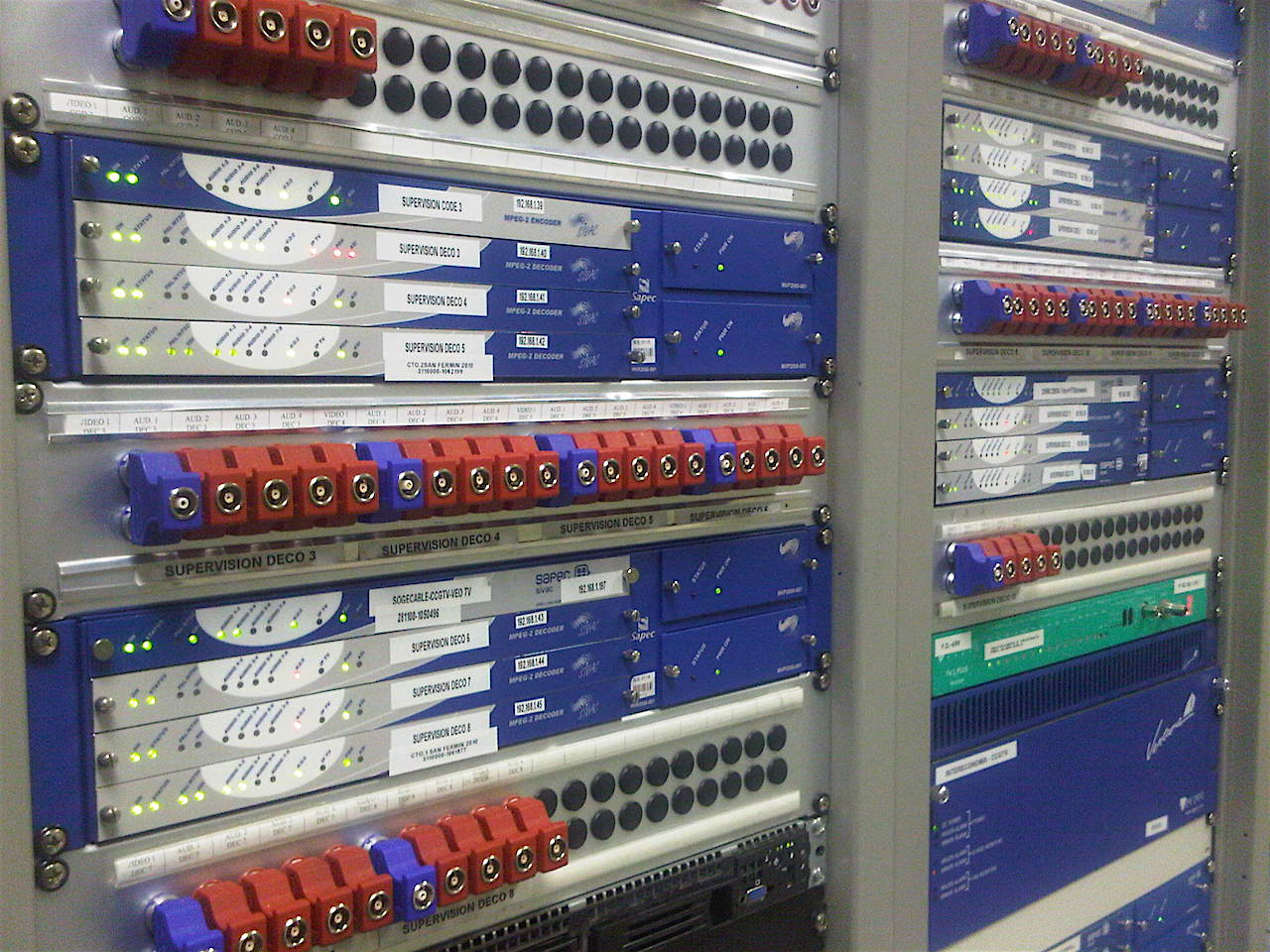
It is true. Years ago we realized that many times customers were looking for a complete solution to their need. And we started collaborating with some companies that offered complementary solutions to ours and that were part of customers’ video transport scenarios.
This way, we started working with companies such as Nevion, Sencore, Wellav, VideoClarity, VideoFlow, APT-Worldcast or BBright among others. All of them offer products that combined with ours allow us to offer a complete solution to our customers.
Reaching representation agreements has been relatively easy, but I think is much more important the close relationship that has been created between several of our partners and Sapec, bringing both the end customer and the partner much more than a simple intermediation and where over the years, they have been able to check the value Sapec brings to their brand.
 Finally, looking to a future in 4K, 8K, HDR… what are the challenges of tomorrow, and how does Sapec prepare to face them?
I would love to have a crystal ball, but what I can do is tell you about the technological changes that this market is undergoing now, some were being announced and the pandemic has accelerated them, as for example remote or distributed production, the change from SDI to IP, etc…
In the short term, I think we need to address a transition to UHD, although there is already a lot of production being generated in UHD, it would be important to create UHD channels. And that these channels already incorporate HDR technologies. I think the next technological change has arrived with the 5G, which is more than having more bitrate, and that it can create new workflows and/or audiovisual media services around it.
At Sapec we have been participating in R&D experiences and projects related to UHD (UHD4U project of the Catrene program) since 2013 where the first transmission of UHD over DTT was made in the WMC together with RTVE, Cellnex and the UPM, among others. And we have dedicated a lot of resources to the Sivac-ONE platform that still has ahead a long journey of evolution.
We also closely follow the evolution of 5G and edge processing, where we believe opportunities may exist.
For all this we have been participating for several years as members of the Advisory Committee of the RTVE-UPM Chair, and we are founding members of the recently created UHD Spain Association.
José María Aguado, a lifetime in Sapec
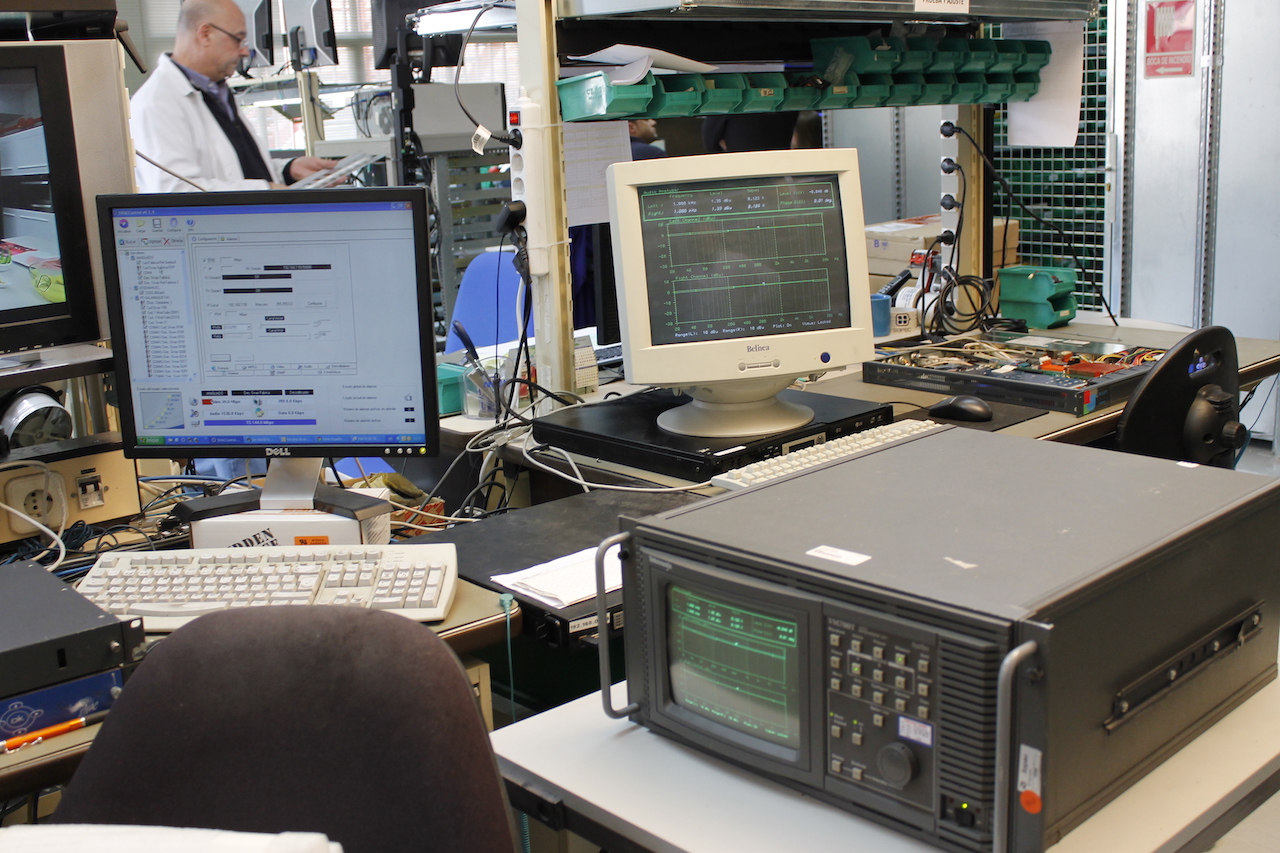
The oldest professional in Sapec is José María Aguado. He was incorporated to the SAPEC staff in 1981 and ever since has held different responsibilities in the company Now, he is responsible in the Production Department to carefully verified that all equipment manufactured by Sapec complies with a strict testing protocol before leaving the factory.
“I started working at Sapec when I was very young. My first tasks were at the factory with the assembly of the receivers of Piped Music as the Albéniz, Granados… Afterwards I was carrying out Piped Music installations at customer facilities during some time until I returned to the test department where I carried out repairs, verifications, and tests of the equipment. Gradually I took charge of testing the new equipment that we introduced in the market such as the MDA-20, Evva, Sivac… to this day, where I not only test the new equipment we manufacture, but work closely with R&D engineers to verify the new versions before they are put into production,” says Aguado.
“I’ve lived throughout a lot of changes in the company, but they’ve been changes that have allowed us to get to where we are today, and I’m proud to have been able to live them,” he concludes.
Galerie
(click on any photo to start the carrousel -scroll left and right by clicking on the arrow-)
Avez-vous aimé cet article ?
Abonnez-vous à notre BULLETIN et vous ne manquerez de rien.
Articles connexes
 Miguel Ángel Calvo Buttini combine fiction et documentaire dans "Le monde est ANSÍ"
 Miguel Ángel Cristóbal (Sapec) : « La migration vers l'UHD nécessitera des encodeurs efficaces, fiables et rentables »
 Miguel Ángel Cristóbal, CEO de Sapec: “en estos 25 años hemos pasado del analógico a mirar al futuro en 8K”
 Décès de Miguel Ángel Gozalo, journaliste et co-fondateur de l'Académie de Télévision
 Le photojournaliste Miguel Ángel de la Fuente (RTVE) remporte le prix Cirilo Rodríguez
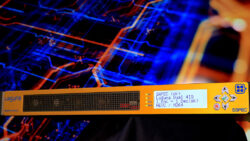 Sapec dévoilera de nouvelles solutions au NAB 2023 : UHD sur Laguna, Gredos II, SRT sur Sivac-One…
 Miguel Ángel Leal, nouveau directeur général de LaLiga Tech
 Miguel Ángel Arango liderará el departamento de desarrollo de nuevos formatos de 16 Escalones
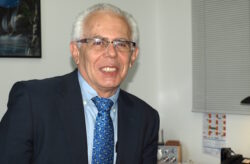 Miguel Ángel Cristóbal, PDG de Sapec : « nous pouvons être fiers de ces 45 ans d'histoire et de la confiance que nos clients accordent à nos solutions »
 Miguel Ángel Fontán, nouveau directeur général de l'AIMC
 Miguel Ángel Vivas commence le tournage de "Ton fils"
 Le tournage de "Los futbolísimos" commence avec Miguel Ángel Lamata à la réalisation
 Miguel Ángel de Frutos assume la direction adjointe des Centres Territoriaux de RTVE
 Miguel Ángel Rodríguez rejoint le conseil d'administration de Secuoya