





Televisión híbrida en una prueba pionera de TV3
TV3 conecta la televisión a Internet en una prueba piloto por la que desde el televisor, los participantes pueden acceder a canales y contenidos extras y ver la programación de la última semana o cualquier vídeo del 3alacarta.
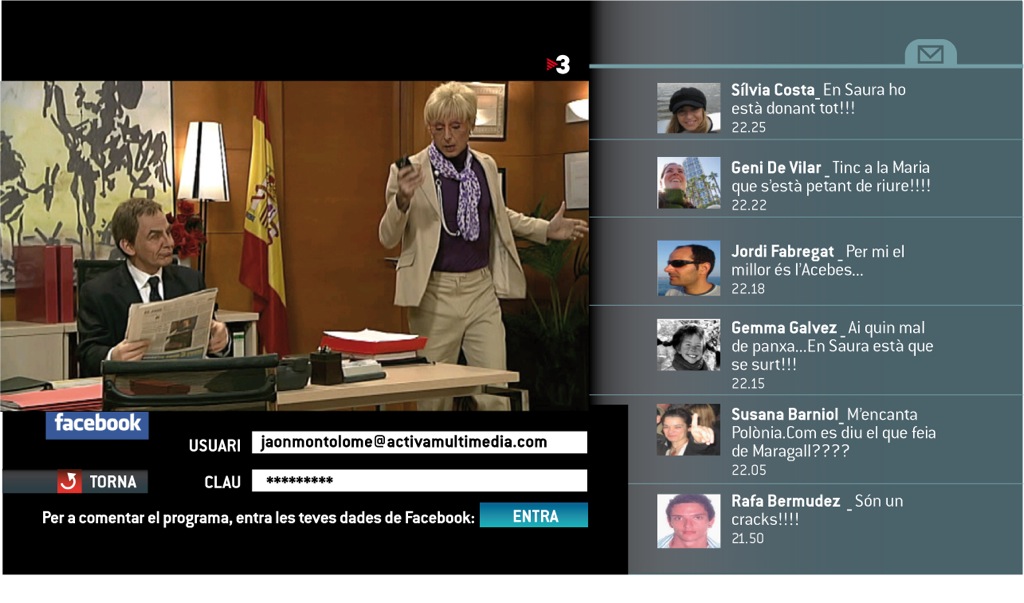 Durante este mes de marzo, veinte familias están experimentando la televisión como será de aquí a unos años. A los participantes del piloto, enmarcado en un proyecto de investigación de la Corporació Catalana de Mitjans Audiovisuals (CCMA), se les ha instalado un receptor de TDT que se conecta a internet y que les permite acceder a un servicio interactivo especialmente desarrollado para la prueba. A través de este servicio, que se activa cuando se entra en cualquier canal de Televisió de Catalunya (TV3, 33, 3/24 y Super3/300), se pueden ver canales y contenidos extras, así como la programación de la última semana y cualquier vídeo del 3alacarta (ver vídeo).
El proyecto, pionero en Europa, estudia las posibilidades que ofrece lo que se conoce como “televisión híbrida”, que combina la difusión tradicional televisiva con la distribución de contenidos a través de Internet, y evalúa las nuevas formas de consumo televisivo que se derivan. Las conclusiones serán útiles en las definiciones de nuevas estrategias de producción y distribución de contenidos de la CCMA. El proyecto, que se inició hace un año, está liderado por CREA, el Centre de Recerca de l’Audiovisual de la CCMA, y cuenta con la participación de TV3, CCRTV Interactiva y Activa Multimèdia.
¿Qué pueden hacer los usuarios del piloto?
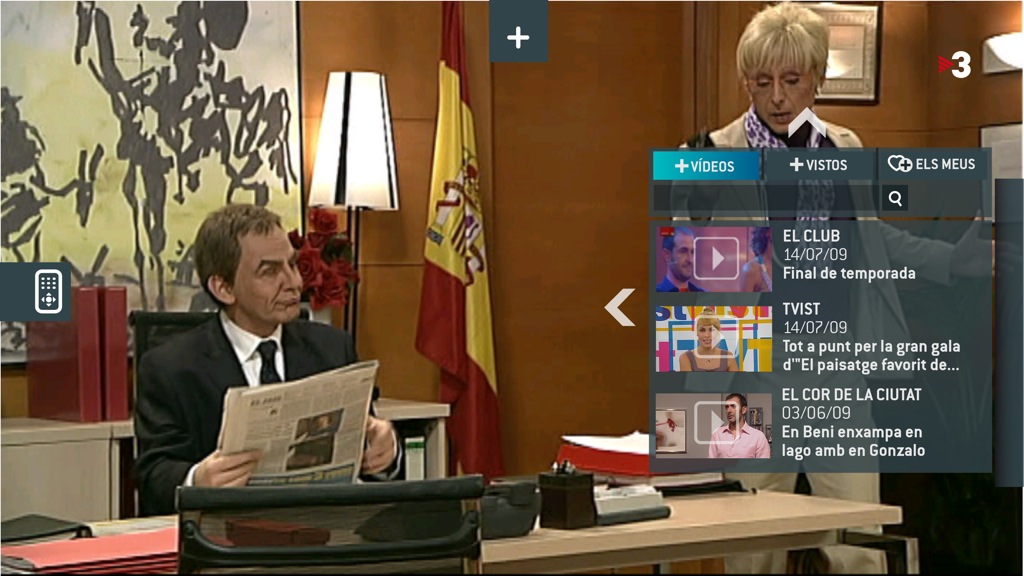
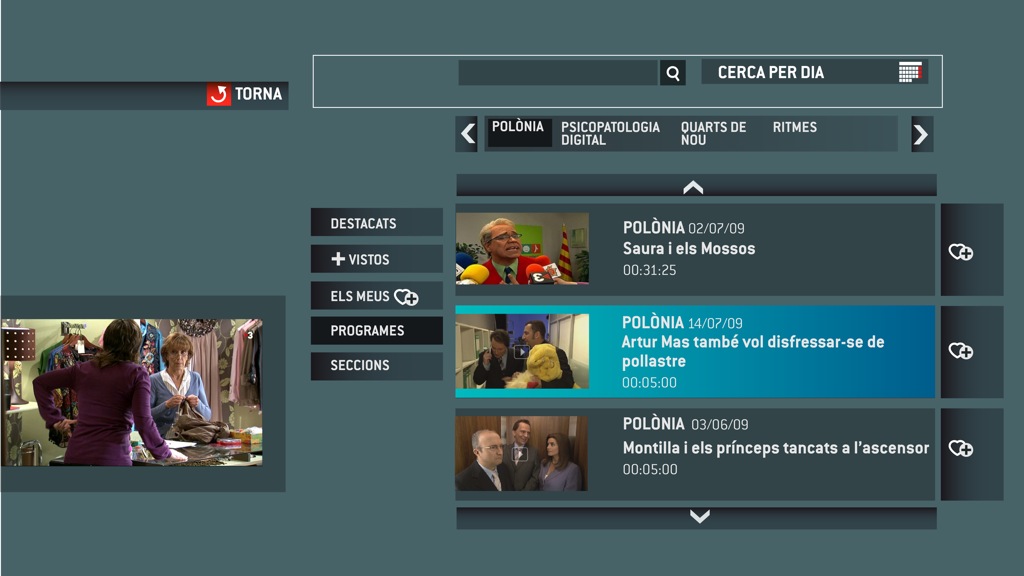
Una de las principales revoluciones que provoca el hecho de conectar la televisión a Internet es la forma de consumir los contenidos, ya que el espectador puede escoger qué quiere ver y cuándo lo quiere ver. Las familias que participan en el piloto tienen acceso a través de la pantalla de televisión a todo el archivo del 3alacarta, que incluye más de 100.000 vídeos con contenidos de Televisió de Catalunya (ver vídeo). El servicio 3alacarta tiene una gran aceptación. En febrero registró cerca de 3.000.000 de visionados y unas 600.000 horas consumidas.
Además, pueden ver en alta calidad los programas que se han emitido en todos los canales de televisión de la CCMA durante la última semana. Este servicio es muy popular en algunas plataformas de pago de televisión por Internet.
[youtube]http://www.youtube.com/watch?v=QRHMWy2FDDI[/youtube]
También se ofrece la posibilidad de acceder a canales exclusivos de Televisió de Catalunya. Son canales que no se reciben por TDT, sino que se distribuyen a través de internet para eventos concretos. Durante el piloto, por ejemplo, se ha podido acceder a la retransmisión en directo de la ceremonia completa del “Català de l’any”.
La prueba contempla también otros servicios que amplían la libertad del espectador y le dan más información. Así, por ejemplo, puede acceder a contenidos extras que complementan la emisión en directo, como vídeos relacionados del programa Polònia.
También se ha incorporado la participación vinculada a redes sociales de internet. Mediante una aplicación ya integrada, Facebook Connect, los espectadores pueden comentar los programas en directo. En el caso del programa Banda ampla, por ejemplo, los hogares del piloto pueden aportar su opinión sobre el tema de debate simplemente escribiendo con el mando a distancia.
Finalmente hay que destacar el control de la emisión en directo. Los espectadores pueden parar la emisión cuando lo deseen, retomarla y rebobinar.
[youtube]http://www.youtube.com/watch?v=S9rcZ5QTmUA[/youtube]
Proyecto pionero
La prueba piloto se lleva a cabo con una muestra de usuarios heterogénea formada por veinte familias del distrito 22@ de Barcelona, a las que se ha instalado el receptor de TDT que se conecta a internet y tiene funcionalidades de grabador personal. El piloto desarrollado está basado en estándares tecnológicos sobre un descodificador libre, no asociado a ninguna plataforma de televisión de pago, con la voluntad de probar el servicio sobre un entorno abierto y universal. En la evaluación de la experiencia de uso del servicio se trabaja en colaboración con expertos del centro tecnológico de investigación de la Fundación Barcelona Media.
El proyecto se enmarca en la apuesta continua de la CCMA por la innovación en el campo audiovisual y es pionero a nivel europeo. La BBC lleva a cabo una experiencia similar a través del proyecto Canvas, que está muy en sintonía con los objetivos del proyecto desarrollado por la CCMA, pero de momento no ha hecho ningún piloto.
Did you like this article?
Subscribe to our NEWSLETTER and you won't miss anything.
Related articles
 La televisión híbrida continúa reemplazando el consumo de televisión tradicional en España
 Las emisiones en pruebas de UHD Spain llegan a la televisión híbrida
 Fallece Maruja Callaved, pionera en informativos y programas de la televisión en España
 El estándar 2.0.1 marca el futuro optimista de la televisión híbrida
 TV3, i2CAT y Cellnex Telecom completan con éxito las pruebas piloto de televisión híbrida
 Segunda prueba piloto de televisión conectada, dentro del proyecto europeo TV-Ring
 RTVE presenta una prueba pionera de emisión y recepción en Ultra Alta Definición
 Fundación i2CAT, Abertis Telecom y TVC participan en el proyecto TV-Ring que perfilará la televisión híbrida del futuro
 Paul Lee abrirá la Jornada ‘El futuro de la televisión: La televisión Híbrida’
 ‘Tú diriges el partido’: una experiencia pionera de televisión interactiva multi-cámara en Televisa
 La UER potencia la televisión híbrida
 Televisión híbrida, hacia otra forma de consumo en televisión
 La nueva televisión: la revolución híbrida
 II Jornadas AEDETI: “la nueva televisión, la revolución híbrida”