





Sony PMW-320, the first XDCAM EX shoulder camcorder
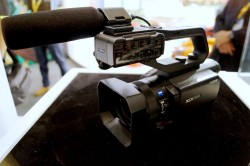
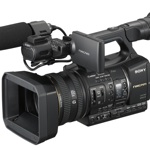
The PMW-320 has expanded the XDCAM EX series with a shoulder camcorder. With three 1/2″ Full HD Exmor CMOS sensors, it offers all the recording features of the PMW-EX1R, to which are added improvements such as a scene file system and 4 audio channels. This camcorder comes in two versions: PMW-320K which is supplied with a Fujinon HD lens; and the PMW-320L, without optics.
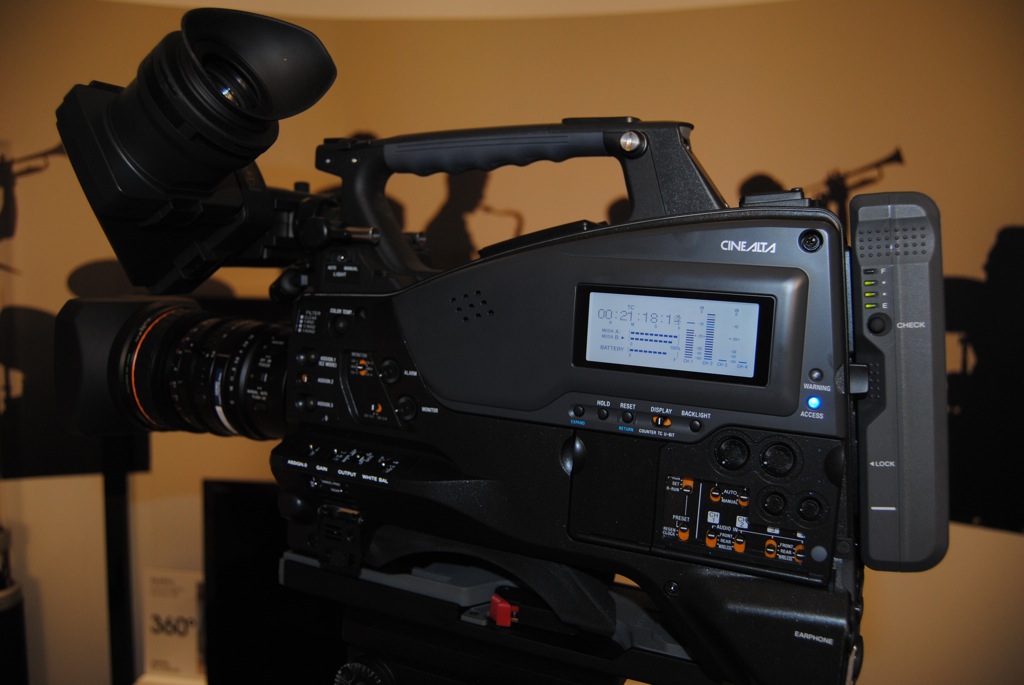
With three state-of-the-art 1/2″ Full HD Exmor CMOS sensors, the Sony PMW-320 camcorder has expanded the new
Each of the sensors in this camcorder offers a native resolution of 1920x1080 effective pixels with Full HD resolution, a sensitivity of F11 in 50 Hz mode, a signal-to-noise ratio of 54 dB and a high horizontal resolution of 1,000 lines in 1920 x 1080/59.94i mode.
It is noteworthy that Exmor CMOS sensors implement an exclusive A/D conversion system for each column of pixels, which translates into a lower clock speed than traditional CMOS sensors, with the consequent energy savings that this entails.
 El camcorder PMW-320 graba imágenes HD a resolución nativa 1920 x 1080 utilizando el codec MPEG-2 Long GOP, que cumple las normas de compresión MPEG-2 MP@HL. Este codec es el adoptado también por la serie de productos XDCAM HD y HDV 1080i, y permite a los usuarios grabar vídeo y audio HD de extraordinaria calidad con una compresión de datos sumamente eficaz y fiable. Entre los modos de grabación, hay que reseñar que admite también DVCAM a 25 Mbps, tanto en PAL com0o NTSC, una opción muy válida para aquellos entornos en los que el flujo de trabajo se lleve a cabo en definición estándar, como por ejemplo, en televisiones locales. El material grabado en modo SP puede además integrarse a la perfección en sistemas de edición compatibles con HDV mediante la transferencia de flujo del camcorder a través de la interfaz i.Link (HDV).
Ofrece dos velocidades de bit: 35 Mb/s (modo HQ) o 25 Mb/s (modo SP), en función de la calidad de imagen y el tiempo de grabación que desee. El modo HQ admite resoluciones 1920 x 1080, 1440 x 1080 y 1280 x 720. El modo 1440 x 1080 es una novedad en el PMW-320 y garantiza integración nativa de material XDCAM EX en el flujo de trabajo XDCAM HD basado en Professional Disc . Al admitir el modo 1440 x 1080, con grabación a 35 Mb/s, el material puede utilizarse sin transcodificarse, simplemente deberá readaptarse a MXF para la edición no lineal y el archivado.
El PMW-320 admite múltiples frecuencias de cuadro como 59.94i, 50i y 25P y 23.98P nativo, además de ser seleccionable 1080i/720P.
Its chassis is based on the popular XDCAM HD422 series model, although in this case it barely weighs 3.2 kg, making it one of the lightest shoulder camcorders in its class and with up to 60% less energy consumption than, for example, the HDW-700.
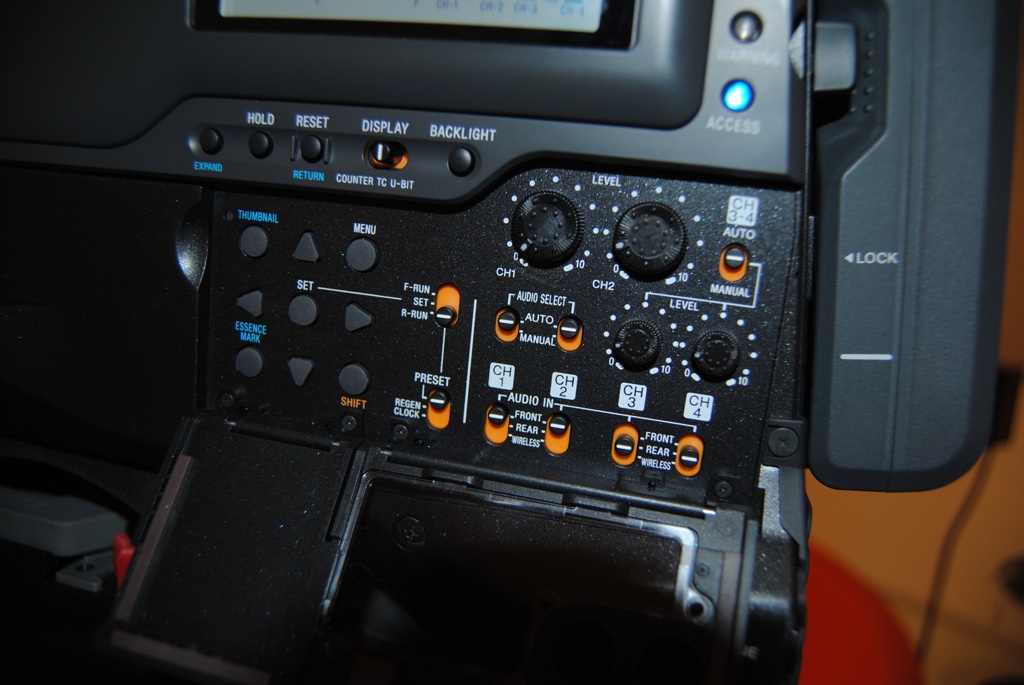
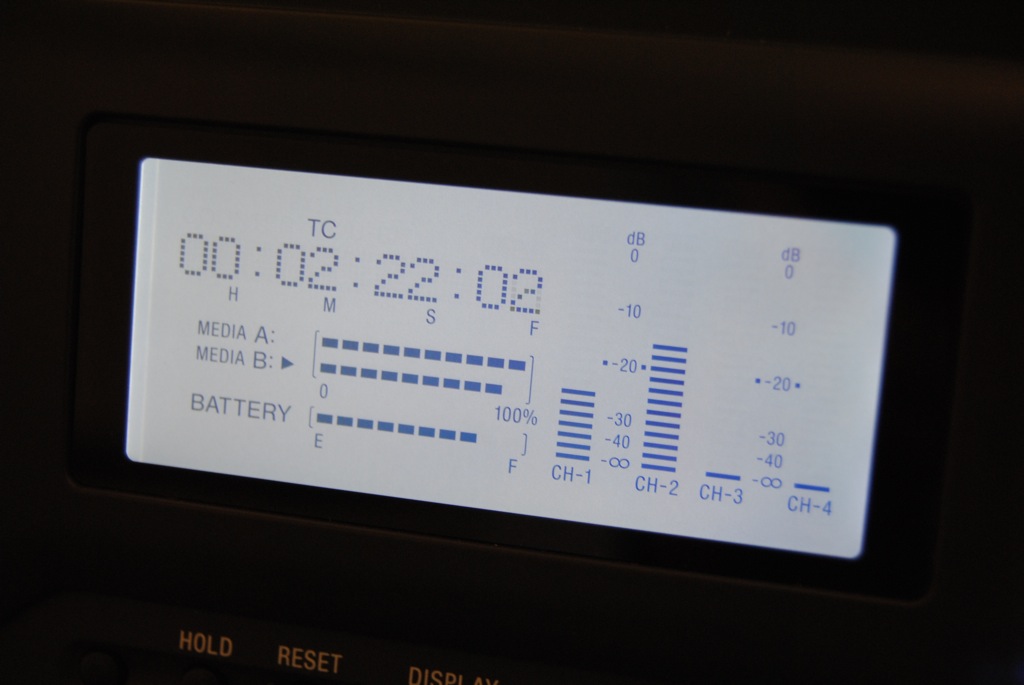
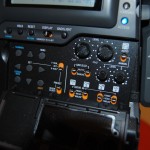
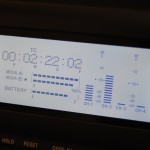
Another novelty of this new equipment is that it allows you to record four channels of high-quality uncompressed audio sampled at 48 KHz and 16 bits (Linear PCM), being able to control the level of each channel thanks to an individual and independent level. In addition to the shotgun microphone, the camcorder also comes equipped with a wireless microphone slot.
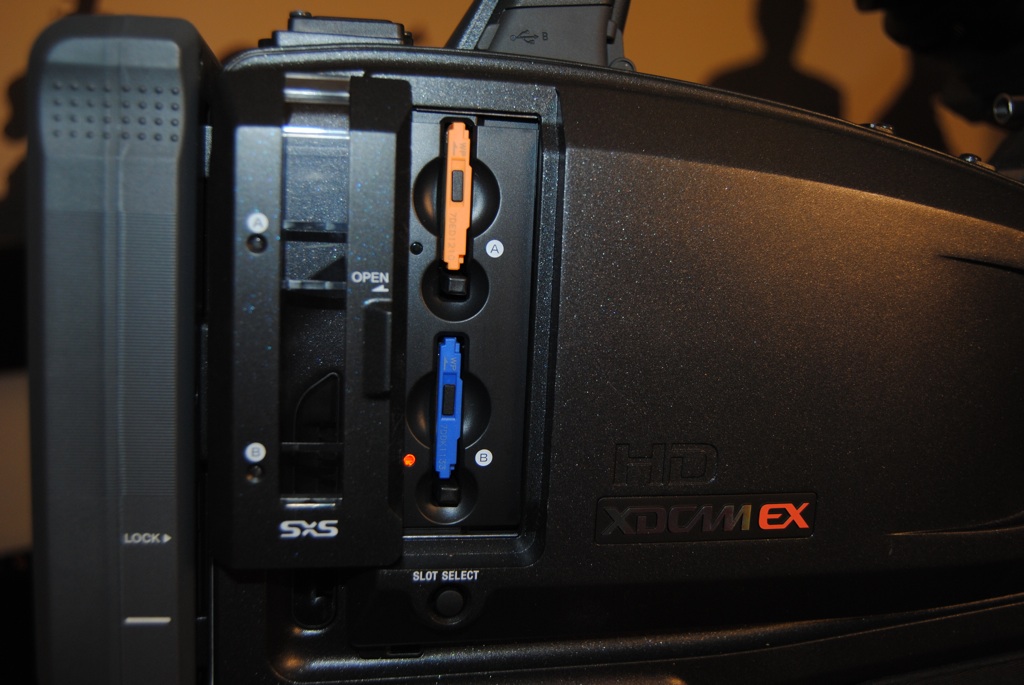
SxS-1 and SxS PRO
Like the rest of the
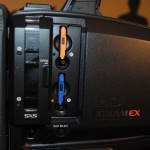
Working with SxS-1 and SxS PRO memory cards allows compatibility with the ExpressCard/34 interface slot common in modern Windows PCs and Macs, to use the PCI Express interface, reaching read speeds of up to 800 Mbps (depending on the type of file and the performance of the PC).
This option provides a large storage capacity of up to 16 GB (SBP-16) and 32 (GB SBP-32), in the latter case being able to record up to 140 minutes in high definition. As the PMW-320 is equipped with two memory card slots, this recording time can easily be increased to 280 minutes with two 32GB cards. When recording to two cards, the transition is done seamlessly without losing any frames. This feature makes the PMW-320 the ideal camcorder for a wide variety of content production applications, including news, local television, and wedding and event recording, which require long recording time.
El soporte SxS-1 proporciona a los usuarios una alternativa económica a los soportes SxS PRO que ofrecen el mismo alto rendimiento pero con una vida útil estimada de 5 años en grabaciones diarias de capacidad total. Los usuarios pueden comprobar la vida útil de la tarjeta en sus camcorders PMW-EX1R y PMW-320 e incluso ver una alarma cuando se alcanza el límite de reescritura de datos.
 El sistema XDCAM EX graba automáticamente en una zona vacía de la tarjeta sin peligro de sobrescribir el contenido existente, contando en el caso del PMW-320 con una memoria caché de hasta 15 segundo que permite iniciar la grabación en cualquier momento sin perderse lo acontecido justo antes de apretar el REC.
Each time you start and stop recording on the XDCAM EX camcorder, the video and audio signals are recorded as a clip. During playback, you can move forward or backward to the next or previous clip with a simple press of the “next” or “previous” button, just as you do on a CD or DVD player.
Additionally, thumbnails are automatically generated for each clip for visual reference, allowing users to directly locate the desired scene by simply guiding the cursor to a thumbnail image and pressing the play button.
For added convenience, the Extend function allows you to divide a clip selected in the index image screen into 12 intervals of the same length with its own index image to identify it. This is very useful if you want to quickly search for a specific scene within a long clip.
Two configurations
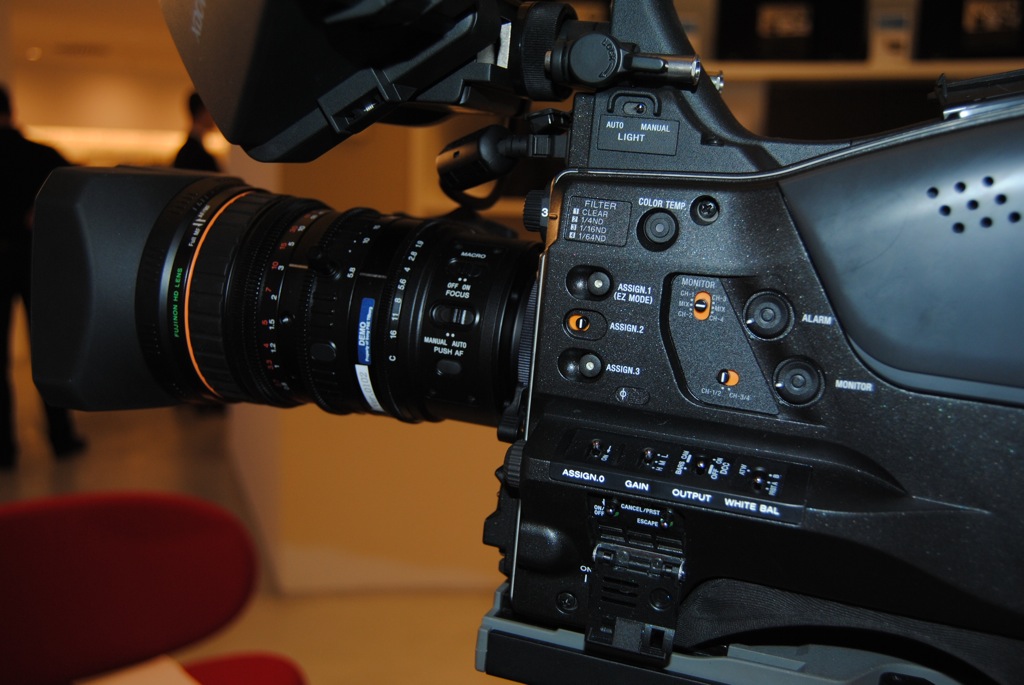
The PMW-320 is offered in two configurations: the PMW-320K, which comes equipped with a Fujinon HD lens with 16x zoom, and the PMW-320L, which comes without a lens. Both models feature a standard 1/2″ bayonet lens interface, and the user can choose from a wide variety of optional lenses in the existing 1/2″ HD lens range.
The optics supplied for the PMW-320K incorporate a unique focus ring mechanism that offers two types of focus: manual focus and auto focus. The lens is equipped with two independent focus wheel mechanisms, which can be changed by sliding the focus ring itself back and forth.
When the focus ring is in the front position, the lens operates in the same way as a typical autofocus lens on a handheld camcorder. In this case, manual or auto focus mode can be selected using the AF/MF switch on the lens. On the other hand, when the focus ring is placed in the rear position, the lens has an absolute focus position and works in the same way as interchangeable optic cameras.
Image inversion function
The PMW-320 camcorder includes a function that allows you to reverse the image without delay, especially useful when mounting cinema optics. This feature is useful for capturing three-dimensional images from a 3D camera with a pair of 2D monitors. The monitor can be connected directly to camera systems without the need to add an external signal converter, simplifying system integration.
Three independent rings
In addition to the unique focus ring, the optical system supplied with the PMW-320K is equipped with independent rings for zoom and iris adjustment. These are located next to the focus ring, in the same arrangement as on shoulder camcorders. This arrangement provides a high level of control and operational comfort.
On the other hand, it has the function of AF assist (autofocus that allows you to manually change the focus positions using the focus ring during AF mode) and MF assist (manual focus that helps focus precisely on the target subject when recording in MF mode.
La función Peaking puede ayudar a los operadores a ajustar el enfoque de la cámara con mayor precisión alterando el modo en que se ven las imágenes en el visor, mientras que la ALAC (Automatic Lens Aberration Compensation)
disminuye toda aberración cromática causada por el objetivo, que se activa sólo con el objetivo suministrado del PMW-320K y con ciertos objetivos de terceros que incorporan datos sobre compensación.
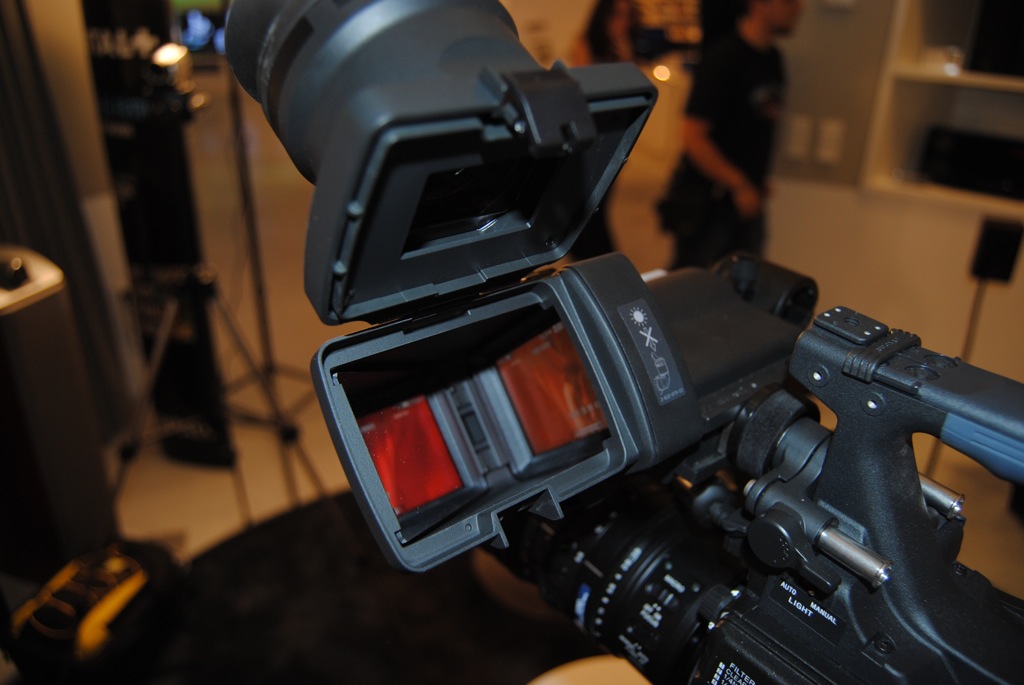
The PMW-320 camcorder incorporates optical neutral density (ND) filters and electrical color correction (CC) filters. The optical ND filters are controlled from a built-in ND filter wheel (Clear, 1/4ND, 1/16ND and 1/64ND). And with DC electric filters, the user can easily obtain the desired color temperature by setting the mode, 3200K/4300K/5600K/6300K, on the camcorder's assignable switch. The user can select the four values cyclically or choose a default value. It can also be controlled via an assignable button. This is useful when a sudden change occurs during recording and a quick and direct adjustment is required.
Recording in native 23.98P
Todos los camcorders XDCAM EX forman parte de la familia Sony CineAlta y ofrecen una grabación de 23.98P nativa que, junto con otras características creativas avanzadas, como las curvas gamma seleccionables, convierte a estos camcorders en una opción para producción cinematográfica. El PMW-320 puede captar imágenes a frecuencias de cuadro seleccionables entre 1 fps (cuadro por segundo) y 60 fps en modo 720P y entre 1 fps y 30 fps en modo 1080P, en incrementos de 1 fps. Por ejemplo, cuando se ven imágenes a 23.98P, las imágenes captadas a 60 fps se muestran a una velocidad 2,5 veces más lenta de lo normal. A la inversa, las imágenes captadas a 4 fps aparecerán a una velocidad seis veces más rápida de lo normal.
With the slow motion and fast motion function, images are recorded natively without interpolating frames. Which means that the quality of the slow and fast motion images is much higher than that obtained in post-production. Additionally, images recorded in slow or fast motion can be played back immediately after recording, without the need for converters or processing in non-linear editing systems.
Image inversion function
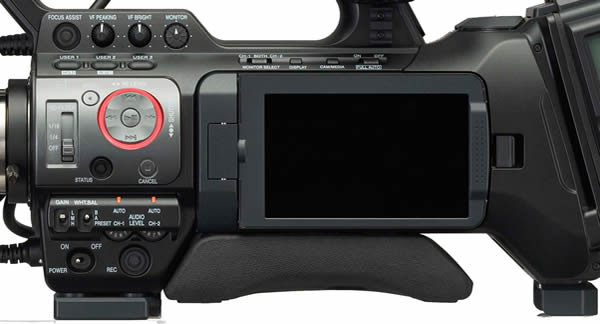
Finally, it should be noted that the PMW-320 camcorder is equipped with a large, easy-to-view color LCD monitor with a resolution of 1920x480 pixels, which makes focusing easier, and six assignable buttons for quick access to the desired functions.
Control
For future expandability, starting this fall the PMW-320 will feature a 50-pin interface option that offers digital extender functionality, which digitally doubles the size of images. Unlike optical extenders, the digital extender function does not involve any loss of sensitivity.
Sony will also soon launch the HDCA-702 MPEG TS adapter, which can be attached directly to the PMW-320, outputting an MPEG Transport Stream (TS) stream via a DVB-ASI output. This can be done simultaneously when the PMW-320 records to the SxS memory card.
A Sony 8-pin remote interface is supplied with the PMW-320, and various camera settings can be controlled remotely using an optional RM-B150, RM-B750, RCP-750, RCP-751, RCP-920 or RCP-921 remote control via its 8-pin remote connector.
[youtube]http://www.youtube.com/watch?v=9-4yvZdOhLY[/youtube]
Gallery
(click on any photo to start the carousel - scroll right and left by clicking on the arrow)


Did you like this article?
Subscribe to our NEWSLETTER and you won't miss anything.
Related articles
 Sony PXW-Z300, the new 4K 60P XDCAM camcorder with 17x zoom, 1/2-inch triple CMOS sensor and AI subject tracking
Sony PXW-Z300, the new 4K 60P XDCAM camcorder with 17x zoom, triple 1/2-inch CMOS sensor and AI subject tracking
Sony PXW-Z300, the new 4K 60P XDCAM camcorder with 17x zoom, 1/2-inch triple CMOS sensor and AI subject tracking
Sony PXW-Z300, the new 4K 60P XDCAM camcorder with 17x zoom, triple 1/2-inch CMOS sensor and AI subject tracking
 PXW-Z750: Sony's new XDCAM camcorder with HDR and HFR recording in a portable and ergonomic design
 Sony PXW-Z450: a 4K XDCAM shoulder camcorder with a 2/3″ 4K image sensor
 PXW-X70, Sony's first compact 4K-ready professional XDCAM camcorder
 Sony finalizes the most compact XDCAM camcorder model so far
 Sony reinforces its popular XDCAM line with the new PXW-X160 camcorder
 Sony reinforces its XDCAM HD422 range with a handheld camcorder and an SxS field equipment
 PMW-100: Sony will expand the XDCAM range with a lightweight camcorder with recording up to 50 Mbps
 AG-HPX371 P2 HD, new shoulder camcorder from Panasonic
 Sony expands the promotion of its HDV camcorders, extending it to XDCAM EX and NXCAM
 Ovide and Sony present to professionals the first compact HDCAM SR camcorder
 NXCAM, Sony's first professional camcorder with AVCHD format
 JVC-HM700: first shoulder camcorder that records on SDHC cards