





Portugal begins analog shutdown
Portugal ha puesto en marcha desde esta semana la primera fase del encendido de la Televisión Digital Terrestre (TDT) en todo el país.
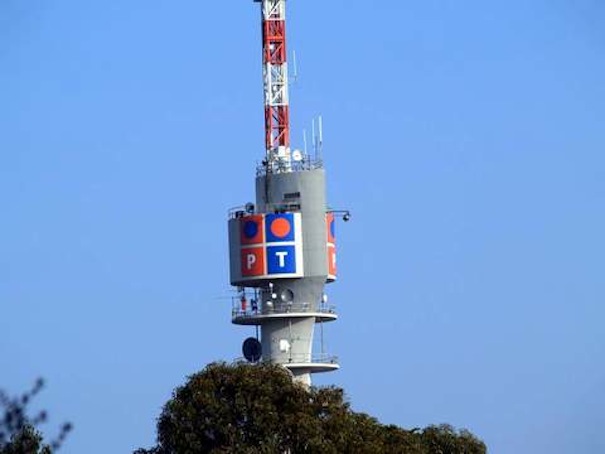
La desaparición definitiva del sistema analógico ha comenzado esta semana con el apagón del centro emisor de Palmela, al sur de Lisboa. Al emisor de Palmela le seguirán los centros que dan cobertura al Algarve, Alentejo, y norte de Lisboa. A finales de marzo se apagarán los emisores analógicos de las islas Azores y Madeira.
El proceso de apagón está previsto que termine el próximo 26 de abril.
De momento, los espectadores podrán recibir cuatro canales en TDT: dos de la televisión pública RTP y los privados SIC y TVI, con una programación en simulcast. Además, el nuevo servicio digital cuenta con un canal en alta definición en pruebas. En las islas se difundirán también en digital los canales públicos regionales RTP Açores y Madeira.
El Gobierno portugués pretendía contar con una oferta de pago de unos 40 canales. Un plan que se abandonó cuando Portugal Telecom anunció su intención de devolver la licencia de pay-tv a ANACOM por la que había pagado 2,5 millones de euros.
En cuanto a la creación de un quinto canal en abierto en TDT, la polémica está servida ya que tanto TVI como SIC han mostrado al Gobierno portugués en numerosas ocasiones su preocupación ante esta posibilidad ya que sostienen que el mercado publicitario ya está saturado.
90% de los hogares con TDT
La Autoridad Nacional de las Comunicaciones (ANACOM) ha emprendido una campaña de información a ayuntamientos y usuarios para facilitar la migración.
ANACOM estima que en torno a 1,3 millones de hogares necesitarán adquirir un decodificador para recibir la TDT y cifra en alrededor del 90% los hogares portugueses con recepción de señales analógicas que están preparados para migrar hacia servicios digitales.
Portugal sigue los pasos de España, Francia y Alemania, que ya llevaron a cabo el apagón analógico, y se adelanta a Italia que irá apagando centros a lo largo de este año.
El servicio de TDT está estructurado do dos licencias diferentes: uno para la gestión de la red y las frecuencias, y otro para la gestión y distribución de canales de televisión de pago y el contenido. Portugal Telecom ha obtenido ambas licencias.
Did you like this article?
Subscribe to our NEWSLETTER and you won't miss anything.
Related articles
 Regional television sets a date for turning off broadcasts in SD
 Telefónica stars in the first shutdown of the copper network in Europe
 Argentina posterga su apagón analógico a 2025
 2Way FM migrates from analog to digital with AEQ solutions
 Dominican Republic ready to carry out the analogue blackout in 2021
 India delays analogue switch-off again
 Brazil will begin analog shutdown in March 2015
Mexico is torn between analogue and digital impulse
DTT: new scenarios after the analogue blackout
Brazil will begin analog shutdown in March 2015
Mexico is torn between analogue and digital impulse
DTT: new scenarios after the analogue blackout
 P+S Technik ready at IBC to bring the analog and digital world closer
 Today, analogue blackout for more than a million Valencians
 Outlook for the sector after the cessation of analog broadcasts
 Overview of DTT: Less than a year after analogue shutdown
 The analogue blackout. The media legacy of PSOE and PP