





The Academy pays tribute to the Goya of Honor, Josefina Molina
Five films and two of her television works make up the cycle that the institution dedicates to Josefina Molina, who will receive the Goya of Honor.
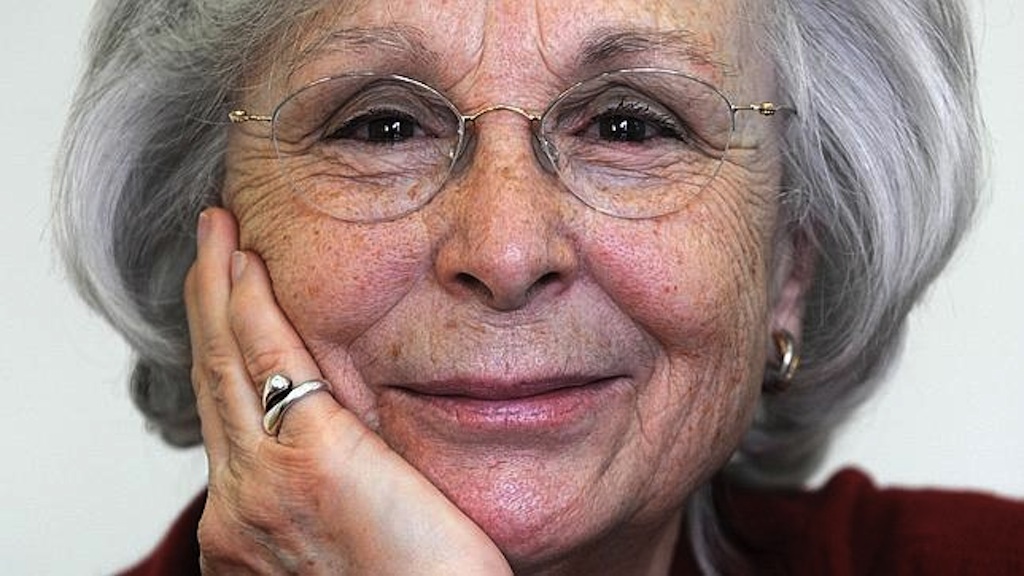
Throughout this week the Film Academy pays tribute to Josefina Molina, who will receive the 2012 Goya of Honor on January 28 at the finalists' party of the twenty-sixth edition of the Goya and who will also collect at the gala on February 19.
Five films and two of his television works make up the cycle that the institution dedicates to Molina, whose work is exhibited The path, a television adaptation of the work by Miguel Delibes that will be presented on January 23, at 6:00 p.m. That same day, at 9:00 p.m., is the session of the fantastic story with which he debuted in the feature film, Vera, a cruel story.
The next passes are The most natural, with Charo López and Miguel Bosé, and night function, performed by Lola Herrera and Daniel Dicenta (January 24, at 6:00 p.m. and 8:30 p.m., respectively); and between orange trees, television production based on the novel of the same name by Blasco Ibáñez (day 25, at 6:00 p.m.).
This work starring Toni Cantó, Nina Agustí and Mercedes Sampietro is followed, on the 26th, at 7:00 p.m., Esquilache, based on A dreamer for a people, by Antonio Buero Vallejo, which has a cast made up of Fernando Fernán Gómez, José Luis López Vázquez, Angela Molina, Ángel de Andrés and Concha Velasco. The projection of Esquilache It is completed with a meeting between Josefina Molina and the public.
La Lola goes to the ports, with Rocío Jurado and Francisco Rabal, closes the series on January 27, at 8:00 p.m.
A life dedicated to cinema and TV
Josefina Molina, the first woman to obtain a directing degree at the Official School of Cinematography in Madrid, has commented that "at the time when I tried to make films it was not easy, but you have to fight against inertia. The work is always double in the case of women: attending to your profession and your tasks; this implies that if you focus your efforts on one of the two paths, you have to do without the other to a certain extent."
The filmmaker from Córdoba, who assures that in her speech she will not make a long list of thanks and that it will be very brief, has always combined cinema with the television medium and affirms that, "although to some of my colleagues working in that medium seemed like a kind of lowliness, they realized that culture could be brought to a country that then had almost no access to it." It is now difficult for her to face dialogue about her feature films: "I am very self-critical and very perfectionist. We directors make the films, but it is difficult for us to talk about them because what we have to say we say through the stories. If I had to mention a constant in my career it could be that I have always talked about the freedom of women to take their path," she stated.
Always concerned about their situation in the film industry, she tries to analyze the reason for the low female presence in the sector: "They have been put in the category of female directors, and men are valued for their individuality. The Association of Women Filmmakers (CIMA) did a study that determined that only 7% of female filmmakers were female, and this is not because there is no talent or they are not committed to their reality - women make films that are closer to the problems -. It is clear that it cannot be seen "Life from a single point of view, you have to do it from all angles." She is, in any case, confident in the future: "Although a reaction of old ghosts who do not want women to break the glass ceiling has emerged without us realizing it, I believe that there are young people who have a lot of preparation and very clear ideas. The contact with the women of CIMA has been very enriching for me, they have a very accurate diagnosis," said the director.
Since he directed between orange trees In 1997, Josefina dedicated herself to living. "There is a moment when you realize the generational change, you are not willing to compromise with certain things and there comes a point when you transfer your interests. Of course, curiosity has always gotten the better of me," he commented.
"It is easy for a 75-year-old man to make films (Vicente Aranda, Manuel de Oliveira...), but not so much for a woman, I don't think we can find financial support. Today I would like to do things that are no longer possible, such as a political film: talk about the situation in my country and analyze why corruption is voted for so much."
Regarding the crisis situation that is being experienced today, she is convinced that "there is someone who is very concerned that we are very afraid. I think we are living in a revolutionary moment in the sense of being able to turn things upside down. Women can contribute a lot because the world cannot continue so inhospitable; we would have to fight to make a more friendly, livable and lasting world. The market, which some believe is the oxygen of society, has become a monster that uses us and then throws us away."
Did you like this article?
Subscribe to our NEWSLETTER and you won't miss anything.
Related articles
 Aitana Sánchez-Gijón, Honorary Goya of the Film Academy
 The Film Academy awards Juan Mariné the Goya of Honor 2024
 Ángela Molina receives the Goya of Honor in the land of her ancestors
 The Film Academy will award the Goya of Honor 2021 to Ángela Molina
 Tribute to the great teacher Chicho Ibáñez Serrador, Goya of Honor 2019, at the nominees party
 The Film Academy pays tribute to Reyes Abades
 The Academy pays tribute to the “invisible” professions of television
 The 'respectable public' and the Academy recognize the career of Mariano Ozores with the Goya of Honor
 Josefina Molina receives the VII UIMP Award for Cinematography
 The Academy awards Jaime de Armiñán the Goya of Honor
 The Television Academy pays tribute to Manuel Martín Ferrand
 The Catalan Cinema Academy pays tribute to its new Honorary Members
 Mario Camus, Honorary Goya of the Academy
 The Academy pays tribute to Antonio Mercero