





New solutions for automation from Mosart at NAB 2012
Mosart es ahora compatible con ocho fabricantes de mezcladores de audio, cinco fabricantes de mezcladores de vídeo, nueve marcas de servidores de video, nueve sistemas de gráficos y seis sistemas de cámaras robóticas.
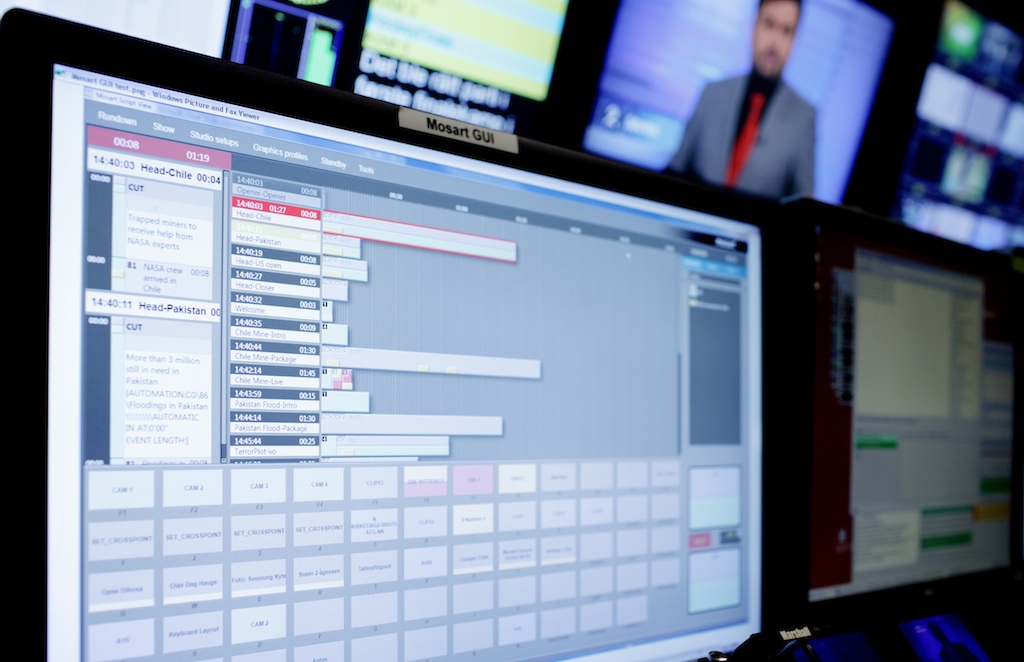
Entre las nuevas soluciones que Mosart mostrará en NAB 2012 destaca la versión 3.0 de su sistema Newscast Automation. Incluye ahora una serie de nuevas características y funciones y se ha rediseñado la interfaz gráfica con configurabilidad de usuario completa logrando una automatización de estudio más versátil y potente. Cmáras, clips, gráficos pueden ahora ser fácilmente asignados a los botones de acceso rápido y sencillo.
Una serie de descripciones de la interfaz también se pueden asignar a los botones, adaptando la GUI desde una pantalla táctil a cualquier tipo de producción en televisión.
Las piezas procedentes de la redacción se mostrarán ahora directamente en la GUI del Mosart, permitiendo a los operadores almacenar clips y elementos gráficos listos para su ejecución en cualquier momento.
Mosart 3.0 también incluye interfaces con los servidores Harris Nexio y K2 de Grass Valley, así como con los mezcladores de audio de Calrec y Stagetec, y los sistemas gráficos Xpression, Casper y Pixelpower, además de los sistemas de estudios virtuales de Brainstorm y las robóticas de Camerobot.Mosart extiende la compatibilidad con nuevo soporte para OpenMedia de Annova y Octopus, además de iNews, ENPS, Dalet News y Norcom.
Así, Mosart es ahora compatible con ocho fabricantes de mezcladores de audio, cinco fabricantes de mezcladores de vídeo, nueve marcas de servidores de video, nueve sistemas de gráficos y seis sistemas de cámaras robóticas.
En NAB 2012, la compañía presentará un panel para Virtual Audio Fader que ofrecerá un mayor control y una mejor visión de los niveles de audio.
Para reformateado de contenidos e integración MAM, Mosart ha mejorado su integración con sistemas de control como Morpheus de Snell.
Mosart Multi-Studio
Como novedad en NAB, veremos el nuevo Mosart Multi-Studio, un sistema de automatización pensado su uso en múltiples estudios, proporcionando alta eficiencia, intercambio eficiente de los recursos y la coordinación entre varias salas de control. La escasez de recursos, tales como puertos de servidor de video y los motores gráficos pueden ser compartidos para el uso óptimo de la infraestructura, y el flujo de trabajo para los periodistas y personal de producción se optimiza mediante una base de datos automatizada de plantillas, por lo que es posible crear plantillas que puedan ser reutilizados en varias salas de control.
Did you like this article?
Subscribe to our NEWSLETTER and you won't miss anything.
Related articles
 Prodys will advance new features for its remote commentator solutions at IBC 2024
 Estructure exposes its new platforms for the automation of issuance and comprehensive management in ACUTEL
 Ross Video updates its solutions for production automation
 Vizrt acude a Las Vegas con el refuerzo en automatización que supone la compra de Mosart Medialab
 Vizrt and Mosart offer a joint solution in automation and writing
 Brainstorm presents new solutions for creating graphics, control and playout at IBC 2012
 Linear Acoustic will present new solutions at IBC 2012
 New Wohler solutions at IBC 2012
 Harris presentará en NAB 2012 nuevas soluciones para grafismo en vivo
 New solutions for test and measurement from Harris in its Videotek range
Vector 3 will show its latest proposals for control, automation and playout at NAB 2012
New solutions for test and measurement from Harris in its Videotek range
Vector 3 will show its latest proposals for control, automation and playout at NAB 2012
 OperatorCDN y +screensCDN, dos nuevas soluciones que Broadpeak mostrará en NAB 2012
 SSL consoles will support Mosart Medialab automation
 PlayBox will present all its solutions for broadcasting and automation in Madrid