





La situación del cine español, a debate en la Academia
En la II convocatoria de las jornadas ‘Situación actual del cine español. Cómo nos afecta a día de hoy’ participan Puy Oria, José Antonio Félez, Enrique Urbizu, Emilio Martínez-Lázaro y Eduardo Noriega moderados por Yousaf Bokhari.
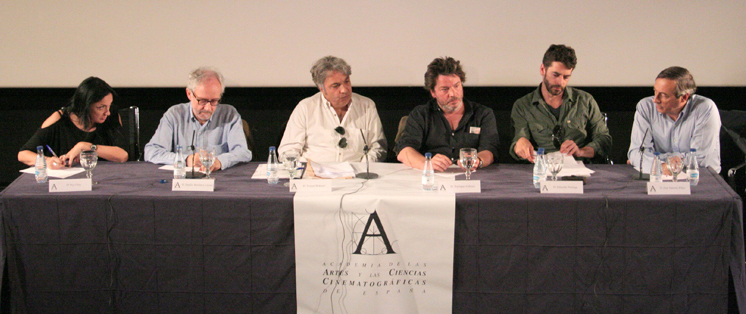
La Academia de Cine volvió a abrir sus puertas el pasado 24 de mayo a casi un centenar de académicos, por segunda vez en un mes, convirtiéndose en foro de debate y discusión sobre el momento que vive el cine español. En el marco de las jornadas ‘Situación actual del cine español. Cómo nos afecta a día de hoy’, la institución organizó una mesa redonda moderada por Yousaf Bokhari, secretario de la Junta Directiva, en la que participaron como ponentes los productores José Antonio Félez y Puy Oria, los directores Enrique Urbizu y Emilio Martínez-Lázaro, y el actor Eduardo Noriega. Con el fin de contextualizar el debate, se proyectó un vídeo resumen de la primera sesión en la que participaron Susana de la Sierra, directora general del ICAA, y Pedro Pérez, presidente de FAPAE.
José Antonio Félez abrió la sesión y, con el mismo propósito de ubicar la cuestión en el contexto general, afirmó que “cualquier actividad empresarial es difícil hoy en España. En el caso del cine es casi imposible por diversas razones, entre ellas que el plazo de tiempo para recuperar la inversión es muy largo. No se hacen películas porque no se pueden hacer: TVE, en lo que llevamos de año, ha estado inoperativa, y sabemos que va a sufrir un recorte en sus ingresos… Si éstos se reducen, la inversión en el cine también lo hará y si se reducen las ayudas públicas, prácticamente no habrá posibilidades de recuperación”.
Enrique Urbizu, triunfador en la última edición de los Premios Goya con No habrá paz para los malvados, aseguró llevar muchos años “echando en falta un convencimiento de nuestra clase política de que es imprescindible proteger, ayudar y valorar como un bien político nacional el producto cultural. Mientras no exista esa voluntad y consideren que una sociedad tiene futuro si tiene como hecho estratégico clave el bien cultural, si no hacen un pacto de estado, tendremos el cine que nos merecemos como sociedad o como país”. Sobre este tema también se pronunció Emilio Martínez-Lázaro. “Hace falta una gran voluntad política y es eso lo que podemos aportar desde aquí, un diálogo constructivo con la Administración”.
Soluciones para todos
“Estudiar la situación para buscar soluciones y acoplar el modelo” fue la propuesta de Eduardo Noriega, que resaltó que hablaba “desde el punto de vista del espectador”, y lamentó que “los cineastas también dan la espalda al cine. La gente que hace cine no va al cine, hay que hacer autocrítica”. No fue su única demanda, ya que en su opinión “el público no tiene la posibilidad de ver cine español en provincias. Necesitamos Internet y creo que las ventanas tienen que convivir”.
Félez subrayó que “lo que necesita el cine es recuperar espectadores. En 2001 se vendieron 151 millones de entradas, mientras que el año pasado no se llegó a los 97 millones. Hemos perdido dos generaciones de espectadores, que ven el cine en el ordenador de forma gratuita”. Las palabras de el productor de El Bola fueron secundadas por Martínez-Lázaro, para quien el público ha dejado de pensar que “el cine es algo por lo que hay que pagar”. Para el director de Amo tu cama rica el principal problema que tiene el sector es la piratería.
Una hoja de ruta
Sobre el papel de los productores se pronunció Puy Oria, resaltando que “estamos abocados a ser gestores, a trabajar para las televisiones o para los estudios. Quedan pocos como Emiliano Piedra o Elías Querejeta, productores creativos, ese también es un punto para reflexionar”. Planteó la posibilidad de que los académicos elaborasen “una especie de hoja de ruta con las diferentes líneas a seguir en cuestiones como la promoción, la educación, la internacionalización y el desencuentro con el público español”. Sobre el futuro también meditó Urbizu, destacando que “hay un clima de derrota que lo abarca todo. Estamos famélicos, no sé qué demonios le vamos a dejar a esta plantación de cineastas. Es paradójico, pero quizá haya que hacer películas mejor pensadas, más sensatas…”.
El debate, que se prolongó durante cuatro horas, fue intenso y activo. Los académicos participaron vivamente en el encuentro en el que se pusieron sobre la mesa los recortes, la situación de TVE, la desgravación por mecenazgo, Internet, la cuota de pantalla, la posición de los guionistas, el panorama de las empresas técnicas, la posibilidad de una bajada del precio de la entrada a las salas y Latinoamérica donde, en palabras de Félez, “el cine español tampoco lo tiene fácil”.
Did you like this article?
Subscribe to our NEWSLETTER and you won't miss anything.
Related articles
 Collective Memory of Spanish Cinema: Film Academy makes public its “living archive”
 La IA en los informativos, analizada en un debate promovido por la Academia de Televisión
 La Academia de Tv plantea en un debate el futuro del periodismo televisivo
 The Film Academy and the Cervantes Institute sign an agreement to promote Spanish cinema outside our borders
 La Academia de Cine debate sobre cómo las plataformas digitales están cambiando el modelo de producción y exhibición
 The Film Academy presents the project “The Network Cinema Academy” in Pamplona
 La Academia de Televisión organizará el debate electoral a cuatro
 El nuevo sistema de ayudas al cine español, a debate en la ECAM
 ‘Luis Buñuel. La forja de un cineasta universal’ y ‘Juan de Orduña. Cincuenta años de cine español’, Premios Muñoz Suay de la Academia de Cine
 La exhibición cinematográfica en España, un estudio sobre la situación de las salas de cine
 The Spanish audiovisual future under debate at the Vitoria TV Festival
 'Kings Abbots. Breaking the molds' and 'Spanish cinema. A cultural history', Muñoz Suay Award from the Film Academy
 Agreement between the ICAA, the Film Academy and the video clubs to promote Spanish cinema before the Goya Awards
The Television Academy presents the Making Of of the 2011 Debate
Agreement between the ICAA, the Film Academy and the video clubs to promote Spanish cinema before the Goya Awards
The Television Academy presents the Making Of of the 2011 Debate