





¿Está preparada la industria audiovisual para trabajar en nube?
¿Está la industria audiovisual adaptando sus procesos a esta nueva realidad? ¿Se aprovechan estas nuevas soluciones para mejorar la productividad y reducir costes en un entorno cada vez más competitivo, sobretodo bajo la coyuntura actual? ¿A qué retos se enfrenta la industria del cloud para adaptarse a los requisitos de la industria audiovisual? ¿Cuáles son los temores de nuestro sector al utilizar este tipo de soluciones? A éstas y otras cuestiones han respondido numerosos expertos en las jornadas ‘La industria audiovisual en el cloud, ¿realidad o ficción?’
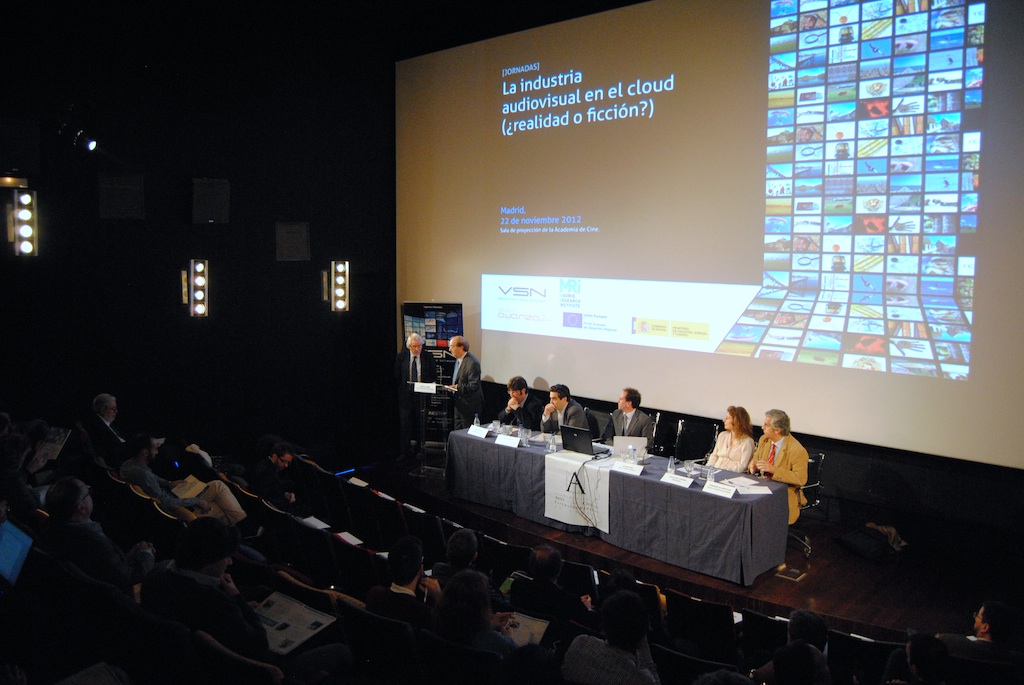
En nuestro día a día interaccionamos con el cloud de una manera constante a través de banca electrónica, redes sociales, prensa electrónica, streamings de música, archivos multimedia… y las empresas también utilizan soluciones basadas en cloud como CRM, webmail,…
¿Está la industria audiovisual adaptando sus procesos a esta nueva realidad? ¿Se aprovechan estas nuevas soluciones para mejorar la productividad y reducir costes en un entorno cada vez más competitivo, sobretodo bajo la coyuntura actual? ¿A qué retos se enfrenta la industria del cloud para adaptarse a los requisitos de la industria audiovisual? ¿Cuáles son los temores de nuestro sector al utilizar este tipo de soluciones?
A éstas y otras cuestiones han respondido numerosos expertos en las jornadas La industria audiovisual en el cloud, ¿realidad o ficción? what VSN, KIM y MRi han organizado en Barcelona y Madrid esta semana con la participación de principales actores de la cadena de valor audiovisual como productoras, distribuidoras de contenidos, organismos públicos, gestores de derechos y medios de comunicación.
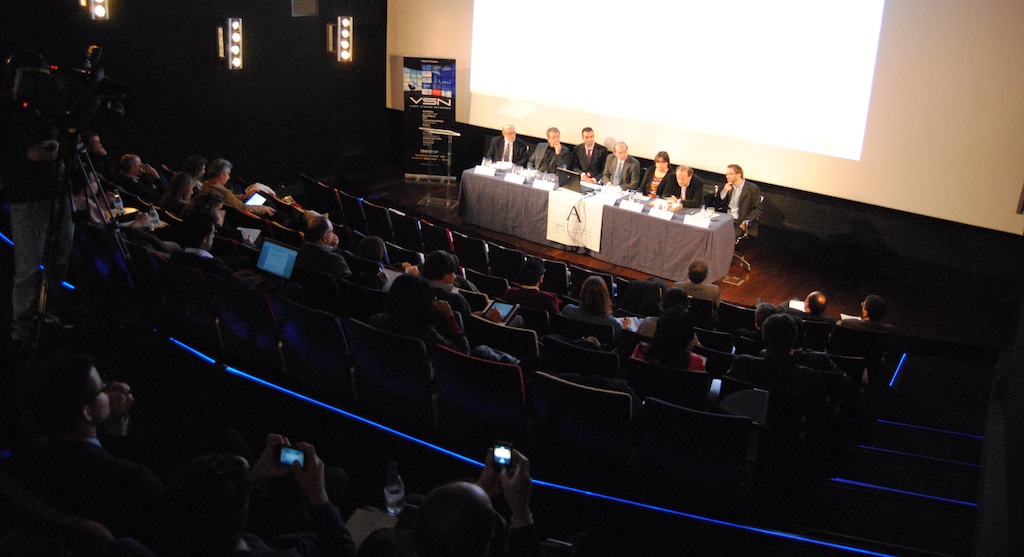
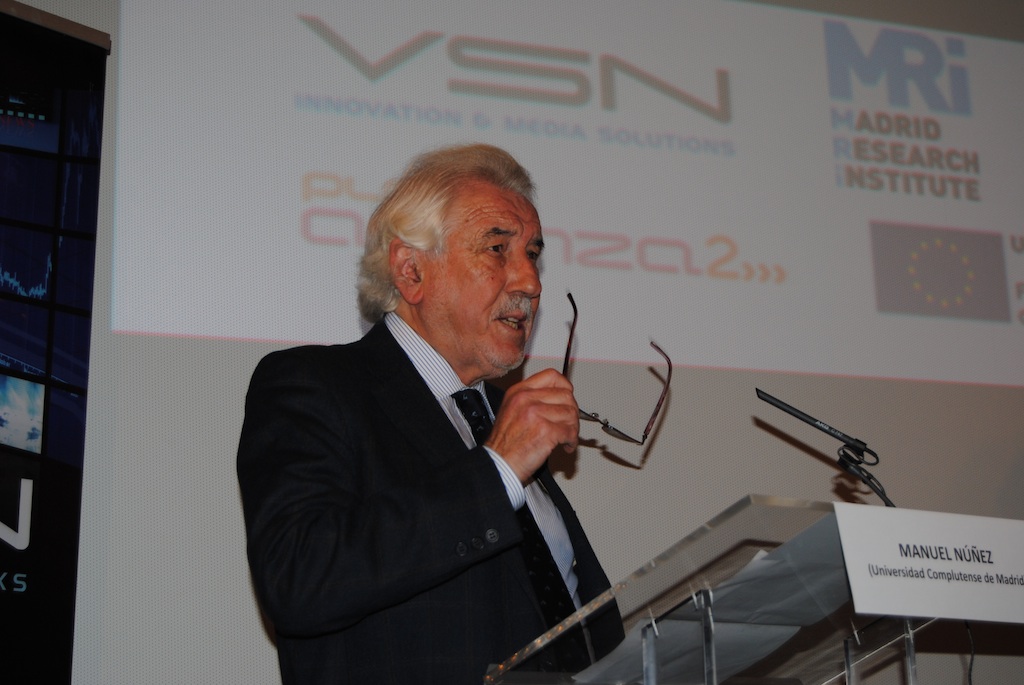 El encargado de abrir la jornada de Madrid celebrada este jueves en la Academia de Cine ha sido Manuel Núñez Encabo. El Catedrático de Ciencias de la Información de la Universidad Complutense de Madrid ha destacado que la fusión entre las TIC y el audiovisual es una realidad palpable aunque aún plantea muchos retos que solventar.
“¿Cómo aprovechar las nueva tecnologías para reducir costes y aumentar la producción con mayor calidad? Estos retos afectan a nuevos contenidos, ya que de lo que se tarta de de contenidos. Nuevos contenidos que van a afectar a muchos campos importantes desde el punto de vista social, económico, del entretenimiento o la formación… La Universidad a Distancia, por ejemplo, ya está trabajando en cloud a través de aulas virtuales”, ha afirmado Núñez Encabo.
“Los retos son importantes desde el punto de vista económico, de la distribución y desde la perspectiva jurídica y deontológica”, ha señalado.
Manuel Núñez ha llamado la atención sobre la necesidad de que las diferentes administraciones y la propia Unión Europea fomenten estas nuevas vías que acercarán aún más los contenidos a los ciudadanos y viceversa.
Por su parte, Jordi Utiel, presidente & CEO de VSN, ha iniciado su intervención preguntándose si los servicios que actualmente ofrecen en cloud computing los gigantes TIC (DropBox, Google Drive,YouSendIt…) son adecuadas para un entorno audiovisual profesional.
“Uno de los incovenientes es el tamaño de los ficheros y el ancho de banda y la propia seguridad de contenidos. También nos planteamos cuestiones ¿están los proveedores e infraestructuras preparadas?, ¿cómo podemos ahorras costes en la nube, qué modelos de negocio podemos basar en la nube? ¿qué aplicaciones de la industria podemos llevar al cloud y cuáles no?”, se ha planteado Utiel.
VSN cuenta desde hace siete años con un sistema de contribución y distribución de contenidos vía IP (IPTransfer). Utiel ha compartido con los participantes en esta jornada las ventajas que el uso de esta tecnología está aportando con total seguridad gracias al uso de marcas de agua.
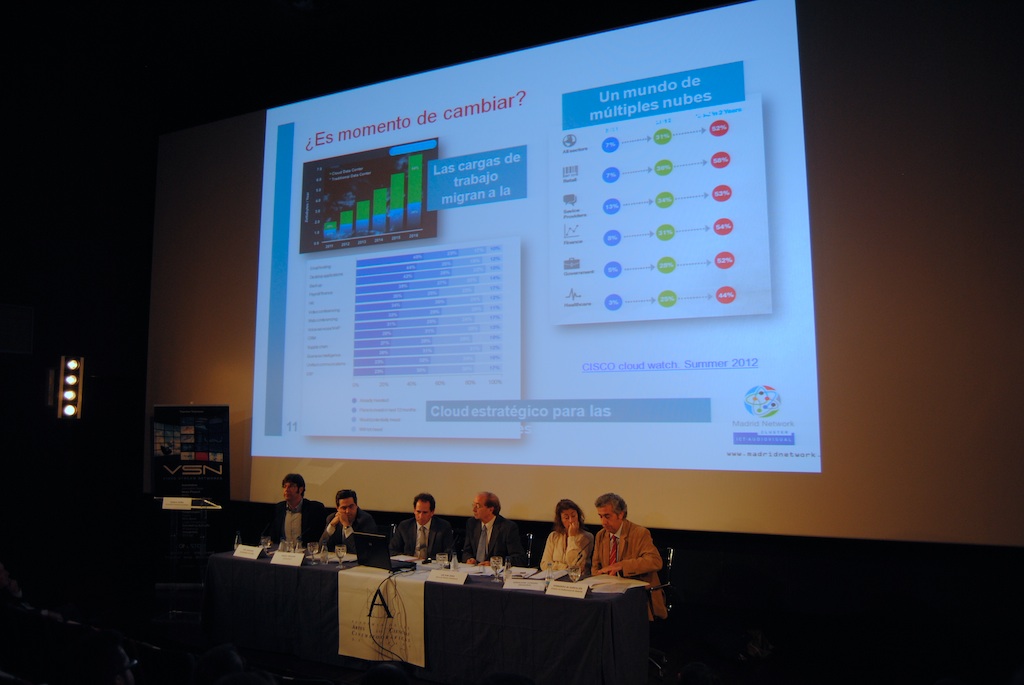
Qué espera la industria del cloud
En una mesa redonda moderada por Víctor Jara, director del Foro de Debate Ciudadano, han participado Géraldine Gonard, Sales Director & New Business Development en Imagina; José Garasino, director general de la Academia de Cine; Ángel Gregori, director ejecutivo de Dialevo; y Fernando Garcillán, Cluster Audiovisual de Madrid Network.
Géraldine Gonard ha destacado que el catálogo de Imagina se compone por más de 9.000 horas de programación que mueven en mercados y festivales de cine y televisión participando en una veintena de citas internacionales, así como a través de misiones comerciales y visitas personales. Imagina ha cerrado ventas en más de 145 países en todo el mundo con más de 800 acuerdos cerrados desde 1999.
En este momento Imagina se está planteando la posibilidad de estructurar toda su promoción y distribución de contenidos a través de cloud. En este momento, cuenta ya con catálogos y trailers online en la web corporativa con acceso abierto a todos y posibilidad de visionar trailers solamente en streaming. Con respecto a los materiales para visionado por parte de los clientes, disponen de episodios y películas en YouTube y Cinando con acceso probado y visionado en streaming. Una de sus ventajas es el ahorro de costes en distribución de materiales y los típicos problemas en aduanas.
En cuanto al envío de materiales de emisión, Imagina está buscando una buena solución para no tener que enviar material físico. Por ahora, solamente el 40% de su catálogo está digitalizado (se lleva a cabo en un laboratorio externo) en cintas LTO.
Para avanzar en esta línea, según Gonard, “necesitaríamos contar internamente con servidores con mayor capacidad, además no existe una codificación única y sería necesario un ancho de banda potente y un CDN a nivel mundial. Ante esto, necesitamos encontrar servicios a un coste más accesible cuya gestión dependa de la propia distribuidora en cuanto a almacenamiento, digitalización y envío”.
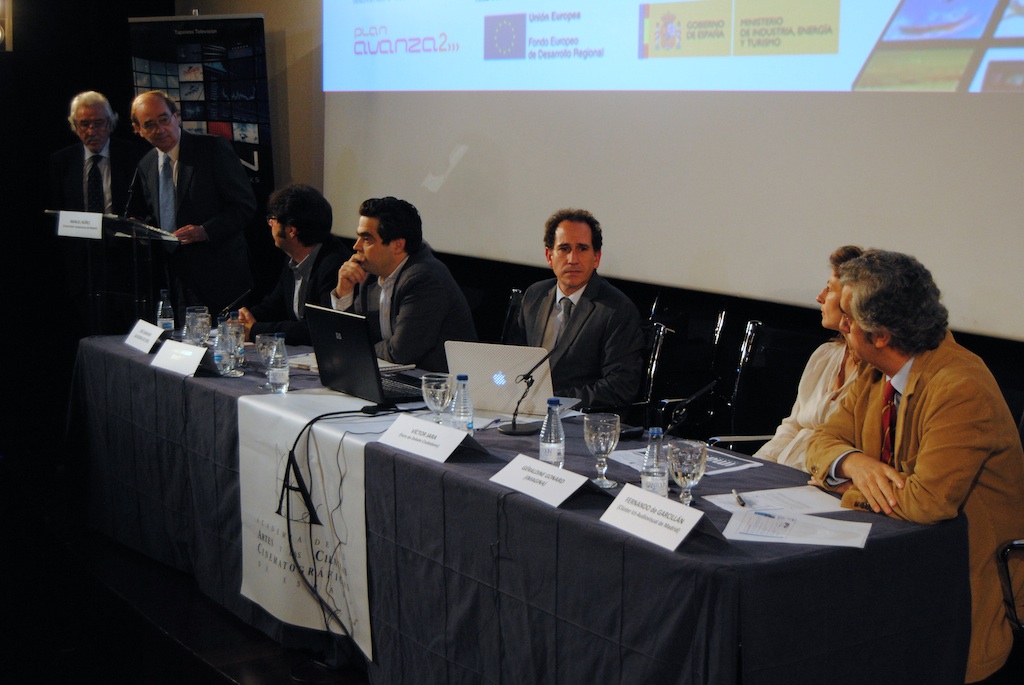 Garasino ha destacado la democratización del proceso de producción y postproducción “aunque no se han abaratado los costes como hubiera sido de esperar”. EL contenido transmedia y multiplataforma que se apoyan mucho en el cloud computing están aún en los primeros pasos desde el punto de vista narrativo trabajando muchas veces con patrones analógicos de producción, creatividad y, lo más importante, en distribución. En la industria del cine creemos que Internet y el cloud es el futuro, pero aún no es presente desde un punto de vista de monetización de los contenidos.
En cuanto a la distribución en sala, Garasino ha señalado que “el 80% de las salas europeas están digitalizadas o en proceso, lo que permite la eliminación de costes de las copias y distribución, pero ha creado costes nuevos como el VPF y ha provocado una revolución en el mercado porque la digitalización se aceleró cuando la oferta de contenidos comenzó a primar en digital”.
De cara al usuario final, “la oferta de contenidos legales está monopolizada por grandes empresas que pueden tener el poderío tecnológico suficiente y aglutinar a su vez un gran catálogo. Cuando haya una generalización de oferta legal, asequible y de calidad, que permita acceder a un catálogo amplio y fácil de gestionar desde cualquier dispositivo podría cambiar esta situación”. Por otro lado, ha llamado la atención sobre una legislación que está caminando muy atrás del desarrollo tecnológico. “El mundo cloud para una industria audiovisual, formada mayoritariamente por actores muy pequeños, presenta aún muchos retos como la seguridad de los contenidos en la red y mejorar la competitividad en el acceso a estos nuevos servicios”, ha concluido Garasino.
Ángel Gregori ha reflexionado sobre las ventajas y desventajas de la nube. Desde su punto de vista, una cuestión importante es “qué haces con aquello que ya tienes en casa, y cómo adaptas tu infraestructura a los nuevos servicios. Dentro de las empresas de media, es necesario definir una estrategia clara de hacia dónde se quiere ir con respecto al uso de la nube.
Fernando Garcillán ha desvelado que el Cluster Audiovisual de Madrid Network trabaja en este momento en un market place de empresas asociadas a diferentes clusters. Desde su perspectiva, para una empresa audiovisual el cloud podría suponer una optimización de la infraestructura de datos teniendo en cuenta que los contenidos audiovisuales son ya la principal fuente de tráfico por Internet. El cloud computing reduciría gastos adaptando la infraestructura a la demanda real en cada momento con mayor flexibilidad y seguridad pasando de un enfoque tradicional de servidores físicos poco ocupados normalmente a un enfoque más de alquiler para optimizar mejor los servicios. Otra ventaja es poder implementar un servicio de forma mucho más rápida que lo que supondría un despliegue de servidores físicos”. “El entorno audiovisual es adecuado para el cloud debido a los miles de usuarios concurrentes, streaming, cargas y proyectos puntuales”, ha concluido Garcillán.
Respuestas en el cloud
Fernando Victoria de Lecea, presidente de la Asociación de Profesionales de la Producción Audiovisual (APPA); Gloria Bretones, responsable de comunicación online de APPA; Luis Sanz, vocal de la Junta Directiva de la Academia de las Ciencias y las Artes de Televisión; Juan José García Cabrera, director de Grandes Cuentas de Arsys; Jesús Izquierdo, Digital media consultant; y Enrique Varela, responsable de Producto de Media Management-Telefónica, han participado en la segunda mesa redonda de esta jornada.
El presidente de APPA ha destacado la ruptura de las clásicas ventanas de comercialización, con las que la nube terminará desde un enfoque internacional. El futuro es la nube, aunque por el momento es ficción. El futuro es la televisión conectada como herramienta de nuestro consumo. La televisión volverá a ser la reina del salón”, ha afirmado Victoria de Lecea.
Gloria Bretones ha centrado su intervención en la posibilidad actual de poder consumir cine de forma totalmente legal, con excelente calidad y buen precio. “La gente no conoce muchas de estas plataformas porque no se comunica y no se fomenta el hecho de que el cine español es de excelente calidad”, defiende Bretones.
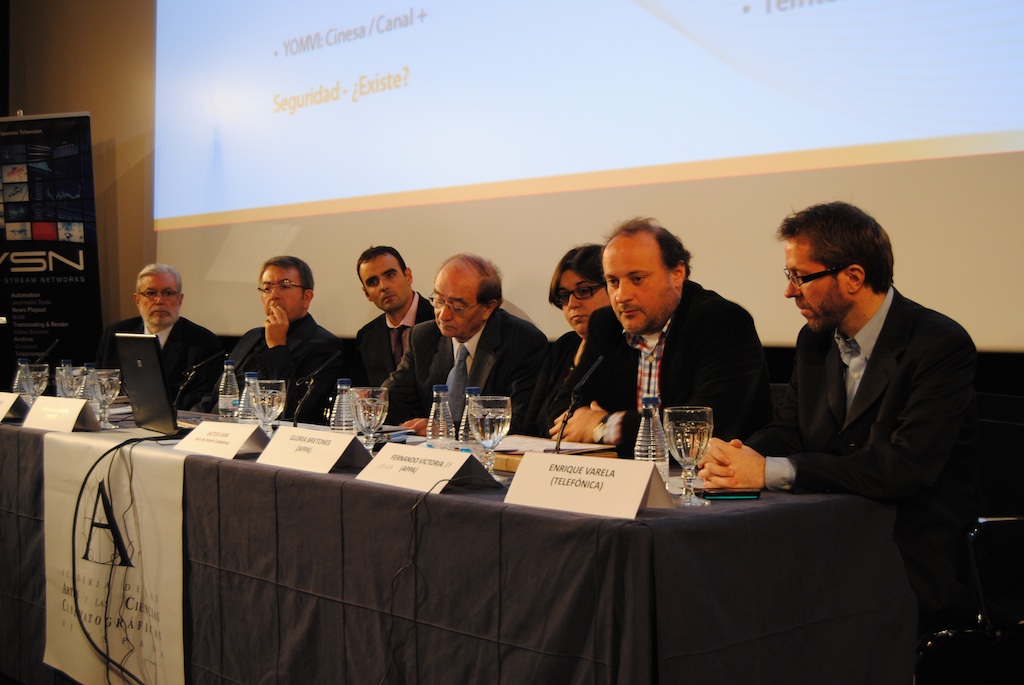 Luis Sanz ha asegurado que entre los posibles negocios audiovisuales basados en nube que podemos encontrar destacan la compraventa de contenidos terminados, frescos sin edición, actuales editados y otros recursos de imágenes y vídeo.
“Desde el punto de vista profesional de la producción y edición, todos los contenidos que se suban a la nube debieran transcodificarse a un códec sencillo de baja resolución que permita una edición o visión por streaming, logrando ediciones a precisión de cuadro, manipulación de pistas de audio… en la nube nunca encontraremos un Nitris o un Final Cut pero sí las suficientes herramientas para facilitar el desarrollo de muchos negocios”, ha destacado Sanz.
Juan José García ha repasado algunas de las posibilidades que brinda la nube para entornos de producción, preproducción y desarrollo como plataformas web (Apache, Tomcat, IIS…), aplicaciones web, aplicaciones corporativas, bases de datos, replicación de servicios, backup de servidores y datos, entre otras. “Toda la infraestructura que puede montar una empresa de media en relación a ficheros ya la ofrecen los proveedores de cloud, con pago por uso, sin compromiso de permanencia, con acceso a tecnología TOP en alta disponibilidad, y soporte 24/7”, ha comentado. Desde el punto de vista de seguridad, García reconoce que “la seguridad está en el proveedor, no en el cloud. El proveedor debe aportar confianza de una forma más clara que en el pasado con certificaciones de terceras partes, CPDs fiables y buen nivel de soporte 24x”.
Jesús Izquierdo ha centrado su intervención en el papel del cloud en la teledifusión con respecto al CDN, la transcodificación de contenidos, el DRM as a service, la seguridad derivada con watermarking/fingerprinting y la documentación del vídeo. “La siguiente revolución del vídeo van a ser los metadatos a lo largo del ciclo de vida del producto audiovisual. Su uso correcto en la distribución de vídeos, indexación y catalogación, abrirá las puertas a nuevos modelos de negocio”, ha comentado Izquierdo.
Enrique Varela, de Telefónica Soluciones, ha afirmado que “la nube no es futuro sino el presente, con una apuesta clara”. En el mundo audiovisual, la nube se perfila como una fórmula para ahorrar costes y grandes inversiones en almacenamiento de media reemplazando grandes librerías con cintas y servidores, ha asegurado.
“La nube es una alternativa a un coste razonable para las empresas de media. Aún hoy, hay reticencias a entrar en el universo cloud por una supuesta inseguridad. La cloud es totalmente segura con seguridad física y lógica. Otra duda suele ser la accesibilidad. La seguridad de poder acceder a la nube minutos antes de un informativo para terminar una pieza, por ejemplo, queda asegurada gracias al uso de sistemas redundantes”, ha añadido.
Success stories
Enrique Varela ha desvelado que Telefónica acaba de poner en marcha un proyecto de nube privada para alojar todos los archivos de contenidos de Mediaset España. Sin olvidar que uno de los primeros desarrollos en nube ha sido la plataforma Imagenio y sus servicios Over the top.
Por su parte, Carles Rams, VSN Technology & Professional Services, ha expuesto el caso de éxito de Zara, una compañía en la que la información generada por todos sus vendedores es enviada al centro de Inditex para procesarla y tomar medidas desde un enfoque puramente industrial. Haciendo un paralelismo sobre las medidas que podría “copiar” el audiovisual de una industria como la de la moda, Rams ha asegurado que “la coyuntura actual exige mejorar la eficiencia. Es necesario abordar nuevos modelos de negocio sin incrementar los costes y gestionar la cadena de valor audiovisual basándose en procesos y compartiendo recursos. Además, la industrialización permite externalizar estos procesos y para ello podemos utilizar soluciones cloud”.
Para industrializar y compartir contamos, según Rams, con herramientas como la arquitectura SOA y la orquestación con Business Process Manager y Business Intelligence.
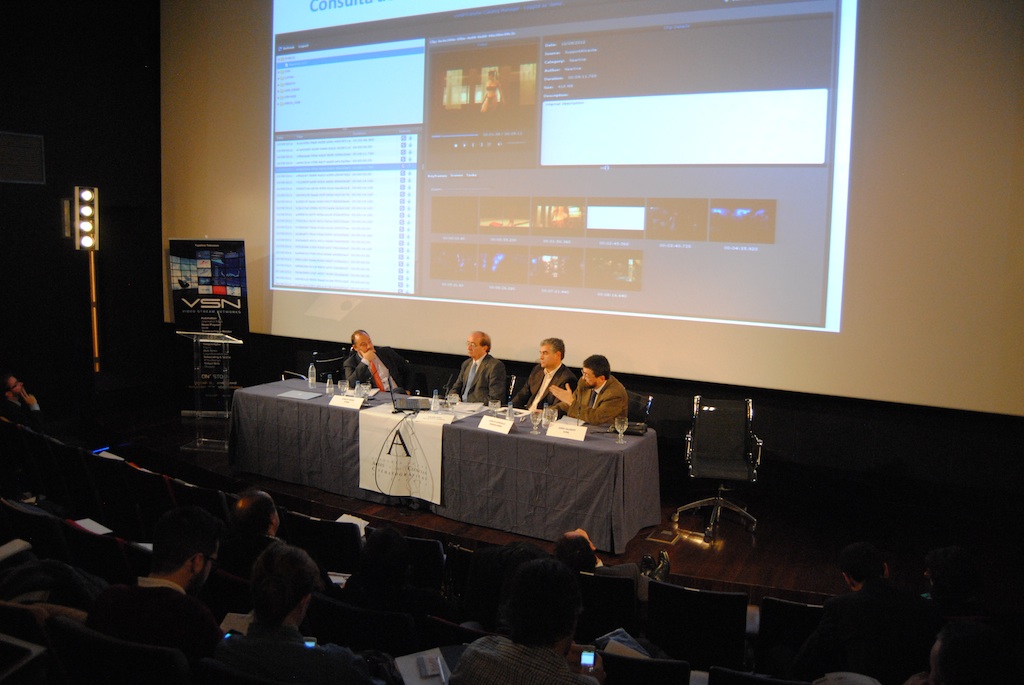
Jordi Gilabert, director de I+D de VSN, ha expuesto una solución efectiva para compartir en un mundo conectado en un entorno broadcast: VSNIPTransfer. Esta solución permite un sencillo envío multidestino, seguro y acelerado en modo pago por uso. Ofrece un MAM en la nube con múltiples servicios como catálogo con pernisos, transcodificación, marca de agua, gestión de metadatos, automatización, integración con CDN, CMS, encriptación… Esta plataforma permite crear un nuevo negocio en la nube para ser ofrecido como SaaS.
Su arquitectura modular permite una funcionalidad incremental y es compatible con entornos de cloud públicos y privados así como con las herramientas de producción broadcast como editores, videoservidores… Desde el punto de vista de la seguridad, ésta queda totalmente garantizada en toda la cadena de creación y distribución del contenido. VSNIPTransfer soporta multiformato SD/HD PAL/NTSC y es multiwarpper (MXF, MOV, AVI, M2T, DV, MPG…).
Gilabert ha compartido con los presentes la experiencia de éxito de la Xarxa Audiovisual Local (XAL) que ha puesto en marcha su nueva plataforma de distribución por IP de contenidos audiovisuales bajo demanda, XIP/TV, para las televisiones locales adheridas a su red. La aplicación permite crear canales de Web TV para cada una de las televisiones locales y ofrece la posibilidad de que cada una pueda realizar la gestión de su propio canal para promocionar tanto los contenidos de la XAL como los de las propias televisiones.
Por último, Carlos González, coordinador comercial de Errequerre, ha expuesto el caso de éxito de esta plataforma de intercambio de contenidos basada en tecnología de VSN, que en muy pocos meses se ha posicionado como un referente en el mercado audiovisual de habla hispana.
Errequerre está así fomentando la compra-venta de contenidos fácilmente accesibles desde la propia plataforma vía IP.
González ha afirmado que “el sistema integrado de gestión audiovisual que ofrece Errequerre intenta cubrir algunas de las necesidades de las productoras y otros generadores de contenidos basándose en soluciones tecnológicas adaptables a las actuales línea de conectividad que el mercado ofrece permitiendo un importante ahorro de costes y la posibilidad de generar ingresos añadidos. Principalmente se cubre dos objetivos: gestión de derechos y solución logística”.
González ha reseñado que en apenas un año de vida Errequerre ya ha cerrados acuerdos con 118 proveedores de contenidos españoles y con 40 en América Latina como Cisneros, Miami Tv o Claxson que comparten y distribuyen su producción a través de la nube.
Did you like this article?
Subscribe to our NEWSLETTER and you won't miss anything.
Related articles
 Madrid is proposed as a filming scene for the Korean audiovisual industry
 Broadcast cinematográfico: la industria (y la tecnología) ya está preparada
 EFD arrives in Spain to provide service to the audiovisual industry
 ¿Por qué está desapareciendo la innovación de la industria broadcast?
 CCMA demands in Parliament the “necessary financing” to promote the audiovisual industry
 Watchity, Konodrac and Ebantic join forces to launch a live audiovisual production solution 100% in the cloud
 Is Spain prepared for the emergence of 5G?
 Los profesionales debatirán en BIT Audiovisual sobre temas candentes en la industria como televisión híbrida, nube, 4K y redes 5G
 VSN demonstrates at this NAB 2018 that it is prepared to face the challenges in the industry
 The future of media companies is in the cloud
 Panorama Audiovisual once again leads in 2015 as a reference medium for professionals in the audiovisual industry
 Agreement to promote the Basque audiovisual industry
 La Jornada sobre industria audiovisual y cloud se amplía también a Madrid
 The BBC prepared for the most digital and interactive Games in history