





Everis and UPF use animation to promote scientific-technological studies
Industry, University and Public Administration collaborate on a 4-chapter animation series that aims to encourage young people to choose scientific-technological studies.
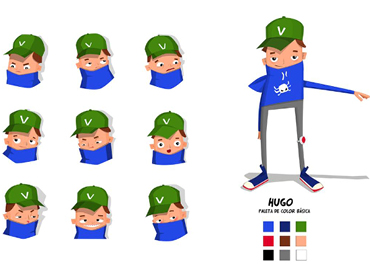 The consulting firm Everis and the Pompeu Fabra University (UPF) prepare Noa & Max. Atrapados en Electronia, an animation series that aims to promote innovative talent and learning for ICT creativity among young people. The series, which is financed by the Spanish Foundation for Science and Technology (FECYT), a public foundation dependent on the Ministry of Economy and Competitiveness, is aimed at young people between 10 and 14 years old and will have four three-minute pilot episodes that can be seen online. Internet.
La serie nace del interés de Everis y la Universitat Pompeu Fabra por el fomento de las vocaciones científico-tecnológicas y el talento innovador entre los estudiantes. Por parte de Everis, como uno de los focos de actuación principal en el ámbito de su Responsabilidad Social Corporativa. Por parte de UPF, dentro de su estrategia de atracción y retención del talento a todos los niveles, tanto en educación como en investigación. Desde 2008, Everis está desarrollando numerosos estudios y proyectos relacionados con la temática de este proyecto, centrándose en la reflexión sobre la problemática de falta de vocaciones en el ámbito científico-técnico y realizando estudios como el Estudio anual sobre la falta ingenieros TIC (2012) o el Factores influyentes en la elección de estudios científicos, tecnológicos y matemáticos (2012).
For its part, UPF develops strategies for attracting, caring for and training students in their fields of action and, specifically, in a comprehensive manner for the media and cultural industry, from the content to the technology that supports them.
The project
Noa and Max, the two protagonist brothers, will have to use knowledge of science and technology to get out of the Electronia video game in which they have been trapped. In the fictional plots, which will pose small scientific-technological challenges, the aim will be to improve young people's perception of their own ability to understand and study scientific and technological phenomena, as well as enhance their creativity and innovative talent.
Sergio Marco, director of Everis, assures that "we want to make this project a meeting point for professionals from different fields (educators, animators, communicators...), generating new learning opportunities, getting closer to new technologies and scientific and technological subjects, and extending it to new applications for younger people that help increase their interest in them."
Marco Romeo, GTI – UPF researcher and director of the Master in Animation IDEC-UPF highlights that “the project is also an opportunity to introduce young animators to the audiovisual world by involving them in the digital design of their own production with a future projection.”
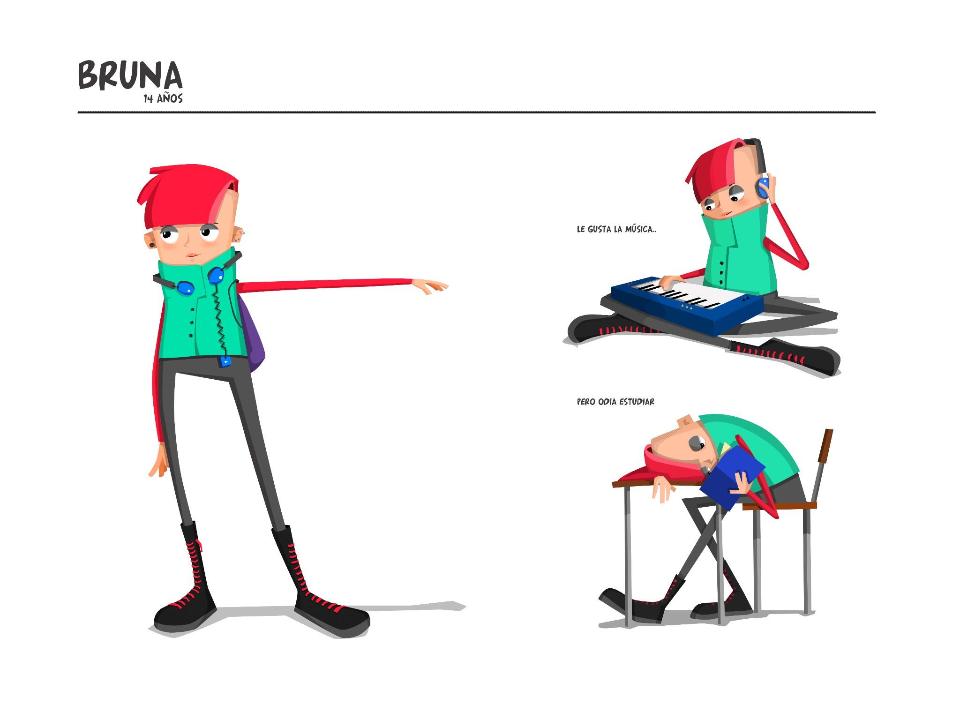 Thinking of the youngest
The design and creation of the series are supported by the conclusions of the study carried out by the consulting firm on the influencing factors in the decision to study in secondary school, carried out on almost 5,000 ESO and high school students. In this way, the series is aimed at young people between 10 and 14 years old, since according to the study, at this age we still have time to act since the decision has not been made.
The study also indicates that girls feel less attracted to technology, hence "we want to change the male stereotype of technology, and offer reference models to girls to increase their interest in ICT," argues Sergio Marco about the choice of a female protagonist for the series.
The commitment to online distribution is due to another of the study's conclusions that indicates web platforms (56%) and television (29%) as the channels with the greatest influence on the decisions of young people of these ages. Hence also the series is intended to be broadcast on television in the future.
In the fictional plots, which will pose small scientific-technological challenges, the aim will be to improve young people's perception of their own ability to understand and study scientific and technological phenomena, as well as their innovative talent. And the fact is that between 45% and 51% of the students do not see themselves capable of taking this type of studies and more than half of the students value the subjects of chemistry, physics and technology negatively compared to only a quarter who do so positively.
Noa & Max contará con dos portales. Por un lado, el institucional, dirigido al público adulto (docentes, padres, profesionales del mundo de la animación y empresas e instituciones) y que ofrecerá la información del proyecto educativo que está tras Noa&Max. Y, por otro lado, el portal juvenil, que estará dirigido al público más joven de la serie donde, además de los capítulos, encontrarán material extra descargable y contenidos adicionales.
The series also has funding from the Scientific Culture and Innovation Program of the FECYT and the Ministry of Economy and Competitiveness, and with the collaboration of entities in the scientific and educational field as well as technological innovation.
“We have gotten Industry, University and Public Administration to collaborate on this project to help solve a problem that, ultimately, affects the employability of young people (more than 50% at the moment),” highlights Sergio Marco.
[youtube]http://youtu.be/60vsM82YPn0[/youtube]
Did you like this article?
Subscribe to our NEWSLETTER and you won't miss anything.
Related articles
 RTVA and the University of Málaga sign an agreement to promote student internships at Canal Sur
 Culture calls for aid to promote editorial digitization, audiobooks and multimedia narrative
 Netflix creates a fund to promote the role of women in the audiovisual industry
 Zixi collaborates with Synamedia to promote mass deployment of video delivery over IP
 Fewer requirements to promote international film production in Spain
 Panasonic, Sony and NHK: Japanese alliance to promote 8K technology before Tokyo 2020
 StreamAMG and OnlineSeminar partner to foster global webinar market
 Ericsson opens a cloud laboratory in Italy to foster innovation and collaboration with operators
 Hispasat and LG sign an agreement to promote Ultra High Definition
 Barco and Dreamworks sign an alliance to promote 3D sound in cinemas
 The Ciudad de la Luz Study Center organizes an animation course together with Clay Animation
 Huesca inaugurates the first Demonstration Center to promote ICT in the audiovisual sector
 AEQ joins Ravenna to promote open standards in audio distribution over IP
 Panasonic launches an initiative to promote 3D production