





The second screen comes to the cinema
A Dutch project proposes an innovative system that aims to complete the viewer's experience in the movie theater through the free download of a simple application for smartphones.
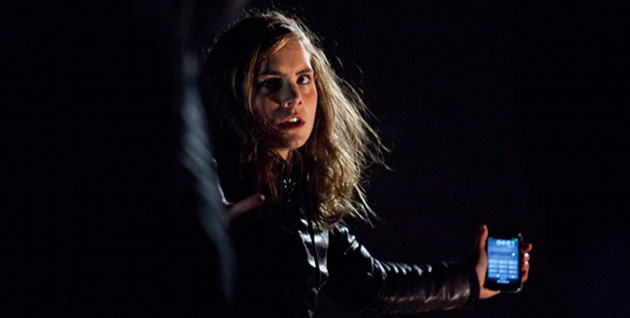
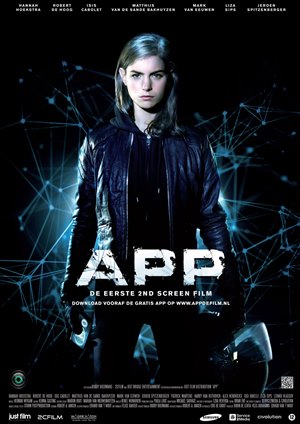
David Vicente Torrico, Master in Communication in an interesting article for the Digital Leisure and Entertainment Observatory (Killed), maintains that the crisis sharpens ingenuity, and if not, ask Bobby Boermans, director of APP, the first feature film in which viewers actively participate in the development of the plot through their mobile phone.
Cinema, in line with the rest of the industries, has faced a difficult economic situation in recent years, with a notable decrease in subsidies, a drop in the number of tickets sold and a sharp increase in illegal downloads.
Faced with such an unfavorable outlook, this Dutch project presents an innovative system that aims to complete the viewer's experience through the free download of a simple application (Film App) for smartphones, without the need to make any investment on the part of the movie theater or increase the cost of admission.
The plot of the film serves as a pretext for the audience to interact in real time with what is seen on the big screen. In this way, each viewer receives the same messages on their mobile phone as the protagonist simultaneously, thus playing a fundamental role in the evolution of the plot. In addition, the application also has a complete database on the cast, images from the filming and multimedia content outside the main narrative.
This is, therefore, an invitation not to turn off your mobile phone when entering a movie theater, which will probably attract younger audiences.
 Innovation at zero cost
The film industry, since its inception, has been involved in a constant evolutionary process, trying to provide the public with a greater degree of satisfaction through technical improvements such as the incorporation of sound, color and, more recently, three-dimensional image. These advances have given rise to a new way of understanding cinema, both in the field of production and from the point of view of the receiver, and have been possible thanks to significant economic investments.
This is where the main advantage of Bobby Boermann's project lies, since the possibility of interacting in real time with the cinematographic story from the mobile phone does not entail any cost either for the distribution theaters or for the viewer. From the producer's point of view, it represents a minimal investment, supported by work synergies that allow greater visibility to the contents that surround the final work, the film.
In this way, technological convergence has made it possible to overcome the last barrier in the audiovisual market, until now insurmountable, such as the cinema.
This fact has been possible thanks to the development of the intelligent mobile phone, commonly called smartphone, which, since its appearance in 2007, has become the main center for leisure and audiovisual consumption. Its technology, based on the Internet connection and the use of applications, has made it possible to make the leap from a mere wireless communication instrument to the 8th cultural distribution channel, behind print media, cinema, radio, television, recording media or the web.
The popularity of this type of terminal is such that it is estimated that almost half of European and American citizens own one, according to the Mediascope Europe study (IAB, 2012), while the consulting firm Screen Digest highlights the more than 7 billion applications downloaded worldwide in the last year, 95% of them free.
In such fertile terrain as this, the entertainment industry has opted to develop new business opportunities, due to the added value it represents for its products.
Cinema has been the latest advance in the leisure industry within the smartphone market, since large communication groups have had a significant community of followers for years through their respective apps. The success of these programs lies in the possibility that the public can participate in real time in voting and contests, expand their knowledge related to the story watched or, one step further: enjoy exclusive content for the users of the applications based on the televised program, in what is known as transmedia.
It is, therefore, about offering the viewer a personalized product, which allows them to interact voluntarily in its creation, providing a series of hyperlinks that improve the user experience.
The digital divide
One of the main problems posed by the use of double screens in cinemas is precisely the absence of said double screen, given that it is not an accessory incorporated at the entrance to the room.
As we pointed out in the previous point, half of American and European citizens have a smartphone, which means that the other half would be excluded from the target audience of the film we are analyzing.
This fact finds its reason for being in the theory of the digital divide, which is defined as the inability of people to access the benefits of the knowledge society based on socioeconomic variables, producing inequality.
However, for the moment, the link created between the big screen and the mobile phone is accessory, as it provides additional information and its lack does not limit the follow-up of the main plot.
A consolidation stage begins
As in all technological innovation, the film market has not yet considered how far its possibilities of participation can go through the mobile phone. This interaction with the viewer must still go through a phase of learning and consolidation, which will allow the maturity of a project that is still in its embryonic state to be reached.
For now, APP It is the first experience. The popularity of the second cinema screen will depend on its reception among the public.
Did you like this article?
Subscribe to our NEWSLETTER and you won't miss anything.
Related articles
 Samsung's Onyx Cinema LED screen arrives in Europe
 'The Walk' comes to the big screen with innovative photorealistic techniques
 The second screen experience inside a stadium
 La Moderna chooses Civolution for the development of second screen environments on Televisió de Catalunya
 The second screen gains weight
 Atresmedia Conecta, the evolution of Ant3.0 on the second screen
 The second screen as an inseparable part of the television experience
 Civolution provides second screen interactive services to the French group Lagardère
The 'Gandía Shore' phenomenon sweeps the second screen and social TV
Civolution provides second screen interactive services to the French group Lagardère
The 'Gandía Shore' phenomenon sweeps the second screen and social TV
 Mobovivo will use Civolution technology in its developments for second screens
 The television industry is not capitalizing on the second screen
 Dentsu trusts EVS's C-Cast in its actions for the second screen
 Softel MediaSphere Bridge Gives Broadcasters a Bridge to the Second Screen
 Captain Thunder comes to the big screen