





BBC will broadcast three World Cup matches in Ultra HD
The signal in 4K resolution will only be available in the British broadcaster's research and development facilities as a testing laboratory.
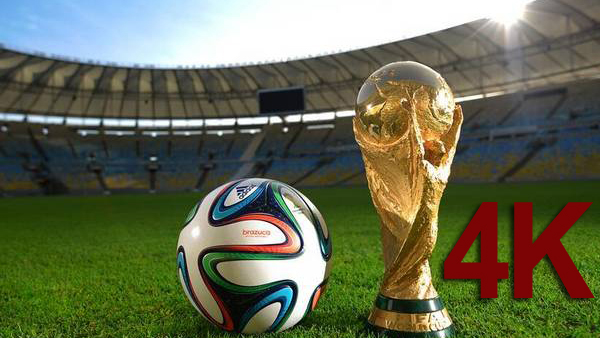
The British public broadcaster BBC will broadcast three matches from the World Cup in Brazil with 4K technology. The BBC thus intends to test the broadcast in Ultra High Definition (UHDTV), so it will only be received in its research and development facilities.
The BBC considers that the biggest challenge facing Ultra High Definition is its compatibility with current signal distribution infrastructures since it would be necessary to have 20 megabits per second to distribute a 4K signal without any interruption.
Although the results of 4K are evident in any of the tests that have been carried out, the BBC now wants to test UHDTV in a real environment of content production and distribution, and above all whether current transmission networks would respond to the challenge.
For this test, the 4K signal will be sent from Brazil via satellite and distributed in the United Kingdom on DTT and broadband.
The R&D team at BBC intends to test new hybrid content distribution models in which the universality of traditional distribution media such as satellite or DTT already coexists with an increasing presence of IPTV.
On the other hand, the challenge of delivering Ultra-HD TV to the home is compatibility with existing broadband transmission and distribution capabilities. This essay will examine the use of high-efficiency coding such as HEVC for the distribution of images both on DTT and over IP networks.
Finally, the BBC will determine how far it can go with the use of adaptive bitrate technology that allows a user's device to automatically select the best available image quality according to the bandwidth available at any given time. During this experience, the adaptive bitrate offered by MPEG-DASH in IP networks will be tested.
Did you like this article?
Subscribe to our NEWSLETTER and you won't miss anything.
Related articles
 RTVE will broadcast the 2026 World Cup in Ultra High Definition
 Mediapro agrees with Cinesa and Yelmo to screen Spain's World Cup matches
 The 4K Summit turns Malaga into the world capital of Ultra High Definition
 The Dutch group M7 offers the World Cup in Russia in Ultra High Definition with Harmonic
 Hispasat will broadcast 28 Russian World Cup matches in 4K via satellite for the Portuguese operator Meo
 The 4K Summit, the world summit of Ultra High Definition, starts in Malaga
 Seville, world capital of Ultra High Definition with the 4K-UHD Summit
 World's first Ultra High Definition broadcast in DVB-T2 with content in HDR, WCG and AC-4
 FIBA gives Mediaset the rights to six new Basketball World Cup games
 'Blue Summer', a global trending topic thirty-three years after its premiere on TVE
 4K Ultra High Definition and M2M technologies will multiply Internet traffic by three
 Gol Televisión will offer all the World Cup matches on multiscreen
 Movistar TV will exclusively broadcast the qualifying matches for the Euro 2016 and the 2018 World Cup
 FIFA will produce three matches of the World Cup in Brazil in Ultra High Definition