





The SGAE takes stock in its Yearbook of the accumulated effects of the crisis on the sector
Factores como la crisis económica, la piratería, la subida del IVA cultural, los cambios en los hábitos de consumo, han afectado en mayor o menor medida a las artes audiovisuales, escénicas y musicales.
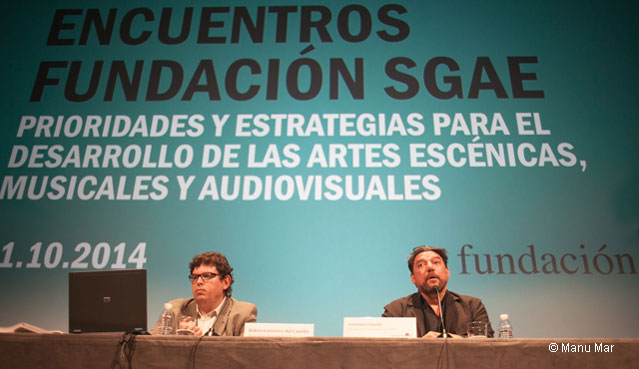
La Fundación SGAE ha presentado este miércoles el Anuario SGAE 2014 de las Artes Escénicas, Musicales y Audiovisuales, volumen que ofrece datos estadísticos básicos para caracterizar el sector cultural y, que, en esta decimocuarta edición, se consolida como una obra de referencia fundamental para el sector.
El Anuario SGAE 2014 ofrece información rigurosa y detallada sobre los principales sectores de las artes escénicas, musicales y audiovisuales, con decenas de miles de datos numéricos y más de 300 gráficos y tablas estadísticas. Surge como resultado de un laborioso proceso de captura y tratamiento de datos, compilación de fuentes y análisis de esta información.
Esta publicación, nacida en 1999, se ha convertido ya en una herramienta fundamental para los estudiosos del mercado cultural español.
Este Anuario presenta la información perfectamente analizada en términos cuantitativos y estructurales sobre los siguientes sectores del panorama cultural: artes escénicas (teatro, danza y ópera), música clásica, música moderna, cine, música grabada, televisión, video, radio y nuevas tecnologías. Para cada apartado, presenta un informe que analiza los principales datos de ese sector, destacando sus aspectos característicos a lo largo del año 2013 y aportando elementos para la comparación con el ejercicio de 2012.
Para poder ofrecer este análisis detallado, en el Anuario se incluyen datos específicos sobre múltiples características de los espectáculos (asistentes, recaudación, precio de las entradas), tratados de modo global y presentando, en algunos casos, clasificaciones significativas (películas más taquilleras, discos más vendidos, producciones escénicas con más público..).
Para la elaboración del Anuario, se ha contado con la participación de nueve periodistas especializados en cada apartado, así como con un total de 36 profesionales, en su mayor parte representantes de asociaciones del sector, que han formado parte de una investigación cualitativa que complementa la visión estadística.
Efectos acumulados de la crisis
En 2013 volvemos a observar descensos en los indicadores de los distintos mercados del sector cultural. Tras un periodo de crecimiento que se alarga hasta los primeros años del siglo XXI, hemos entrado en una época de retroceso que acumula unas pérdidas que detallaremos en las próximas líneas. Factores como la crisis económica, la piratería, la subida del IVA cultural, los cambios en los hábitos de consumo, han afectado en mayor o menor medida a las diferentes disciplinas.
Las artes escénicas y musicales comenzaron su retroceso entre los años 2008 y 2009, viendo reducidas su oferta, su asistencia y su recaudación y teniendo que adaptarse a los cambios que ha ido marcando la crisis.
Algunos mercados como el del vídeo, el del cine o el mercado físico de la música grabada iniciaron un retroceso de sus indicadores hace al menos 10 años, acumulando, por tanto, pérdidas muy significativas.
El efecto contrario han experimentado los medios televisivo y radiofónico, que han visto aumentado su consumo medio diario, convirtiéndose en una alternativa de ocio en un tiempo de crisis aunque los datos correspondientes a 2013 muestran ligeros descensos.
Los descensos, en cualquier caso, son mucho más acusados en lo referido a los ingresos publicitarios generados por la radio y la televisión.
Cine
La exhibición cinematográfica ha sufrido, como el resto de mercados del sector cultural, un retroceso. Respecto al año 2008, ha acumulado unas pérdidas totales del 19,2% en el número de sesiones, del 28,9% en asistencia y del 20,1% en recaudación. Debemos tener en cuenta dos hechos. Por un lado, los descensos, suaves, comenzaron en el año 2007. Y, por otro, la tendencia negativa se agravó principalmente en el año 2013. Solo en este año se perdieron el 17,8% de los espectadores y el 18,5% de la recaudación.
Vídeo
El mercado del vídeo es unos de los sectores en que más pronto se inició el retroceso. Entre los años 2003 y 2004 encontramos los máximos de todos los indicadores y a partir de ese momento se acumulan importantes caídas para el sector. Si comparamos la recaudación obtenida en 2013 con la de 2008 tenemos un descenso total, en solo cinco años y a pesar de la consolidación del Blu-ray, del 69,2% en los ingresos. Si aislamos el ejercicio 2013, y lo comparamos con 2012, observamos que el valor obtenido en este último año cae un 22,8% respecto al año anterior.
 Television
El consumo televisivo desde 2008 ha experimentado un incremento del 7,5%, superando en 2013 en 17 minutos el consumo medio por habitante al día de dicho año, si bien, pese al incremento global, los ingresos publicitarios se han visto reducidos en los últimos cinco años en un 44,7%. En cualquier caso, en el año 2013, el número de minutos diarios dedicados a la televisión, en términos medios, pasó de los 246 minutos de 2012 a 244 en 2013, reduciéndose ligeramente. Los ingresos publicitarios continuaron con su senda de descenso, suponiendo, en 2013, una caída del 6,2% respecto a 2012.
Radio
El consumo radiofónico también se ha visto incrementado desde 2008 un 6,7%, aumentando en siete minutos la media de consumo diario por oyente de lunes a domingo aunque, tal y como ocurría con los datos referidos a la televisión, el número medio de minutos dedicados en la escucha de la radio se redujo ligeramente este último año, pasando de los 114 minutos en 2012 a los 111 de 2013. Sin embargo, pese al incremento general experimentado en el consumo, los ingresos publicitarios se han visto reducidos en un 37,1% desde 2008. En el 2013, respecto a 2012, experimentaron también un descenso, en este caso del 11%.
Videojuegos
El mercado de los videojuegos también ha incrementado sus pérdidas en 2013 respecto a 2008. Desde este último año ha experimentado un retroceso de sus ingresos totales (hardware, software y periféricos) del 46,8%. El descenso sería del 47,6% si consideramos el año 2007 como ejercicio de referencia. Si analizamos el año 2013, el descenso experimentado es del 7,3%.
Artes escénicas
El año 2008 representa para las artes escénicas un punto de inflexión, acaparando una máxima en todos los indicadores e iniciando a partir de ese momento una importante caída. Las artes escénicas han acumulado unas pérdidas en estos últimos cinco años del 30,4% en el número de representaciones, del 34,3% en la asistencia y del 23% en recaudación (un 24,7% menos si comparamos 2013 con el año 2009).
Otra reflexión que es imprescindible hacer es que las cifras de recaudación incluyen el IVA, por lo que su subida, en el último tercio de 2012, implica que los ingresos libres de impuestos se han visto sustancialmente reducidos. La diferencia entre los descensos en asistencia y recaudación se explica, en buena medida, por la incidencia de ciertos espectáculos con precio elevado, así como el descenso de la asistencia en eventos gratuitos o de precio muy reducido. En lo que se refiere a la evolución entre 2012 y 2013, se puede afirmar que el número total de funciones descendió en un 4,7%, que el número total de espectadores se redujo en un 4,1% y que la recaudación, incluyendo el IVA en estos datos, descendió en un 3,5%.
Teatro y danza
Desde 2008 se han acumulado unos descensos que han llegado al 29,1% en el número de representaciones. La asistencia ha caído un 33% respecto a dicho año y la recaudación ha visto reducidos sus ingresos totales en un 15,8% (un 18,4% menos respecto a 2009, año que alberga el punto máximo). Si comparamos las cifras de 2013 con las de 2012, se puede observar cómo el número de representaciones ha descendido un 4,4%, la asistencia un 3,2% y la recaudación un 2%.
En danza, desde 2008 el número de funciones de danza ha caído un 49,4%, la asistencia se ha reducido en un 41,4% y la recaudación ha bajado un 50%. Además, hay que resaltar que la danza inicia los descensos un año antes que el teatro y el género lírico, por lo que estas pérdidas son todavía mayores en relación a 2007. En lo que se refiere al año 2013 respecto a 2012, se puede ver cómo el número de funciones descendió en un 10,6%, los espectadores disminuyeron en un 10,5%, así como la recaudación (que cayó también en un 10,5%).
Ópera, zarzuela y música clásica
Desde el año 2008, el número de representaciones se ha reducido un 28,4%, el número de espectadores ha caído un 41,8% y la recaudación ha perdido un 45,3%. Los descensos son también más que perceptibles en el año 2013, ya que si comparamos sus resultados con los de 2012, observamos que las funciones se reducen en un 6,2%, los espectadores en un 8,4% y la recaudación en un 10,4%
La música clásica también experimenta descensos en todos sus indicadores. Si comparamos las cifras del año 2013 con las que se obtuvieron en el año 2008, obtenemos unas caídas del 18,7% en el número de conciertos, del 17,9% en el número de espectadores y del 17,2% en la recaudación. Los descensos registrados en 2013 son del 3,3% en el número de conciertos, del 4,1% en el número de espectadores y del 2,1% en la recaudación.
Música popular
2008 representó el valor máximo de los principales indicadores, y a partir de ese momento comienza un retroceso que en 2013 continúa haciéndose, incluso, más profundo. Si comparamos ambos años, obtenemos unos descensos que llegan al 25,5% en el número de conciertos, al 33,2% en la asistencia y al 19,2% en la recaudación. Si descontamos los datos de macroconciertos y grandes festivales, estos descensos llegan hasta el 36,2% en asistentes y al 23,6% en recaudación. Esta diferencia se explica, en buena medida, por la incidencia de las actividades gratuitas sobre el total de los conciertos. Si se analiza únicamente la evolución entre el año 2012 y el 2013, se observa que el número total de conciertos se redujo en un 11,4%, que los espectadores cayeron en un 12,4% (12,5% si descontamos los macrofestivales) y que la recaudación se contrajo en un 13,6% (un15,4% si dejamos los grandes eventos al margen).
 Música grabada
Hay varios aspectos a tener en cuenta en el mercado de la música grabada. El primero de ellos es que si comparamos las cifras de la recaudación total del año 2013 con las de 2008, se ha perdido un 56,2%. Este porcentaje aumenta si lo comparamos con las cifras de años anteriores. En concreto, entre el año 2012 y el año 2013, el valor de las ventas se ha visto reducido en términos globales en un 15,1%.
Por otro lado, hay que resaltar que este mercado está cambiando: mientras que en 2008 el mercado físico acumulaba un peso relativo del 88,5% del total, en 2013 se ha visto reducido hasta el 59,8%; aunque sigue siendo el mercado predominante, ha perdido 28,7 puntos respecto al mercado digital. Este hecho se ha producido porque mientras que el mercado físico ha acumulado unas pérdidas desde 2008 de un 70,4%, el mercado digital ha aumentado en un 53,1% sus ventas desde ese mismo año. Sin embargo, hasta el momento, la subida en los ingresos del mercado digital ha sido incapaz de asumir las pérdidas del mercado físico, lo que explica que la música grabada acumule unas pérdidas mayores cada año. Creemos importante señalar que el mercado digital, por primera vez, no aumenta sus ingresos, obteniendo en 2013 un 0,4% menos respecto al año 2012.
Acceso al Anuario completo.
Did you like this article?
Subscribe to our NEWSLETTER and you won't miss anything.
Related articles
 The SGAE 2025 yearbook certifies a new decline in cinema and television in 2024
 The SGAE 2023 Yearbook highlights the drop in viewers and advertising revenue on television in the face of the rise of platforms
 IMAX takes stock of its debut at NAB
 The SGAE 2021 Yearbook collects data from the cultural sector during the Covid-19 crisis
 Mercedes Fernández (Telefónica) takes stock of the implementation of 5G in Spain
 The Galician Association of Independent Producers takes stock of the impact of the coronavirus
 The RTVE-UPM Chair takes stock of its latest experiences at the 4K-HDR Summit
 Atos makes a very positive assessment of its technological project at the Pan American Games
 The SGAE Foundation presents its Yearbook on Performing, Musical and Audiovisual Arts
 'SGAE 2015 Yearbook': x-ray of the film, video, television, radio and video game industry
 The SGAE Yearbook takes the pulse of audiovisuals
 FAPAE takes stock in Malaga
 Telecinco faces the crisis with a profit of more than 62 million
 FAPAE takes stock in San Sebastián