





The sector, concerned about the evolution of the digital dividend process
The main sectoral agents warn the Government that, if the provisions established regarding the shutdown at the end of the year of all broadcasts on the channels affected by the Digital Dividend are complied with, it could mean the loss of the DTT signal to a relevant degree in the so-called coverage extension areas.
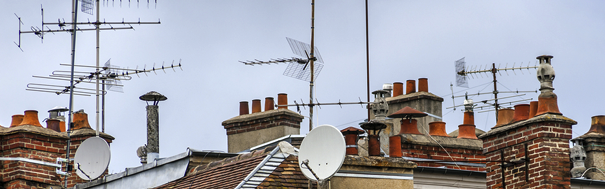
Although the Secretary of State for Telecommunications and the Information Society (SETSI) is making a certain effort to convey tranquility regarding the re-antennation process that is being carried out on account of the digital dividend, the Council of Consumers and Users, FORTA, UTECA, Abertis Telecom and FENITEL have shown their concern.
After the meeting of the Coordination and Monitoring Group of Actions for the Release of the Digital Dividend, held last Monday, the agents and sectors directly involved and affected by this process of change in the audiovisual panorama, maintain that despite the fact that the Secretary of State maintains that 252,000 buildings of the 998,000 that must adapt their antennas had accepted budgets for their adaptation at the end of October (25% of the total) and that in On that date, 83,066 buildings had already completed the adaptation of their collective antennas (a percentage of less than 10% of the total), the reality is that, despite the efforts made by all agents in close collaboration with the Ministry of Industry, there is not enough capacity to achieve an acceptable degree of antenna adaptation within the initially planned period of the end of the year.
"The difficulties of deadline and supply of amplification equipment, essential to adapt buildings to the Digital Dividend, have already been highlighted by the Associations of Telecommunications Installation Companies, estimating that the degree of adaptation of antennas as of December 31 will hardly reach 50% of the total number of buildings that require it, and leaving several million citizens distributed throughout the national territory with serious limitations in access to television. This situation affects, in various ways, ways, to all channels, new and pre-existing, of private and public multiplexes” affirm the agents of the sector.
If the provisions established regarding the shutdown at the end of the year of all broadcasts on the channels affected by the Digital Dividend are complied with, this would also cause the loss of the DTT signal to a relevant degree in the so-called coverage extension areas.
The sector states that "leaving 50% of the buildings without adapting and turning off the multiplexes above channel 60 would affect the reception of practically all the channels, although in different percentages, preventing the reception of the entire current offer by a very significant number of citizens, who will see their right to a varied, plural and diverse television offer, which the General Law of Audiovisual Communication requires to be guaranteed, significantly diminished."
Given this situation, which is so far from the exemplary migration that took place a few years ago in the adoption of digital DTT, sectoral agents have requested to minimize the impact on citizens. In his opinion, the Administration should reconsider the schedule initially planned for the shutdown of DTT emissions in the Digital Dividend Band, prolonging the current DTT emissions during the first quarter of 2015, a period in which the full deployment of the new multiplexes will have been completed, and substantial progress will have been made both in the process of adapting the antennas of the buildings with respect to all the affected channels and in the necessary actions for coverage extensions.
Did you like this article?
Subscribe to our NEWSLETTER and you won't miss anything.
Related articles
 The coronavirus crisis will impact the second digital dividend
 The blackout of DTT frequencies continues due to the Second Digital Dividend
 Aid for the Digital Dividend, exempt from personal income tax
The sector insists on extending the adaptation to the digital dividend by three months
Aid for the Digital Dividend, exempt from personal income tax
The sector insists on extending the adaptation to the digital dividend by three months
 49% of the population is now fully adapted to the digital dividend
 Countdown to the release of the Digital Dividend
 The digital dividend, under debate
Co-financing for the costs of the digital dividend?
The digital dividend, under debate
Co-financing for the costs of the digital dividend?
 Antena 3 will distribute the highest and most profitable dividend in the sector on average
 The Council of Ministers gives the green light to the release of the digital dividend
 The digital dividend, a new challenge for digital television
 Digital dividend: new challenges in digital television
 Industry will settle the issue of the digital dividend next fall
 The digital dividend marks the new challenges in digital television