





EVS DYVI rompe con el concepto del mezclador tradicional
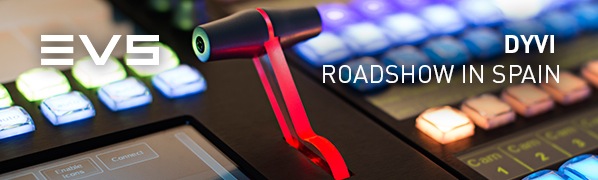
EVS DYVI promete marcar un antes y un después en la forma en la que los mezcladores se conciben, diseñan y actúan en un flujo de trabajo de realización en directo.
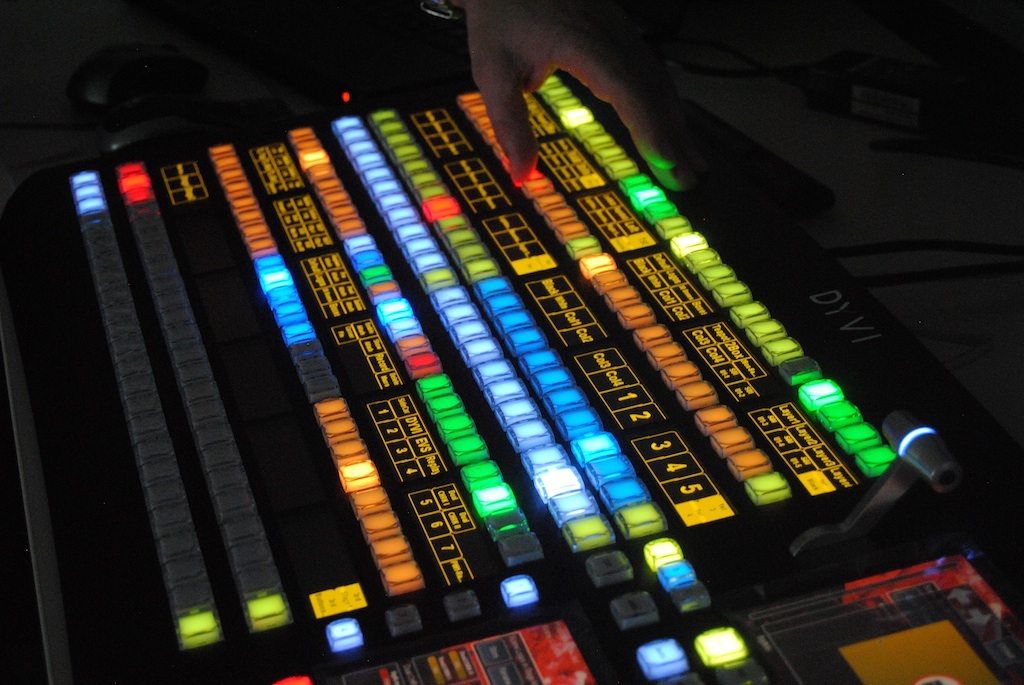
Tiene el precio de un mezclador tradicional de 3ME pero sin embargo, como está quedando patente en el Tour Europeo que EVS está llevando a cabo, el nuevo DYVI se presenta como un mezclador con casi infinitas posibilidades.
EVS DYVI promete, sin duda, marcar un antes y un después en la forma en la que los mezcladores se conciben, diseñan y actúan en un flujo de trabajo de realización en directo.
A primera vista podría parecer un mezclador al uso, sin embargo se trata de una solución completamente IP que permite la transferencia de material 4K en un único archivo entre los servidores EVS y las soluciones de edición en red.
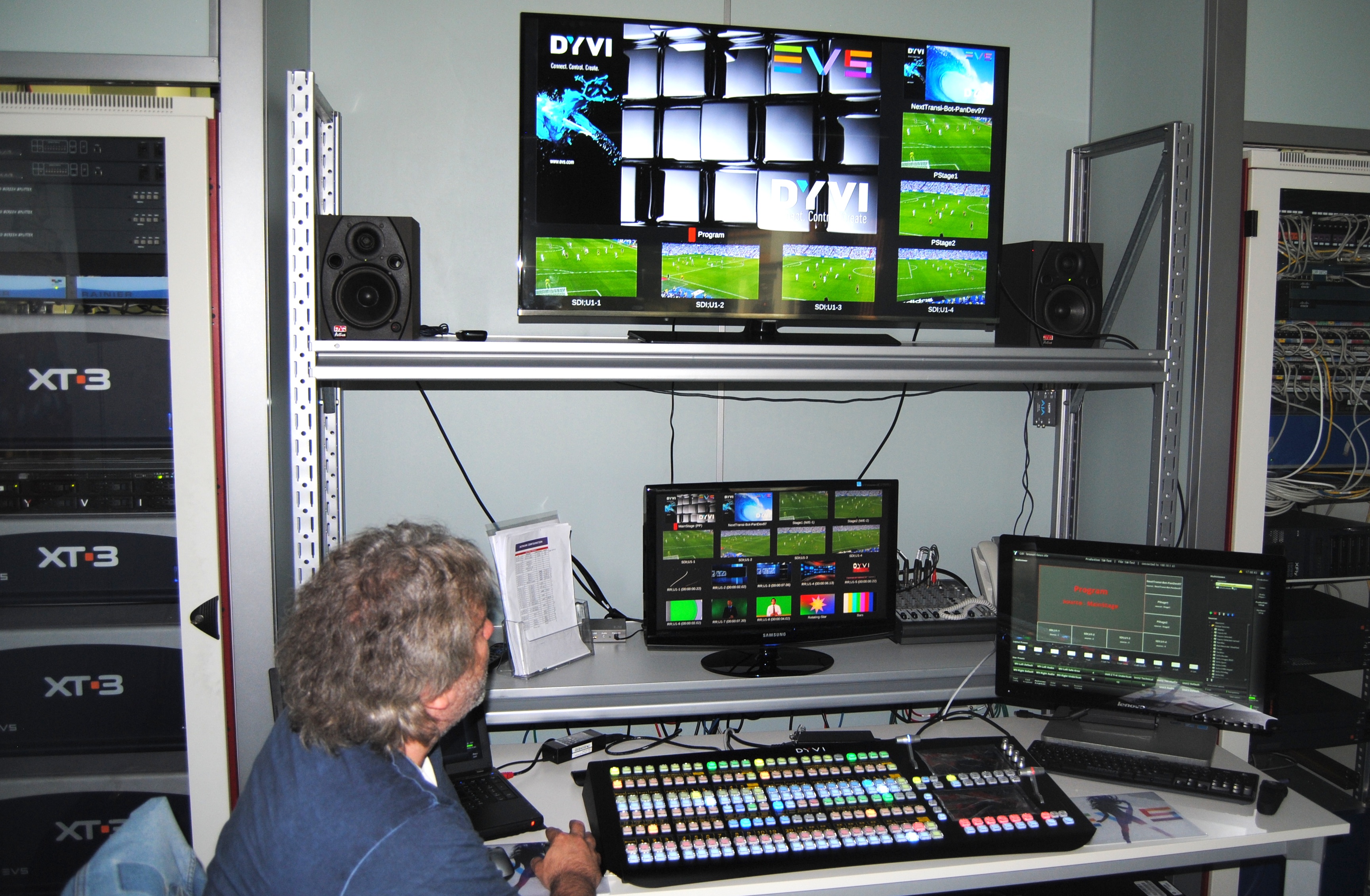 Gracias a una arquitectura de procesamiento no propietaria, DYVI permite la mezcla directa en resoluciones de hasta 4K en directo (en tiempo real sin compresión), actuando sobre los propios paquetes de datos.
El nuevo mezclador de producción parte de paradigmas radicalmente distintos a la forma de trabajar en un control de realización al uso. Partiendo de una plataforma sólida, con componentes modulares y escalables, fabricados con soluciones IT profesionales, el verdadero corazón de DYVI es un “production module” de apenas 2RU. Junto a una GPU Nvidia K6000, PCI Express y un software, EVS ha diseñado una mesa sin límites de recursos ya que, le pida lo que le pida el realizador, la GPU lo procesará en tiempo real.
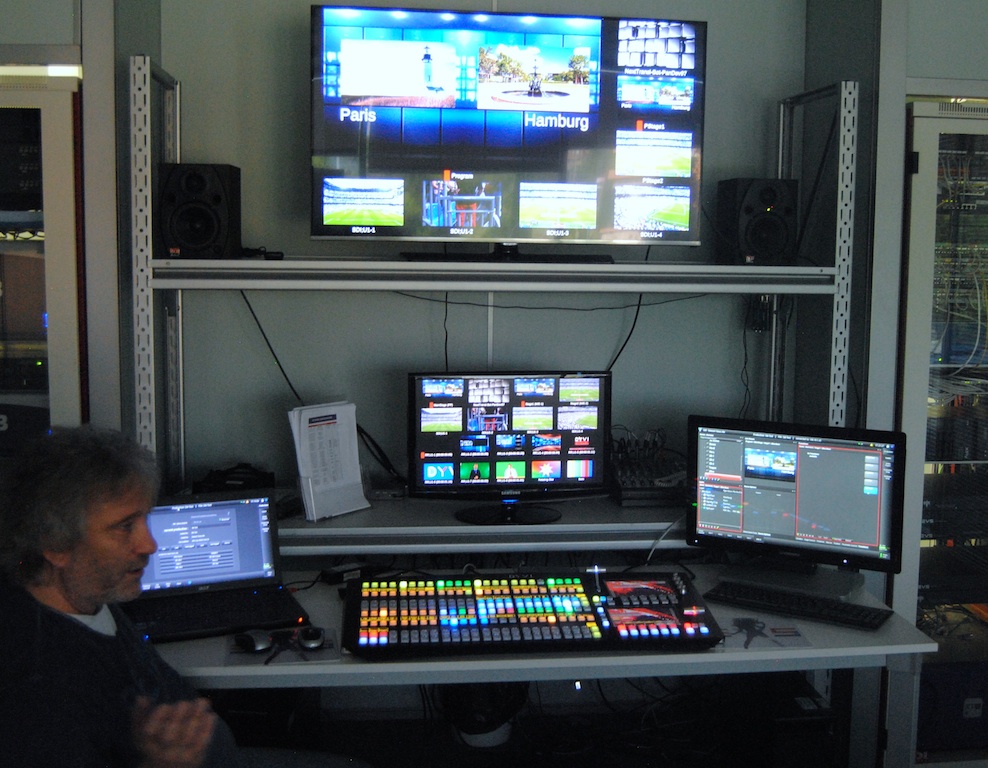 Gracias al uso de estos production modules, que pueden interconectarse con tantas unidades como sean necesarias bajo una red de 40 Gbps, es posible canalizar todas las señales en tiempo real sin necesidad de ninguna matriz adicional como ocurre en los mezcladores tradicionales.
Cada production module cuenta con hasta 24 entradas y 6 salidas, además de dos salidas para multiviewer (con hasta 16 imágenes por cada multipantalla). DYVI integra además tally, UMD, reloj (con el mismo timing en todas las salidas tanto SDI como HDMI)…
A diferencia de los mezcladores tradicionales, DYVI no trabaja con configuraciones de Mix Effects, sino que todo el mezclador en sí es un sistema gráfico avanzado.
Ocho canales de RAM Recorder y la capacidad de almacenar un centenar de clips desde un disco duro de dos terabytes completan los elementos de este nuevo mezclador. El RAM Recorder permite trabajar con más de cien clips por módulo de procesamiento, en cualquier formato de archivo tanto en local como desde un servidor FTP integrado para fomentar el intercambio de contenido de forma automatizada.
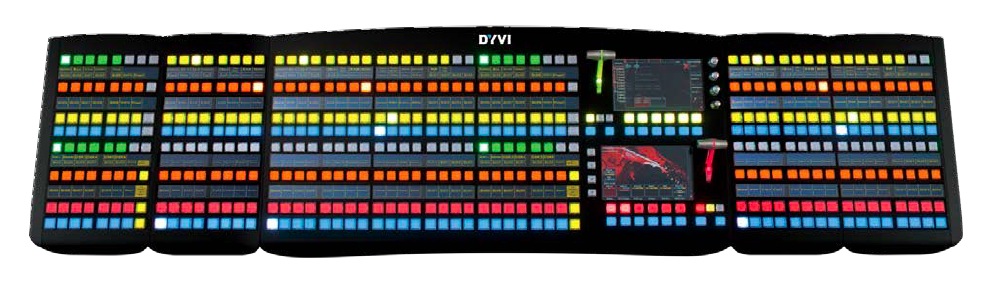
En cuanto al uso de macros, como no hay limitación de hardware en esta mesa, es posible mandar todas los macros al mismo tiempo si fuera necesario. Ofrece además un procesador de escenas con número ilimitado de posibilidades.
 En cualquier caso, la GPU siempre procesará cada frame, hará un refresh en tiempo real con el efecto o mezcla que se le pida e inmediatamente lo ofrecerá para emisión.
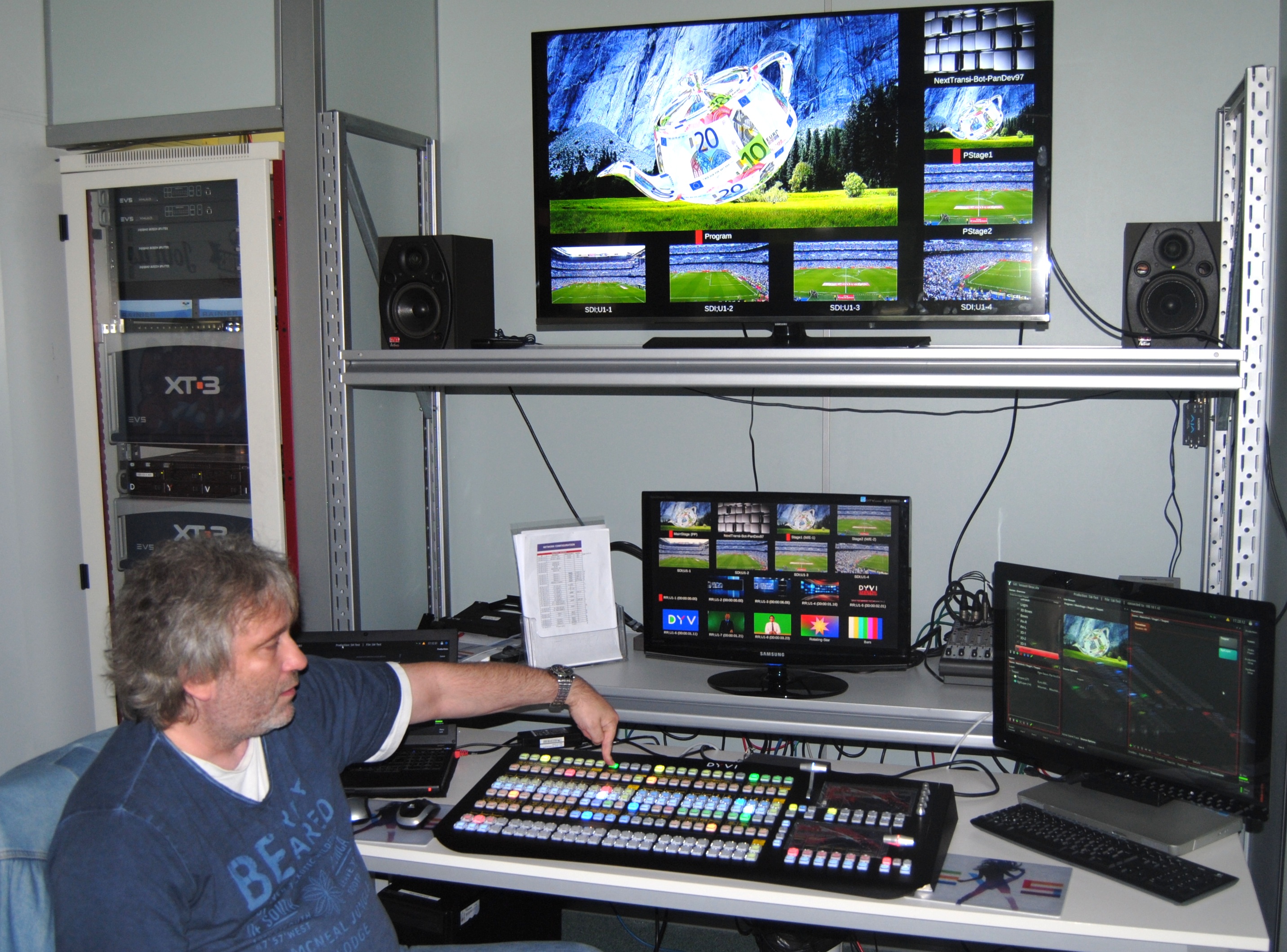
DYVI trabaja con el concepto de layers, en lugar de keyers, contando con un número ilimitado de ellos para presentar cualquier tipo de efecto (Chroma key, V+K, 2D DVE, 3D DVE…).
No cabe duda que la única limitación es la creatividad del operador ya que en el tour en el que EVS presenta este nuevo mezclador se pueden ver ejemplos con hasta dos docenas de layers simultáneamente.
Por lo que efectos 3D se refiere, el excepcional procesamiento gráfico de la GPU permite contar con efectos avanzado en tiempo real por complejos que estos sean.
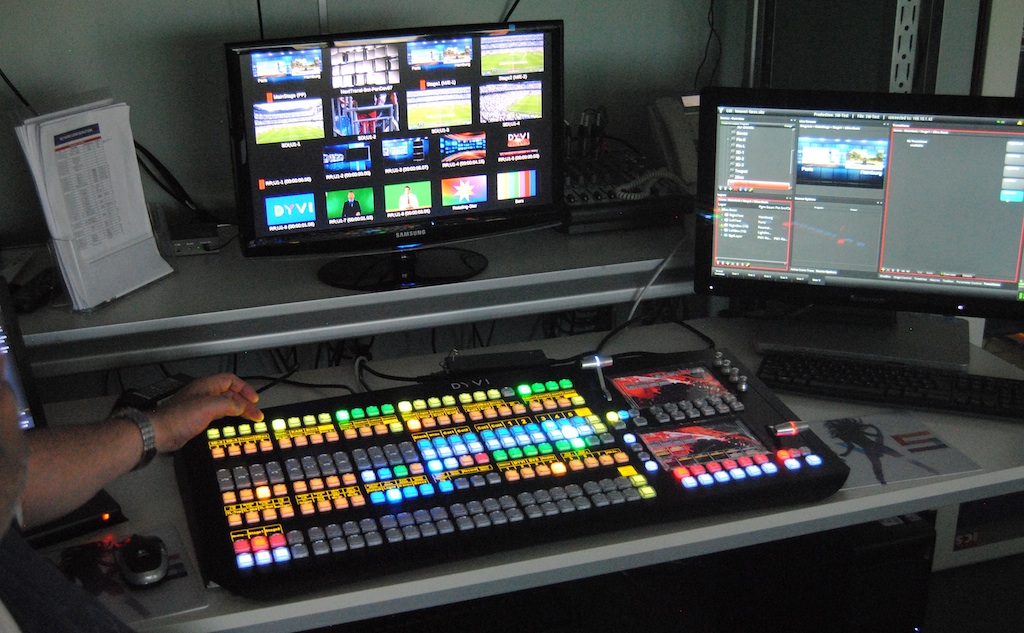
Otra diferencia, la encontramos en el concepto de diseño. Partiendo de la idea de que habitualmente apenas se utiliza el 20% de la capacidad de un mezclador, el nuevo DYVI está preparado para acceder a una configuración absolutamente personalizable, por lo que el realizador contará en la zona de la superficie de control que desee de aquellas funciones que necesite, evitando mapear aquellos botones que no vaya a utilizar.
 Conectividad
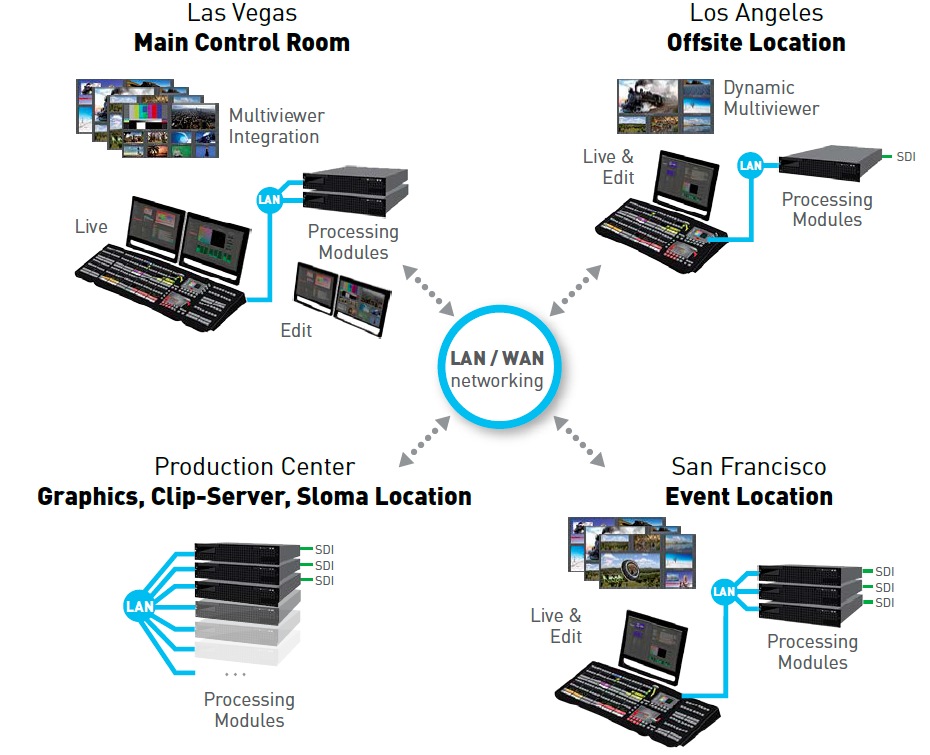
Pero quizás uno de los aspectos que más sorprenden sea el grado de conectividad distribuida o remota que ofrece esta solución. EVS ha diseñado DYVI para que puedan combinarse uno o varios paneles, con uno o varios production modules tanto en local como el remoto. De esta forma, podríamos determinar, por ejemplo, que un production module trabaje con uno u otro panel, compartir todas las entradas o seleccionar qué entradas van a cada production module.
A través de fibra es posible contar con varios production modules en diferentes localizaciones. En este caso, el realizador no será nunca consciente a la hora de mezclar el material de qué procedencia tiene cada fuente ya que trabajará igualmente con fuentes locales como remotas en otro edificio. Esto permitiría, por ejemplo, dedicar un production module ubicado en un edificio de un complejo de producción a grafismo y generación de caracteres y al mismo tiempo trabajar en un estudio en otro edificio con un production module que gestionará las fuentes procedente de varias cámaras.
 En un complejo de producción en el que los mezcladores apenas se emplean en un 30% del tiempo, sería así posible contar con dos o tres superficies de mezcla que gestionarían los production modules de cualquier estudio, con el consiguiente ahorro económico.
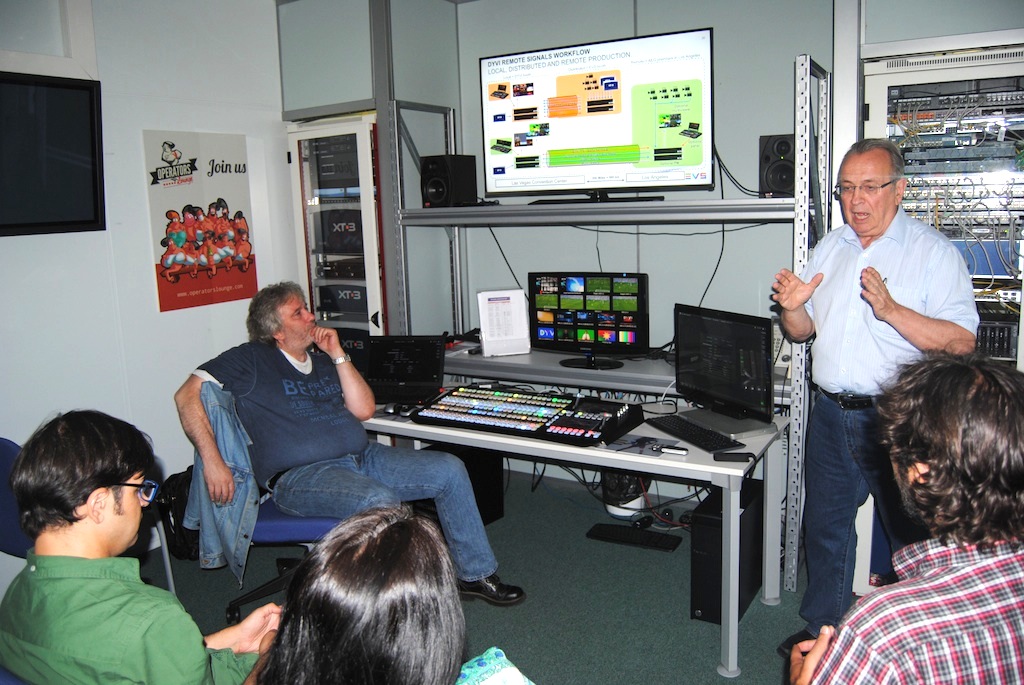
Cuando hablamos de conectividad, no solo nos limitamos a diferentes zonas en un mismo edificio o complejo, sino incluso a ciudades separadas a cientos de kilómetros. Mediante una fibra telco de apenas 10 gbps es posible, por ejemplo, contar con un mezclador en Las Vegas que realizaría señales procedentes de cámaras ubicadas en San Francisco o Los Ángeles. Todas estas señales sin comprimir se enviarían al control de realización central, repartiendo el sistema a su vez todas las señales adicionales como multipantalla, tally, audio, intercom… a todos los puntos de producción. Sin duda, un nuevo concepto que abre posibilidades de producción de directos nunca vistas hasta la fecha.
EVS DYVI Tour
BARCELONA – JUEVES, 2 DE JULIO
- Sesión 1: 10:00 h.
- Sesión 2: 12:00 h.
- Sesión 3: 16:00 h.
Hotel Gallery
Roselló 249, 08008 BarcelonaMEDIATECH 2015 – 15 AL 17 DE JULIO
- Johannesburgo (Sudáfrica)
Presentación a cargo del distribuidor de EVS en Sudáfrica, InalaPara confirmar asistencia, es necesario enviar datos de contacto y sesión a la que se desea acudir al mail sales.iberica@evs.com o llamar al 91 490 39 30.
[youtube]https://www.youtube.com/watch?v=zhU6DjA-XsA[/youtube]
Did you like this article?
Subscribe to our NEWSLETTER and you won't miss anything.
Related articles
 Aftonbladet emplea el mezclador EVS DYVI en sus producciones de estudio
 RPC, filial de Globo, instala un mezclador Dyvi de EVS para lograr una mayor eficiencia en la producción de informativos
 Kanal 2, the largest private television station in Estonia, invests in a Dyvi mixer from EVS
 Clique Tv crea una nueva generación de programación con Dyvi de EVS
 Los nuevos canales de PlanetSPort en Croacia emplean mezcladores DYVI de EVS
 University of Miami Athletics, primera universidad en Estados Unidos que instala el mezclador DYVI de EVS
 La alemana BNC adquiere ocho servidores XT4K y dos mezcladores DYVI de EVS
 San Francisco Giants install EVS DYVI to create a more engaging in-stadium experience
DYVI de EVS enriquece la experiencia de los aficionados del San Francisco Giants
San Francisco Giants install EVS DYVI to create a more engaging in-stadium experience
DYVI de EVS enriquece la experiencia de los aficionados del San Francisco Giants
 Coppola apuesta por el mezclador DYVI de EVS para su más ambicioso proyecto
 NAB rompe la barrera de los 100.000 visitantes
 Tedial Evolution avanza un paso más allá del tradicional concepto de MAM
 Tadeo Jones rompe fronteras
 Telecinco ‘rompe’ con Arguiñano