





TV3, i2CAT y Cellnex presentan las conclusiones del proyecto TV-Ring sobre televisión conectada
El proyecto TV-Ring ha desarrollado tres pilotos de televisión conectada en diferentes países de la Unión Europea. El piloto catalán ha servido para confirmar que la emisión de determinados contenidos en formato multicámara tiene un interés claro entre los usuarios.
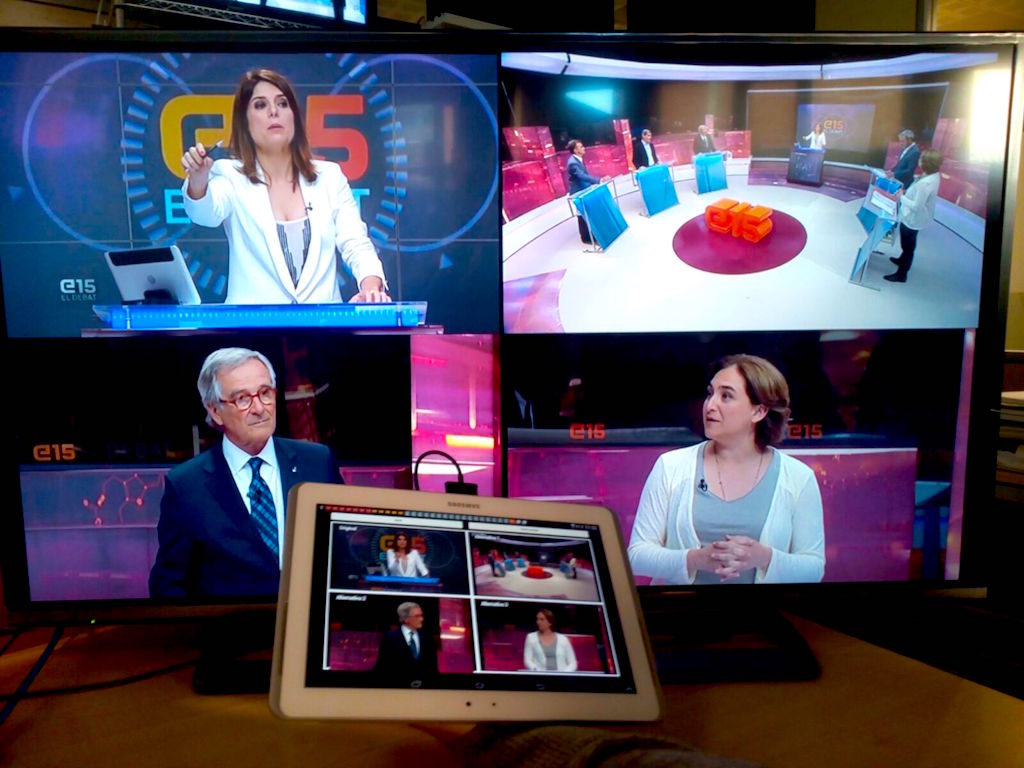
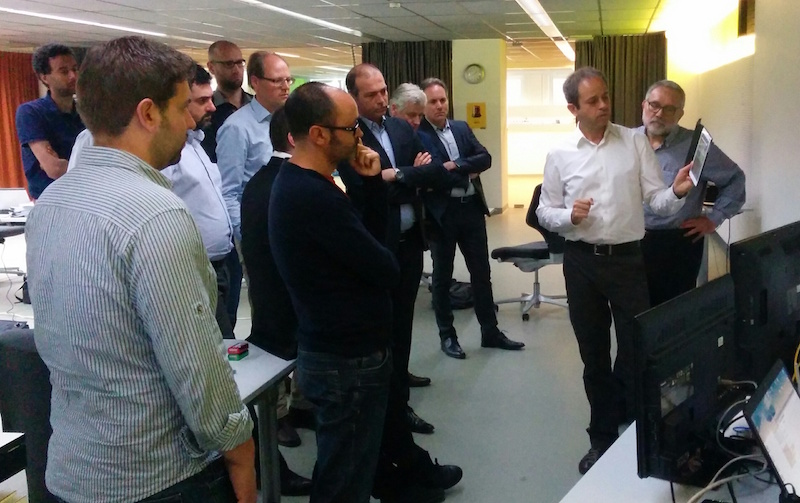
El proyecto europeo TV-Ring, en el que han participado Televisió de Catalunya (TV3), Cellnex Telecom and the i2CAT Foundation, toca a su fin. El pasado 19 de mayo, se llevó a cabo en Lovaina (Bélgica) la revisión final del proyecto de investigación Tv-Ring, cofinanciado por la Unión Europea. Este acto tenía como finalidad la presentación de los resultados obtenidos en el proyecto ante los representantes de la Comisión Europea. Hace apenas unos días que se ha conocido el resultado de esta evaluación, que ha sido ampliamente positiva.
El proyecto TV-Ring ha desarrollado tres pilotos de televisión conectada en diferentes países de la Unión. Aparte del piloto catalán en el que han participado TV3, Cellnex y i2CAT otros socios han llevado a cabo pruebas piloto en el área de Berlín-Brandenburg (Rundfunk Berlin-Brandenburg) y en Holanda (Stichting Nederlandse Publieke Omroep).
El objetivo principal del proyecto ha sido crear y demostrar escenarios avanzados de televisión conectada basados en el estándar HbbTV e infraestructuras de conexión de alta capacidad como soporte. Dentro del piloto catalán del proyecto, se han completado un conjunto de pruebas en directo y en diferido, inicialmente centradas en el municipio de Gurb, en la comarca de Osona, pero finalmente abiertas a la audiencia HbbTV en general. Estas pruebas han ofrecido servicios multicámara sobre contenidos muy diversos: programas musicales, partidos de fútbol, debates y especiales informativos.
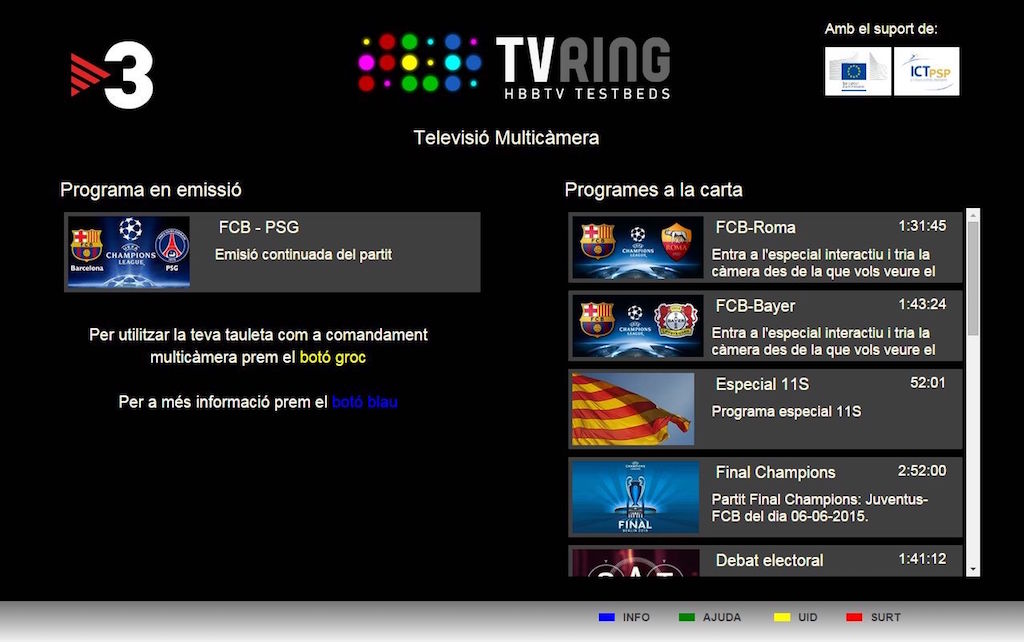
 El piloto catalán del proyecto TV-Ring ha servido para confirmar que la emisión de determinados contenidos en formato multicámara tiene un interés claro entre los usuarios. Por ejemplo, sirva como indicador el hecho de que durante las pruebas en abierto del piloto en la emisión de partidos de la Champions League se triplicó el número de accesos al servicio de HbbTV de la Corporació Catalana de Mitjans Audiovisuals (CCMA) respecto del promedio diario.
También el uso de la segunda pantalla en el proyecto ha demostrado su gran utilidad y aceptación, no sólo desde el punto de vista del consumo adicional o complementario en este dispositivo, sino también como control remoto del contenido que se quiere ver en la pantalla del televisor. Este concepto abre un abanico de posibilidades en el control de aplicaciones HbbTV en el televisor, mediante la pantalla táctil de la tableta o el móvil y con aplicaciones flexibles que superan largamente las limitaciones del mando a distancia tradicional.
Por otra parte el piloto catalán de TV-Ring también ha evidenciado la falta de madurez del entorno HbbTV, tanto en referencia a la emisión de contenidos multicámara como en la sincronización entre dispositivos. Este hecho se debe a la baja implantación en el mercado de las últimas versiones del estándar. En este sentido, la CCMA, como miembro de la asociación HbbTV, está llevando los resultados del piloto de TV-Ring al “Improving Interoperability Task Force Group” del HbbTV, para colaborar en la mejora de la compatibilidad con los receptores HbbTV.
El proyecto TV-Ring ha tenido una duración de 30 meses: comenzó en septiembre de 2013 y concluyó en febrero de 2016. Ha sido cofinanciado por la Unión Europea, mediante el programa CIP ICT PSP, y liderado por la Fundación i2CAT, Centro de Investigación en Tecnologías de Internet de Cataluña.
Did you like this article?
Subscribe to our NEWSLETTER and you won't miss anything.
Related articles
 IAB Spain sheds light on Connected Television with a complete White Paper
 Cellnex avanzará sus planes sobre la UHD en España y Europa en la 4K HDR Summit 2020
 TV3, i2CAT and Cellnex Telecom successfully complete hybrid television pilot tests
 Cellnex, Cires21, Sapec y el grupo G@TV (UPM) presentarán en Madrid el proyecto PLEASE
 TV3, i2CAT y Cellnex Telecom ofrecieron acceso multicámara durante el partido de Champions FC Barcelona – Bayer Leverkusen
 Segunda prueba piloto de televisión conectada, dentro del proyecto europeo TV-Ring
 La CCMA participa en el NEM Summit con un proyecto de investigación sobre televisión conectada
 CLAG y TVG presentan el proyecto ‘CLAG Media Talent’ enfocado a buscar nuevo talento audiovisual
 La Fundación i2CAT presenta los resultados del proyecto FIBRE desarrollado entre la UE y Brasil
 Tedial and RTVE present the digitalization project of the RTVE historical archive at the FIAT IFTA annual conference in Dubai
 Fundación i2CAT, Abertis Telecom y TVC participan en el proyecto TV-Ring que perfilará la televisión híbrida del futuro
 Abertis and Nagra present a television distribution service in the cloud
 El Consorcio del proyecto Phidias lanza dos canales para la televisión conectada
 Tablets, televisión conectada y redes sociales enriquecen el escenario de consumo de televisión