





La industria española del videojuego facturó 510,7 millones de euros en 2015, un 24% más que en 2014
El empleo del sector creció un 32%, respecto al año anterior, situándose en 4.460 profesionales que trabajan para un total de 480 empresas.
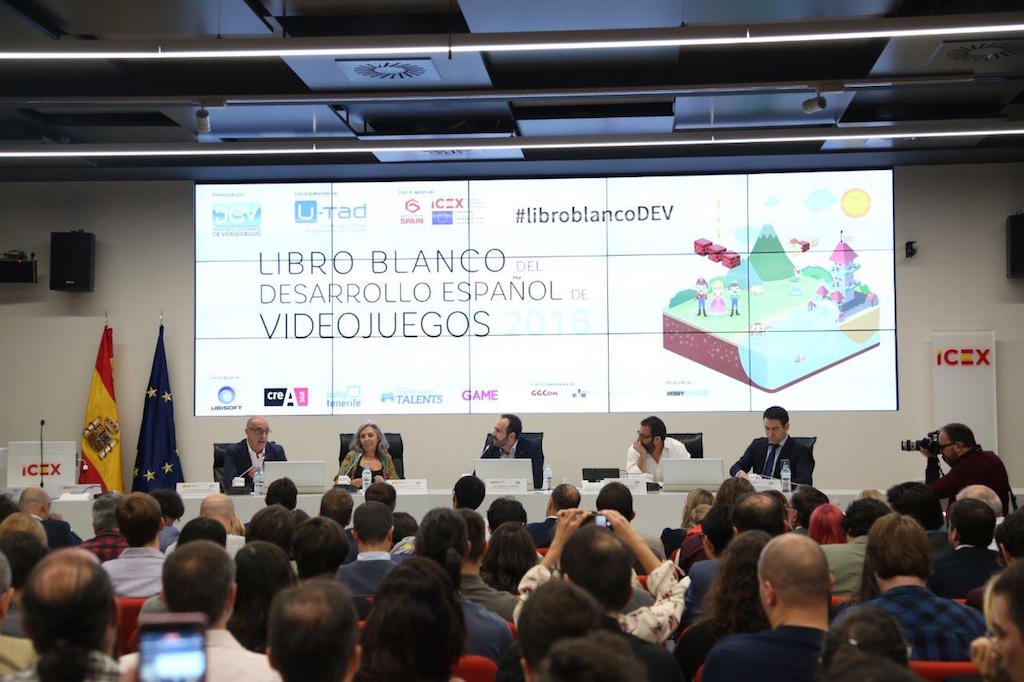
Con una facturación superior a los 510 millones de euros y un crecimiento del 24% con respecto al año 2014, la industria española del videojuego continúa liderando, por quinto año consecutivo, la evolución de la economía digital española, según revela el Libro Blanco del desarrollo español de videojuegos en su edición 2016, que ha sido presentado este martes en Madrid por la Asociación Española de Empresas Productoras y Desarrolladoras de Videojuegos y Software de Entretenimiento (DEV) con el patrocinio de U-Tad, Centro Universitario de Tecnología y Arte Digital y el apoyo del ICEX España Exportación e Inversiones.
Este estudio, que en las ediciones de 2014 y2015 acumuló más de 30.000 descargas, recoge los principales datos de la industria española de desarrollo de videojuegos, investiga sobre las tendencias que va a seguir la producción de contenidos interactivos, y evalúa sus necesidades, dando traslado al Gobierno y al resto de las Administraciones Públicas de las recomendaciones imprescindibles para el impulso de este importante sector.
 Creación de empleo
Gracias a su carácter emprendedor, la producción de contenidos continúa liderando la creación de empleo en España y en su papel de motor de la industria, un año más, el sector del videojuego ha logrado una alta cota de crecimiento, incrementando su fuerza laboral en un 32%, lo que se traduce en 4.460 profesionales. A esto hay que sumarle los puestos de trabajo generados de forma indirecta lo que, según estimaciones, alcanza la cifra total de más de 7.800 profesionales vinculados al mundo del videojuego.
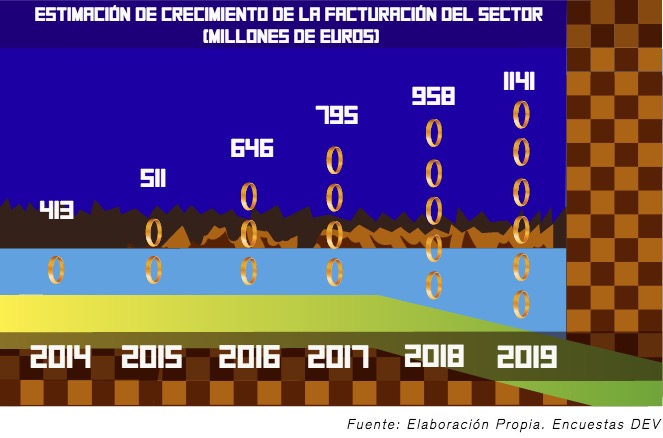
Asimismo, las perspectivas de futuro de esta industria son muy positivas, estimándose unas previsiones de crecimiento a una tasa anual (CAGR 2015-2019) de un 22,7%, es decir, se superarán los 10.000 empleos en 2019.
 Facturación
Concretamente, la industria española del videojuego facturó 510,7 millones de euros en 2015, un 24 por ciento más que en 2014, cifra que la sitúa entre las principales industrias nacionales de contenidos digitales.
Por su parte, el resto de los indicadores económicos también confirma la continuidad de esta tendencia al alza, ejercicio tras ejercicio, estimándose una previsión anual de crecimiento del 22,4% (CAGR 2015-2019), lo que supondrá alcanzar, si se cumplen las previsiones, los 1.140 millones de euros de facturación en 2019.
Los diferentes modelos de negocio de venta digital ya representan en conjunto el 56% de la facturación. Por otro lado, ya casi un 40% por ciento proviene de fuentes alternativas, como el desarrollo para terceros, la venta de servicios y la formación.
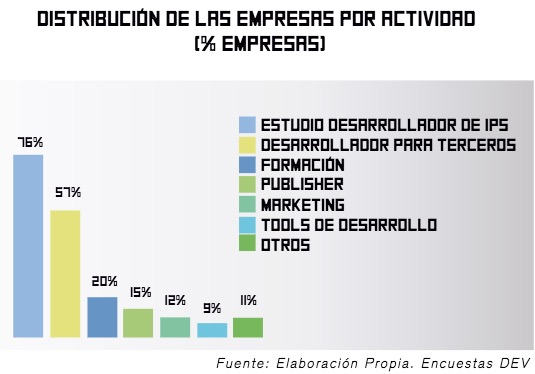
Según el estudio, están censadas un total de 480 empresas de videojuegos, es decir, un 20% más que en 2014. Además, existen alrededor de 125 iniciativas y proyectos empresariales incipientes a la espera de consolidarse como compañías en el corto o medio plazo.
En definitiva, esta joven industria no deja de demostrar su buena salud y su empuje, ya que el 85% de las empresas activas no existía hace 10 años. Y es que, éste importante motor de la economía española se ha visto acelerado en los últimos 5 años, durante los cuales se ha creado el 63 por ciento de las empresas actuales. Siendo, además, un sector altamente creativo y capaz de generar nueva propiedad intelectual de gran valor y proyección internacional.
Respecto a la distribución geográfica de las empresas de videojuegos en nuestro país, el 80% por ciento de éstas se aglutinan en 5 comunidades autónomas. Aunque la mitad de ellas se concentran entre Madrid y Cataluña, con un 26,2% y un 24,8%, respectivamente.
 Vocación internacional
La industria española es global, con unas exportaciones que representan el 52 % de media sobre el total de la facturación. Los dos mercados internacionales de mayor peso son Norteamérica, con un 22 % y Europa, con un 19%. Aun así, la internacionalización sigue representando uno de los grandes retos y necesidades del sector, sobre todo para las empresas de menor tamaño.
La Realidad Virtual está revolucionando multitud de sectores económicos de nuestra sociedad, encontrándose entre ellos la industria del entretenimiento, una de las más punteras del país. En este sentido, el 30% de las empresas de videojuegos ya está llevando a cabo desarrollos en RV y Realidad Aumentada, mientras que prácticamente dos tercios de ellas han manifestado que tienen previsto hacerlo a corto y medio plazo.
Asimismo, las industrias del videojuego declaran estar listas para sumarse a las otras grandes tendencias del sector, como son los eSports, el Cloud Gaming y los Wearables.
La fiscalidad de las inversiones en producción de videojuegos y el acceso de la financiación, las grandes asignaturas pendientes
Como en anteriores ediciones, DEV reclama al Gobierno y a los grupos parlamentarios una modificación urgente de la Ley del Impuesto de Sociedades destinada a asimilar, para la industria del videojuego, las ayudas e incentivos fiscales que ya reciben el cine y el audiovisual español, así como todos los países con los que competimos en este negocio global.
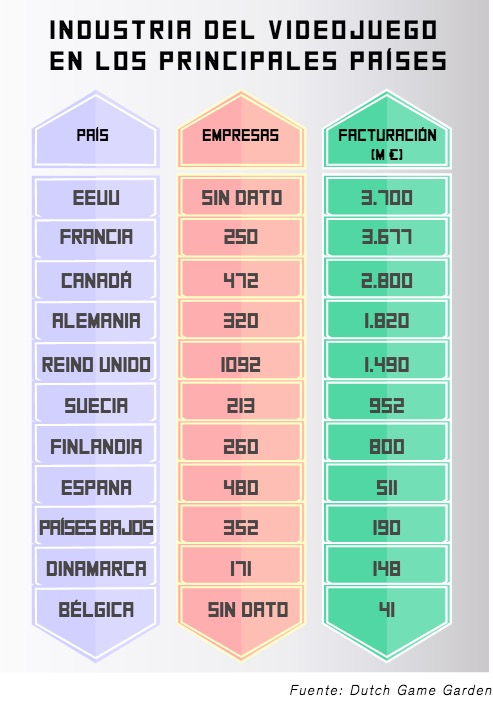
“Debemos apostar decididamente por crear un ecosistema que nos ponga en condiciones de competir mundialmente con las grandes industrias internacionales, como Canadá, Corea del Sur, pero también Francia, Reino Unido e Irlanda en Europa, países que han decidido apostar fuerte por el videojuego como sector altamente tecnológico, creativo, generador de empleo y de riqueza”, señala Ignacio Pérez Dolset, presidente de DEV.
El acto de presentación además ha contado con un intenso debate de portavoces del PP, PSOE, Podemos y Ciudadanos que se han comprometido a recoger el guante que les ha lanzado la industria española de videojuegos y continuar con las propuestas legislativas ya presentadas en el Congreso de los Diputados y en diversas cámaras autonómicas.

Did you like this article?
Subscribe to our NEWSLETTER and you won't miss anything.
Related articles
 The Spanish Agile Content closes 2022 with 101.5 million euros in turnover
 Prime Video donates one million euros to help recover the Spanish audiovisual industry
 The Canarian audiovisual industry has already lost more than 30 million euros due to the coronavirus crisis
 'Father there is no more than one': the highest-grossing Spanish film, exceeding 14 million euros in revenue
 The Spanish video game industry grows in turnover but decreases in active studios
 Mediapro cerró 2015 con un beneficio operativo de 129 millones de euros
 Investment in telecommunications increases by 30% in 2014 to exceed 5,000 million euros
 'SGAE 2015 Yearbook': x-ray of the film, video, television, radio and video game industry
 Income from the audiovisual sector in Spain exceeded one billion euros in 2014
 Filming left eight million euros in Tenerife in 2014
 Industry will allocate 38.5 million in help lines to support the video game sector
 Industry will allocate 30 million euros to the internationalization of technology companies
 Industry allocates 477 million euros to innovative technological projects
The telecommunications sector had a turnover of 38,000 million euros in 2011, 4.6% less
Industry allocates 477 million euros to innovative technological projects
The telecommunications sector had a turnover of 38,000 million euros in 2011, 4.6% less