





The 4K-UHD Summit begins in which experts from around the world debate Ultra High Definition
La posición de la TDT, el cable, el satélite y la distribución IP ante la irrupción de la Ultra Alta Definición marca la primera jornada de la cumbre internacional sobre UHD que se celebra en Sevilla.
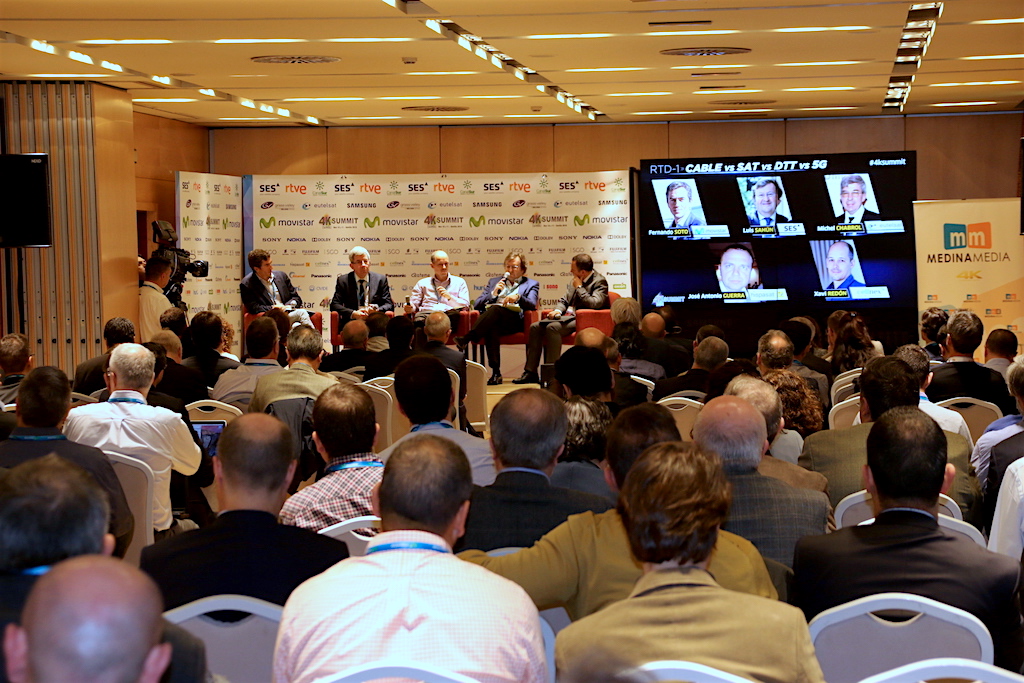
Sevilla ha vuelto a reunir por segundo año a expertos de todo el mundo para debatir sobre el desarrollo de la Ultra Definición. La 4K-UHD Summit, organizada por Medina Media con Panorama Audiovisual como Main Media Partner, se ha inaugurado en esta edición con una mesa redonda en la que operadores de cable, satélite y TDT han intercambiado impresiones sobre el despegue de la Ultra Alta Definición.
En el panel han participado Fernando Soto (Movistar), Luis Sahún (SES Astra), Michel Chabril (Eutelsat), José Antonio Guerra (Hispasat) y Xavier Redón (Cellnex).
Fernando Soto ha iniciado su intervención asegurando que Telefónica quiere migrar lo más rápido posible al 4K haciendo una fuerte apuesta en la producción de contenidos en Ultra Alta Definición. Soto ha adelantado también que tras el éxito de la emisión en 4K del Clásico Real Madrid-Barça, la operadora se plantea ahora comenzar a distribuir el mundial de Moto GP en esta resolución.
Precisamente la aún poca producción de contenidos en 4K es una de las preocupaciones que plantean los operadores para el desarrollo.
Por su parte, Luis Sahún ha hecho hincapié en la relación que el desarrollo de la Ultra Alta Definición tiene con la televisión conectada, destacando que en 2020 habrá 21.000 millones de dispositivos estarán conectados al mismo tiempo.
El desarrollo de la tecnología 4K requiere de inversión en redes de distribución así como en el impulso de televisores conectados, subrayando que debido al ancho de banda que supone la distribución de contenidos en UHD, el satélite jugará un papel destacado en este nuevo entorno.
Xavier Redón ha subrayado que lejos de lo que cabría pensarse, la televisión digital terrestre ofrece gracias a las nuevas tecnologías de multiplexado estadístico, el estándar de compresión HEVC y el de emisión DVB-T2 una extraordinaria plataforma para la distribución de contenidos en UHD.
Como muestra, Cellnex Telecom está emitiendo en directo para Sevilla, Madrid y Barcelona tres señales 4K en simultáneo desde esta 4K Summit empleando para ello un único canal de TDT.
Los Olímpicos, en UHD
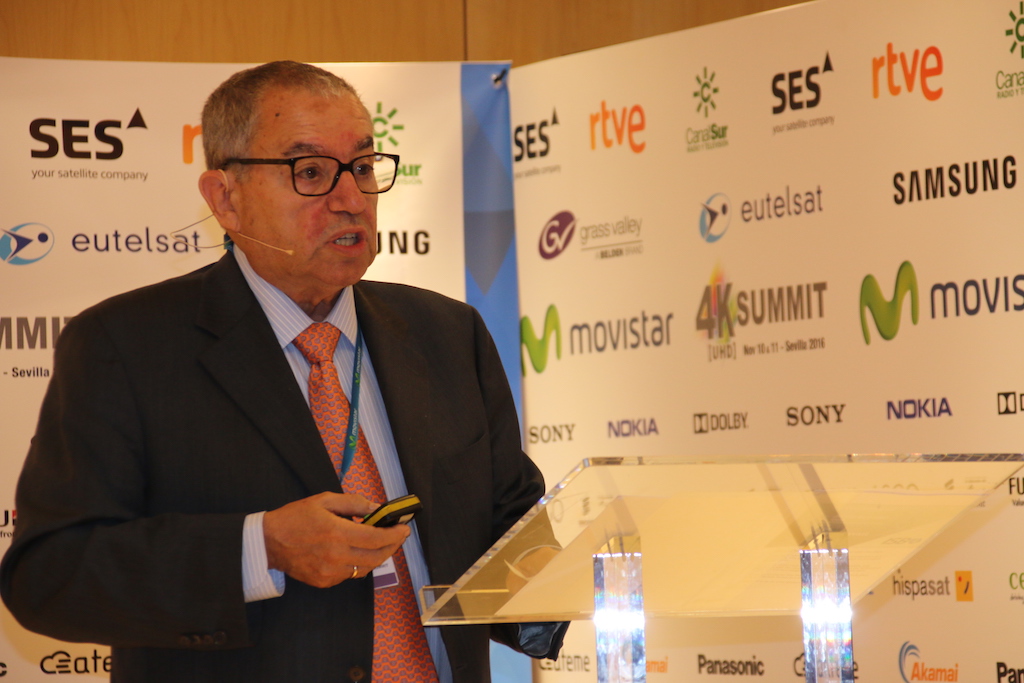
Manolo Romero, consejero para televisión del COI, de varias federaciones internacionales de diferentes deportes, vicepresidente de OBS y presidente de ISB (International Sport Broadcasting), ha participado en la 4K-UHD Summit de Sevilla repasando la vinculación que históricamente ha tenido el movimiento olímpico con la innovación tecnológica aplicada al audiovisual.
Romero ha destacado cómo cada edición de los Juegos desde Berlín 1936 ha supuesto un paso más en la adopción de las últimas tecnologías hasta llegar a Río 2016 donde por primera vez se han producido unos Juegos en Ultra Alta Definición (4K y 8K).
Por su parte, Paulo Rabello, director de tecnología y arquitectura en Tv Globo, ha intervenido en Sevilla para compartir las experiencias del broadcaster brasileño durante los Juegos de Río 2016 donde en colaboración con NHK y NBC llevó a cabo una serie de experiencias piloto de producción en 8K con alto rango dinámico.
Rabello ha asegurado que mientras que “la UHD es una realidad sobre servicios OTT pero un sueño aún llevar resoluciones 8K por el aire”. También ha señalado que el 4K y 8K abrirá un nuevo lenguaje audiovisual donde intervendrán menos cámaras y se empleará una realización más panorámica con múltiples fuentes de audio. Por otro lado, se ha mostrado convencido de que las altas resoluciones abrirán la puerta a una televisión más inmersiva y emocional. Rabello ha afirmado que “los fabricantes de televisores están deseando disponer de contenidos en 4K para dinamizar el mercado”.
UHD en directo
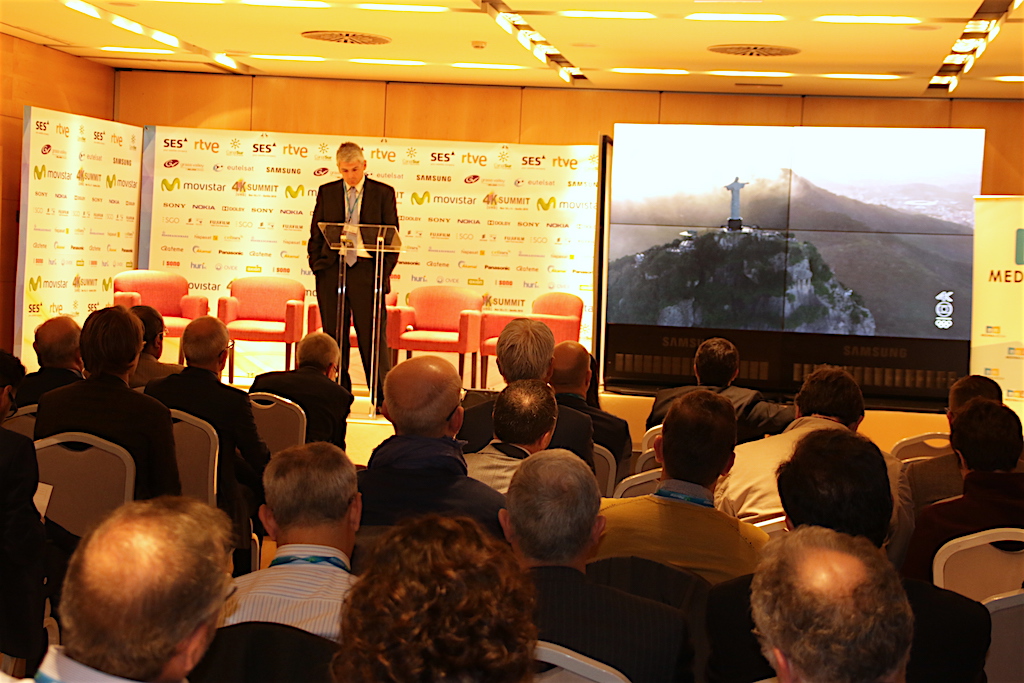
Una interesante mesa redonda a reunido en esta 4K-UHD Summit a productoras, fabricantes y proveedores de tecnología. Emili Planas (Mediapro) ha iniciado su intervención asegurando que no necesitamos más píxeles sino más calidad de píxeles. También ha expuesto la posición del grupo audiovisual español ante la Ultra Alta Definición señalando que la apuesta de Mediapro pasa por una producción simultánea durante un tiempo de HD y 4K con alto rango dinámico (HDR).
Cristiano Benzi (Eutelsat) ha subrayado que el aumento de producciones en 4K está acelerando la adopción de la alta resolución. Benzi ha destacado la apuesta que está llevando a cabo la RAI italiana por la UHD con varias producciones ambiciosas como la apertura de la Puerta Santa, que ha calificado como la mayor producción llevada a cabo hasta la fecha en UHD y HDR.
Klaus Weber (Grass Valley) ha hecho un paralelismo entre el fenómeno que supuso el 3D y el que está suponiendo el paso a la UHD. A su juicio, el 3D creó una frustración en el espectador que ahora intentará subsanar la Ultra Alta Definición. Weber ha señalado que los fabricantes de equipamiento cuentan ya en el mercado con una amplia oferta de soluciones 4K para captación, mezcla, almacenamiento y distribución pero, sin embargo, desde su punto de vista los productores están siendo aún un tanto reacios a adoptar la UHD como su patrón en producción. Sin embargo, cree que esta situación cambiará rápidamente.
Por su parte, Gustavo Marra (Ateme) ha reconocido que la adopción de la UHD está siendo mucho más acelerada de la que supuso la migración de la SD a la HD y ha señalado que el rápido avance en la tecnología de codificación está abriendo la puerta a trabajar con anchos de banda hasta ahora impensables.
Mark Horton (Ericsson) ha puesto de manifiesto el avance que supone en HDR para conseguir una televisión inmersiva capaz de sacar el máximo partido a una alta resolución de imagen.
Did you like this article?
Subscribe to our NEWSLETTER and you won't miss anything.
Related articles
 New milestone for ultra high definition: 1 billion UHD televisions sold worldwide
 World experts in Ultra High Definition shake hands at the 4K HDR Summit
 RTVE shares its experiences with Ultra High Definition at the 4K Summit
 The 4K Summit turns Malaga into the world capital of Ultra High Definition
 RTVE focuses on its Ultra High Definition projects at the 4K Summit in Malaga
 Sky Germany presents its Ultra High Definition roadmap at the 4K Summit
 The 4K Summit shows the world what the future of Ultra High Definition television will be like
 The 4K Summit, the world summit of Ultra High Definition, starts in Malaga
 BIT Experience 2017 tomará el pulso a la Ultra Alta Definición y HDR en un panel de expertos
 Seville, world capital of Ultra High Definition with the 4K-UHD Summit
 Rohde & Schwarz dará a conocer en la 4K-UHD Summit de Sevilla su extenso portfolio para Ultra Alta Definición
 Lucca (Italy) will bring together experts from all over Europe to discuss Ultra High Definition and interactivity
 Seville looks to the future of audiovisuals in Ultra High Definition at the 4K Summit
 In 2025 there will be more than 820 Ultra High Definition channels around the world