





NASA counts on Teradek and RED to stream the solar eclipse
Cinco codificadores Cube y la plataforma para codificación en nube Core permitió distribuir cinco fuentes de video diferentes de la NASA a 18 destinos online diferentes, incluyendo Facebook, YouTube, Twitch y Ustream, entre otros.
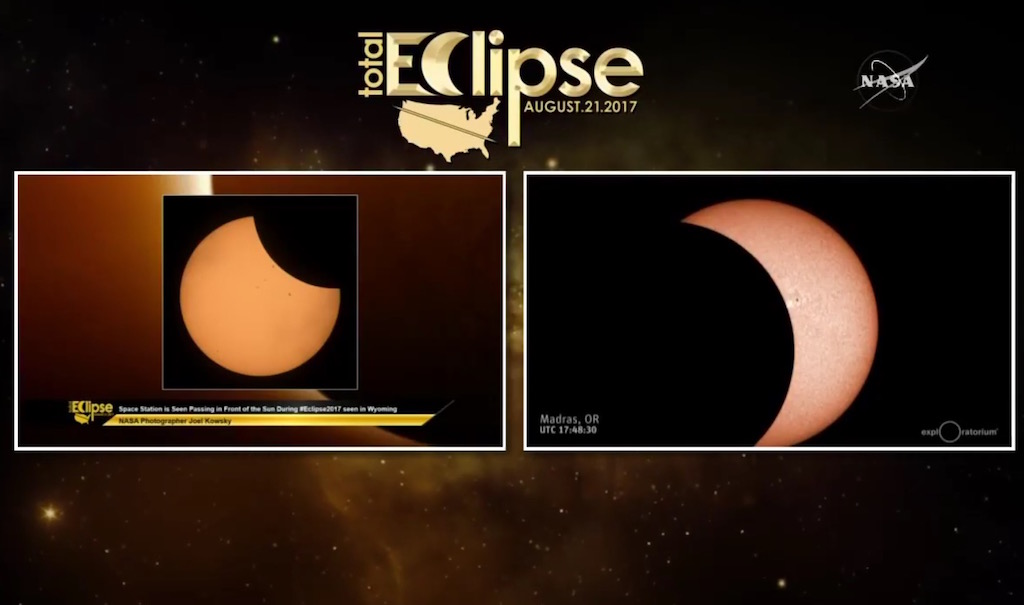
La NASA ha retransmitido el eclipse de sol del pasado 21 de agosto a su web y a las principales plataformas online utilizando la tecnología de codificación de Teradek.
La agencia espacial estadounidense alcanzó la audiencia más alta de un día en su site alcanzando los 53,3 millones, con 33 millones de páginas vista en su microsite Eclipse Live. Estas cifras suponen siete veces más audiencia del último hito en cuanto a tráfico que supuso el vuelo de la New Horizon a Pluton. Sin duda, esta fue con mucho la operación de difusión más exitosa jamás lograda por la administración espacial.
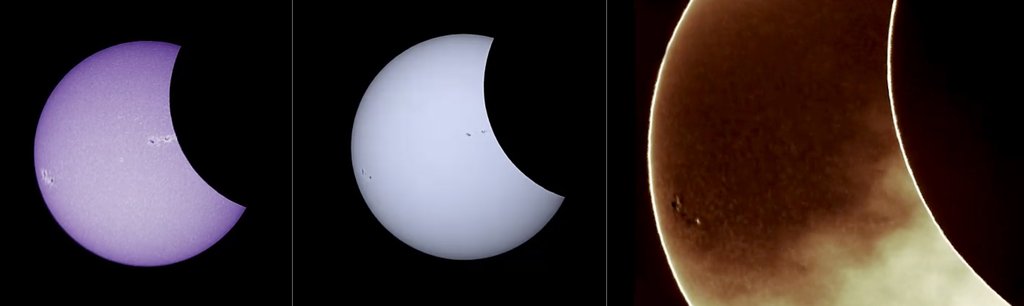 Teradek suministró todo el material para la retransmisión en directo a Internet. La NASA contó con cinco codificadores Cube y una cuenta Core para codificación en nube trabajando con cinco fuentes de vídeo diferentes que se distribuyeron a un total de dieciocho destinos online diferentes, incluyendo Facebook, YouTube, Twitch y Ustream.
El objetivo de la NASA era publicar cinco programas de eclipse diferentes para el mundo, incluyendo tres fuentes procedentes de telescopios (H-Alpha, Calcium-K, White Light), un feed con imágenes procesadas y, por supuesto, la cobertura regular de la NASA. De esta forma, los espectadores online tuvieron diferentes opciones de visualización del evento.
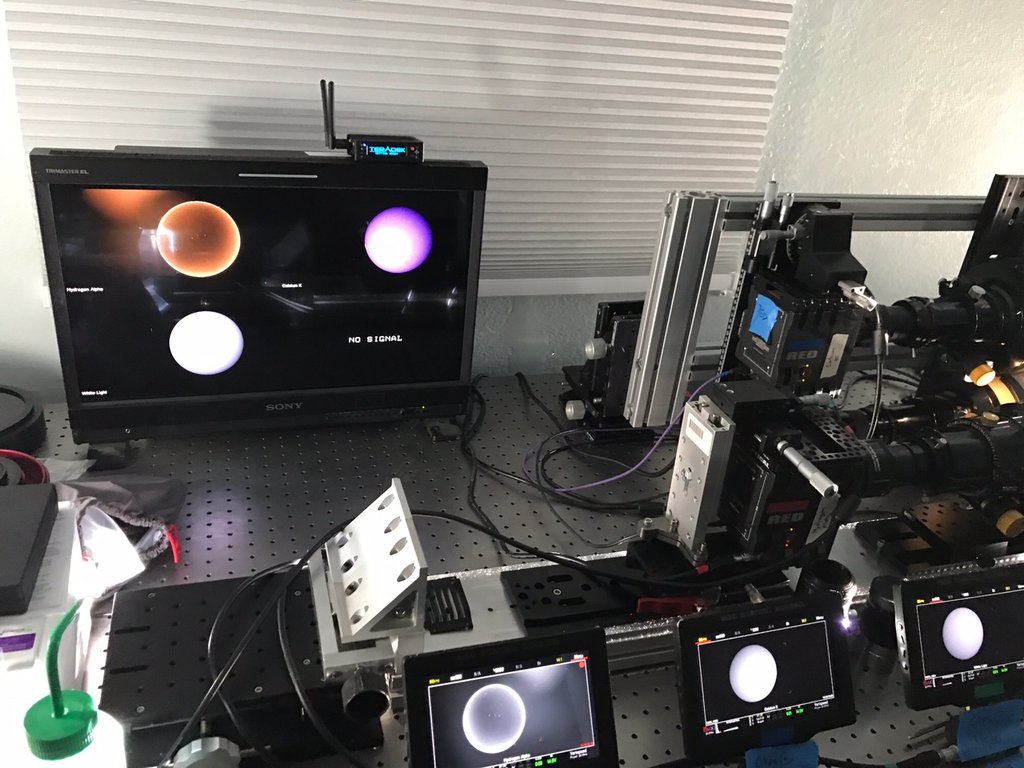
RED Dragon
En el observatorio solar móvil de la NASA (diseñado específicamente para este evento), SUNLab, las tres ópticas de telescopio volcaron sus imágenes a tres cámaras RED Dragon 6K, que alimentaron todos los canales de video HD-SDI previo paso por un etalonaje de color conforme a una LUT. Cada uno de estos canales se dirigió a los codificadores de flujo de Cube, los cuales los transportaron a la plataforma de administración Core de la NASA.
El sensor de Dragon ofrece una resolución de hasta 6K, equivalente a 19 MP, lo que aporta una nitidez propia de una cámara fotográfica DSLR en un formato cinematográfico 9 veces mayor que el HD. Además, permite grabación de cámara lenta a 100fps incluso en 6K, llegando hasta 300fps en 2K.
Además de tener un rango dinámico muy amplio, ofrece la posibilidad de grabar vídeo HDR en Raw, llegando hasta 18 pasos. Con la ventaja de ser una cámara modular, muy pequeña en su tamaño original, es personalizable con multitud de accesorios.
La cuarta fuente fue una imagen de vídeo procesada del eclipse, que fue corregida a través de un ordenador y lanzada desde otro Cube. Esta fuente se envió a la misma plataforma Core también.
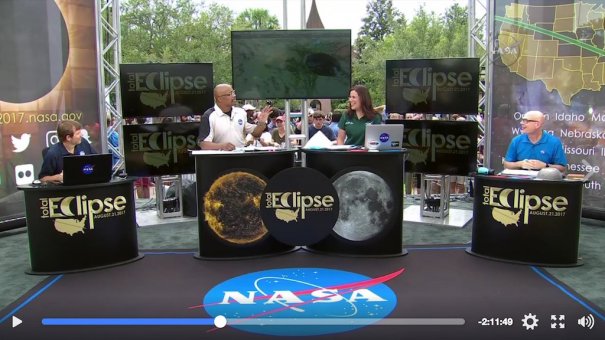
El programa principal fue el quinto feed, que fue editado y finalizado a través de un mezclador de producción antes de ser enviado al sistema de subtitulado de la NASA. A partir de ahí, un amplificador de distribución empujó la alimentación al Cube, que transportó la señal a Core.
Con la funcionalidad de simulcasting basada en la nube de Core, los cinco flujos se entregaron a dieciocho destinos diferentes, incluyendo Facebook, YouTube, Twitch, Periscope y muchos otros, con más de 3 Petabytes de datos transmitidos.
En esta ocasión, la NASA decidió renunciar a las transmisiones de televisión tradicionales y en su lugar distribuyó su programación especial del Great American Eclipse de forma simultánea en varias plataformas. El efecto fue doble: el streaming online ayudó a NASA EDGE a mantener sus costos de transmisión mínimos mientras se publicaba en plataformas que la mayoría de la gente usa. Además, la transmisión a estas plataformas significó que la mayoría de la gente tenía acceso a los videos el lunes por la mañana, cuando las personas en el trabajo o la escuela tienen más acceso a dispositivos móviles y OTT.
Did you like this article?
Subscribe to our NEWSLETTER and you won't miss anything.
Related articles
 ITN counted on Vodafone and LiveU to broadcast the Coronation on a public 5GSA network
 Moncada promotes a meeting to discover streaming and remote production workflows with Teradek
 Teradek presents its proposal for wireless video and mobile streaming Serv Micro at Cine Gear Expo
 Tivify uses Ateme's Titan to broadcast the Champions League final with low latency
 Teradek presents Prism Flex, its 4K HDR encoder/decoder for streaming
 The new Teradek 5-in-1 streaming monitor, Wave, is now available
Wave, the new 5-in-1 streaming monitor from Teradek
The new Teradek 5-in-1 streaming monitor, Wave, is now available
Wave, the new 5-in-1 streaming monitor from Teradek
 Eurovision will use Haivision Hub to broadcast the 2021 European Swimming Championships
 Haivision streaming technology and SRT protocol helped NASA monitor SpaceX launch
 TVU Networks will contribute its technology to broadcast NASA's first manned space flight in nine years
 NASA launches the first 24/7 UHD HDR video streaming service in the world
 Record and stream videos in 4K and 360º with the new Samsung Gear 360
 VidiU Mini: Teradek makes streaming even easier
 NBC Olympics uses Microsoft Windows Azure to stream the Olympics. Sochi 2014