





Netflix approves the Panasonic Lumix S1H as a camera for its productions
Además de la S1H, otras cámaras de Panasonic homologadas por Netflix son la Varicam 35, LT y Pure, la EVA1 y la AK-UC4000.
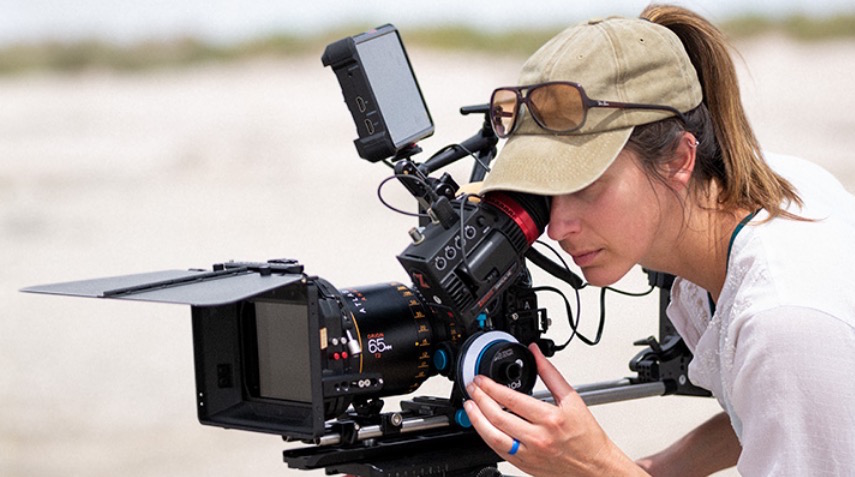
Netflix ha incorporado la nueva cámara Lumix S1H of Panasonic en el listado de cámaras homologadas para la producción destinada a la plataforma.
Periódicamente Netflix hace público este listado qué determina qué requisitos de resolución y captura debe cumplir una cámara con la que se producirá, al menos el 90% del total de un contenido de ficción. Para el contenido no ficticio, este umbral puede ser más flexible.
Además de la S1H, otras cámaras de Panasonic homologadas por Netflix son la Varicam 35, LT y Pure, the EVA1 and the AK-UC4000.
La nueva Lumix S1H es capaz de grabar vídeo a 6K/24p (proporción de aspecto 3:2), 5.9k/30p (16:9), y 4K 60p 10-bit/C4K. Su sensor full frame de 24,2 megapíxeles de nuevo desarrollo está equipado con ISO Dual Nativo, que permite una alta sensibilidad con un mínimo de ruido. Combinado con la potencia del nuevo Venus Engine processor ofrece la máxima calidad con un impresionante nivel ISO.
Ofrece V-Log/V-Gamut con un amplio rango dinámico de 14+ pasos, equivalente a cámaras profesionales de cine, para capturar con precisión desde áreas oscuras hasta las más luminosas. Además, el V-Log/V-Gamut es compatible con la popular colorimetría conocida como “Varicam Look”, muy popular entre los profesionales.
Destacar también su capacidad ilimitada de tiempo de grabación en todos sus modos de grabación gracias a las tecnologías de dispersión de calor únicas de Panasonic y su ventilador integrado. El HDR (High Dynamic Range) en HLG (Hybrid Log Gamma), 4:2:2 10 bits de salida HDMI, y modos Anamórficos 4:3 también están disponibles junto con una gran variedad de herramientas prácticas para la cinematografía, así como la luz indicadora de grabación, un monitor de forma de onda y la función V-Log View Assist.
La S1H incorpora un image stabilizer (I.S.) que compensa de forma efectiva el temblor de la mano. Combinando el estabilizador en el cuerpo (5 ejes) y el estabilizador óptico de imagen de 2 ejes (O.I.S.) de las ópticas de la serie Lumix S, el Dual I.S. 2 compensa prácticamente cualquier tipo de desenfoque, lo que permite el uso de una velocidad de obturación más lenta consiguiendo hasta 6.5 pasos de diafragma. Incorpora un monitor trasero articulado, un visor electrónico LVF y una pantalla LCD de gran tamaño, alta resolución y gran visibilidad. Su diseño robusto proporciona a los fotógrafos profesionales una alta fiabilidad.
Una de las grandes ventajas de la nueva propuesta es el uso de monturas L Mount (fruto de la alianza entre Leica, Sigma y Panasonic) lo que permitirá al usuarios trabajar con más de 40 objetivos intercambiables sin necesidad de adaptador abriendo con ello un espectro casi ilimitado de nuevas posibilidades creativas.

Vídeo con calidad cine
La S1H incorpora un sensor CMOS Full Frame de 24,2 megapíxeles de 35 mm (35,6mm x 23.8mm) captura una resolución de 6.024 x 4.016 píxeles, garantizando que las texturas más finas de cualquier escena se capten de forma precisa. Adopta un OLPF (filtro de paso bajo) que suprime el efecto moiré, que en combinación con el motor Venus Engine, permite obtener una imagen nítida con un mínimo de ruido, incluso con un ISO de 51200.
Una característica clave y única de la S1H es la sensibilidad ISO nativa dual. Una tecnología que se introdujo por primera vez en el buque insignia de Panasonic, la Varicam. Al mantener la misma relación señal/ruido, el sensor puede producir unas imágenes increíblemente nítidas en condiciones de iluminación escasa y sin degradar la imagen. Esto se traduce en una cámara que puede cambiar de una sensibilidad estándar a una alta sensibilidad sin apenas aumento en el ruido.
La sensibilidad ISO nativa dual brinda a los cineastas una mayor variedad de opciones artísticas, así como la capacidad de utilizar menos luz en el set de grabación, ahorrando tiempo. La sensibilidad ISO nativa dual de la S1H es de 640 y 4000, lo que permite rodar en casi cualquier entorno de iluminación. Normalmente, el ruido aumenta a medida que aumenta la sensibilidad con un único sensor de imagen e ISO nativo. Sin embargo, con el nuevo sensor de imagen con ISO nativo dual, minimiza la generación de ruido por la elección de un circuito preciso y óptimo de acuerdo a la sensibilidad antes de procesar la toma. Como resultado, permite la grabación a un ISO de alta sensibilidad, 51200. Esta tecnología ISO nativa dual permite cambiar manualmente entre Low (ISO 640-5000) y High (ISO 4000-51200).
Además, ofrece un amplio rango dinámico de 14+ pasos, prácticamente los mismos que las cámaras de cine de Panasonic para reproducir con precisión todos los detalles, desde la oscuridad a las áreas más brillantes.
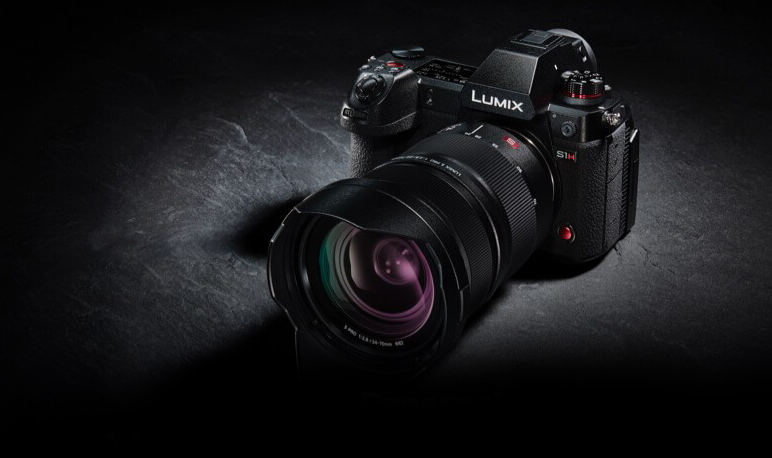 La capacidad de capturar colores precisos e infinidad de tonalidades de piel es una necesidad para cualquier cineasta. Importa la reconocida colorimetría de la gama de cámaras de cine VariCam. La nueva S1H incorpora el V-Log/V-Gamut para ofrecer un alto rango dinámico y una amplia gama de colores. El V-Log renderiza una imagen muy plana mientras mantiene toda la información de color dentro de la imagen. Esto significa que para el proceso de post producción hay un mayor nivel de control y posibilidades. El sensor CMOS de la Lumix S1H logra una amplio gamut de colores conocido como V-Gamut, que es el espacio de color óptimo de la S1H y logra un espacio de color más grande que BT.2020. V-Log tiene características de curva que recuerdan un poco al negativo de una película y el V-Gamut ofrece un espacio de color aún más grande que la película.
La grabación de video en HDR (High Dynamic Range) está disponible, y es capaz de reproducir tanto las partes brillantes y como las oscuras de una imagen, haciendo que se vea tal y como la percibe el ojo humano. La cámara registra este Hybrid Log Gamma-video con una curva de gamma designada compatible con ITU-R BT.2100
La nueva cámara es capaz de grabar a 4:2:2 de 10 bits a 4K 60p/50p con salida HDMI. Además, se adapta a una gran variedad de formatos de grabación, incluido el modo Anamórfico 4:3, para satisfacer las necesidades de los profesionales.
El VFR (Velocidad de fotogramas variable) permite a los usuarios grabar video en C4K/4K (60 fps, máximo 2.5x más lento en 24p) y FHD (180 fps, máximo 7.5x más lento en 24p). La velocidad de fotogramas mínima para Video quick motion es de 2 fps. Además, el video HFR (High Frame Rate) con sonido también se puede grabar incluso cuando se usa el enfoque automático.
También están disponibles herramientas prácticas como un Monitor de Forma de Onda (Waveform Monitor), que puede ser escalado y posicionado en la pantalla, así como V-Log View Assist. Las luces indicadoras están equipadas en los lados delantero y trasero de la cámara y se puede mostrar una indicación de marco rojo en la pantalla / visor, cuando la cámara está rodando.
Did you like this article?
Subscribe to our NEWSLETTER and you won't miss anything.
Related articles
 Daniel Sánchez Arévalo shoots an ensemble thriller for Netflix produced by Bambú Producciones
 Panasonic Lumix S1RII: a hybrid camera with full-sensor 8K recording
 Panasonic incorporates Viz Mosart to create automated productions
 Lumix FZ82: the new Panasonic camera with 60x zoom and 4K recording
 Panasonic designs a new 35mm F1.8 lens for Lumix S Series Full-Frame cameras
 Lumix BS1H Full Frame, Panasonic's latest proposal for cinema and live
 Panasonic surprises with the new Lumix BGH1, a Box-Style camera with 4K 60p/50p capture and a wide dynamic range
 Lumix S5, Panasonic's new full-frame hybrid camera that offers exceptional video in a compact body
 Lumix S1H: a groundbreaking full frame camera for cinematic capture
 Bambú Producciones begins filming 'Despite everything', a new series with a Spanish seal for Netflix
 Netflix updates the list of approved cameras for its productions
 Panasonic Lumix GH5S: 4K video recording optimized for high sensitivities
 Panasonic Lumix GH4: the first Micro Four Thirds camera that records in 4K quality
 The BBC approves the cameras for HD capture