





The new audiovisual ecosystem will be a challenge for intellectual property
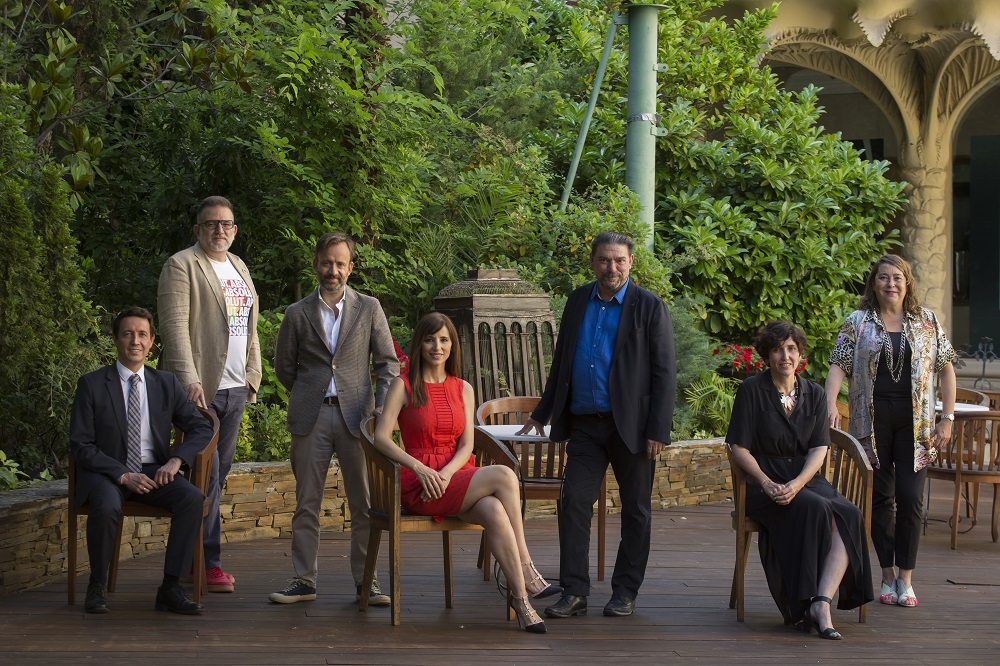
The Academy of Television and Audiovisual Sciences and Arts organized this Thursday, June 24, in collaboration with the General Society of Authors and Editors (SGAE) a meeting between professionals from the sector to reflect on intellectual property in the new audiovisual scenario.
The objective of this meeting was to discuss how the sector is adapting to the new digital environment, the main changes for authors and producers of audiovisual content and the challenges of intellectual property in a global market.
The president of the SGAE, the academic Antonio Onetti, was in charge of opening a conference “that is tremendously timely and necessary to expose the current situation of profound transformation that the Spanish audiovisual sector is experiencing.”
The journalist and academic, Olga Lambea, moderated, in the Manuel de Falla Room of the Longoria Palace, an interesting debate in which experts such as: Adriana Moscoso del Prado, general director of Cultural Industries, Intellectual Property and Cooperation of the Ministry of Culture and Sports; Nicholas Connold, director of the Digital Rights department of SGAE; Jose Manuel Nevado, academic and general director of the Association of Audiovisual Television Producers of Spain (PATE); Marisa Castelo, president of the Author Institute; and Miguel Langle, director of Regulatory Affairs and Institutional Relations at Atresmedia. The day also included interventions by some of the attendees.
The General Director of Cultural Industries, Intellectual Property and Cooperation Adriana Moscoso del Prado, pointed out that "we are in a very important moment for the audiovisual industry. We have a lot of talent and great creators and a robust ecosystem of creative companies, with tradition and know-how." “In this framework of the Audiovisual Hub, European aid arrives and this will give the impetus behind the recovery and resilience plans.” “This is the year of the creative economy and we cannot build the edifice of cultural industries without intellectual property and creative sovereignty.”
In this sense, he spoke of the different speed between change in the sector and legislation: "We are transposing European directives that have become a bit old. The challenge is exciting but also very dizzying." And he spoke of the importance of listening and involving all agents in the sector: "We must put all the tools on the table so that in the audiovisual sector there is space for everyone and we have the obligation to protect our cultural diversity. This is a common work with a vision of the country."
José Manuel Nevado defended the importance of the independent producer: "The first big battle that we want to put on the table is that an independent producer is half producer and half creator. We want this to be recognized." On the other hand, he also defended the need for a plural debate in the sector: "The time has come for us all to sit at the table with transparency and to participate in this business as well. If there is a moment, it is this. We now have a great opportunity to work together. Let's define the rules."
Marisa Castelo highlighted that "we have gone from a production system that was controlled by large groups to the emergence of global producers with whom it is very difficult to compete. This has several very good things." "Operators move their money globally and this is good for new creators. There is more money for production and that is seen on the screen. Another good thing is professionalization, which has been increasing. And another is that now it is manufactured for everyone." In his opinion, the fundamental challenge before us is that “we have to form a common front with Europe.”
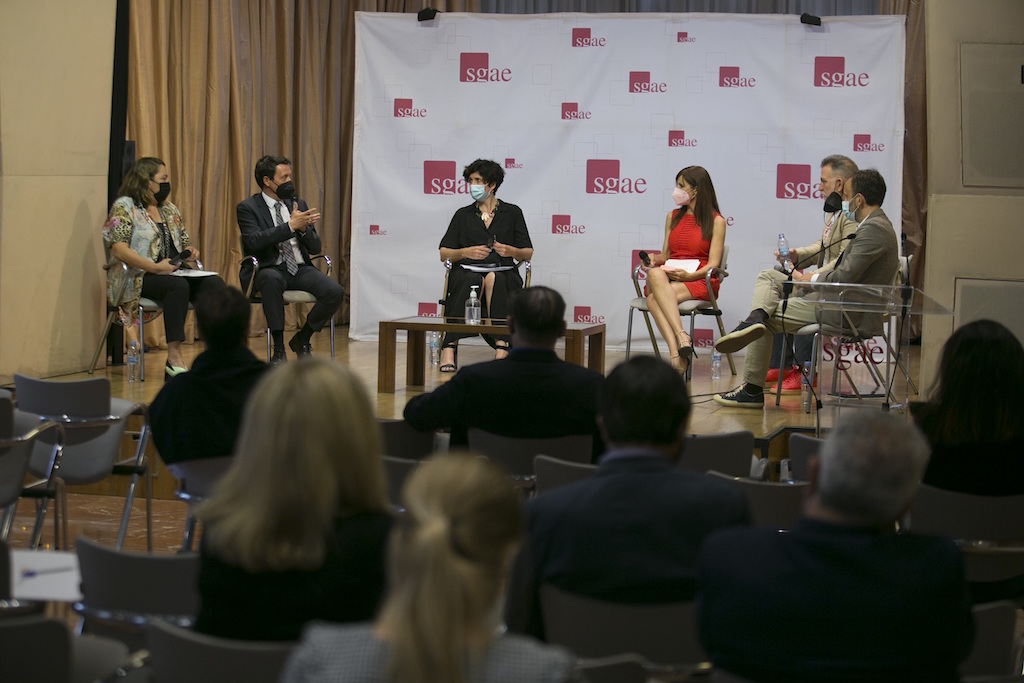
Rules for everyone
Miguel Langle explained the importance of creating rules for everyone: "We have to create rules that do not distort the market. The aim is not only for foreign investment to come, but for us to be the ones to take that investment out of Spain." "We need a reflection on reciprocity with respect to the USA. A balance. The intellectual property rights model is very complex and a reflection must be made to have a more homogeneous model." “The world has changed and we must think with a European vision and avoid abuses,” he concluded.
The director of the digital rights department of SGAE. Nicholas Connold stated that "the main challenge is the data. We do not work with the content itself but with the data of that content. The main challenge is the volume of content on the new platforms. And here mutual collaboration is necessary so that there is data exchange." "Globalization has somewhat broken the territorial border of management entities. Spain is one of the countries that protects authors the most." Finally, he closed his speech with an optimistic vision: "There are more people than ever working in this sector in Spain and it is also consumed more than ever. I believe we are on the right track."
https://www.youtube.com/watch?v=58nQ0224l-w
Did you like this article?
Subscribe to our NEWSLETTER and you won't miss anything.
Related articles
 Virtual production in the audiovisual sector and its relationship with intellectual property
 The transfer of intellectual property rights: risk or opportunity?
 Academia TV and SGAE organize the meeting “Intellectual property in the new Spanish audiovisual ecosystem”
 What advantages and risks will 5G mean for the audiovisual sector?
 The Second Section of the Intellectual Property Commission processed a total of 152 procedures in 2018
 Vitelsa launches the new production center of the EU Intellectual Property Office
 Established the First Section of the Intellectual Property Commission
 In 2013, more than 51 million euros of items that violated intellectual property rights were seized
 Partial reform of the Intellectual Property Law
 EGEDA and Televisa consolidate their alliance for the management, administration and defense of intellectual property rights
Televisa contracts with EGEDA for the global management of its intellectual property rights
EGEDA and Televisa consolidate their alliance for the management, administration and defense of intellectual property rights
Televisa contracts with EGEDA for the global management of its intellectual property rights
 The European Commission takes measures to strengthen intellectual property rights
 The Television Academy creates a platform for debate on intellectual property
 Seminar: A reform of the Intellectual Property Law?