





The Parliament of Galicia embraces the benefits of UHD and automation with Panasonic


PTZ cameras, controllers and tables Panasonic star in the ambitious intervention of the integrator Spica in it Parliament of Galicia. Guillermo Alonso Santoro, Spica's systems director for more than 35 years, shares all the keys to the installation.
The world of integration parliaments, full and others similar spaces in Spain it is full of particularities that make these facilities unique. The requirements of the administration regarding transparency, together with the demand from the public televisions In order to fulfill their service to citizens, these infrastructures must be prepared to generate a significant number of signals with high quality standards.
To all this, we must add an added difficulty: the frequent intervention on historic buildings. Many government spaces are housed in protected spaces, increasing the complexity of integrating elements such as cameras or network infrastructures. The useful life of audiovisual systems, in addition, involve interventions on obsolete networks. And, as the professional Spica and your system manager Seneca, “implementing cable is not the same as replacing it.”
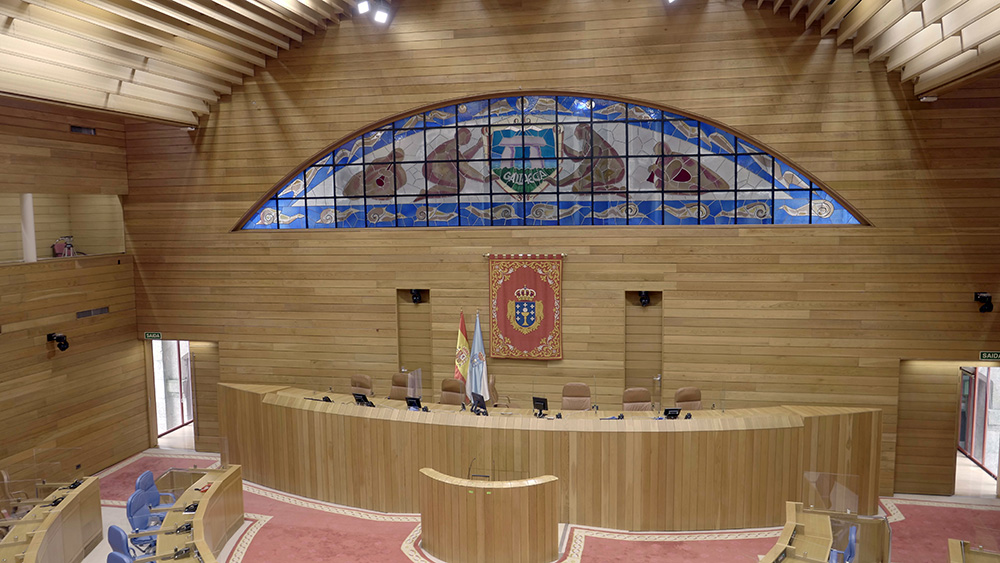
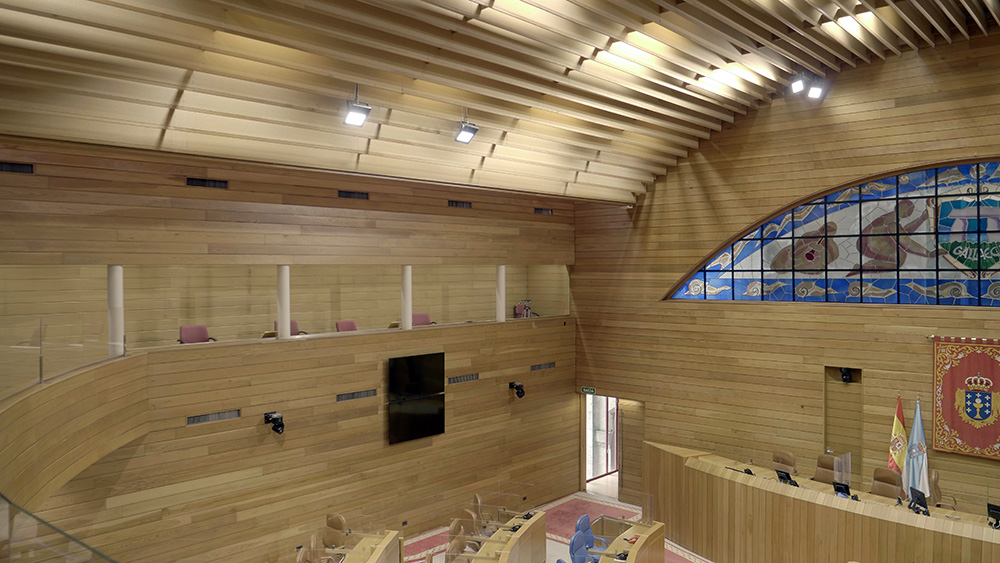
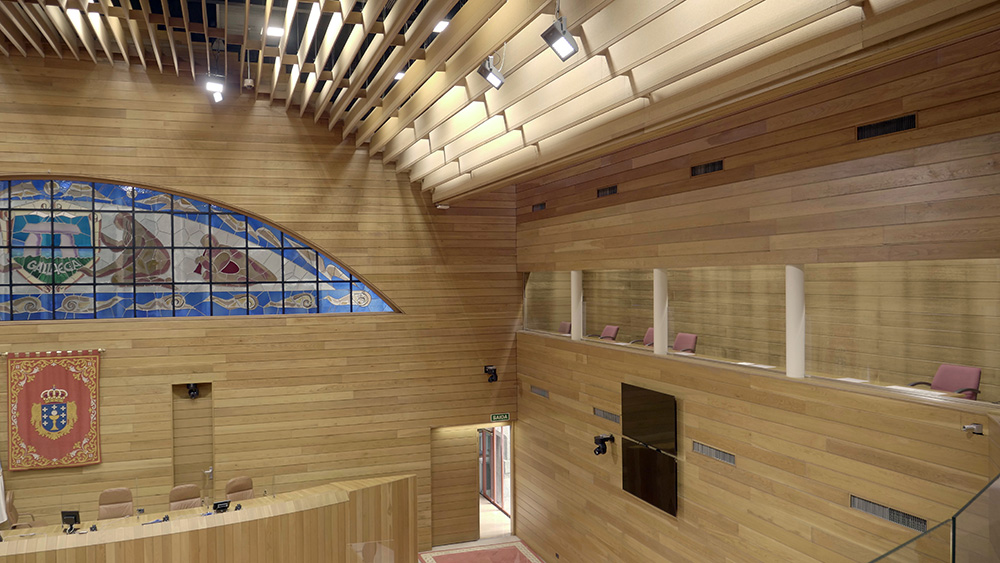
Guillermo Alonso gives all the keys to the recent update of the Parliament of Galicia, established in 1981 and located in the Pazo del Hórreo in Santiago de Compostela (La Coruña), a building designed by Antonio Bermejo y Arteaga that dates back to 1915.
A project born before the pandemic
The renewal of the audiovisual production and distribution systems of the Parliament of Galicia, as Alonso explains, took his first steps three years ago. It was then when the institution, in order to guarantee its public service of inform and preserve everything that happened in parliamentary headquarters, considered that it was essential take a qualitative leap in the quality of your audiovisual production. However, the project would not begin until well into 2021. The pandemic was not the only cause of the delay, since, due to budgetary reasons, the project was delayed month by month. Meanwhile, the Galician institution undertook small implementations to solve “emergencies” of the day-to-day life of the institution.
Finally, the public tender arrived in May 2021. The audiovisual team of the Parliament of Galicia required a renewal of its collection, management and distribution system, as well as its network infrastructure. They did so by proposing a model based on 3G-SDI networks to operate in a maximum resolution of Full HD.
After studying all the applications, the appointed commission ended up opting for the option proposed by Spica, a company with more than 60 years of experience. The project proposed by the integrator respected all the bases proposed by the contest, but added three differentiating elements: the implementation of a red 12G-SDI, in order to be able to transport signals in future UHD; the implementation of 4K cameras, provided by Panasonic; and the installation of Seneca, an audiovisual content management system and video minutes.
Installation in record time
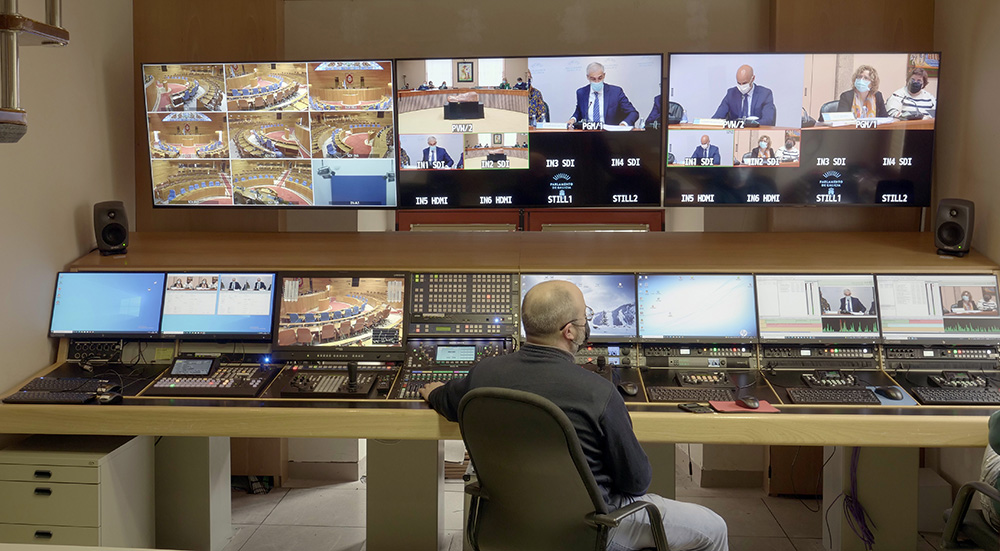
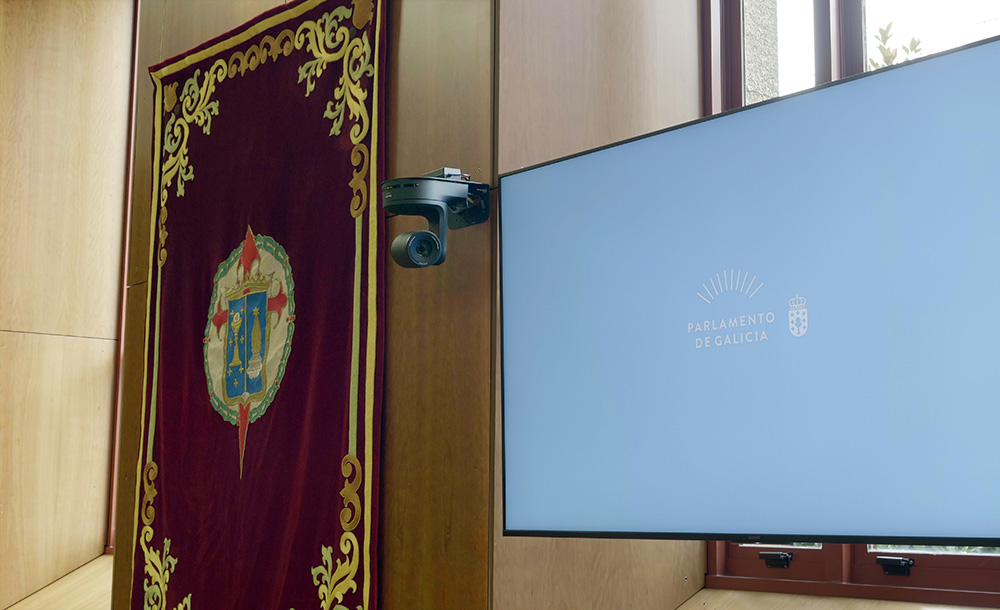
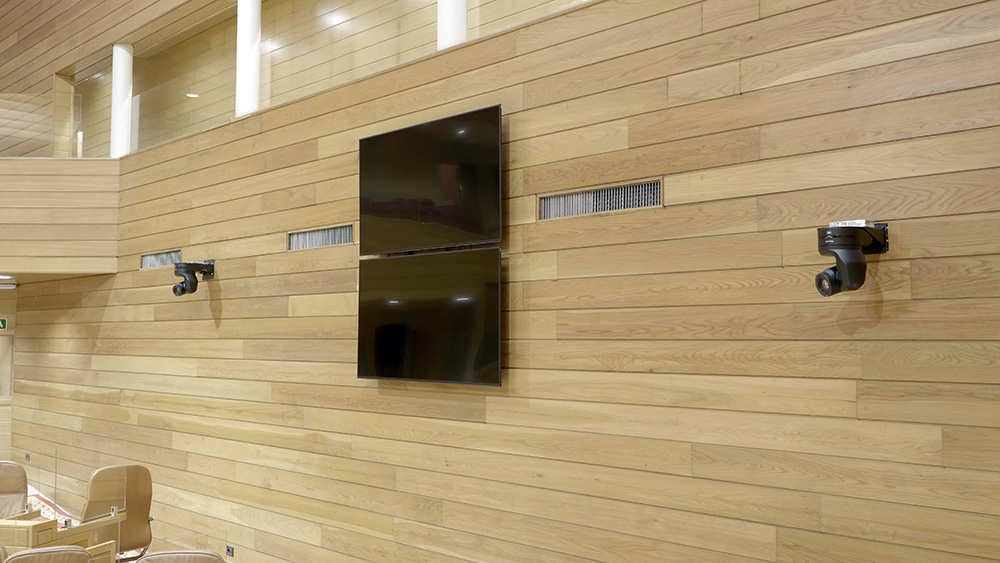
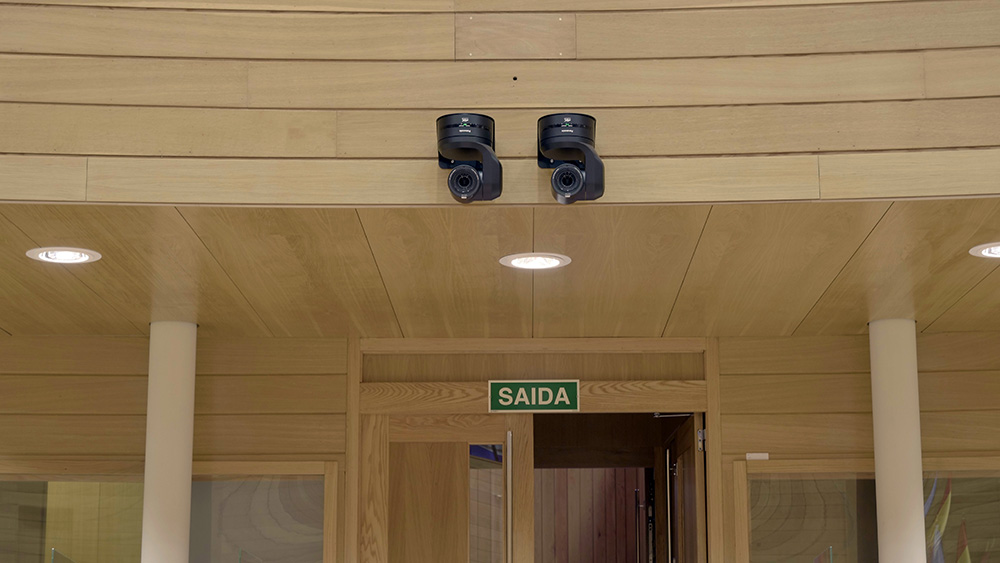
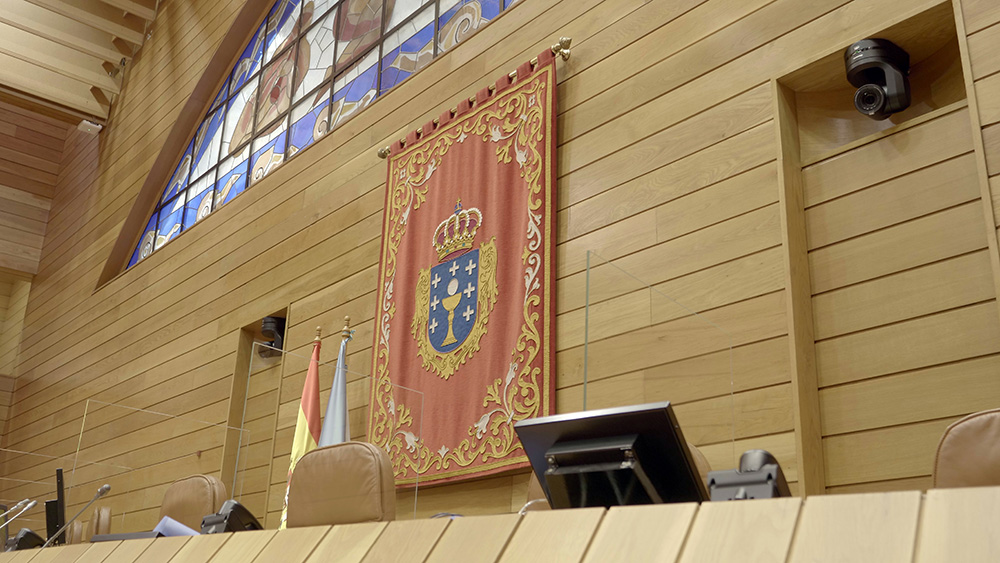
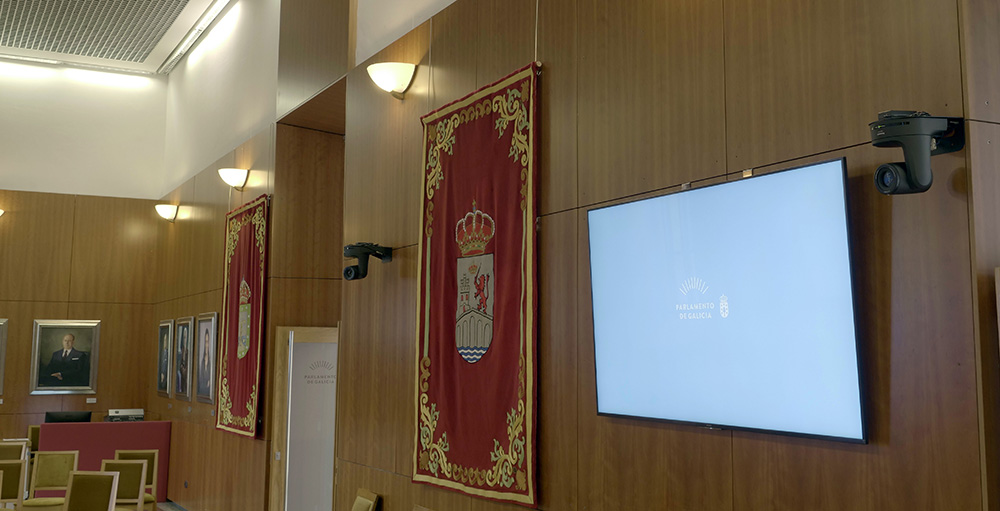
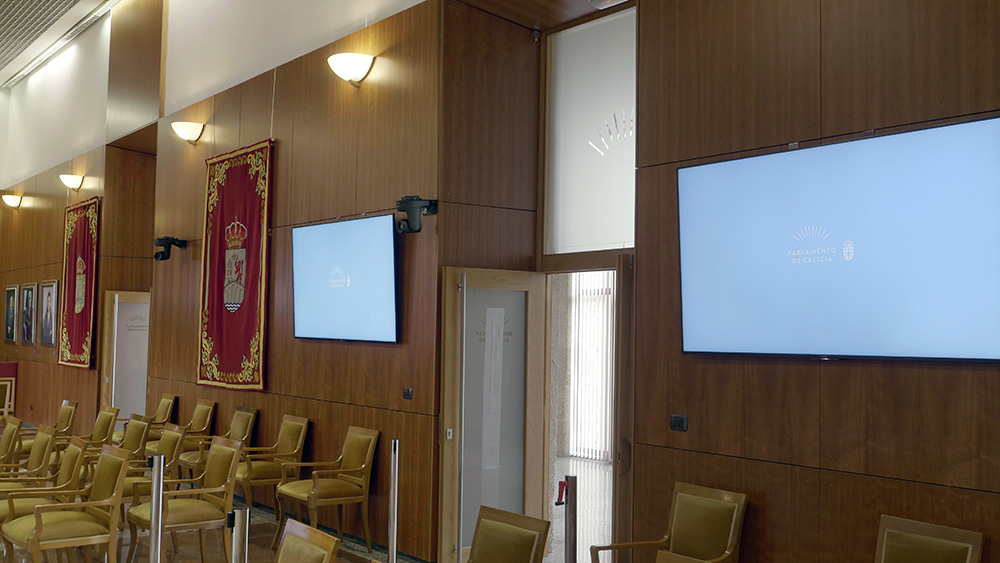
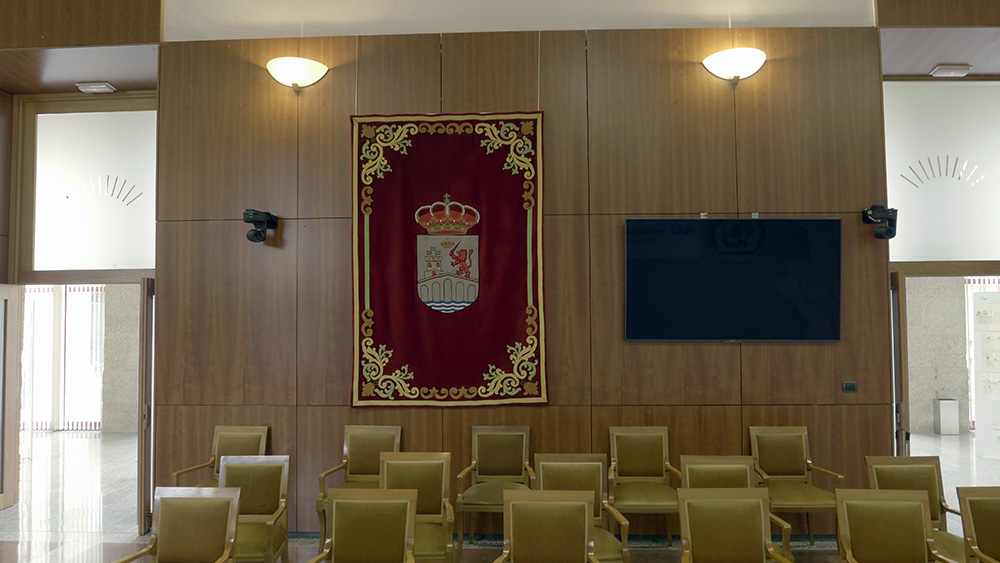
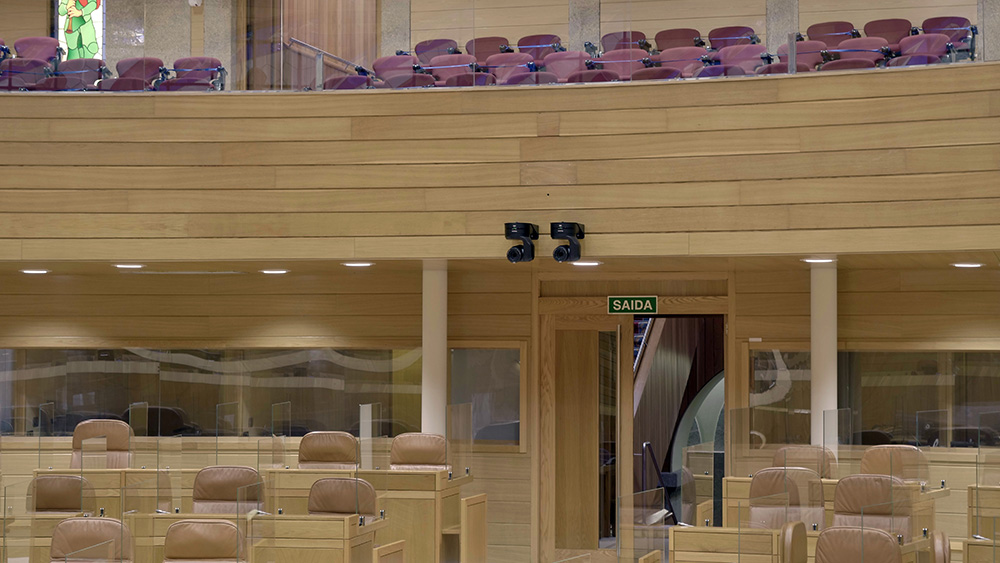
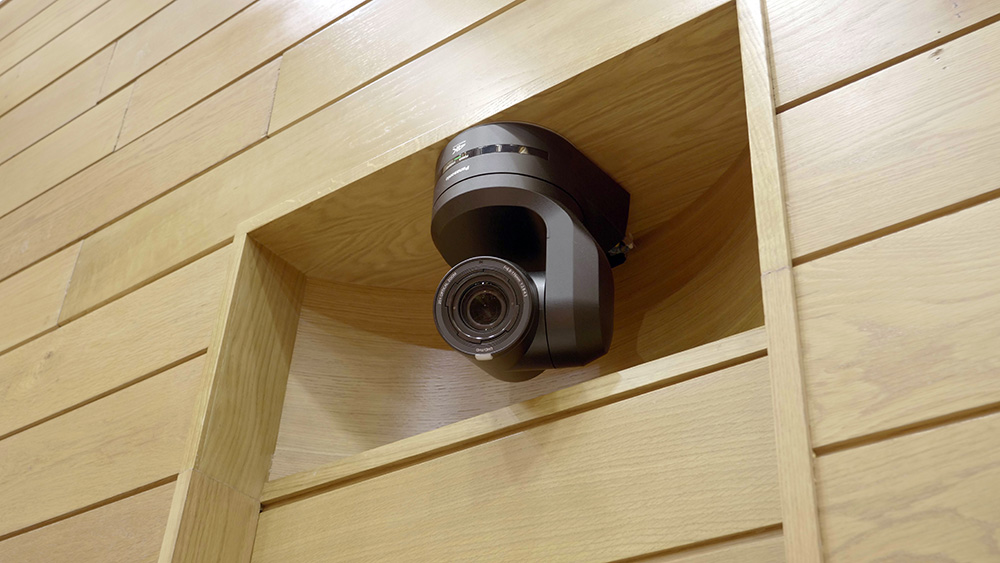
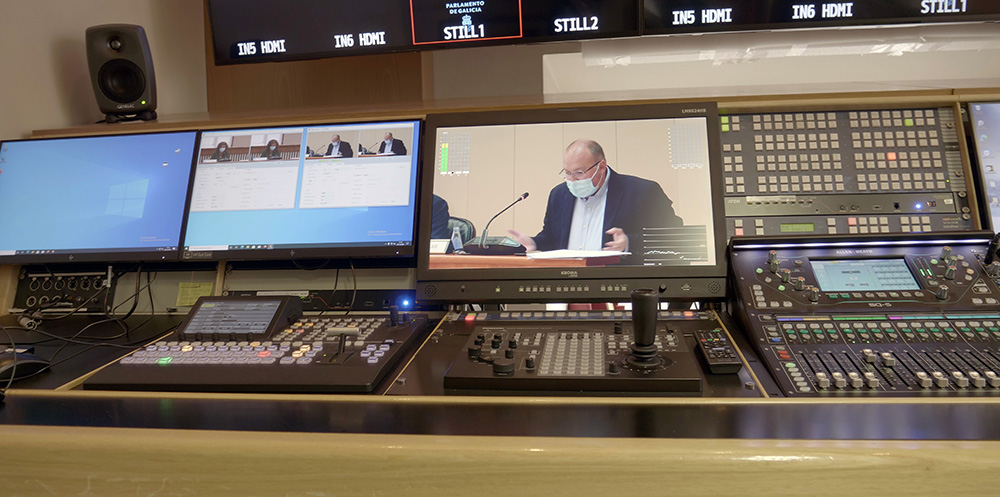
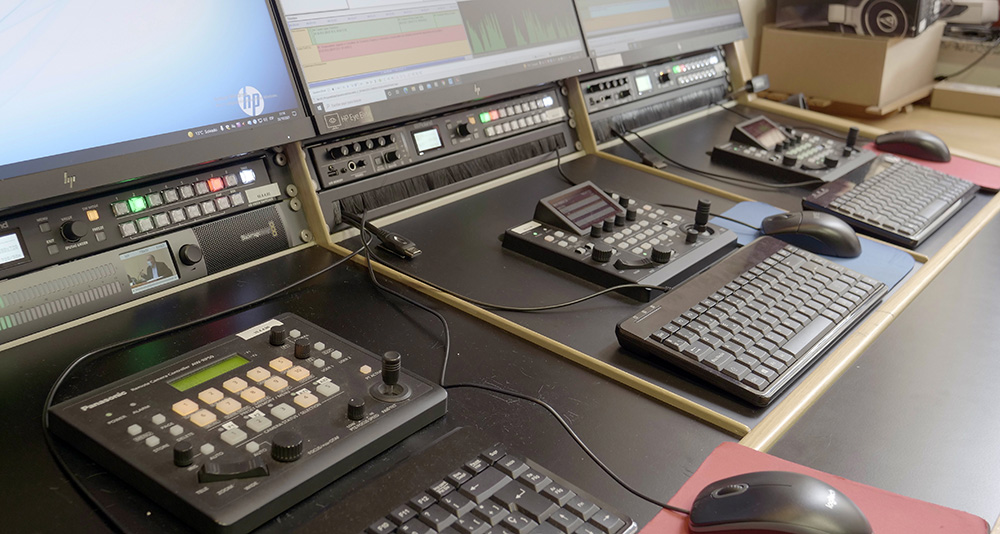
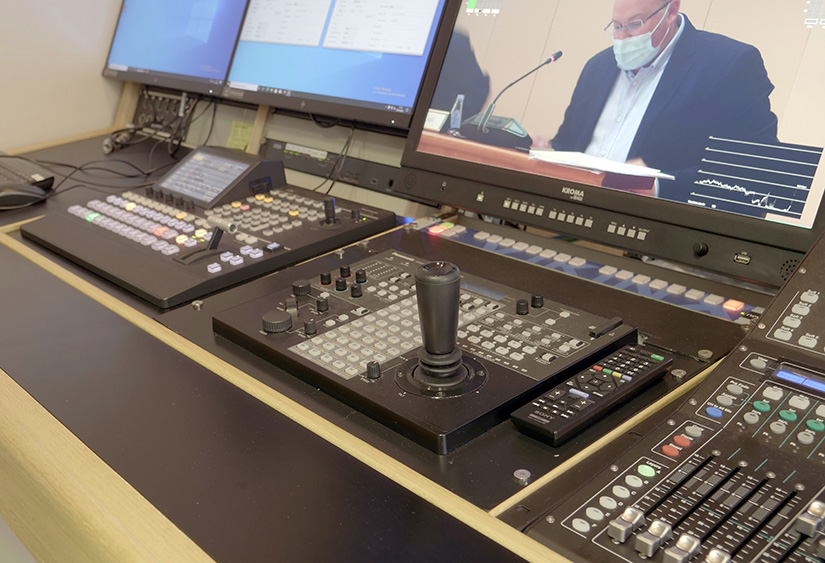
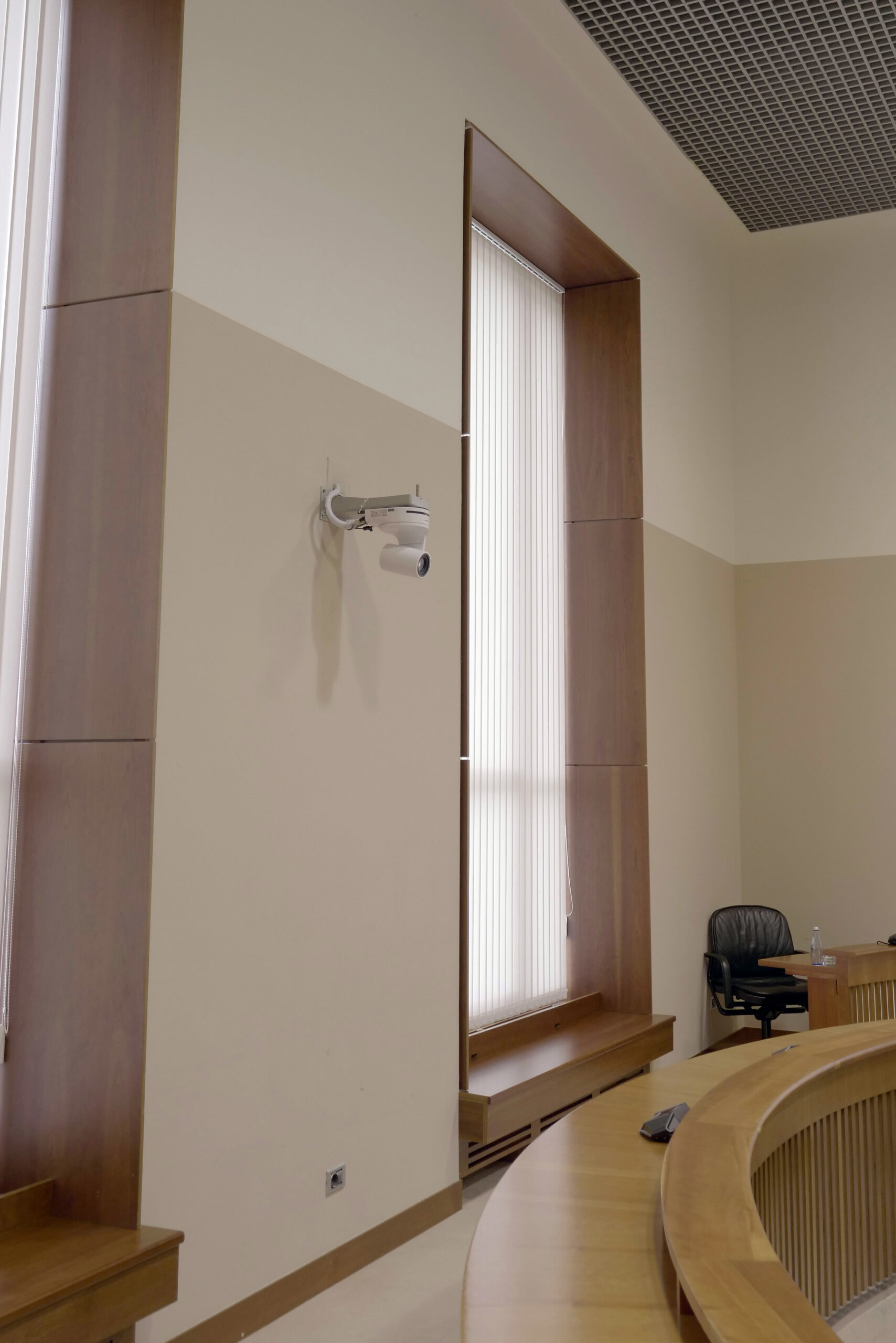
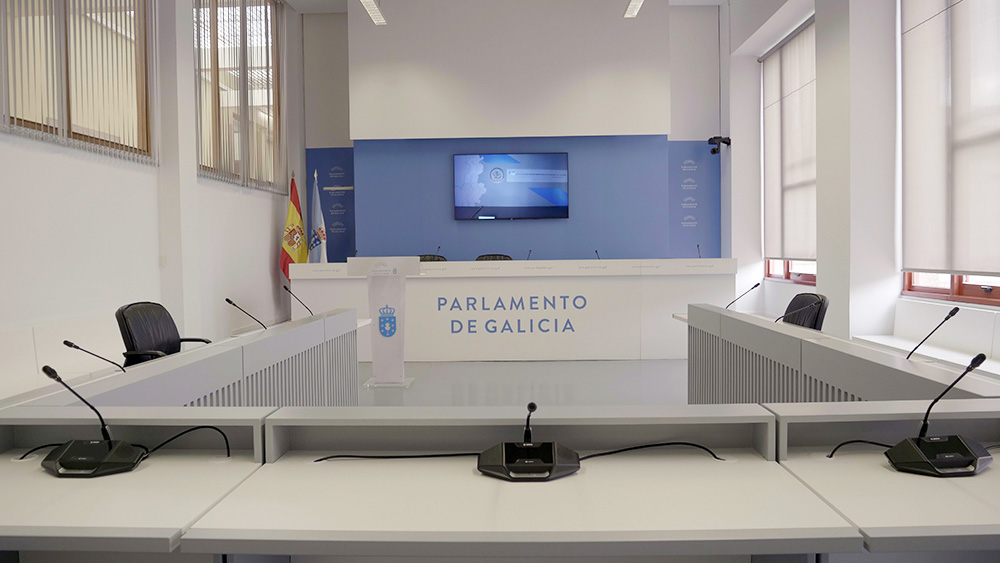
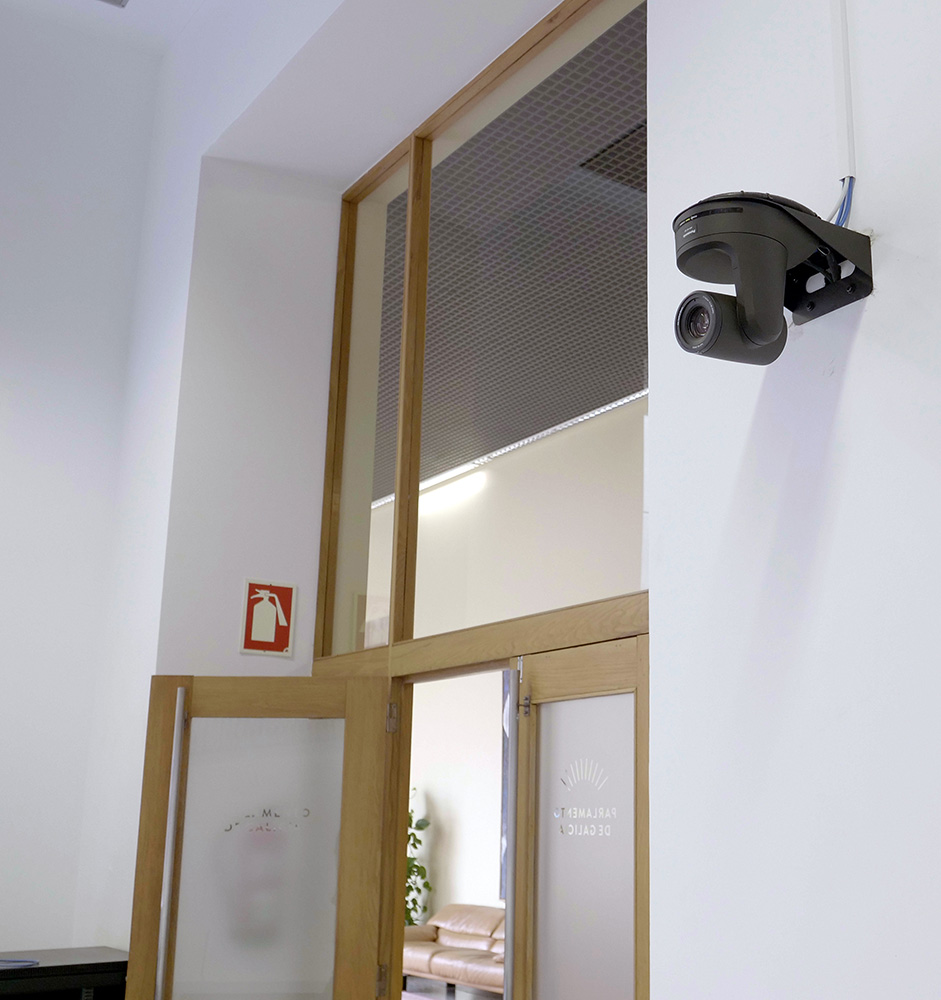
The installation of the new production system occurred during the summer, one of the few windows of “non-activity” of the Parliament of Galicia. During this period of time, they updated four committee rooms, and multipurpose room, he full and her own control room. The project included the installation of PTZ cameras (with their respective drivers) Panasonic, among which the models stand out AW-UE150 4K 50p, with 20x optical zoom + iZoom; the switch 4K for live events AV-UHS500, system of Panasonic prepared to work both in HD as in UHD; a new network infrastructure 12-SDI, distributed throughout the entire parliament; the IP conference system Of those who say of Bosch; and a selection of products Nevion, Albalah y AVP.
The installation began well into the summer period and was completed in time for the first week of september. The most important part of the whole core switching and matrices was carried out during the last three weeks of August. The installation progressed as planned, although it is true that the Spica team encountered a problem: the call for an extraordinary plenary session. Given this circumstance, the team led by Alonso created a provisional audiovisual production set, guaranteeing the broadcast and dissemination of what happened in parliament.
A UHD system is IP
In the world of administrations public, and more specifically with regard to parliamentary spaces, the times of exploitation of audiovisual assets They are moderately long. They require solutions that can reliably support a prolonged activity over time. The case of the Parliament of Galicia is no exception. With an estimated exploitation time of 12 years, the Spica team strived to offer a system that could withstand robustness over the years and technologies.
In this way, it was decided to use technologies IP y UHD. To address the production and transportation of the audio channels, Spica has used conference technology The IP of the speaker of Bosch, a system that works using the DANTE standard. Regarding UHD, we have opted for a red 12G ready to, in the future, make the leap to 4K.
The benefits of this commitment to UHD, a “market opportunity (…) thanks to the drop in technology prices”, are already tangible. Beyond the visual fidelity resulting from having UHD capture devices, the signal from the 4K cameras in the living room are used as if they were “four HD cameras”. Alonso provides more details: "The Panasonic table allows you to make a virtual cut, so that you can have two shots from the same capture point without switching anything. In this way, we can capture the speaker and the table through a single camera."
The connection with public televisions
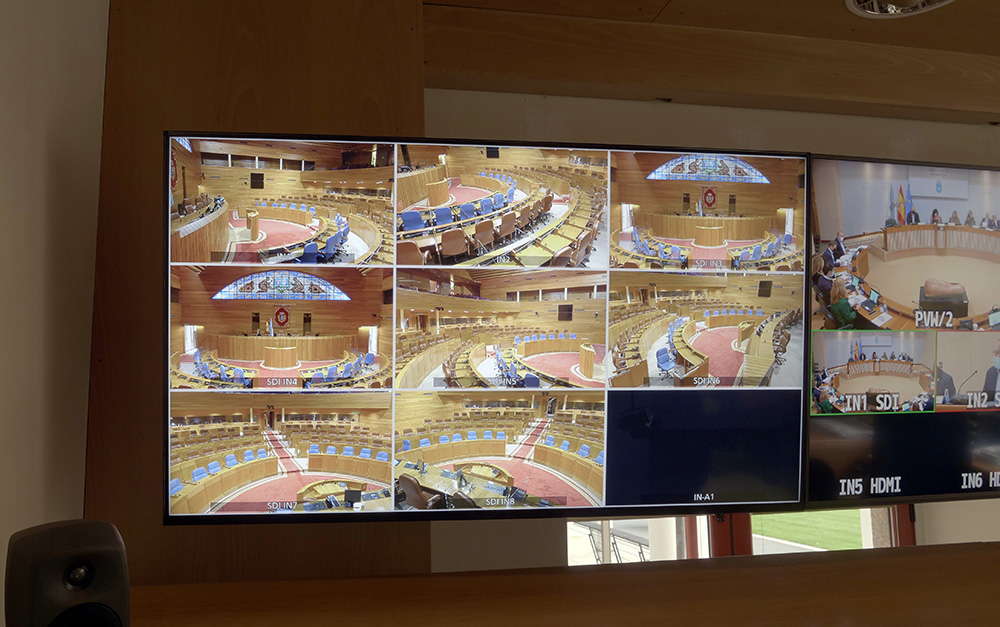
Un requisito fundamental de la instalación fue proporcionar una conexión permanente y directa con Spanish Television y tvg (Televisión de Galicia). Desde la sala de control del Parlamento de Galicia se generan three signs que se envían a estos broadcasters: una señal ya producida, un canal con la interpretación del lenguaje de signos y una tercera señal “de reserva”. Esta conexión se realiza por fiber hasta el centro de producción de televisión de la televisión pública gallega, ubicado en San Marcos.
Las televisiones pueden integrarlas estas señales en su programación directamente, ya sea emitiéndolas de forma íntegra o seleccionando momentos concretos para completar una cobertura informativa. La cobertura, según subraya Alonso, cuenta con una “política de realización bastante cerrada”, la cual fue consensuada entre el equipo de producción audiovisual del Parlamento de Galicia y las televisiones.
En el caso de que se produzca un acto institucional de especial relevancia o una entrevista de alcance, las televisiones pueden desplazar al parlamento diferentes enlaces (ya sea en forma de unidades móviles o mochilas de transmisión) para completar la señal institucional original.
Automatización para afrontar retos de producción
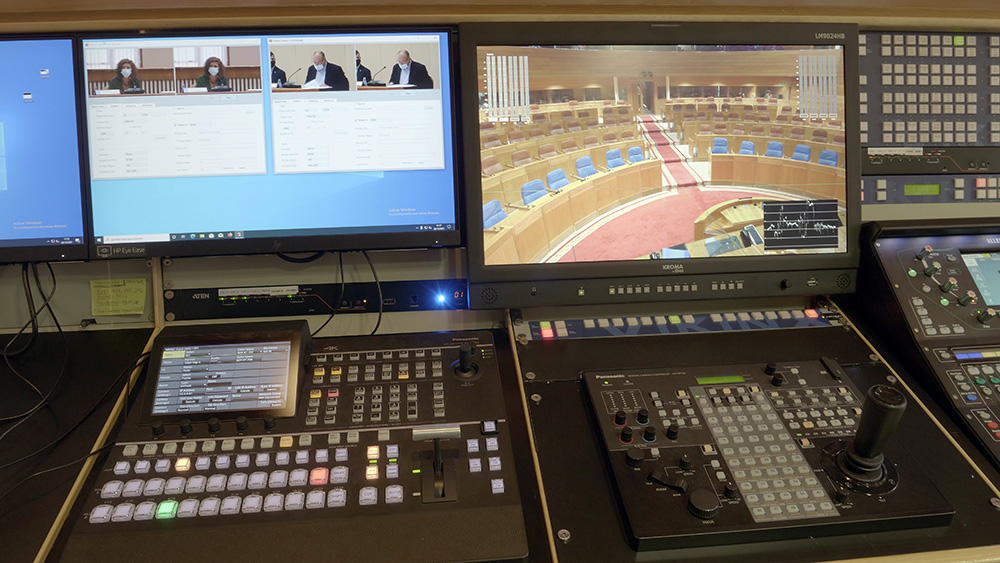
La producción diaria del Parlamento de Galicia se realiza con Seneca, una suite desarrollada por la propia Spica. El sistema, presente en otras instituciones españolas, se encarga de gestionar la grabación, catalogación, archivo y videoacta de todas las sesiones de la institución. Gracias a la integración de los sistemas de Bosch y las cámaras de Panasonic, las sesiones de las comisiones pueden ser automatizadas basándose en elementos como la activación por voz. Alonso aporta más claves: “Contamos con sistemas que permite que, al abrirse un micrófono, se seleccione una cámara concreta de las que hay en las salas y vaya a una posición predefinida. Siempre disponemos de controladores remotos, por si hay que replantear un plano o un movimiento, pero el objetivo es crear un proceso automático”. Utilizando Séneca, el equipo de audiovisuales puede producir hasta cuatro sesiones de manera simultánea.
El sistema de producción se controla con dos personas cuando no hay plenos, un equipo que se amplía con un director en el caso de que estos se celebren. En este caso, el procedimiento de realización suele ser manual, si bien integra diversos elementos de automation, like guías en la activación de microfonía o la generación automática de graphic elements.
Progreso para el día de mañana
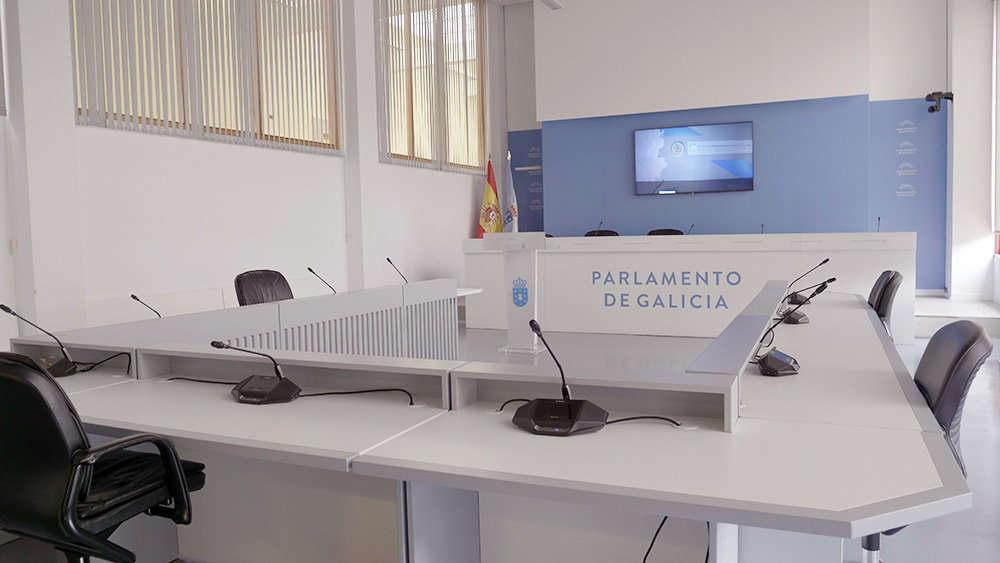
He Parliament of Galicia y Spica han planteado una integración ambiciosa. Lejos de conformarse con los estándares actualmente consolidados, se ha querido plantear una solución que mira directamente al futuro. Ya sea con la renovación completa de la sala de control, la actualización de las cámaras, sistemas de debate y de votación de las salas de comisiones; o de la actualización de cámaras e infraestructura tanto del multipurpose room and the full, la perspectiva siempre ha sido la de dar un paso más.
Eje de su éxito ha sido la optimización de los recursos, apostando por la process automation. La tecnología, con su imparable avance, no deja de otorgar nuevos enfoques a procesos que se creían ampliamente establecidos.
“Todo este progreso ayuda a que, con muy pocas personas, se produzca toda la magia”, concluye Alonso, plenamente satisfecho de todas las posibilidades con las que cuenta el renovado Parlamento de Galicia.
A report by Sergio Julián Gómez
Gallery
(click on any photo to start the carousel - scroll right and left by clicking on the arrow)
Did you like this article?
Subscribe to our NEWSLETTER and you won't miss anything.
Related articles
 Sumendi Uhartea and current animation: relocation, AI and tax benefits
 Tedial convinces broadcasters at IBC with the benefits that smartWork offers
 Atomic Production embraces immersive sound with Genelec monitors
 Viewers remain skeptical about the benefits of 8K
 Viz Vectar Plus continues to exploit the benefits of NDI with its version 1.2
 Turkuvaz group in Türkiye embraces an IP environment with Lawo
 COVID-19 gives a snip to the profits of Atresmedia and Mediaset España
 HP and Sgo disclose the benefits of virtual reality with Los Secretos
 Black Box will demonstrate at IBC the real benefits of virtualization and high-performance KVMs
 Globecast Embraces IP Contribution with Aviwest StreamHub DMNG
 Vértice 360 plans to double its profits until 2013
 Vértice 360º returns to the path of profits in 2010
 LaSexta enters profits and does not see the merger as urgent
 LG Electronics: record profits in the third quarter of 2009