





The Disney+ documentary 'Shark Attack 360', created with composer Ultimatte (Blackmagic)
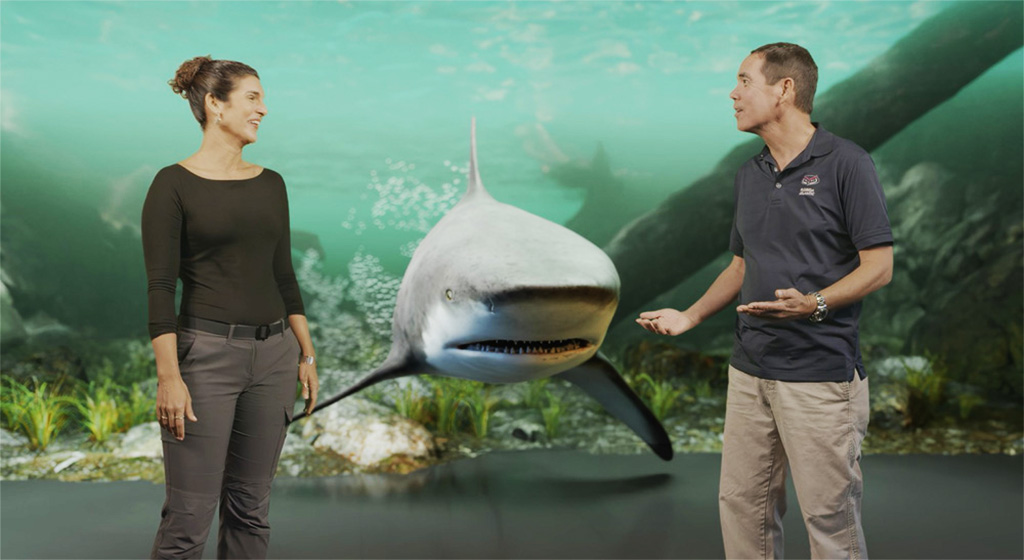
The study Little Shadow created a virtual environment supported by solutions such as the Ultimatte composer (Blackmagic), DaVinci Resolve or Unreal Engine software to shape 'Shark Attack 360', a documentary by Disney+.
Shark Attack 360, series composed of eight episodes of 60 minutes, investigates the true behavior of the sharks and investigate why they attack humans, showing personal stories and scientific evidence in the process. The production, which is part of the Sharkfest from National Geographic, rounds off his script with a staging full of visual effects avant-garde.
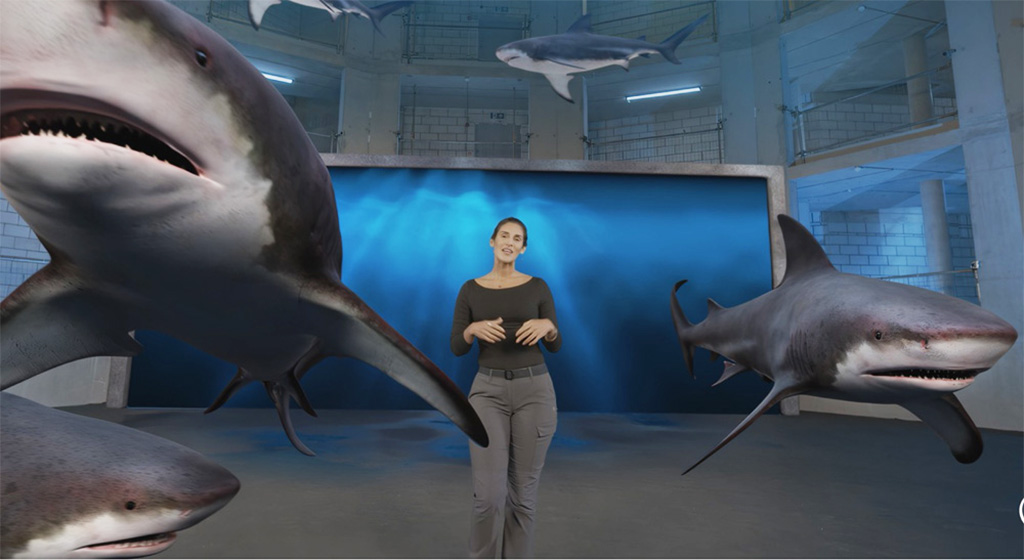
The London producer Arrow Media commissioned the execution of the three-dimensional graphics and visual effects a Little Shadow. As part of its work, the producer had to give life to interactive virtual images and set up a shark laboratory in 360 degrees, where we can show the movement and anatomy of these individuals.
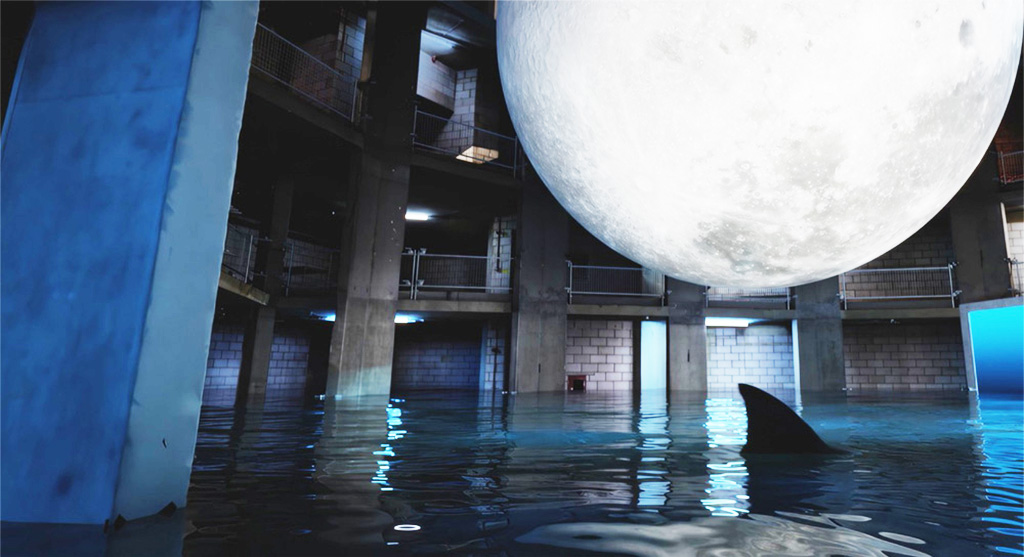
Simon Percy, director of Little Shadow, made the decision to establish the filming environment in Collins’ Music Hall of Islington, an alternative theater that was never finished. This location was where the individual was located virtual laboratory of sharks in 360 degrees, a visual bet which combines real images and others generated with a computer. "Initially, we used a LiDAR scanner to develop a 3D model of the location so we could plan and create the project to scale. The digital replica of the venue allowed us to organize everything in detail and preview the images to ensure that the shots could be generated in advance, thus streamlining both filming and editing," explains Percy.
Creating a virtual environment from scratch
Although the theater met the lighting requirements, the lack of sound insulation and the layout of spaces provided some challenges: "Everything echoed and any sound from the equipment was amplified, so we mounted the central work units away from the stage. This involved sending a 4K signal over 110 meters and four floors via a BNC cable," says the director of Little Shadow.
Likewise, instead of using large LED screens, Little Shadow deployed to Shark Attack 360 a combination of custom systems and other tools to facilitate performing live overlays on a green background. When developing the workflow, Percy worked closely with experienced visual effects artist Lucas Zoltowski and the series' director of photography, Matthew Beckett: "We needed a flexible solution to capture real images and integrate computer graphics that we played on a virtual production console to achieve an instant visual environment. This was crucial when creating an immersive underwater environment."
After evaluating different options, the Little Shadow team decided to go for Unreal Engine and the composer Ultimatte 12 4K, in order to make the superimpositions on the spot. Signal management was carried out with a switching matrix Blackmagic Videohub 20×20 12G, and at the same time several recorders were used HyperDeck Studio 4K for capturing and reproducing content.
"This was vital for making instant decisions on set, reviewing recorded footage immediately, and ensuring shots and adjustments were optimal. To bring the underwater scenes to life, we used a green background and the Ultimatte composer, which allowed us to integrate the virtual 3D elements onto the screens using augmented reality tools. This gave the presenter the ability to interact with the sharks in real time, resulting in a more engaging experience for the viewer."
Camera movements in hybrid environments
One of the main challenges of Shark Attack 360 was to manage the complex camera movements inherent to this hybrid modality. The project required follow-up comprehensive and rotoscoping techniques to seamlessly merge live footage with virtual backgrounds, particularly in the smallest details such as hair or close interactions with virtual sharks.
"The composer Ultimatte He was essential for making overlays on green backgrounds, as he guided the camera movements based on the virtual elements and, thanks to this, everyone on set could see the images in real time. It gave us more space to experiment with different possibilities and be more creative in the scenes and ensure that we all shared the same vision and then work in the post-production stage,” explains Percy.
However, some takes and corrections did not involve the use of green funds, as the director of the production company concludes: "DaVinci Resolve Studio's artificial intelligence tools, which include features such as the "Magic Mask" function for applying rotoscoping techniques, were immensely effective in these cases. We continue to explore with DaVinci Resolve Studio and Fusion software, as our work is taking us down that path. It is incredibly fast when working with EXR files and everything is GPU-powered, which is amazing. On this project, it really helped define the aesthetic and apply certain blur to unify the computerized images with the real shots.”
https://youtu.be/dP0O5Emu54Y
Did you like this article?
Subscribe to our NEWSLETTER and you won't miss anything.
Related articles
 Telemundo Deportes used Blackmagic Design's Ultimatte 12 HD in coverage of the 2024 Olympic Games
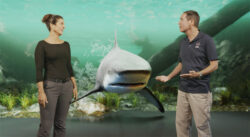 Disney+ documentary ‘Shark Attack 360’, created with composer Ultimatte (Blackmagic)
 SRT and 5G enable production of ‘Mountain Attack’ with Blackmagic’s URSA Broadcast G2
SRT and 5G enable 'Mountain Attack' production with Blackmagic's URSA Broadcast G2
SRT and 5G enable production of ‘Mountain Attack’ with Blackmagic’s URSA Broadcast G2
SRT and 5G enable 'Mountain Attack' production with Blackmagic's URSA Broadcast G2
 SociallyU installs a virtual studio powered by Blackmagic's Ultimatte 12 4K
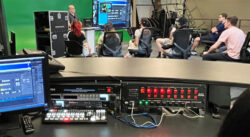 Blackmagic Ultimatte 12 HD arrives at Drexel University virtual production studio
Blackmagic's Ultimatte 12 HD arrives at Drexel University's virtual production studio
Blackmagic Ultimatte 12 HD arrives at Drexel University virtual production studio
Blackmagic's Ultimatte 12 HD arrives at Drexel University's virtual production studio
 Disney uses Ultimatte 12 and HyperDeck Studio 4K Pro devices in the virtual production of 'Pinocchio'
Disney’s ‘Pinocchio’ used Ultimatte 12 and HyperDeck Studio 4K Pro for virtual production pipeline
Disney uses Ultimatte 12 and HyperDeck Studio 4K Pro devices in the virtual production of 'Pinocchio'
Disney’s ‘Pinocchio’ used Ultimatte 12 and HyperDeck Studio 4K Pro for virtual production pipeline
 Blackmagic exhibits for the first time at IBC 2022 the new Ultimatte 12, Pocket Cinema Camera 6K G2, Atem SDI...
 Disney’s ‘Rise’, filmed with Blackmagic’s URSA Mini Pro 12K
 Motorsport Network launches a virtual studio with Blackmagic's Ultimatte and Ursa Mini 4K
 Blackmagic Design further optimizes the algorithm of its Ultimatte digital composer
 Blackmagic increases its portfolio with the purchase of Ultimatte and Fairlight