





'El 47' leads the race for the 2025 Gaudí Awards, with a record number of 18 nominations
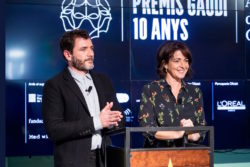
The La Pedrera Auditorium has hosted the reading ceremony of the nominees for the Gaudi Awards 2025 (Catalan Film Academy), with a total command of 'El 47'.
The eighteen nominations of The 47 represent a record number in the history of the Gaudí Awards, exceeding sixteen Eva in 2012 and uncertain glory in 2017. They follow closely House in flames y Dust will be, both with fourteen nominations, and also worth highlighting is Second Prize, with nine, and Hail Mary, with seven.
With seventy-five titles registered in the race, thirty productions (twenty-six Catalan and four European) have gone to the second round of voting, which starts today, December 5. The winners will be announced on January 18, 2025 in a gala that will take place, for the first time on Saturday, at the Auditorium Forum CCIB (Barcelona International Convention Center).
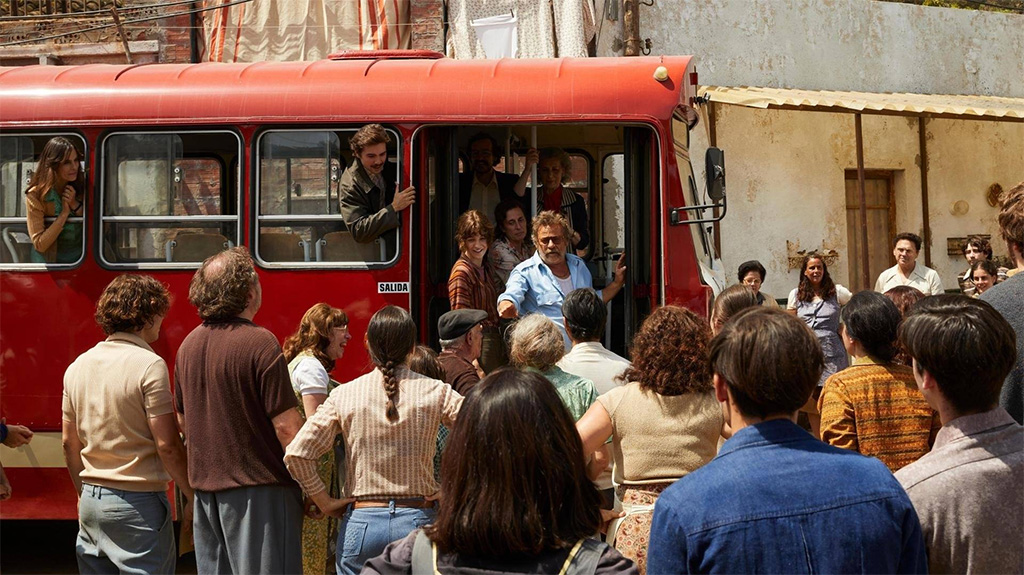
In the category of best movie Four productions in the Catalan language will compete: The 47, by Marcel Barrena, starts as a great favorite. Plea in favor of community struggle, tells the true story of Manolo Vital, a bus driver in Barcelona in the late 70s, who became a neighborhood leader when he kidnapped the vehicle he was driving to take it to Torre Baró, demanding decent living conditions for the inhabitants of a historically forgotten neighborhood. With fourteen nominations, it is close behind House in flames, the reunion of a posh family in Cadaqués that serves Dani de la Orden to make a fun satire of domestic dynamics and talk about guilty motherhoods, infidelities and toxic relationships. She also talks about motherhood and the decision not to have children mammal by Liliana Torres, who claims the freedom of women and their right not to be judged or stigmatized for their determination. Finally, Hail Mary, by Mar Coll, uses tools of psychological thriller and even horror film, to offer a unique look at guilty motherhood: in this case, from the depression of a woman who cannot feel an emotional bond with her baby.
They are nominated for Best film in a non-Catalan language the films The sparkles, The little loves, Dust will be y Second prize. In The sparkles, director Pilar Palomero takes a lucid and humanistic look at mourning and the accompaniment of someone who is on the verge of death, a theme similar to that raised by Carlos Marques-Marcet in Dust will be, tied in number of nominations with House in flames. The Barcelona filmmaker opts for the musical with contemporary dance choreographies when talking about a topic as delicate as the right to assisted dying. He talks about care, motherhood and metaphorical returns to adolescence. The little loves, in which Celia Rico Clavellino tells the story of a woman who spends the summer taking care of her mother, who has suffered a domestic accident. and with Second prize, the team formed by Isaki Lacuesta and Pol Rodríguez escape from the biopic to delve into the legend surrounding the Granada band Los Planetas and make a film about the creation and fissures of friendship.
Nominations for the Gaudí Awards 2025
Best Film
- House in flames. Directed by Dani de la Orden, written by Eduard Sola and produced by Toni Carrizosa, Alberto Aranda, Ana Eiras, Kike Maíllo, Bernat Saumell, Dani de la Orden, Jaime Ortiz de Artiñano, Oriol Sala-Patau and Conxa Orea.
- The 47th. Directed by Marcel Barrena, written by Marcel Barrena and Alberto Marini, and produced by Laura Fernández Espeso and Javier Méndez.
- Mammal. Directed and written by Liliana Torres, and produced by Miriam Porté Solano and Carla Sospedra Salvadó.
- Hail Mary. Directed by Mar Coll, written by Mar Coll and Valentina Viso, and produced by Sergi Casamitjana and María Zamora.
Best film in a non-Catalan language
- The sparkles. Directed and written by Pilar Palomero, and produced by Fernando Bovaria, Valérie Delpierre and Simón de Santiago.
- The little loves. Directed and written by Celia Rico Clavellino, and produced by Sandra Tapia, Ignasi Estapé, Ibon Cormenzana, Ángel Durández, Cleber Beretta Custodio and Francisco Celma.
- They will be dust. Directed by Carlos Marques-Marcet, written by Carlos Marques-Marcet, Clara Roquet and Coral Cruz, and produced by Tono Folguera, Ariadna Dot, Giovanni Pompili, David Epiney and Eugenia Munenthaler.
- Second prize. Directed by Isaki Lacuesta and Pol Rodríguez, written by Isaki Lacuesta and Fernando Navarro, and produced by Cristóbal García, Edmon Roch, Marta Velasco, Alex Lafuente and Roberto Butragueño.
Best documentary film
- Diary of my sextortion. Directed and written by Patricia Franquesa, and produced by Patricia Franquesa and Mireia Graell Vivancos.
- the escape Directed by Josep Morell Feixas, Guillem Sánchez Marin and Marc M. Sarrado; written by Josep Morell Feixas and Guillem Sánchez Marin, and produced by Silvía Pairó Vila, Jordi Vilar Segura and Adriano Mórano.
- La Joia: Bad Gyal. Directed by David Camarero Porcar, written by Laura Herrero Garvín and David Camarero Porcar, and produced by Sergi Cameron, Àlex Julià and Ivo Vinuesa Rocher.
- Salt: the submerged memory. Directed and written by Ot Burgaya, and produced by Agustí Danés, Beth Codina and Jordi Sacristan.
Best animated film
- Buffalo Kids. Directed by Pedro Solis and Juan Jesus Garcia “Galo”, written by Jordi Gasull and Javier Barreira, and produced by Jordi Gasull, Jaime Ortiz de Artiano, Toni Novella, Marc Sabe, Pedro Solis, Ignacio Salazar-Simpson, Ricardo Marco Bude, Francisco Celma Sanchez and Cleber Beretta Custodio.
- Dahlia and the Red Book. Directed and written by David Bisbano, and produced by Ángeles Hernández, David Matamoros, Álvaro Urtizberea, David Bisbano, Guido Rud, Patricio Rabufetti, Fernanda Senatori, Lisette Freire Pérez, Franklin Ventura, Carlos Rivas and Ricardo Montes.
- Black butterflies. Directed by David Baute, written by Yaiza Berrocal, and produced by Edmon Roch, David Baute, Marc Sabé, César Zelada, Muntsa Tarrés and Xavier Romero.
- Rock Bottom. Directed and written by María Trénor, and produced by Alba Sotorra Clua, Miguel Molina, Adán Aliaga, Robert Jaszczurowski, Lukasz Kacprowicz, Marcin Wasilewski, Anna Mroczeck, Wojciech Lezczynski, Dani Bagur and Kiko Donínguez.
Best address
- Carlos Marques-Marcet by Dust will be
- Dani of the Order by House in flames
- Isaki Lacuesta and Paul Rodríguez by Second prize
- Marcel Barrena by The 47
Best new direction
- Celia Giraldo by a common place
- Clara Serrano Llorens and Gerard Simó Gimeno by L'edat imminent
- Miguel Faus by Quiet
- Mònica Cambra Domínguez and Ariadna Fortuny Cardona by A radiant floor
Best original screenplay
- Carlos Marques-Marcet, Clara Roquet and Coral Cruz by Dust will be
- Eduard Sola by House in flames
- Isaki Lacuesta and Fernando Navarro by Second prize
- Marcel Barrena and Alberto Marini by The 47
Best adapted screenplay
- Ibai Abad u Elisenda Gorgues by Scapanpobres
- Mar Coll u Valentina Viso by Hail Mary
- Miguel Faus by Quiet
- Pilar Palomero by The sparkles
Best leading actress
- Angela Molina by Dust will be
- Emma Vilarasau by House in flames
- Maria Rodríguez Soto by mammal
- Patricia Lopez Arnaiz by The sparkles
Best Leading Actor
- Alberto San Juan by House in flames
- Alfredo Castro by Dust will be
- Eduard Fernandez by The 47
- Enrique Auquer by mammal
Best Breakthrough Performance
- Aimar Vega by The little loves
- Laura Weissmahr by Hail Mary
- Mireia Vilapuig by Scapanpobres
- Zoe Bonafonte by The 47
Best supporting actress
- Adriana Ozores by The little loves
- Betsy Tournez by The 47
- Clara Segura by The 47
- Maria Rodríguez Soto by House in flames
Best supporting actor
- Antonio de la Torre by The sparkles
- Carlos Cuevas by The 47
- David Verdaguer by The 47
- Enrique Auquer by House in flames
- Oriol Pla by Hail Mary
Best short film
- Healthy care. Directed and written by Lucía García Romero, and produced by Sergi Casamitjana and Lita Roig.
- Dol i fa sol. Directed and written by Pep Garrido and Maria Besora, and produced by Xesc Cabot and Pep Garrido.
- the gaps Directed and written by Marina Freixa Roca, Sofia Esteve and Isa Luengo, and produced by Carlotta Schiavon, Laura Rubirola and Ian de la Rosa.
- the prince Directed and written by Àlex Sardà, and produced by Carlota Coloma, Adrià Lahuerta, Marta Cruañas and Xavi Vara.
Best production direction
- Carlos Amoedo by Second prize
- Charles Apollinaire by The 47
- Laia Gómez Roig by House in flames
- Mayca Sanz and Andrés Mellinas by Dust will be
Best art direction
- Irene Montcada by The Abbess
- Laia Ateca by Dust will be
- Marta Bazaco by The 47
- Núria Guardia Allué by House in flames
Best assembly
- Always Calleja by Salve Maria
- Alberto Gutierrez (AMMAC) by House in flames
- Chiara Dainese by Dust will be
- Nacho Ruiz Capillas by The 47
Best original music
- Arnau Bataller by The 47
- Maria Arnal by Dust will be
- Maria Chiara Casà by House in flames
- Zeltia Montes by Hail Mary
Best cinematography
- Isaac Vila by The 47
- Gabriel Sandru by Dust will be
- Nile Zimmerman by Hail Mary
- Takuro Takeuchi by Second prize
best costume
- Catherine Marchand and Pau Aulí by The Abbess
- Lourdes Fuentes by Second prize
- Olga Rodal and Irantzu Ortiz by The 47
- Pau Aulí by Dust will be
Better sound
- Elena Coderch, Sarah Romero, Oriol Tarragó and Marc Bech by House in flames
- Eva Valiño, Fabiola Ordoyo and Yasmina Praderas by The 47
- Diana Sagrista, Alejandro Castillo, Eva Valiño and Antonin Dalmasso by Second prize
- Xavier Lavorel, Maya Baur, Kathleen Moser andDenis Séchaud by Dust will be
Better visual effects
- Diana Cuyàs by Dust will be
- Laura Canals and Iván López Hernández by The 47
- Lluís Rivera Jove, Xavi Molas and Laura Pedro by House in flames
- María Magnet, Marion Delgado, Iñaki Gil “Ketxu” and Sebastien Launay by Second prize
Best makeup and hairstyling
- Anna Álvarez de Sardi and Maribel Bernales by House in flames
- Karol Tornaria by The 47
- Natalia Albert and Marta Xipell by Dust will be
- Yolanda Piña and Inés Díaz by Second prize
Best European film
- Anatomy of a fall. Directed by Justine Triet (France)
- Fallen Leaves. Directed by Aki Kaurismäki (Finland)
- Poor creatures. Directed by Yorgos Lanthimos (Poland)
- The area of interest. Directed by Jonathan Glazer (Poland)
Did you like this article?
Subscribe to our NEWSLETTER and you won't miss anything.
Related articles
 Mujeres de Cine closes its 16th edition with a record number: more than 20,000 spectators
 'El 47' sweeps the Gaudí 2025 awards with eight awards
 Starlink closes the year with a record number: 2.3 million unique users
 'Argentina, 1985' leads the nominations for the X Premios Platino with 14 nominations
 ‘Alcarràs’, ‘One year, one night’ and ‘Pacifiction’ lead the nominations for the XV Gaudí Awards
 La 1 leads Christmas Eve with 12.9% and record for 'Telepasión'
 ‘Incerta glòria’ and ‘Estiu 1993’ lead the nominations for the Gaudí Awards
 Eleven films participated by RTVE will compete in the Gaudí Awards with 58 nominations
 'Ida' leads the European Film Awards nominations
 Mediapro receives a record number of Madrid-Barça customizations from channels around the world
 'The Great Spanish Family' leads the Goya nominations
'Eva', 'While you sleep' and 'Bruc, the challenge', the candidates with the most Gaudí nominations
'The Great Spanish Family' leads the Goya nominations
'Eva', 'While you sleep' and 'Bruc, the challenge', the candidates with the most Gaudí nominations
 Polycom reaches record sales
 ‘Pa Negre’, ‘Herois’ and ‘Buried’ capture the nominations for the III Gaudí Awards