





LiveU successfully concludes the 'Field Trials Beyond 5G' research project
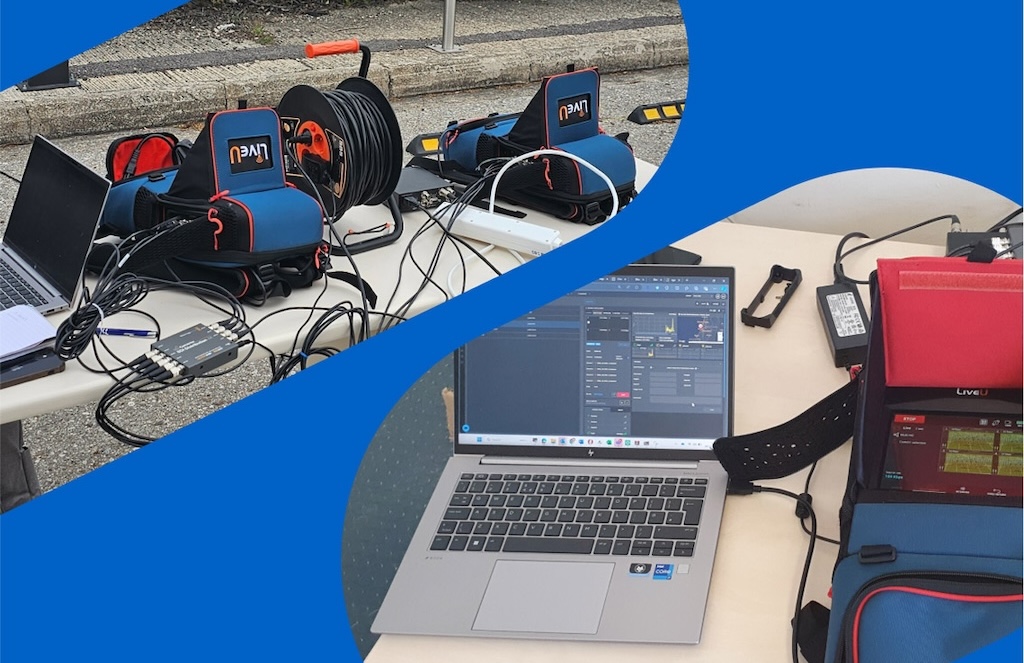
El proyecto europeo FIDAL/B5VideoNet (B5GVN), en el que participa LiveU, demuestra avances pioneros en los flujos de trabajo de producción de vídeo remota utilizando la tecnología de enlace múltiple y multislice 5G para la transmisión y la retransmisión al receptor desde una o varias cámaras.
LiveU llevó a cabo exhaustivas pruebas y ensayos utilizando sus unidades LU800 PRO multicámara and the solución de conectividad Xtend con capacidades de última generación más allá del 5G (B5G). Como parte de este proyecto, LiveU se centró en tres casos de uso de producción remota:
- Producción remota en la nube: aprovechamiento de configuraciones de segmentación para garantizar el ancho de banda y la latencia de los flujos de trabajo de transmisión basados en la nube.
- Producción basada en el edge: integración de la computación móvil en el edge dentro de la infraestructura de un operador (como una nube privada).
- Producción remota in situ con soluciones basadas en la nube: pruebas de configuraciones de segmentación de enlace ascendente/descendente para flujos de trabajo de producción completos utilizando el receptor móvil de LiveU, Xtend y LU-Link, junto con la solución de grabación automática y etiquetado de metadatos de historias LiveU Ingest.
Las pruebas se llevaron a cabo en el banco de pruebas B5G de la Universidad de Patras (UoP) en Grecia. Los tres escenarios exploraron las ventajas de la unión multienlace y multisegmentación para la transmisión de vídeo con calidad de emisión, un mecanismo que garantiza parámetros específicos de ancho de banda, latencia o tasa de error de las tarjetas SIM en toda la infraestructura 5G. Esto resultó ser especialmente importante en condiciones de carga y congestión de la red.
En el proyecto se trabajó con diversas configuraciones slice y multi-slice con velocidad de bits garantizada (GBR) y sin garantizar (Non-GBR). Una vez implementada en redes comerciales, esta tecnología avanzada permitiría a los broadcasters y a los creadores de contenidos adaptar los niveles de servicio a sus requisitos de producción, recursos y presupuestos. Por ejemplo, se podrían reservar segmentos GBR de mayor ancho de banda cuando fuera necesario, mientras que se podría recurrir a segmentos GBR más económicos o incluso NGBR para el tráfico menos crítico o para complementar el ancho de banda cuando fuera necesario (y según el presupuesto). Esto es muy valioso para la producción deportiva con múltiples cámaras, que exige una transmisión de primera calidad, ya que permite aumentar el ancho de banda al máximo, pero no necesariamente en todos los casos y a cualquier precio.
Otra tecnología clave explorada en el marco de B5G-towards 6G fue la de las API de exposición de red para la asignación de recursos de red, un paso fundamental hacia la orquestación dinámica de servicios y el uso de servicios y recursos «según sea necesario». El proyecto sentó las bases para la solicitud de servicios de contribución de vídeo en tiempo real, lo que permite a LiveU y otras aplicaciones similares solicitar dinámicamente segmentos en función de la hora y la ubicación del evento, garantizando la calidad exactamente cuando y donde se necesita. Esta tecnología (y los casos de uso relacionados) permite a los operadores de telefonía móvil prestar servicios «según sea necesario» en lugar de «en todo momento y en todo lugar».
Se utilizó una red 5G privada (NPN) en combinación con lo anterior, lo que demostró una red privada para la producción remota in situ, tanto en enlace ascendente como descendente. Además, también se demostró que el espectro carving permite la creación de subredes privadas para garantizar la calidad del servicio (QoS), con la tecnología B5G basada en una radio definida por software (SDR) en el equipo de infraestructura de la UoP. Esto puede abrir nuevas oportunidades de monetización para los operadores en casos específicos de producción remota (y otros), al tiempo que ofrece importantes ventajas a los clientes que requieren fiabilidad y calidad.
Baruch Artman, vicepresidente adjunto y director de proyectos 5G y ESG de LiveU, afirma que “realizamos docenas de pruebas en interiores y exteriores durante nueve días en el banco de pruebas B5G de la UoP, junto con su equipo. Las pruebas incluyeron varios tipos de segmentos con múltiples niveles de ancho de banda mínimo y máximo garantizados y 5QIs (identificadores de QoS 5G), con diferentes latencias de servicio de extremo a extremo. Se demostró con éxito cómo la tecnología de unión 5G multienlace y multislice de LiveU ofrece ventajas para la producción remota en términos de fiabilidad, flexibilidad y gestión de costes, tanto para los clientes como para los operadores”.
“Otras conclusiones clave fueron la posibilidad de solicitar servicios a través de API de exposición de red estandarizadas, lo que resulta prometedor para la producción remota de medios con aplicaciones como la nuestra, ya que permite solicitar recursos y servicios de red para un periodo de tiempo específico o incluso bajo demanda. Se trata de casos de uso pioneros e importantes para la producción de medios, también para el futuro 6G”, añade.
FIDAL es un proyecto de Horizonte Europa, cofinanciado por 6G Smart Networks and Services. Junto con LiveU y la Universidad de Patras, otros socios clave que participan en el proyecto son Nova (una importante empresa de telecomunicaciones griega), FORTH (Fundación para la Investigación y la Tecnología – Hellas) y Ubitech.
Did you like this article?
Subscribe to our NEWSLETTER and you won't miss anything.
Related articles
 LiveU supports the ambitious live broadcast of Drake's 'Iceman' audiovisual project
 SES and LiveU launch solution that merges the mobile field unit and satellite worlds
 LiveU shares the key features of LU300S, its latest 4K HDR field unit via 5G
 The first end-to-end live broadcast of 5G to smartphones successfully concludes
 LiveU and T-Mobile bring drone-captured HDR shots to Fox Sports ‘MLB at Field of Dreams’
LiveU and T-Mobile bring drone-captured HDR shots to Fox Sports' 'MLB at Field of Dreams'
LiveU and T-Mobile bring drone-captured HDR shots to Fox Sports ‘MLB at Field of Dreams’
LiveU and T-Mobile bring drone-captured HDR shots to Fox Sports' 'MLB at Field of Dreams'
 Crime + Investigation, the only channel dedicated to the investigation of crimes, celebrates 10 years in Spain
 Successful conclusion of the European 5G-Crosshaul research project
 The first global 4K broadcast in DVB-T2 with HDR, WCG and Dolby AC-4 carried out by Cellnex Telecom successfully concludes
 VSN participates in the European research project EUMSSI
 The CCMA participates in the NEM Summit with a research project on connected television
 Concluye el Proyecto ICT2020 destinado a optimizar las infraestructuras de comunicación del hogar del futuro
 El proyecto Saturno concluye con éxito
 Huawei successfully completes a 2 TB/s WDM fiber optic transmission field test