





'The Cashier', black comedy with neonoir aesthetics and technological seal with Blackmagic
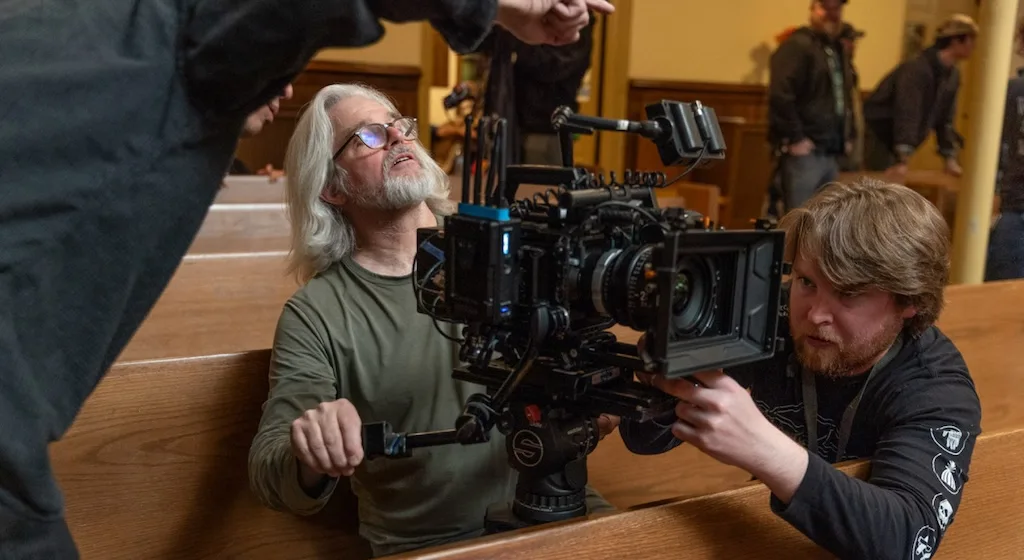
The upcoming feature film 'The Cashier' was shot using high-quality digital film cameras. Blackmagic Design, including the URSA Cine 12K LF and PYXIS 12K models. The film was also edited and graded using DaVinci Resolve Studio.
The Cashier, whose script and direction were in charge of Andy Edmunds, follows the story of a bumbling domestic terrorist who accidentally purchases a winning lottery ticket, sparking a clash between various characters motivated by ambition, faith, and redemption. “I'd like to think that if Quentin Tarantino teamed up with Aaron Sorkin to make a typical, restricted-rated TV movie, the result would be a film like this,” Edmunds jokes.
With vast experience playing various roles in the film industry, Edmunds was ready to take the big step into directing. During the initial preparations for what would be his first film as a director, he contacted the head of photography Kunitaro Ohi in order to establish an early collaborative relationship. “Andy has worked behind the scenes on many narrative projects, but we had only met briefly on a few occasions,” Ohi points out. "When it came time to shoot his first feature film as a director, he was kind enough to contact me. I appreciated the level of practical considerations he brought, it was something that made me feel close to the project."
Ohi explained that the decision to shoot with the latest generation of Blackmagic Design cameras was driven by what he considers the enormous technological leap that Blackmagic Design has taken in terms of long-form narrative work. “I think it's about time Blackmagic cameras got the attention they deserve,” says Ohi. "I had used the Pocket Cinema Camera 6K for secondary shots on a previous feature film, as well as one of the early URSA models for a short film. The images were outstanding, but I always felt the cameras needed a few extra features to reach the level I needed."
“The launch of the URSA Cine 12K LF and the PYXIS 12K It was a game-changer," Ohi admits. "With the new design and dynamic range, I finally had everything I needed to shoot narrative features. It was perfect timing, because the PYXIS 12K came out just as I was starting to prepare for The Cashier. That gave me the impetus and the tools I needed to encourage me to try the new camera system.”
What ultimately convinced Ohi to participate in the film was both the script and Edmunds' approach. “Although the script follows the guidelines of this film genre, the film has an unusual sense of humor and a style that is difficult to describe,” says Ohi. "Andy was determined to make the film increasingly weird and thoughtful, much more so than what was already in the script. I thought it was an excellent project to challenge myself, both technically and conceptually."
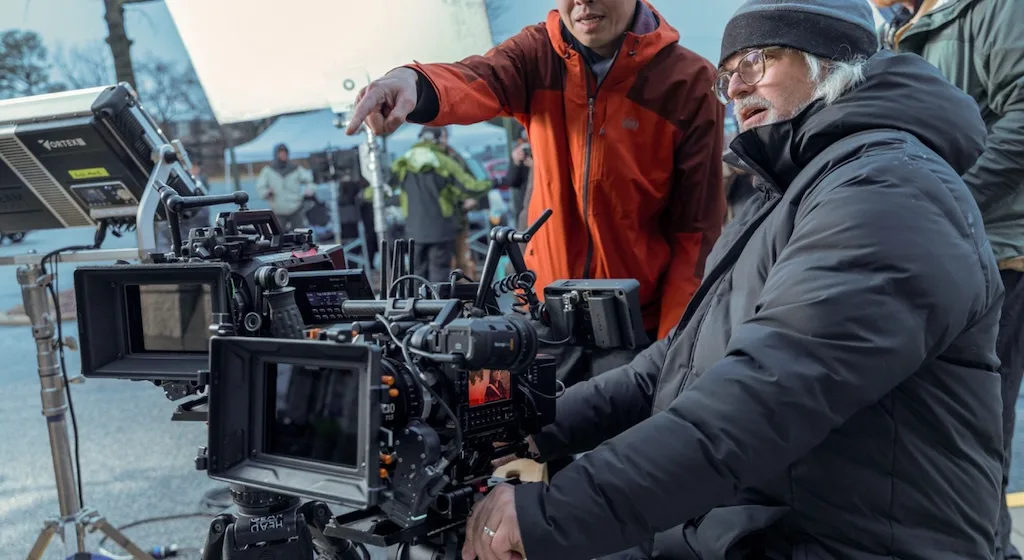
Image quality and ease of use
In the study, Ohi pointed to image quality and ease of use as highlights. "He dynamic range of sensors "It can be compared to camera systems that cost ten times more," emphasizes Ohi. "The menus are packed with functions; However, they are so easy to use that even I could navigate them. As a cinematographer, I'm a bit old-fashioned, but I was impressed with how intuitive the menu turned out to be. Overall, the images we got from the camera exceeded my expectations: great dimming, solid codec, and fantastic light sensitivity. “I never felt like I had to make sacrifices in terms of the images I was getting out of the camera.”
On the other hand, Ohi also points out that although the PYXIS 12K camera was used as a B camera, he never used it as he would normally use a secondary unit. “It is an incredible complement to the URSA Cine 12K LF, since the sensors are identical,” said Ohi. "Honestly, I didn't even consider it a secondary camera. On many occasions I used the two models interchangeably and determined the angles according to which of the two cameras was most appropriate for each space."
“We set up the PYXIS like a regular camera,” Ohi continues. “Even after adding all the accessories, the camera was still light enough that the secondary camera operator didn't need any additional measures to find balance if shooting handheld.”
The camera operator B, Bunt Young, also praised the images and the flexibility of the model. “The PYXIS produces excellent images," said Young. "The sensor is exceptional and the lightweight, adaptable design of the PYXIS 12K is perfect.”
The film's visual style is a mix of "neonoir" lighting and tilted angles, influenced by contemporary South Korean cinema. “The team often referenced the work of the Coen brothers and Park Chan-wook for framing and lighting,” Ohi continued. “The movie Being There by Hal Ashby was also the compass that consistently guided us toward that strange tone we wanted to cultivate.”
Regarding the objectives, production used fixed models Who Gets of Sigma y Prime view of Tokina and rolled in 8K 16:9 resolution for a final finish in 1.85:1. Due to an extremely tight pre-production schedule, the in-camera cinematic LUT was used for monitoring. “If there were any particularly challenging situations, I would turn off the LUT and monitor the image with the logarithmic curve to make sure the camera was recording with the proper exposure.”
Face challenging situations
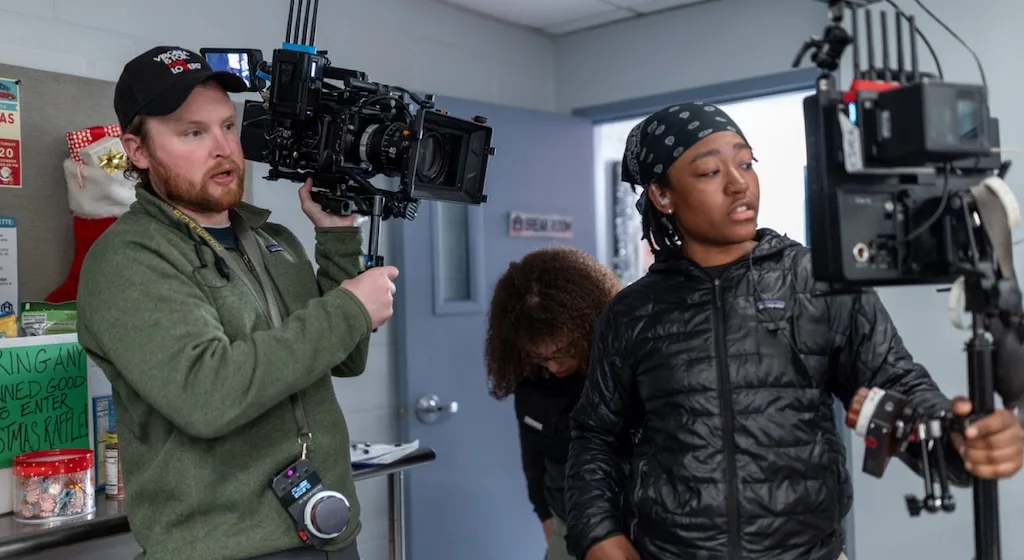
Ohi was pleased to see the excellent performance of the URSA Cine 12K LF and PYXIS 12K models, even when faced with challenging situations. “There was a boardroom with a full-wall window during a winter shoot in Richmond, Virginia, and the entire crew had to maintain a consistent exposure balance between the lighting coming from the windows and the rest of the room as evening fell,” adds Ohi. "The dynamic range of the cameras and their ability to handle dim or contrasting lights made what could have been a bumpy day one that was easy to work on. As the sun set, we were able to keep the window exposure at the same level as the room with the support of just a few lighting panels, set at literally one percent. Neither the chief electrician nor the machinist could believe it. Shane Guild, my chief electrician, jokingly asked me, "Am I done yet?" without work?”
The post-production was completed in Richmond, and the editors Rex M. Teese y Matthew West They edited the film in DaVinci Resolve Studio. Teese generated the copy in this same program, which helped maintain consistency in all phases of the project, from studio filming to editing. For his part, West will also use DaVinci Resolve Studio for the final grading.
Did you like this article?
Subscribe to our NEWSLETTER and you won't miss anything.
Related articles
 Alejandro Millán directs 'Ho, what a day!', a black comedy with the ISII Group seal
 Valencia hosts the filming of 'Dying doesn't always turn out well', a black comedy directed by Claudia Pinto
 Bollywood comedy 'Fake Boyfriend' filmed with Blackmagic Pocket Cinema Camera
 Blackmagic, technological engine of 35 films screened at Sundance
 Lazona launches distribution label and production company with a Basque label: Lazona Pictures and Lazona Zinema
 DaVinci Resolve Studio finishes ‘Ms. Marvel' with a very particular aesthetic
 Hollyland combines aesthetics and functionality in its new Lark M1 wireless microphone
 ICEX renews the image of the 'Audiovisual from Spain' seal
 These are the next Netflix reality shows with a Spanish seal
 'Suc de Sindria', a hard story told with great aesthetic beauty, wins the Goya for Best Fiction Short
 Mota achieved a TV movie aesthetic in his New Year's Eve special with ARRI and Fujinon
 'La noche del Telediario', a journey through the aesthetic and technological evolution of TVE's news programs
 DaVinci Resolve enables a “very Ridley Scott” aesthetic in ‘Prometheus’
 Abertis Telecom receives the European 500+ seal for excellence in management