





Sony PDW-F800: high-level production for the most demanding operators
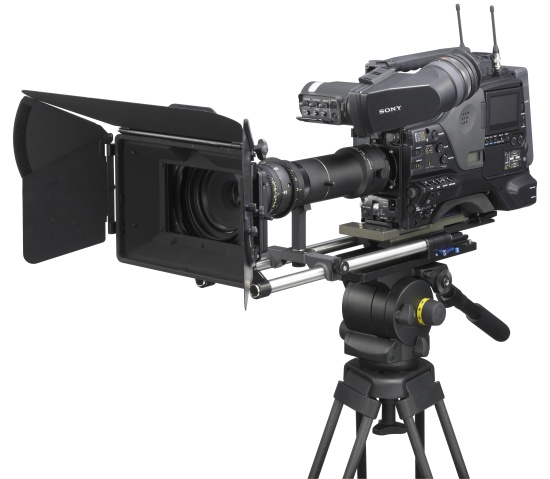
The ability to record in cinema-style 24P progressive, the option to 'ramp' by playing with the increase and decrease of the frame rate, recording in standard definition and the double turret of optical filters make the F800 a camera for both television and high-end production environments.
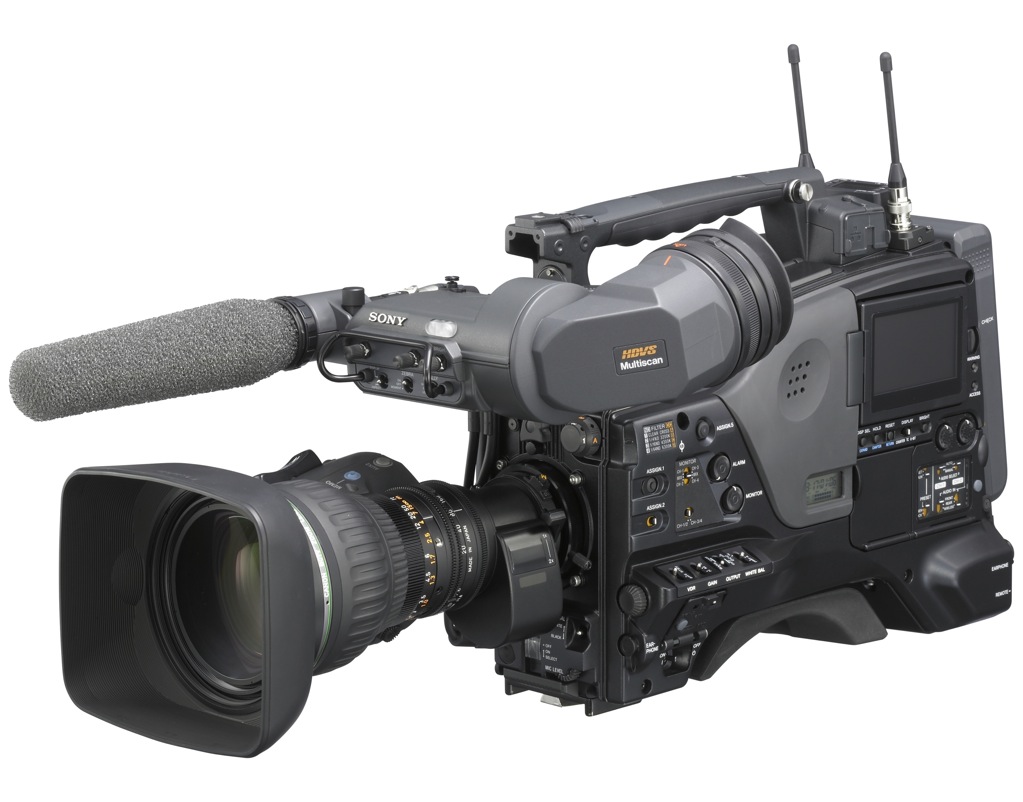
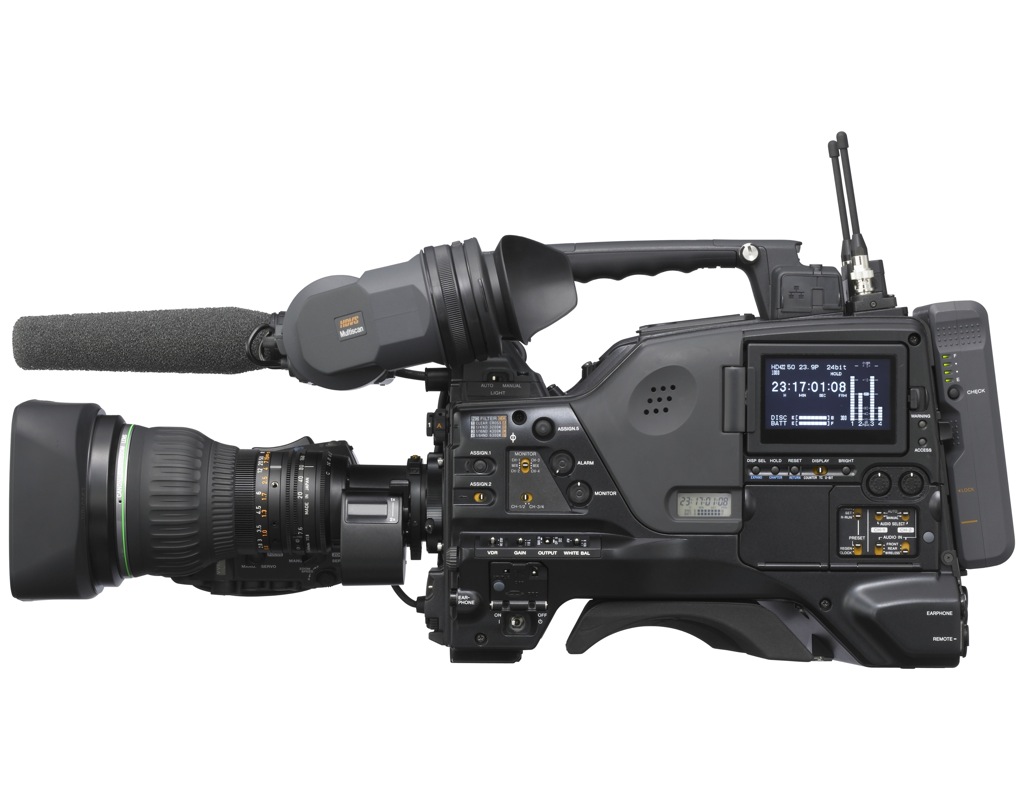
Heir to the PDW-700 (presented by Sony in 2008), the PDW-F800, high-end and more complete, is the new camera in Sony's XDCAM HD family presented on the occasion of NAB'09. What is most striking about this camera is that both the body and the button panel are very similar to its predecessor, which makes it easier for the operator to familiarize itself, with very similar electronics including the sensors and the laser deck.
Specially designed for the production of high-level series and documentaries, this camera uses three 2/3-inch Power HAD FX CCDs, offering recording in MPEG 422 at 50 Mbits/sec and a framerate of 23.98p at native 1080. The PDW-800 is a completely multi-format camcorder as it allows you to work at 1080i, 25P, 23.98P, 720, 04:02:2, 04:02:0, IMX at 50, 40 or 30Mb/s, DVCAM quality SD, or PAL and NTSC 04:03 or 16:09. In short, the same camera to record PAL or NTSC up to 1080i or with a cinema look at 24-25p.
For those who are still somewhat afraid of pressing 'Rec' and remembering that there is no tape inside, this camera, working on Professional Disc, with recording in MPEG IMX, DVCAM and 4:2:0 HD formats, is facilitating a new step in the familiarization of totally tapeless equipment. It also offers multi-format recording (1080i/720P), as well as HD/SD conversion and cross-conversion during playback between 1080i and 720P.
 Thanks to XDCAM HD 422 technology it is now possible to record at 50 Mbps with a 2/3 inch camcorder, thus providing greater creative production possibilities to filmmakers, broadcasters and professionals.
After the introduction of firmware version 1.5 for this series, both the F800 and F700 have benefited from important improvements such as recording at 23.98 fps or even in different formats on the same disc (with the same frame rate). Another advantage is the possibility of recording in continuous mode, in the purest linear style emulating a tape, avoiding the creation of dozens of clips during the recording of several shots of a sequence.
Another important novelty is the simultaneous recording in low proxy resolution, which allows faster access to the material. But perhaps one of the aspects that professionals from cinematographic fields have most valued is the possibility of making 'ramps' in the F800: in 23.98p (between 1-48fps), in 23.97 (between 1-59.94fps), in 25p (between 1-50fps).
With this camera we can record in fast or slow motion, even doubling the speed. The result achieved in overcrank pickup is really good, with very smooth movements, without flickering. Another advantage of the F800 is that it allows slow motion sequences to be reproduced in the camera itself, which would allow the camera itself to be used without having to shape the material to send it, for example, to a satellite link.
Another very useful function when facing the production of nature documentaries is the possibility of recording a frame every certain programmed interval (up to 24 hours) or keeping the shutter open for a maximum interval of 16 frames (a luxury for those who tend to look at the sky with its stars and fight with impossible profits), something great when recording under a starry sky without having to activate the gain.
For the most demanding users
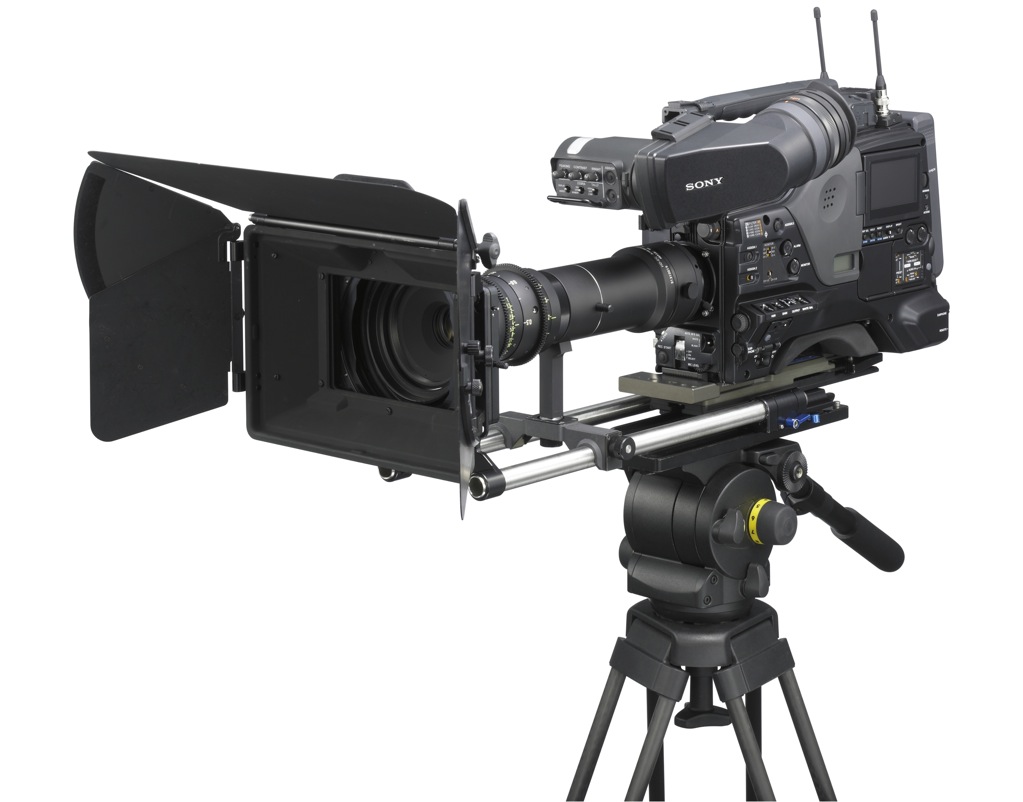
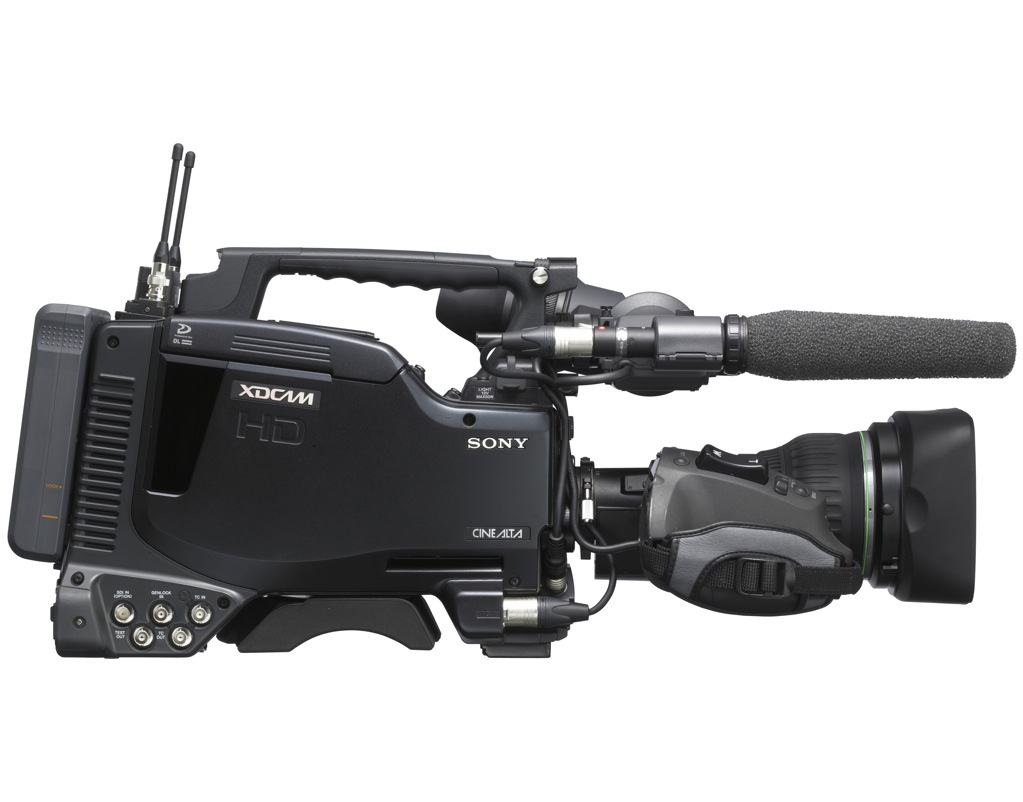
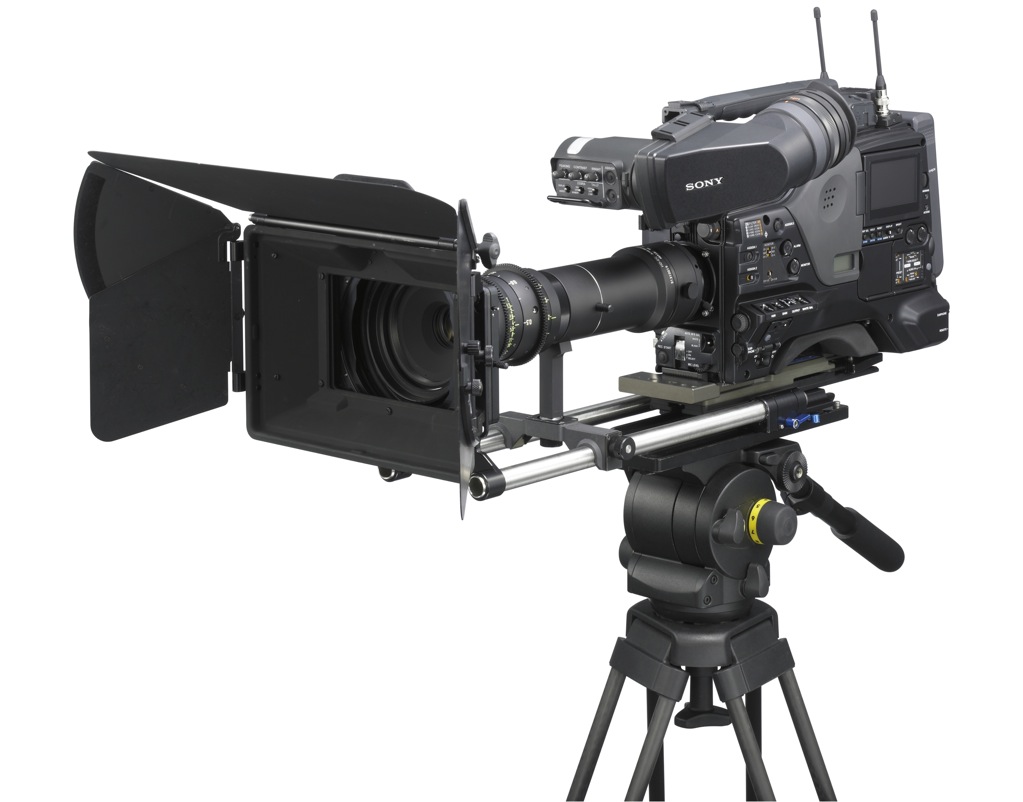
The possibility of recording in progressive at 24P with cinema style, the option to make 'ramps' by playing with the increase and reduction of the frame rate, recording in standard definition and the double turret of optical filters make the F800 a camera for both television and high-level production environments, including cinema... In addition, the most demanding operators have other possibilities such as the image inverter (which allows the use of 2/3″ cinema lenses, Ultra Prime and anamorphic) or focus assist. This function consists of a bar graph visible at the bottom of the viewfinder, which will indicate the focus accuracy within the marked area on the viewfinder. As focus improves, the graph moves to the right until it reaches the ideal focus point. The viewfinder, or even a monitor connected to the SDI output, also shows other aspects such as the safety zone, aspect ratio, image center, skin gate and zebra level.
 But perhaps one of the most valued aspects of this camera is the possibility of working with gamma curves previously defined by the user. This is one of the functions that operators have been demanding from Sony for a long time. Now, thanks to HyperGamma we have four default gamma settings, which can be configured on the camera itself or even from a laptop using the CVP File Editor software originally developed for the HDW-F900.
This possibility greatly speeds up filming, since in addition to having the camera's four standard settings, any operator can incorporate their gamma curves directly on the camera, controlling even the smallest detail of lights, shadows or color in a scene, avoiding the always hasty last-minute tests at the filming location.
Another important improvement over the PDW-F700, which has only one, is the double turret of optical filters. The PDW-F800 has a filter to control the neutral density and another to adjust the color temperature. Although it may seem that Sony has taken a step back by replacing the electronic filter selection with a manually controlled physical filter, the truth is that this decision relieves those of us who used to go crazy with so many buttons preferring the immediacy of the wheel. However, there are opinions for all tastes, and there are those who prefer the system with a single wheel and electronic control, as in the 700 model, although the truth is that having two wheels allows you to add other diffusion filters or something similar behind the optics.
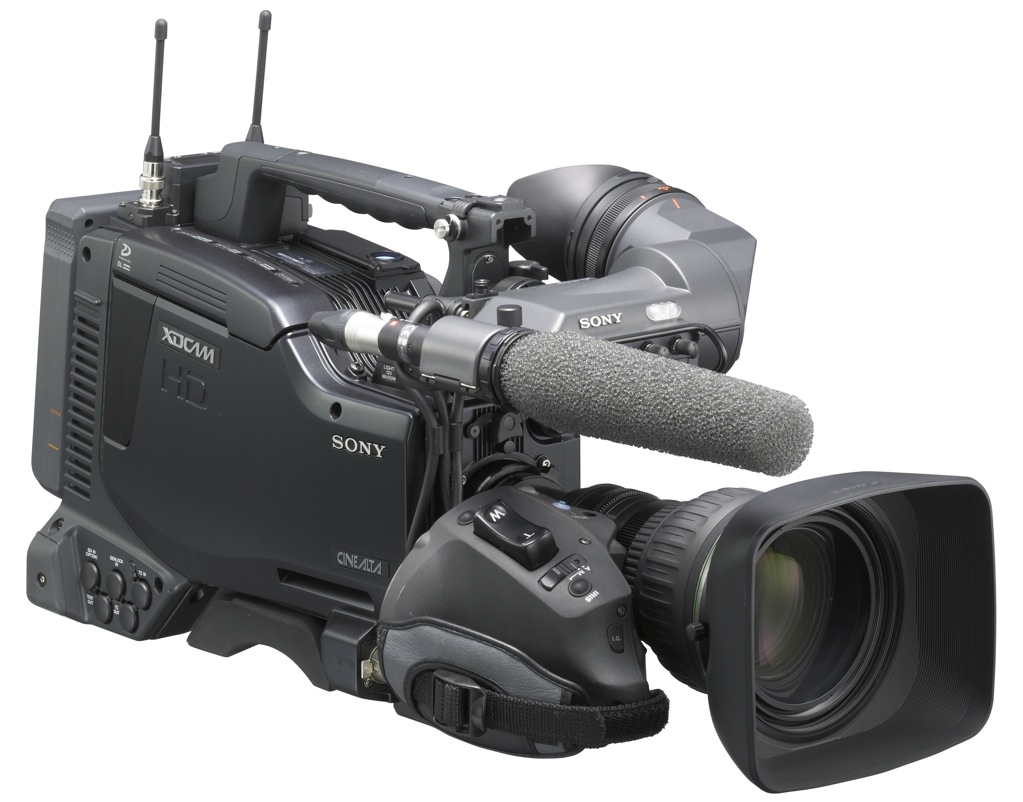 Working on Professional Disc
Despite the widespread use of tape-free environments, there are still many users who remain somewhat insecure in the absence of tape. In the case of the F800, when working on the Professional Disc support, these 'distrustful' users have a physical support on which to place their trust that that unique moment that is being captured is being stored. We could say that it is a 'matter of faith'. The Professional Disc has proven to be an extraordinarily robust and reliable format that withstands extreme weather conditions and temperatures. The cost of working with Professional Disc is around one euro per GB, allowing it to be reused more than a thousand times over half a century. In terms of cost, according to Sony estimates, a double-layer disk at a price of about 59 euros (50GB) would be equivalent to a 94' tape that costs around 73 euros, which would mean a saving of 20%.
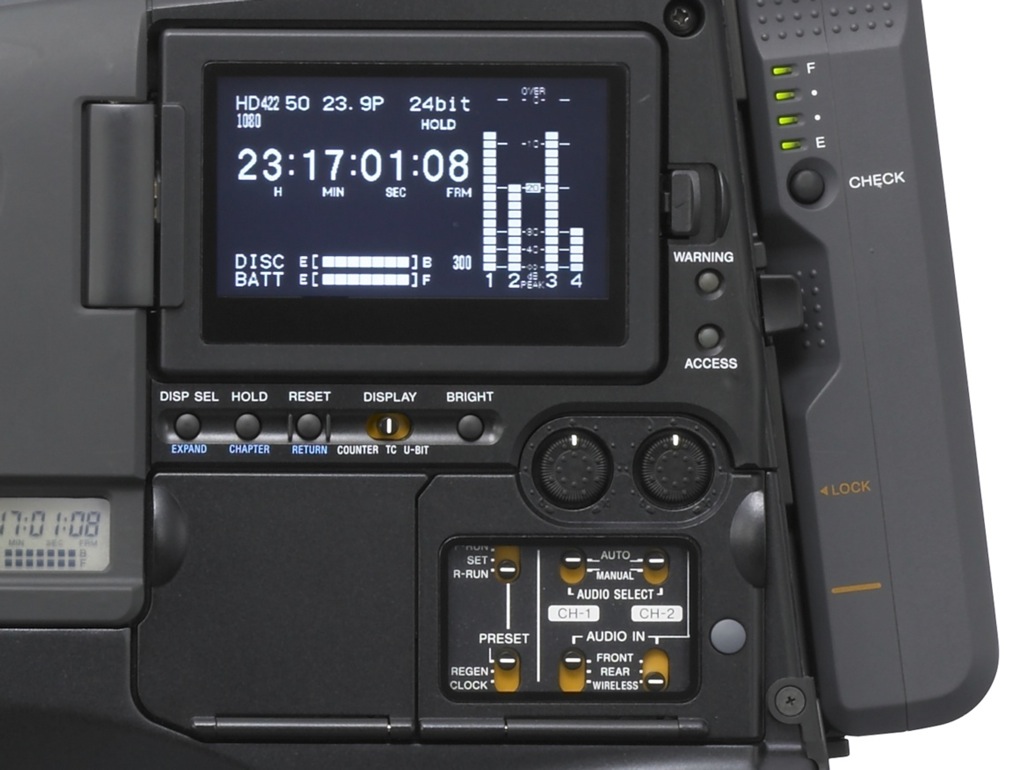
With the F800, both single-layer (23 Gb with reference PFD-23A) and double-layer (50 Gb with reference PFD50DLA) disks can be used. In the first case it is possible to record 45 minutes, while in the second, up to 96 minutes of HD material at 50 Mbps are reached.
Interestingly, since the F800 also supports the possibility of recording in standard definition, it is possible to stretch the recording time on a Professional Disc, easily doubling the recording time up to 190 minutes. In this way, those broadcasters that still work in SD obtain a very low cost per recording minute ratio.
XDCAM, being a file-based system, allows immediate access to the material, even simultaneously in real time by several groups for editing, post-production, graphics... with the consequent saving of time. Additionally, by simultaneously recording proxy files, it considerably speeds up the workflow, saving time, bandwidth and storage.
The absence of tape allows an immediate response. Like the rest of the PDW series, the PDW-F800 features a cache memory that allows you to store video temporarily before writing to disk. Therefore, it is possible to start recording images before the optical disk drive begins to spin at its maximum speed, which provides very fast response. Even when the device is in save mode, pressing 'Rec' starts immediate recording without further delay. In addition, both the PDW-700 and the F800 have a cache memory of up to 30 seconds, which allows us not to lose any critical image in a press conference, or the precise moment that the animal we have been observing for days does the action we expected and we find ourselves with the camera on standby or changing the disc.
Why XDCAM HD?
One of the advantages of working with the XDCAM HD format is that it shares the same layout and operation as tape-based equipment with the advantages of non-linear support, the possibility of connecting to a network and sharing files. XDCAM also records files simultaneously in high HD quality and in low resolution, which allows them to be moved quickly.
Being file-based provides more efficiency with additional information such as metadata, higher dump speeds, direct integration with most NLEs, and greater compatibility (MPEG2 422P@HL compression encapsulated in MXF).
The MPEG-2 422P@HL algorithm at 50 Mbps offers an optimal balance in terms of image quality and recording autonomy. In addition, it requires much less processing than other intraframe algorithms based on MPEG-4.
Access
PDW-F800, its strengths
- 2/3'' Full HD CCD (more sensitive up to 600% in dynamic range)
- Native resolution 1920x1080
- 1080i/720p and 24P format for HD422/420 (1080)
- Supports 23.3 Gb (48 min at 25p HD) and 49 Gb (dual layer) disks
- Renameable MXF Files
- Recording of different formats to disk (XDCAM, IMX, DVCAM)
- Four channels of high-quality audio
- Dual HD/SDI and HD-Y composite output
- Interfaz Ethernet e i-Link
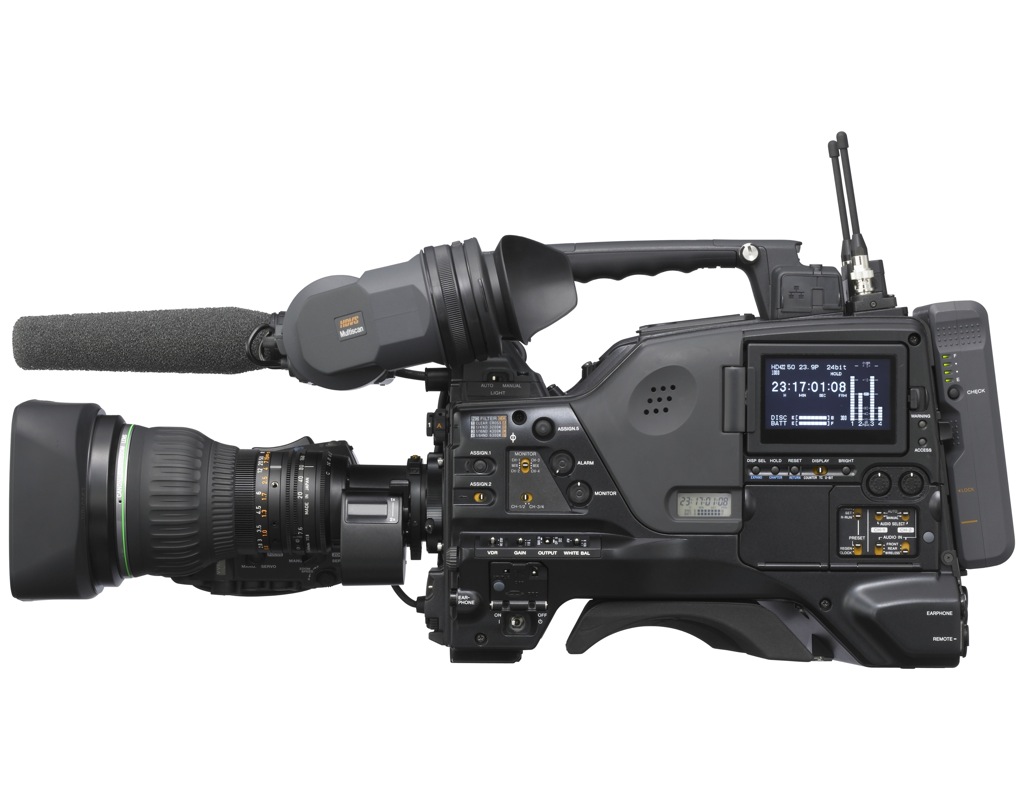
- Side LCD (which the 650 already incorporated)
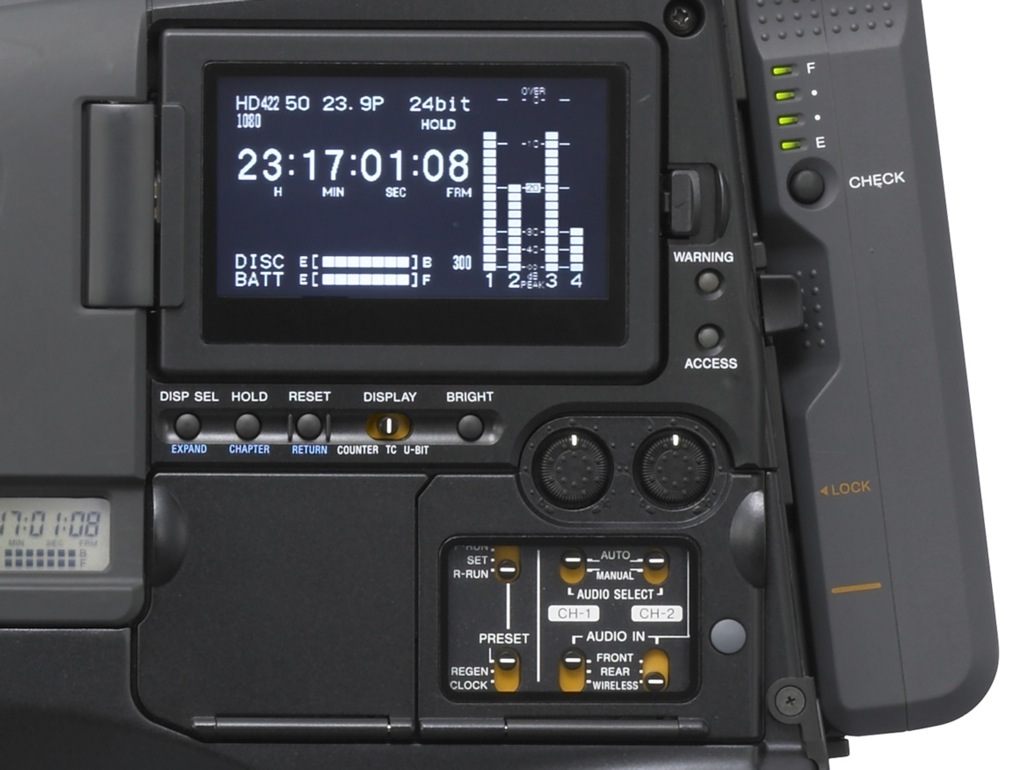
- New TC and remain display
- noise suppressor
- Editable user menu
- Assignable buttons on the handle
- Using memory stick cards for scene files and camera parameters
- Recording to Professional Disc with unique UMID
[youtube]http://www.youtube.com/watch?v=c48SgfxqiSs[/youtube] [youtube]http://www.youtube.com/watch?v=haonjGu6LOs[/youtube] [youtube]http://www.youtube.com/watch?v=wEQXrKY6W8A[/youtube]
Gallery:

Did you like this article?
Subscribe to our NEWSLETTER and you won't miss anything.
Related articles
 Antípodas Film Lab is born, post-production at the highest level in the south of Spain
 Bando Post uses DaVinci Resolve Studio for high-profile advertising campaigns
 4K Garden uses AJA equipment to achieve 4K HDR production at the highest level
 RGBlink offers its solutions for broadcast and high-level Pro AV presentations at IBC
 AVI Studio chooses Mistika for high-level advertising post-production
 Motion Path and Bigstudios partner with Orad to provide top-level creative services
 U-tad announces more than 120 scholarships to promote high-level training in the digital sector
 Chyron: a solution for every need in high-level graphics
 Production and post-production at the highest level with Octopus and VM Broadcast
 Glassworks revolutionizes high-level postproduction in Barcelona
 Fireface UCX, the new high-level interface from RME
 Videoreport incorporates the Sony PDW-F800
 Scene files for the Sony XDCAM PDW-700 and F800
 Sony PDW-F800 with variable frame rate