





New features strengthen the OmniBus iTX offering in radio applications
OmniBus Systems ha mejorado el OmniBus iTX con nuevas prestaciones que aumentan la capacidad de automatización y transmisión en entornos radiofónicos con funciones como que pretenden agilizar las operaciones de las cadenas con procesos como el Roll-Under/Join-in-Progress, la integración de EAS Digital, breakaway regional, noticias de última hora en directo o la marca de agua integrada de Nielsen Digital.
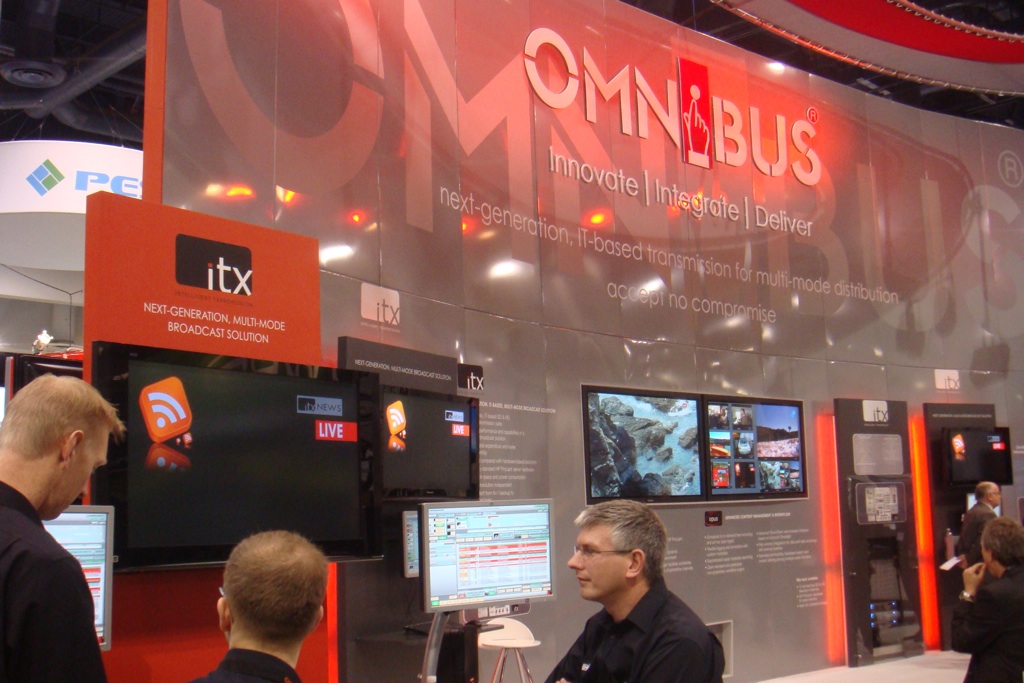
El sistea OmniBus iTX da ahora un paso adelante con un modelo eficaz y versátil de emisión radiofónica centralizada, que asume una variedad de papeles para emisión, producción y streaming adaptándose fácilmente a cualquier configuración de ingesta, producción, emisión y control en todo el workflow.
Las nuevas prestaciones que han sido introducidas para agilizar las operaciones de las cadenas de radio incluyen procesos como el Roll-Under/Join-in-Progress, la integración de EAS Digital, breakaway regional, noticias de última hora en directo o la marca de agua integrada de Nielsen Digital.
Con su sencilla adaptación a la agrupación de múltiples instalaciones en una sola localización o distribución de la carga de trabajo de una instalación central a más de una localización, iTX también hace que las cadenas con un modelo de emisión centralizado puedan protegerse contra apagones de larga duración en la instalación central o en cualquier localización de forma sencilla y rentable. Con su agilidad para entregar streams para Red o aplicaciones móviles en paralelo con la emisión, iTX ofrece a los propietarios de las cadenas la capacidad de desarrollar nuevos servicios rápidamente para poder responder a las condiciones del mercado, a la vez que mantiene una calidad de salida que no sólo iguala, sino que supera la mejor que se puede obtener con una infraestructura de transmisión convencional.
DataDirect
OmniBus ha añadido la arquitectura DataDirect Networks’ (DDN) S2A a su gama de plataformas de almacenamiento que están certificadas para uso con la plataforma de automatización y transmisión iTX en emisiones criticas y aplicaciones de media.
La plataforma xStreamScaler de DDN, junto con los sistemas de almacenamiento S2A9900 y S2A6620, han sido probados con iTX bajo la modalidad de uso continuo para verificar la resistencia (recuperación) e integridad de datos durante los episodios intensivos de transferencia de media.
Did you like this article?
Subscribe to our NEWSLETTER and you won't miss anything.
Related articles
 Lawo will expand its Home ecosystem at NAB 2025 with four new applications
 Blackmagic adds more than 300 new features to the new version 17 of DaVinci Resolve
 So Drama! improve your radio entertainment offer with Lawo
 Vodafone reinforces its television offer with FoxNow and launches new features
 Nuendo 7 now available with new tools and features
 Radio Underground, new ways and models of doing FM radio
 Beacon and new applications for SNG and VSAT with HD Ranger+
 Strategic alliance in the design of new applications on HbbTV
 New online applications come to TiVo in Ono
 UltimateTv will show the new CGFootball and CGTools applications at Broadcast IT'11
 New applications for Assimilate's Scratch product range
 OmniBus iTX 1.3 with new possibilities for audio, graphics and monitoring
 iTX omnibus for Internet TV and streaming applications
 AM presents new mobile applications at the GSMA Mobile World Congress