





'Alice' in the land of 1,700 sequences with visual effects
La nueva película de Tim Burton, estrenada el pasado fin de semana en España con gran éxito, ha supuesto un rodaje express en apenas cuarenta días y un largo trabajo de postproducción para incluir efectos visuales en más de 1.700 secuencias con extrañas combinaciones técnicas y de desarrollo estereográfico ya que la película se rodó originalmente en 2D.
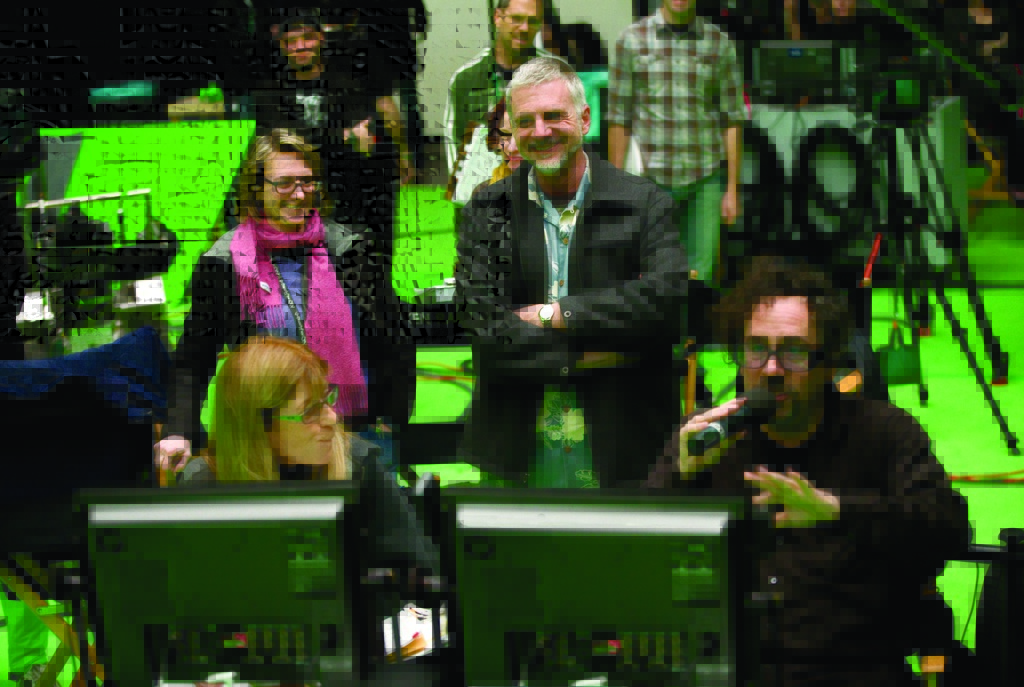
No cabe duda de que cuando Tim Burton junto con el director de producción Rob Stromberg iniciaban una nueva versión de Alicia en el país de las maravillas estaban embarcándose en uno de los proyectos más complejos de los últimos años. Pese al elevado presupuesto de la película, curiosamente, debido a la apretada agenda de algunos de sus protagonistas como Johnny Deep (incondicional en las películas de Burton -y van siete proyectos-), Helena Bonham o Anne Hathway, el rodaje se llevó a cabo en un tiempo récord de apenas cuarenta jornadas en los estudios Culver City de Los Ángeles.
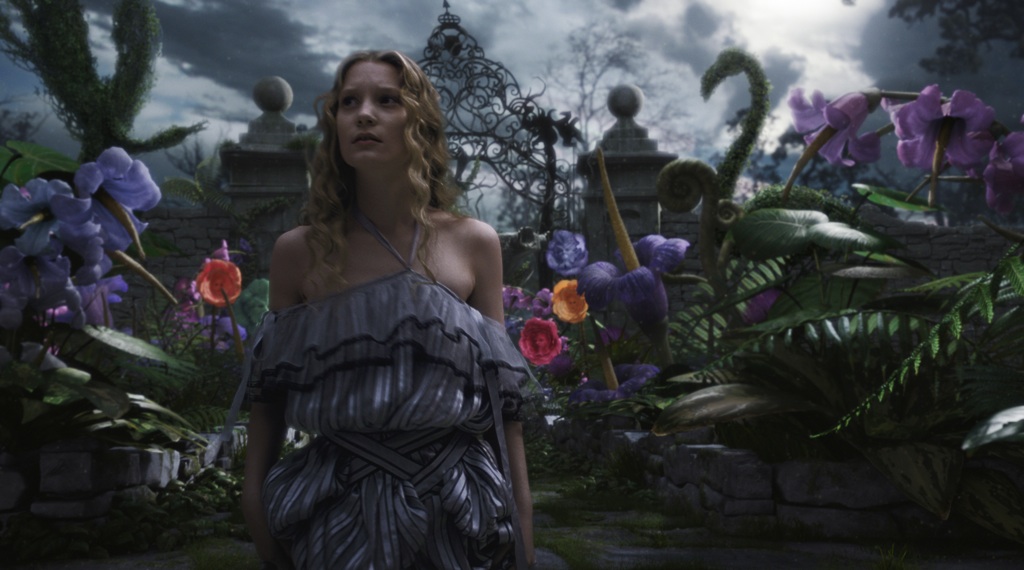
Las secuencias de acción real con las que se inicia la película se rodaron en Cornualles (Inglaterra). La postproducción, en cambio se prolongó durante casi un año desarrollando avanzadas técnicas de composición y efectos visuales, con gran peso de entornos, personajes y animales desarrollados completamente por ordenador, con la complicación añadida de la estereoscopía.
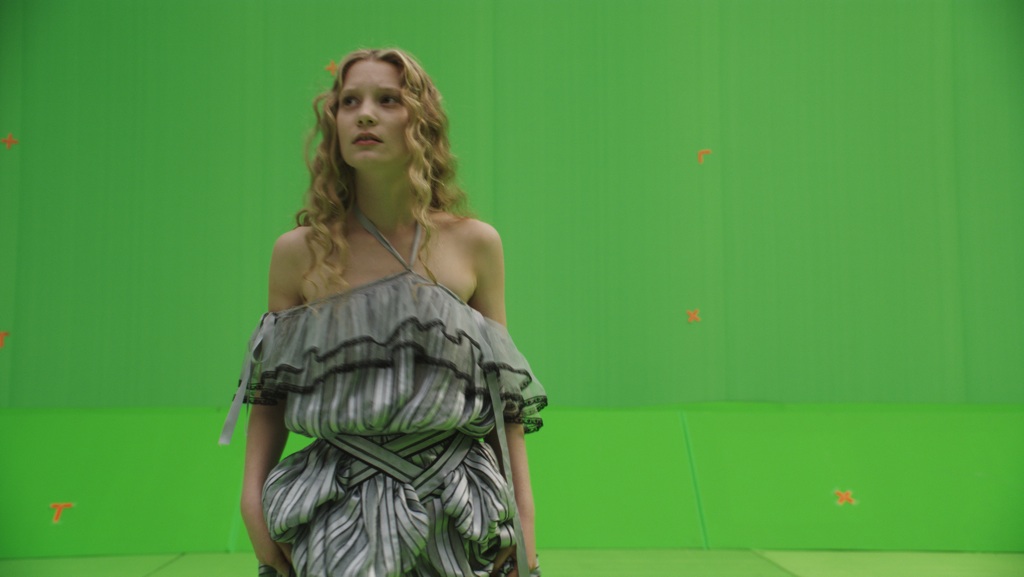
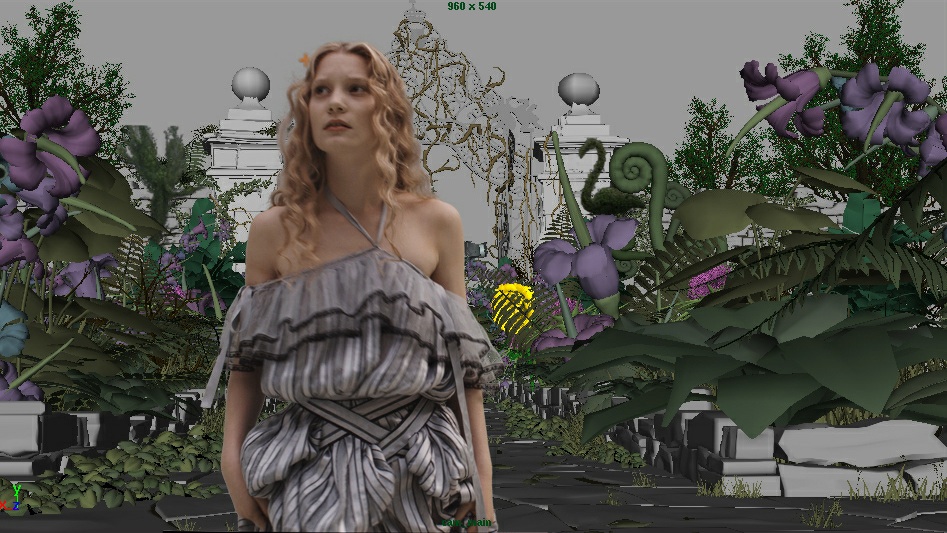
Durante el propio rodaje se generaron algunos archivos MotionBuilder, utilizando los escenarios físicos apenas para los primeros planos supervisados al milímetros por el propio Burton. Las escenas con más acción y menos presencia de actores fueron estrechamente desarrolladas junto a la compañía Third Floor desde el momento mismo de la preproducción hasta la sala de composición donde se ‘vestía’ el chroma verde. Hay que considerar que en esta película, prácticamente el 85-90% del rodaje se llevó a cabo ante un chroma con un rodaje tremendamente precipitado por lo que el equipo debía asegurar contar con los planos precisos a la hora de componer ya que en la mayoría de las jornadas apenas tuvieron tiempo para repasar los dailies.
Aunque en un primer momento el equipo estudió la posibilidad de utilizar captura de movimiento, y de hecho comenzaron a rodarse algunas tomas con esta técnicas, finalmente Tim Burton fue paulatinamente alejándose de esta técnica para sacar la máxima expresividad a los personajes reales. Finalmente, muchas escenas combinaron actores y elementos y personajes generados por ordenador en una atmósfera surrealista. Incluso, muchas secuencias están rodadas utilizando sólo elementos reales sobre chromas y encajadas sobre las imágenes rodadas con actores de carne y hueso meses antes.
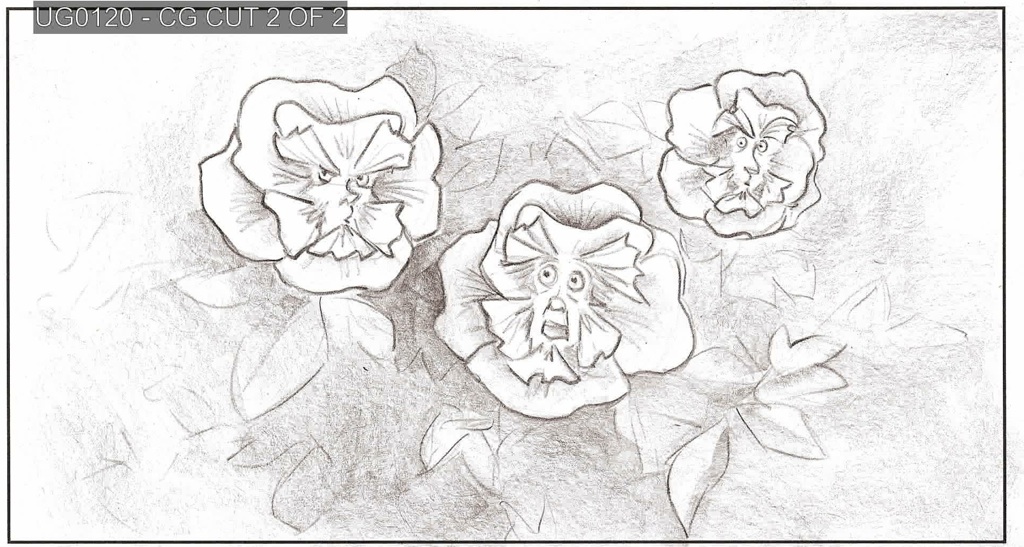
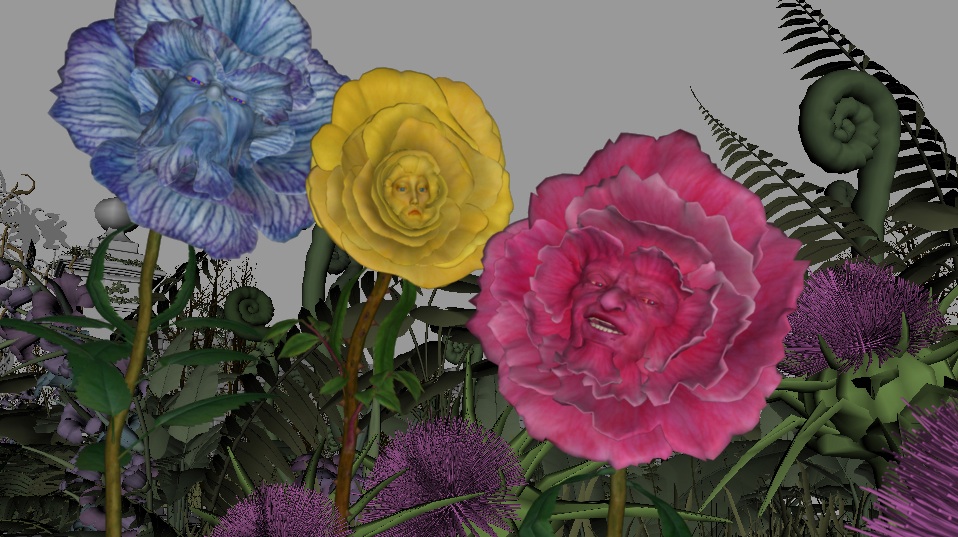
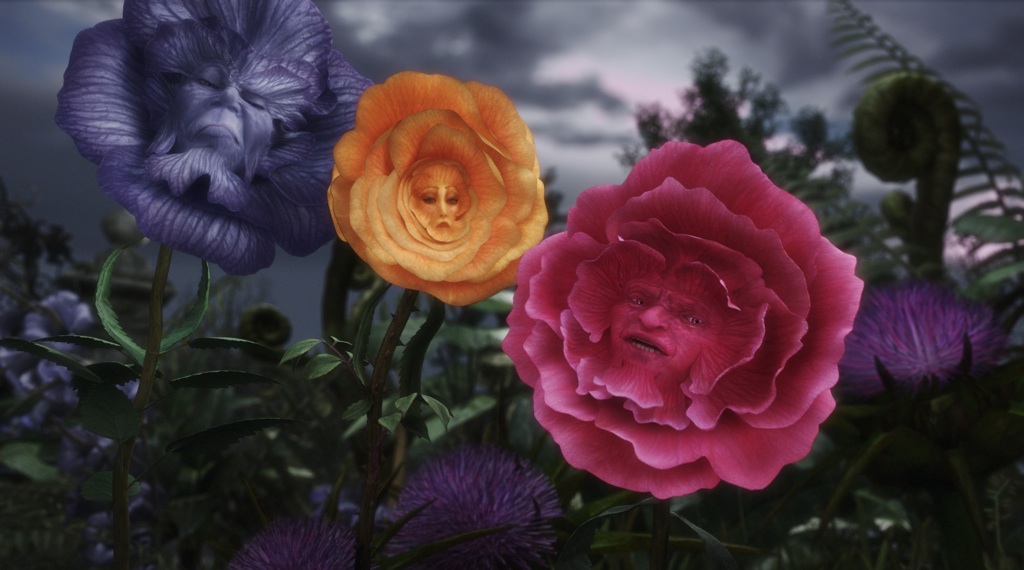
Elementos de atrezzo e incluso vestuario fueron generados por ordenador con una cuidada interacción de los personajes dentro de los mágicos entornos simulados a lo largo de la cinta en un ingente trabajo encargado a la empresa CafeFX que colaboró en supervisar hasta el mínimo detalle, pero vital en el desarrollo final del proyecto, como es la iluminación.
Para representar a los personajes digitales en el plató, el equipo de producción utilizo recortes de cartón, maquetas a tamaño natural o también recurrió a los hombres de verde con ojos clavados en varias partes de la anatomía para ayudar a los actores a encontrar la línea de visión correcta interactuando con personajes reales.
En toda la película únicamente encontramos decorados reales en la Sala Circular y la mazmorra de la Reina Roja, el resto, incluso los ojos del Sombrerero Loco (Johny Deep), incluso, se agrandaron en tamaño digitalmente.
Ken Ralston, fundador de Industrial Light&Magic junto a Lucas y supervisor senior de efectos visuales de Alicia, ha manifestado sentirse muy satisfecho al “combinar distintas técnicas para que la película fuera absolutamente única. Creo que se trata de una experiencia muy visceral, casi tangible gracias al formato 3D”, continúa Ralston. “Quiero que los espectadores se sumerjan en ese extraño mundo y dejen que la magia se apodere de ellos. Dejar que los personajes los conduzcan en un viaje realmente divertido”.
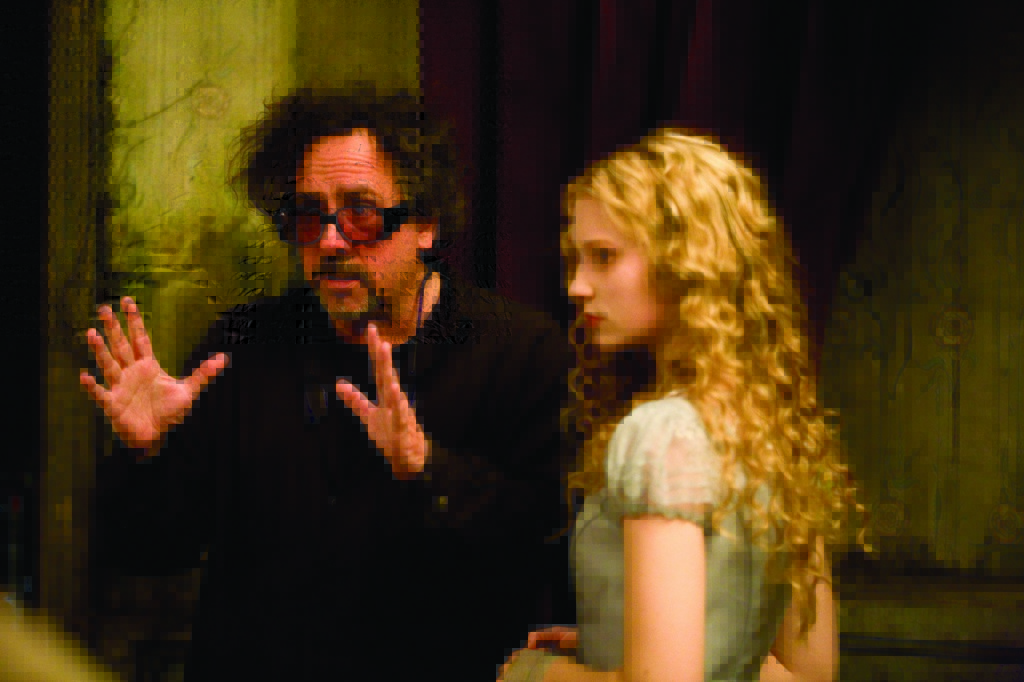
Estereoscopía
Junto a todo este desarrollo tan complejo de producción hay que sumar la dificultad técnica de la estereoscopía. El resultado es más que satisfactorio debido en gran parte al trabajo cojunto desarrollado por Imageworks, InThree y Legend3D apostando principalmente por una conversión en postproducción del rodaje en 2D a 3D, resultando así una estereoscopía muy poco agresiva que ayuda a sostener una atmósfera fantástica realmente envolvente, aunque mucho menos espectacular que la que percibimos en Avatar. De hecho, James Cameron ha criticado el hecho de que Hollywood se haya lanzado a sacar en 3D películas que no fueron concebidas inicialmente en 3D “en detrimento de su calidad”. “El éxito de Avatar puede hacer creer a los estudios que es plausible convertir una película de 2D a 3D en unas semanas, cuando es un proceso que arranca desde mucho antes del rodaje. Si quieres hacer una película en 3D, ruédala en ese formato. Es el típico ejemplo de Hollywood haciendo algo mal”, ha matizado el director de la película de los hombrecillos azules.
Con respecto a la estereoscopía, Tim Burton, quién ya utilizó la técnica de pasar de 2D a 3D en Pesadilla antes de Navidad, llegó a comentar que “lo divertido es la parte artística, sentir que haces una película y no enamorarse demasiado de la tecnología”, añadiendo que para él no tenía sentido “rodar en 3D cuando no había nada que grabar”. “Hay buen 3D y mal 3D como hay malas conversiones y buenas. Siempre supimos que iba a ser en 3D así que hicimos el plan adecuado para que cuando llegase ese momento fuese simplemente otra parte del proceso tecnológico”, añadió el director.
Alicia en el país de las maravillas ha recaudado el 70% en salas 3D. En España ha salido con 643 copias, 225 de ellas en 3D y formato Imax.



Did you like this article?
Subscribe to our NEWSLETTER and you won't miss anything.
Related articles
 PFX resucita ‘Agárralo como puedas’: más de 100 tomas con efectos visuales
 U-tad estrena su primer Grado en efectos visuales
 El especialista en efectos visuales Pwnisher utiliza DaVinci Resolve Studio
 La temporada final de ‘Paraíso’ vuelve a exprimir las posibilidades de los efectos visuales en TV
 Telson lleva a cabo los efectos visuales de ‘Operación Marea Negra’
 Muse VFX crea los efectos visuales de ‘Y: El último hombre’ con Fusion Studio
 Los cuatro grandes retos técnicos de los efectos visuales de ‘La Fortuna’ (Movistar+)
 Malditomaus crea los efectos visuales de ‘Spiral’ con Fusion Studio
 RNE adapta como ficción sonora ‘Alicia en el país de las maravillas’
 Rodeo FX wins its second Emmy for the visual effects of 'Game of Thrones'
 La Academia reconoce los efectos visuales y la fotografía de ‘Grupo 7’
 Free Your Mind en los efectos visuales 3D de ‘Torrente 4’
 Serena sorprende con los efectos visuales de las promos de Cuatro para el Mundial
 Eyeon Generation 2.0, más efectos visuales con soporte 3D