





Sony streamlines 3D with revolutionary applications
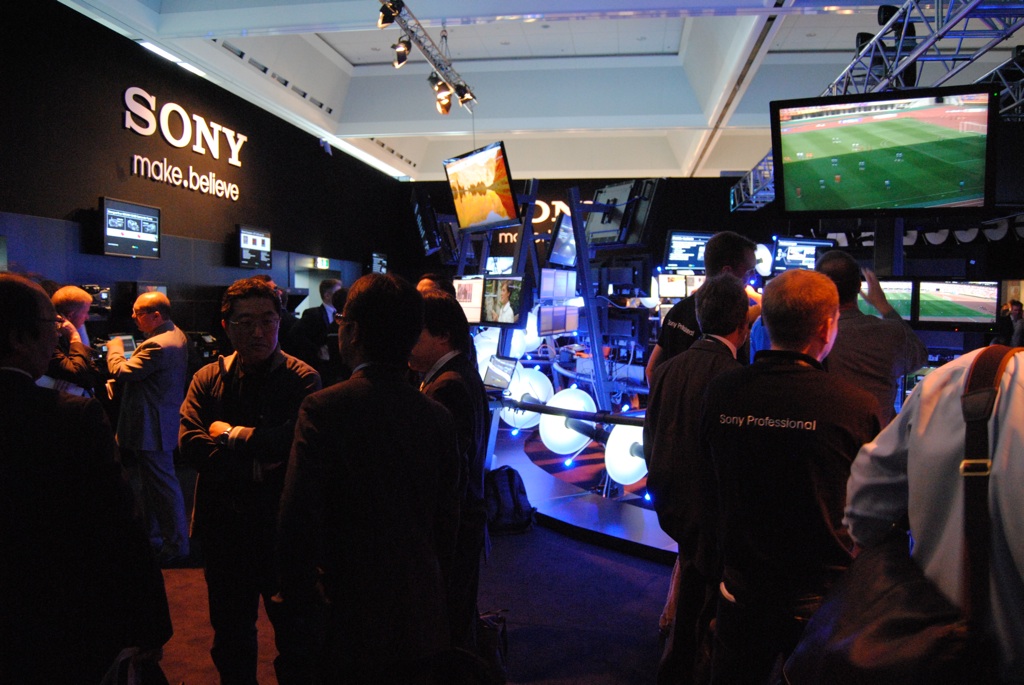
Como parte de su compromiso con la tecnología de broadcast en 3D, y con la potencia del procesador MPE-200 como corazón, Sony ha presentado recientemente en IBC 2010 una serie de mejoras y complementos para su flexible solución de producción 3D en directo. Sony Profesional ha exhibido diferentes modelos de flujos de trabajo en 3D para demostrar que cada proyecto diseñado para las tres dimensiones necesita una solución a medida que garantice la máxima calidad en todo el proceso.
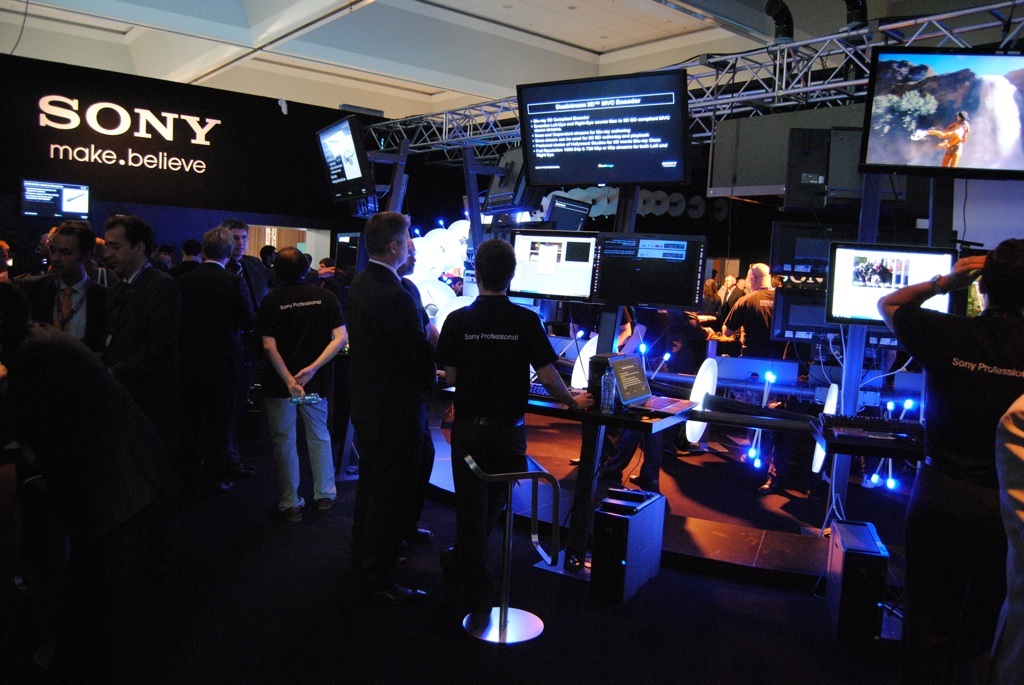
Sony continúa su compromiso con el 3D presentando en IBC 2010 numerosas soluciones destinadas a facilitar la producción estereoscópica. Entre otras novedades, destaca su primer prototipo de camcorder de hombro 3D, el adaptador de fibra óptica HFDA-200, nuevas opciones de software para el revolucionario equipo MPE-200, que permitirán convertir formato 2D en 3D, una innovadora aplicación de unión de imágenes y un equipo de efectos de vídeo con capacidad 3D para la familia MVS-8000.
IBC también ha servido de escenario para la presentación de Vegas 10, la última versión del conocido software de edición, que proporcionará funciones de ingesta y edición para imágenes en tres dimensiones. Los visitantes que han acudido al stand de IBC, han tenido la oportunidad de ver los monitores 3D de Sony profesional en modelos de 24” y 42” pulgadas.
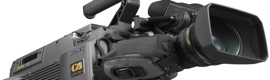
La última novedad en la cartera de soluciones 3D de Sony es su primer prototipo de camcorder de hombro para producciones en formato 3D. Está diseñado para ofrecer más movilidad y flexibilidad en grabaciones fuera del estudio y asegurar al mismo tiempo una alta calidad de contenido 3D. Este prototipo, aún en fase de desarrollo, se ha podido ver por primera vez en el stand de Sony en IBC.
El proyecto del mundial de fútbol permitió ver cómo la tecnología de Sony permitía transmitir en directo, y con extraordinario éxito, imágenes 3D de 25 partidos al público de todo el planeta.
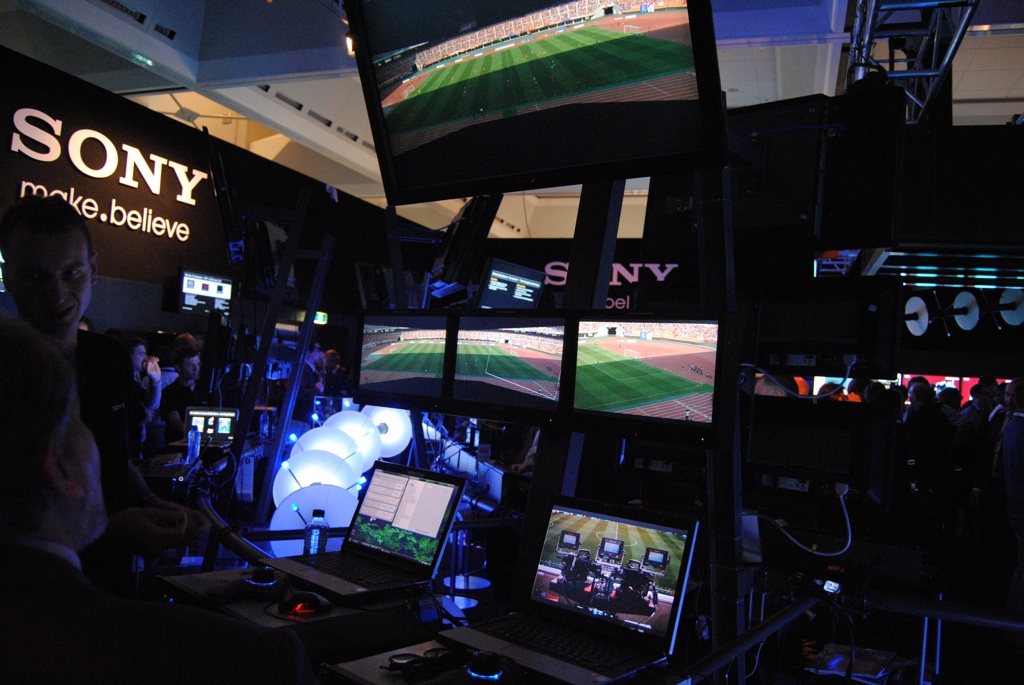
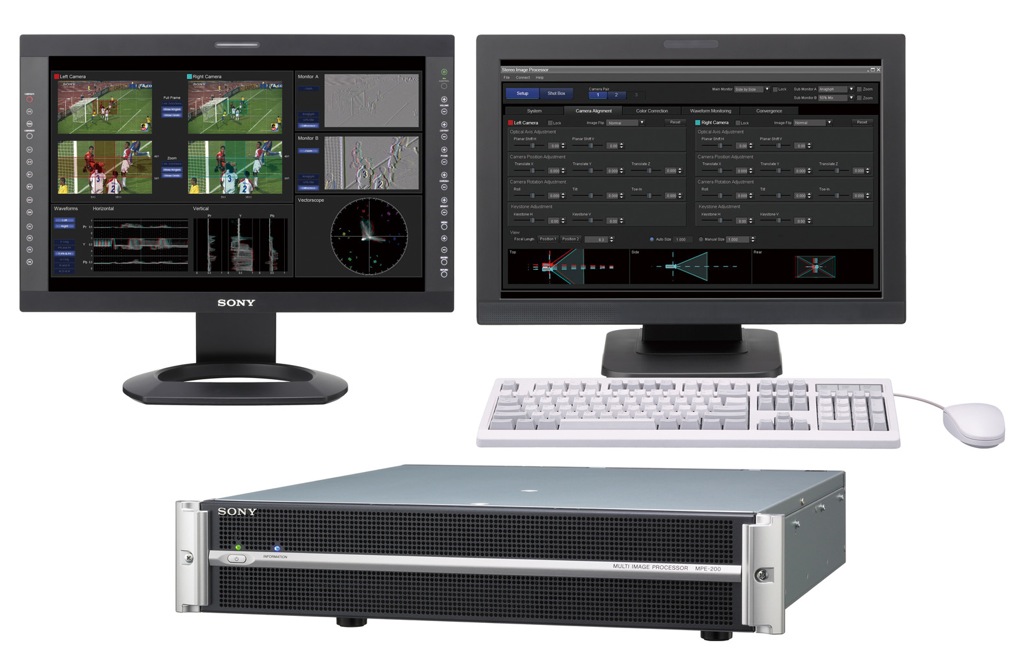 MPE-200, en el corazón del flujo estereoscópico
Un componente fundamental en todo este flujo estereoscópico es el procesador de imágenes multiformato MPE-200. Este procesador posibilita la producción de imágenes tridimensionales de alta calidad en tiempo real, manteniendo una alineación perfecta de las cámaras en cualquier posición de zoom a lo largo de todo el evento. Tras analizar las opiniones recogidas en Sudáfrica y otras emisiones en directo, Sony ha mostrado en IBC las últimas actualizaciones del software MPES-3D01, V1.20, utilizado con el MPE-200. Este nuevo software, cuya publicación está prevista para octubre, añadirá nuevas funciones de alineación automática para la configuración de las cámaras, así como otra serie de mejoras operativas solicitadas por los usuarios.
El procesador MPE-200 de Sony es capaz de funcionar con numerosos paquetes de software, lo que permite utilizarlo en multitud de entornos de broadcast. Sony ha aprovechado su presencia en IBC para presentar tres nuevos paquetes de software que pueden instalarse en el MPE-200.
En primer lugar, una aplicación que permitirá convertir imágenes 2D al formato tridimensional. Este paquete, MPES-2D3D1, que estará disponible antes de que finalice el año, resultará perfecto para generar imágenes 3D desde posiciones de cámara donde es imposible montar plataformas 3D. Por ejemplo, cámaras situadas en la portería del campo de juego o imágenes captadas desde un helicóptero, donde las limitaciones de espacio y peso impiden instalar estas plataformas. El procesador MPE-200 utiliza las imágenes 2D procedentes de estas cámaras y las convierte en vídeo 3D de alta calidad.
En segundo lugar, Sony ha dado a conocer en esta feria su nuevo software de unión de imágenes. Esta aplicación, cuya comercialización está prevista para la primavera de 2011, utiliza tres cámaras contiguas para generar una imagen panorámica. La información enviada por las cámaras se combina para formar una sola imagen completa. De esta forma, el operador puede crear una cámara virtual y colocarla en función de la acción que quiera mostrarse en la pantalla con sólo situar unas marcas sobre la zona con ayuda de un joystick. Esto permite ofrecer vistas de cualquier punto de interés que se produzca en la escena. Este software también puede programarse añadiendo datos de profundidad, por ejemplo, de un estadio de fútbol, para crear una vista 3D artificial de la escena.
En tercer lugar, la capacidad de sobreimprimir gráficos es esencial en las producciones en directo, y Sony facilita esta tarea con la incorporación de un nuevo producto a su gama MVS. Sony también ha exhibido una novedosa aplicación para utilizar con el procesador de vídeo y la familia de mezcladores MVS-8000. El uso de este paquete de software MPES-FX01 para el MPE-200, en combinación con un mezclador de la serie MVS-8000, permite sobreimprimir gráficos 2D y 3D en las imágenes de vídeo 3D en tiempo real.
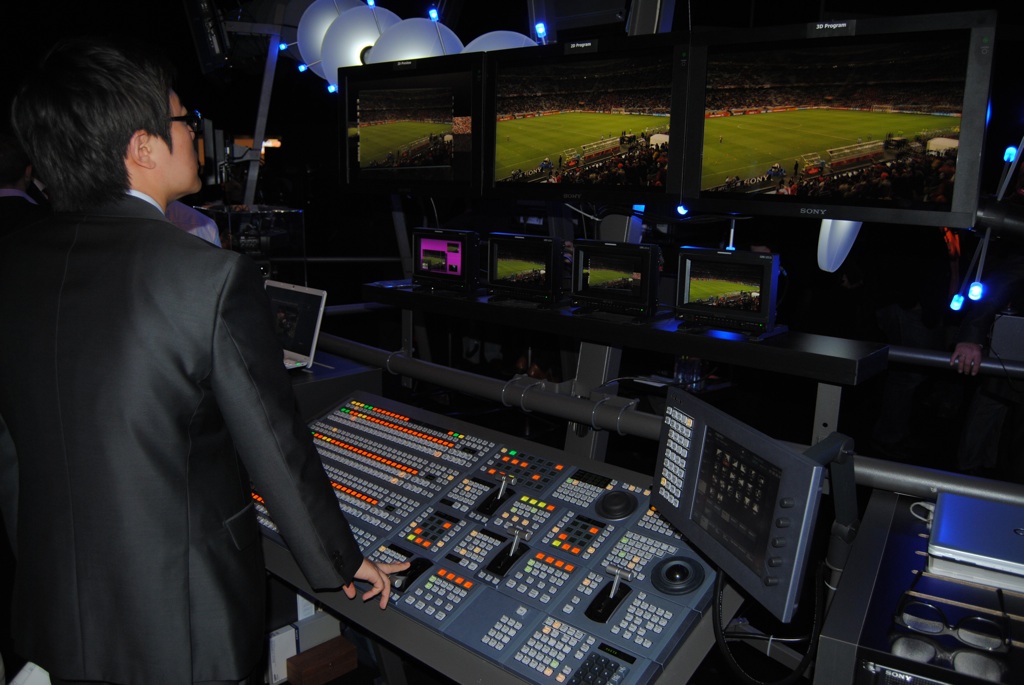
Mezclador MVS-8000
El mezclador MVS-8000 es también un componente fundamental en las propuestas de Sony para 3D. Su utilización en las transmisiones del mundial de fútbol ha demostrado la valía del producto en el acontecimiento futbolístico más importante del mundo. En IBC pudo verse el último miembro de la familia: el MVS-8000X. Este mezclador puede manejar imágenes 3D directamente procedentes de la cámara y también admite producciones en formato 1080/50p. Al ser el último modelo de la popular gama MVS, está destinado a convertirse en parte esencial de los flujos de trabajo de producción en 3D.
Para hacer más sencillo el tendido de cables, Sony también ha presentado el adaptador de transmisión de fibra óptica HDFA-200. Este adaptador hará posible la transmisión de la imagen de dos cámaras HD a través de un solo vínculo SMPTE hasta un CCU específico de tercera generación. Gracias a las señales de vídeo, intercom y de control, así a como a la transmisión de corriente a través de este vínculo, se garantiza el funcionamiento de sistema de ambas cámaras. Gracias al sistema HDFA-200, que está diseñado de forma específica para funcionar con el HDC-P1 de Sony, un solo RCP es capaz de controlar la unión de cámaras. De esta forma, el HDFA-200 proporciona un sistema de cámara específico para la producción 3D en directo.
Más allá de otros aspectos relativos al flujo de trabajo, el estereógrafo 3D necesita poder ver una reproducción exacta de las imágenes capturadas. También utilizados en la producción del mundial de fútbol, los monitores profesionales 3D de Sony estará disponibles a modo de equipos de producción a partir de octubre. Los monitores 3D profesionales se basan en el chasis de gama alta de la serie LMD 51W, que ofrece una calidad de imagen excepcional, y se comercializarán en modelos de 24” y 42”. Los monitores 3D ofrecerán nuevas prestaciones de visualización 3D y una amplia gama de entradas, incluyendo SDI 3G; HD-SDI (secuencia de campo; contiguo; canales de transmisión dual izquierdo y derecho), así como entrelazado de línea DVI (línea a línea). Además, las gafas 3D BKM-30G, extraordinariamente ligeras y cómodas, se han optimizado para su uso profesional con los monitores 3D.
Andy Hotten, responsable de grupo de Sony Professional. ha señalado que “en Sony hemos aprendido mucho durante el año pasado. Nuestra experiencia y el éxito obtenido en el mundial de fútbol demuestran nuestra capacidad para ofrecer un completo y sofisticado flujo de trabajo de producción 3D en directo, y ahora podemos dar un paso más y compartir nuestra experiencia y conocimientos con la industria”.
No hay duda de que se incrementará el número de eventos producidos en 3D y Sony seguirá innovando y suministrando soluciones para apoyar e impulsar la adopción de esta tecnología. Como parte de este compromiso, Sony abrirá un centro de excelencia 3D en su central europea de Basingstoke, Reino Unido. Este centro proporcionará formación y asistencia a profesionales y empresas de broadcast que deseen producir en 3D y se inaugurará en otoño de 2010.
“Nuestro centro de formación ofrecerá a especialistas en producción y empresas de broadcast la posibilidad de elaborar su propio contenido 3D a través de la tecnología y las competencias que hemos desarrollado y probado en entornos reales. Estamos impacientes por abrir sus puertas y nos sentiremos orgullosos de nuestros futuros graduados”, concluyó Hotten.
Did you like this article?
Subscribe to our NEWSLETTER and you won't miss anything.
Related articles
 La plataforma Ci de Sony Media Cloud Services debuta en IBC con aplicaciones de producción de vídeo e integración de cámaras inalámbricas
 Digital Rapids makes encoding and transcoding even faster and more flexible
 Percon agiliza las conexiones en fibra en aplicaciones móviles con el 4500-TR
 Sony PMW-1000 – Improved XDCAM HD422 Workflow for Studio and Outdoor Applications
 Colorfront streamlines the work of dailies
 Riedel streamlines communication in the Tour de France
 AJA speeds up file transfer from SR-R1
 Matrox streamlines news production at MSNBC
 Primestream streamlines collaborative work
 EVS streamlines the production of the XIV World Swimming Championships
 EVS agiliza y hace más eficaces los flujos de trabajo
 Sony universaliza el HDCAM-SR a nuevos mercados y aplicaciones
 Avid agiliza el workflow con P2HD AVC-Intra
Snell mostrará en NAB su popular Kahuna en aplicaciones 3D
Avid agiliza el workflow con P2HD AVC-Intra
Snell mostrará en NAB su popular Kahuna en aplicaciones 3D