





Total Star Network reduces transmission costs with Barix IP audio solution
Total Star Network, la red de radiodifusión que cuenta con ocho estaciones en Inglaterra y España, ha sustituido su sistema de transmisión basado en líneas dedicadas e ISDN por una red de transmisión de señales de audio IP mucho más rentable.
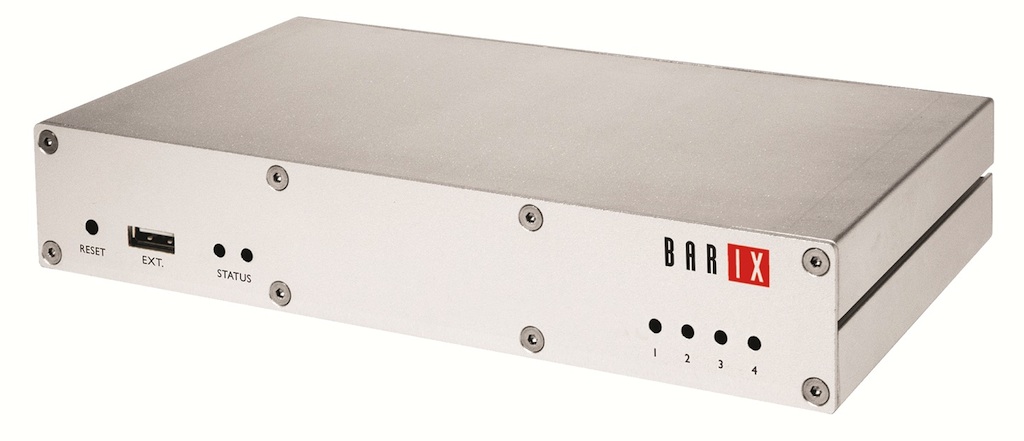
Gracias al servicio Reflector y dispositivos de Barix, Total Star Network, red de radiodifusión que cuenta con ocho estaciones en Inglaterra y España, ha sustituido su sistema de transmisión basado en líneas dedicadas e ISDN por una red de transmisión de señales de audio IP mucho más rentable.
La compañía de radiodifusión estima un ahorro anual de casi 10.000 dólares (6.000£ libras esterlinas) en costes de transmisión de programas, y en algunos casos, incluso mejorando la calidad de audio.
Total Star Network optó por el servicio Reflector de Barix para simplificar las transmisiones de las señales de audio IP desde la sede central ubicada en Cheltenham (Inglaterra) hasta sus siete emisoras regionales. Los dispositivos profesionales de audio IP Exstreamer 500 de Barix proporcionan los puntos de codificación/decodificación desde la sede central hasta los estudios locales, y posteriormente, hacia las zonas de transmisión. Además, la red utiliza la solución de audio IP de Barix para transmitir la programación de la emisora OneGold Radio a una estación FM ubicada en la Costa Blanca, tramo del litoral mediterráneo correspondiente a la provincia de Alicante (España).
Distribuido por StreamGuys, socio de Barix, el Servicio Reflector actúa como un centro online de configuración de la conexiones de audio (bridge transport), a la vez que proporciona una retransmisión directa de las señales de audio. La utilización del Servicio Reflector elimina al operador la necesidad de las tediosas configuraciones de direcciones IP estáticas y de router, reduciéndolos a la simple creación de una cuenta en el sitio web del servicio, a la introducción de información sobre los dispositivos hardware y a la realización de algunos ajustes generales en los parámetros de audio.
Liam Kelly, Ingeniero de Radiodifusión para Total Star Network, se percató de la posibilidad de modificación de los niveles sonoros en el Exstreamer 500 desde cualquier lugar a través de este servicio, lo que es sin lugar a dudas una gran ventaja, ya que elimina la necesidad de tener que conectarse físicamente a los dispositivos. Por otra parte, también comentó que la calidad de audio era mejor que cuando se utilizaban líneas ISDN, gracias al incremento significativo del ancho de banda disponible al utilizar el Servicio Reflector (formato MP3 de 128 Kbps a 192 Kbps).
Casi con toda probabilidad, la mayor sorpresa al cambiar a una transmisión de audio basada en el protocolo IP, ha sido su consistencia. “Es bastante increíble que podamos obtener una calidad de audio tan excepcional a través de estas distancias con este tipo de continuidad. La intensidad de la señal es sólida como una roca, sin pérdida de señal alguna.”
Por separado, Total Star Network utiliza los dispositivos Exstreamer 500 para aplicaciones remotas de radiodifusión, incluyendo la cobertura de las carreras de caballos de la Gold Cup de Cheltenham que tuvo lugar a mediados del mes de marzo. El personal de Total Star Network trasmiten las señales en directo desde el emplazamiento remoto hasta la sede central a través de una conexión vía satélite que cuesta unos 32$ (20£ libras esterlinas) al mes. Esto proporciona a las emisoras de radio una forma rentable y profesional de retrasmitir eventos sin la necesidad de equipos de transmisión y alquiler de enlaces por satélite excesivamente caros.
Barix presentará su nuevo dispositivo profesional de audio IP Exstreamer 500 en la próxima feria NAB 2011 que tendrá lugar del 11 al 14 de abril en el Centro de Convenciones de Las Vegas , así como sus nuevas actualizaciones para el Servicio Reflector que simplificarán todavía más su integración con infraestructuras de radiodifusión ya existentes. La técnica tunneling, la monitorización, el sistema de avisos y la resistencia del sistema son algunas de las mejoras que incluye la nueva versión actualizada.
Did you like this article?
Subscribe to our NEWSLETTER and you won't miss anything.
Related articles
 Bitmovin desarrolla una solución para supervisión en tiempo real en la transmisión de vídeo
 Sennheiser ushers in a new era in wireless digital audio transmission with Spectera broadband bi-directional solution
 France Télévisions reduces its production costs by 65% with TVU cloud technology
 Netflix mejora la experiencia de sus clientes, aumenta la eficiencia y reduce costes con Amazon Kinesis Data Streams
 Turner EMEA disminuye costes y reduce en un 70% el tiempo de edición con soluciones de Sony
 Panasonic develops single cable and connector solution for 8K signal transmission
 Telstra elige la solución Ericsson Media Delivery Network como servicio CDN
 Mediaset España reduce en un 10% los costes operativos en el primer trimestre
 El control maestro y branding integrado de Pixel Power aumenta visibilidad y reduce costes
 Barix will present the new Exstreamer 205 for IP audio distribution in retail at IBC
 Full interoperability in telepresence with the Polycom UC Intelligent Core solution
 Barix IP audio solutions for the transmission of Radio Notimil in Ecuador
 LG Network Wireless: solución inalámbrica para conectar hasta 31 LCDs
 Barix presents a solution for inserting advertising on local radio stations