





Goodbye to Steve Jobs, the great technology guru
The co-founder of Apple died this Wednesday at the age of 56. Apple had confirmed a few months ago that the firm's former CEO was facing critical health problems.
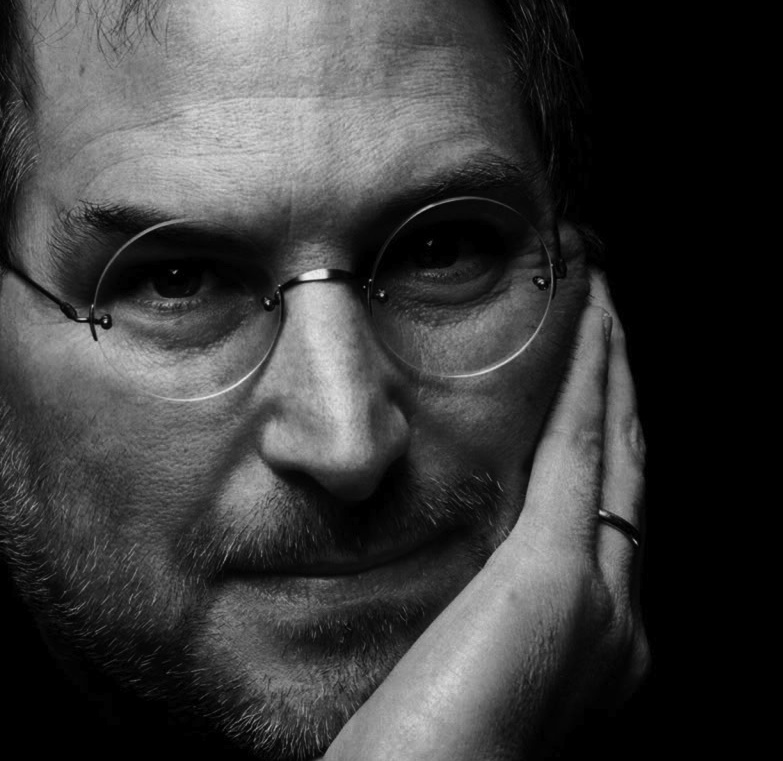
"Death is the destiny we all share. No one has escaped it. And that is as it should be because death is very likely the best invention of life," Steve Jobs expressed these words at Stanford University a few years ago.
The former CEO of Apple, Steve Jobs, after a long illness against which he had fought tirelessly until the last moment, died this Wednesday at the age of 56. Apple in a statement regretted the disappearance of its co-founder, stating that “the world is much better thanks to Steve.”
On August 24, Jobs resigned as CEO of the company due to health problems. "I have always believed that if the day ever came that I could not meet my duties and expectations as CEO of Apple, I would be the first to tell you. Unfortunately, the day has come," he said on that occasion through a letter addressed to the technology community.
After his resignation, Tim Cook took the helm of the company as executive president, appearing for the first time in public as such just a few days ago for the presentation of the new iPhone 4S.
Jobs, a charismatic and expressive man capable of convincing the masses with just a message, took technology to a state never before known, turning Apple from a rudimentary two-employee company to a Silicon Valley giant, especially after the launch of the Apple II, the first mass-use computer.
Steven Paul Jobs was born on February 24, 1955 in San Francisco, the son of Joanne Schieble - then a single graduate student - and Abdulfattah Jandali, a student originally from Syria. He was given up for adoption to Clara and Paul Jobs, who encouraged his love of electronics. He graduated high school in 1972 and enrolled at Reed College in Portland, Oregon.
Since he regained control of the company that he had founded in 1976, and from which he had been forced to leave in 1985, Jobs became the backbone of Apple. The technology firm that had revolutionized personal computers during the eighties was now adrift. Clone manufacturers (non-brand computers) had stolen the hardware market, while Windows largely dominated software.
Upon his return to Apple, Jobs renewed the entire hardware industry, democratized access to software, challenged the content industry, became Apple's most important asset and led it to become an icon of this era. Now, the challenge for the apple company is to demonstrate that it can continue to innovate on the technological front lines without the inspiration of its founder...
Chronology
- February 24, 1955. Steve Jobs is born.
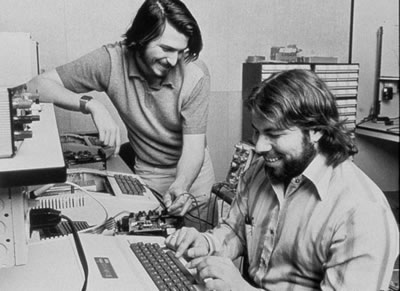
- April 1, 1976. Steve Jobs and Steve Wozniak found Apple Computer.
- July, 1976. The Apple I is unveiled.
- April 17, 1977. The Apple II is introduced, inspired by the kitchen utensils on display at Macy's.
- January 24, 1984. Challenged IBM by launching the Macintosh, the popular Mac.
- September 17, 1985. Jobs leaves Apple and launches NeXT.
- 1997. Jobs returns to Apple as interim CEO.
- May 6, 1998. Apple unveils the iMac.
- July 2, 1999. Apple unveils the iBook.
- April 28, 2003. Apple introduces the iTunes Music Store.
- September 2006. Apple presents AppleTV.
- January 9, 2007. Apple launches the iPhone.
- January 15, 2008. Apple unveils the MacBook Air.
- January 27, 2010. Apple presents the iPad tablet.
- June 6, 2011. Apple presents its iCloud cloud proposal.
- October 5, 2011. Steve Jobs dies.
[youtube]http://www.youtube.com/watch?v=0hxJ2tDTjYk[/youtube]
Did you like this article?
Subscribe to our NEWSLETTER and you won't miss anything.
Related articles
 'OT' premieres on Prime Video with a great display of broadcast technology
 The Basque company Sherpa.ai hires Joanna Hoffman, the executive who was Steve Jobs' right-hand woman
 Goodbye to Chicho Ibáñez Serrador, a genius who scared, entertained and made the public on the small and big screen think
 Goodbye to Reyes Abades, the great magician of special effects
 Editshare technology ensures Zeppelin TV does not lose any detail in the production of 'Big Brother' in Spain
 Goodbye to Gil Parrondo, great master of art direction in cinema
 Goodbye to De la Quadra-Salcedo, pioneer in Spain of the great current affairs report on television
 The Youth Olympic Games had a great display of virtual graphics with Ventuz technology
 Panasonic technology allows you to follow the lives of the contestants in 'Big Brother 15'
 Spanish technology in the latest big 3D blockbuster in India
 Spanish cinema says goodbye to the great Bigas Luna
 FAPAE gets involved in the great technology fair
 Marketing guru Guy Kawasaki inaugurates FICOD 2010
 Great deployment of EVS technology at the Guangzhou Asian Games