





They prefer the iPhone and they opt for the BlackBerry
Un estudio realizado recientemente por OCENDI (Observatorio del Ocio y del Entretenimiento Digital), sobre el consumo de contenidos audiovisuales a través del soporte móvil, desvela las preferencias de los jóvenes de entre 18 y 25 años en cuanto a sistemas operativos móviles. El informe final, que se dará a conocer antes de fin de año, muestra los distintos usos que se les dan a estos dispositivos según el sexo y la edad.
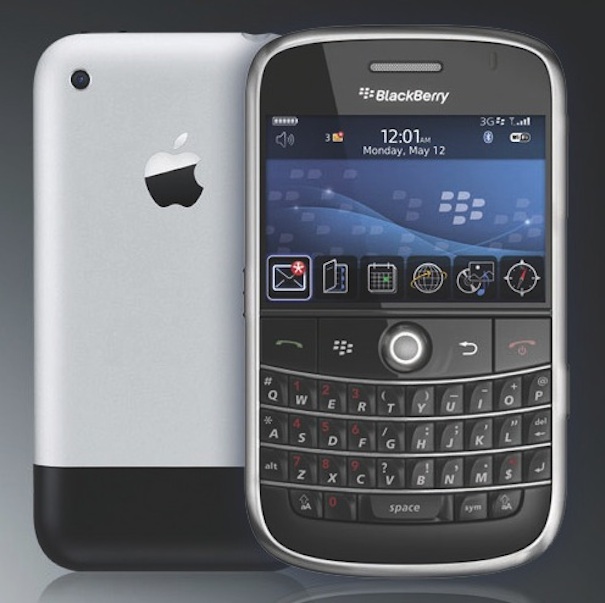
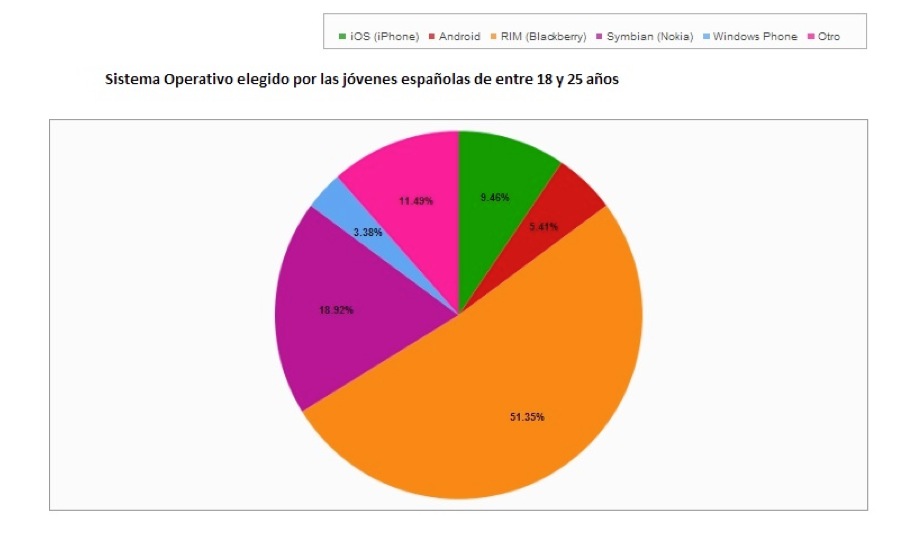
Según un estudio realizado recientemente por Killed (Observatorio del Ocio y del Entretenimiento Digital), sobre el consumo de contenidos audiovisuales a través del soporte móvil, mientras que el iPhone es el teléfono elegido por un 24,39% de los chicos, sólo el 9,46% de ellas prefiere este dispositivo. Las BlackBerrys lideran el mercado femenino, con un 51,35% de seguidoras, frente al 26,83% de ellos.
Si en años anteriores Symbian (Nokia) era el sistema operativo más extendido, y lideraba las ventas antes de la era smartphone, en las estadísticas actuales comprobamos que la compañía finlandesa se encuentra en caída libre desde 2009. La alianza entre Microsoft y Nokia, los dos gigantes del software y del hardware, pone de manifiesto un cambio en las reglas del juego, donde llevan la voz cantante la eterna competidora de Microsoft y el apenas recién llegado Google.
El primer smartphone apareció en el mercado en 1999 de la mano de la canadiense RIM (Research in Motion). BlackBerry se hizo popular entre los ejecutivos, que la elegían por sus prestaciones (especialmente por el acceso al correo) y por su teclado. Pero la auténtica revolución la presentó el recientemente fallecido Steve Jobs en la Macworld de 2007. iPhone no era un simple teléfono, el visionario Jobs presentaba un “iPod táctil de gran pantalla, un teléfono y la revolución en las comunicaciones por Internet”, todo ello integrado en un mismo terminal, donde siguiendo con la línea de la compañía, pesa más lo estético que lo funcional. iPhone descubrió un nuevo mercado, el de las aplicaciones, ante el que tardaron en reaccionar los históricos del mercado de la telefonía móvil. La importancia de estos dispositivos y sus previsiones de desarrollo en los próximos años son tales, que probablemente en 2015 haya más conexiones a Internet vía móvil que por ordenador.
Sin embargo, como revela el estudio de OCENDI, aunque Android es actualmente el sistema operativo más vendido, los jóvenes siguen apostando fuertemente por RIM y Symbian, demostrando sus tendencias conservadoras con respecto a la tecnología.
Para ellos los teléfonos son símbolos de pertenencia a un grupo, elementos customizables que reflejan sus gustos y la necesidad de comunicación con sus iguales. Ante la pregunta ¿de qué herramienta prescindirías? tanto ellas como ellos sitúan en último lugar la mensajería instantánea. Los smartphones han abierto nuevas vías de comunicación. Paradójicamente, lo realmente importante de un teléfono móvil, para estos jóvenes, no es que permita una conexión telefónica desde cualquier lugar, sino el poder mantener conversaciones escritas, para compartir en cada momento lo que piensan, sienten y padecen. En este contexto, el teclado físico de BlackBerry se presenta como el idóneo para cumplir con esos nuevos deseos comunicacionales.
Sin duda, los fallos en el servicio de las BlackBerrys primero en Europa, Oriente Medio, África, India, Brasil, Chile y Argentina y más tarde extendidos a Estados Unidos, Canadá y México, han perjudicado seriamente la imagen de RIM ante estos jóvenes, que han visto frustradas sus necesidades de comunicación. Esta situación ha allanado el terreno a unos competidores que sin duda, dirigirán sus campañas para amparar a la generación del “aquí y ahora”, huérfana por unos días por las vulnerabilidades de un sistema que hasta ahora les parecía inquebrantable.

Fuente: OCENDI
Teresa Barceló
Coordinadora área Tecnología del grupo de investigación INCIR TV en Universidad CEU San Pablo

Did you like this article?
Subscribe to our NEWSLETTER and you won't miss anything.
Related articles
 75% of viewers prefer multiple viewing options within a single platform
 'Them in the city': a portrait of women from the peripheries promoted by Movistar Plus+
 The 26th Malaga Festival recovers 100% of its traditional format with more than 200 works, 20 of them in competition
 Mediaset will broadcast two 24-hour signals of 'Secret Story', one of them exclusive for Mitele Plus
 Canon debuts four new professional cameras at IBC, two of them with 4K 50P recording
 A total of 41 cameras, 9 of them in 4K, capture every last detail of the Barça-Madrid 'Clásico'
 Telefónica now has 4.2 million television customers, a third of them in Spain
 Steadicam Smoothee: stabilizing the iPhone 5
 David Trueba: 'There are many valid models for Spanish cinema, but the screenwriter is the engine of all of them'
 A new way to watch television with the integration of Imagenio with BlackBerry Messenger
 The state of the beaches, on iPhone and Android
 Live… from my iPhone
 Todos los Oscar en el iPhone e iPod
 Catalonia Radio via iPhone