





New challenges in an industry in continuous evolution
El negocio de los medios de comunicación está experimentando un cambio rápido, lo que está creando nuevos desafíos para los propietarios de los contenidos y las empresas de broadcast. Marc Caeymaex, director de EVS Ibérica, ofrece su visión en esta Tribuna sobre los nuevos flujos de trabajo y la distribución multiplataforma de contenidos.

Entre los nuevos desafíos a los que se enfrentan los medios se encuentra el reparto de los derechos, la profusión de nuevas plataformas digitales como las redes sociales, los vídeos, así como los contenidos generados por los propios usuarios y, en consecuencia, la aparición de audiencias versátiles que tienen la destreza de ver la televisión mientras escriben mensajes en sus teléfonos móviles o en Twitter.
Como resultado, las empresas de retransmisión necesitan poner todos sus esfuerzos para equilibrar la balanza entre captar la atención de un público masivo y atender a la vez los intereses particulares de los espectadores manteniendo su atención.
EVS ha estado atento a estos cambios y ha tratado de mejorar las capacidades de sus tecnologías actuales, así como de desarrollar nuevas soluciones complementarias que ayuden a las empresas de retransmisión aumentar el valor de sus contenidos y facilitar el envío de la media a las diferentes plataformas audiovisuales.
Como jefe responsable de la gestión de los grandes eventos de EVS, Luc Doneux considera que la cobertura en los deportes está cambiando y se espera que continúe así en los próximos años. Con 15 años de experiencia en la empresa, Doneux ha tenido el privilegio de haber trabajado en el diseño de las soluciones desarrolladlas por parte de EVS para los diferentes Juegos Olímpicos, Copas del Mundo y Campeonatos de Europa de fútbol desde 1998 y considera que, aunque las bases de la retransmisión deportiva prevalecerán, la forma en que los espectadores consumirán los contenidos va a cambiar de forma espectacular.
Doneux señala que este cambio también se va a percibir en los accionistas del deporte de dos maneras. “En primer lugar, los titulares de los derechos de emisión van a ver divididos estos derechos según las diferentes plataformas audiovisuales (directo, teléfonos móviles, Internet y otros). Por tanto, los grandes propietarios de los derechos de emisión (por ejemplo, la UEFA, FIFA) están intentando unir todas estas plataformas y vender el conjunto a una organización. Le corresponde entonces a las empresas de retransmisión ofrecer el contenido en múltiples formatos”.

Nuevas pantallas
“En segundo lugar, el aumento de pantallas y la posibilidad de distribuir más contenido por banda ancha está abriendo nuevas posibilidades a la hora de cubrir otro tipo de deportes. Existen otros deportes minoritarios como la vela o el judo que pueden ser producidos económicamente con una infraestructura “tradicional” en HD desde la grabación hasta la distribución. Así tenemos el ejemplo de Google que ha decidido cubrir alguno de estos deportes. Al mismo tiempo, los grandes eventos como las Olimpiadas o la Champions League se producirán con un mayor énfasis en los valores de producción, gráficos y experiencias interactivas”, añade Doneux.
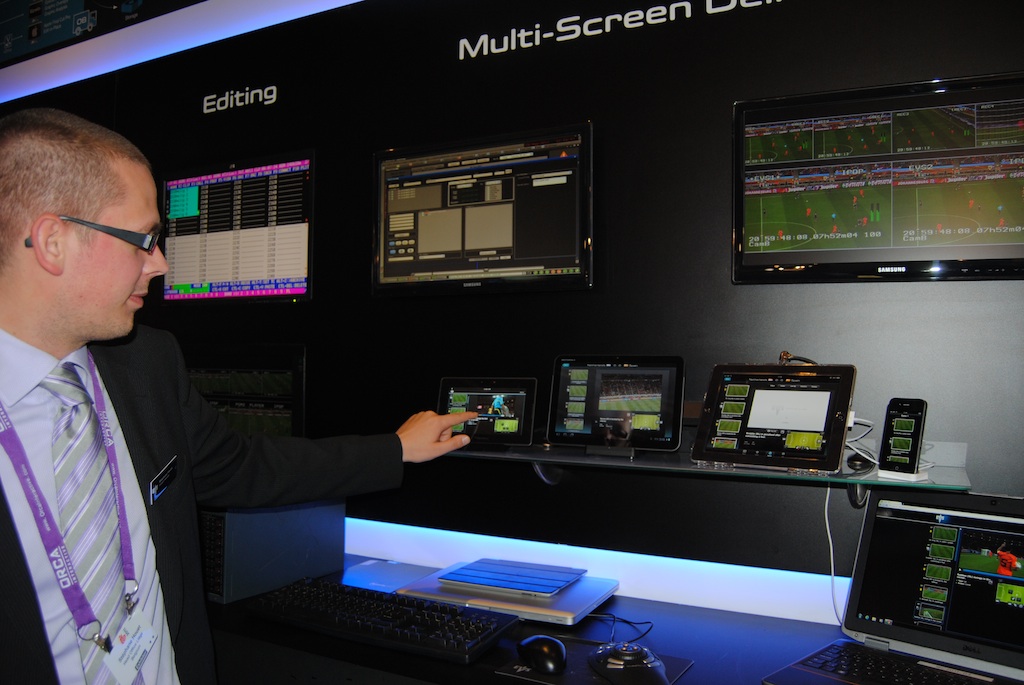
Sport360º de EVS ayuda a afrontar estos desafíos con éxito empleando los servidores más reconocidos de la industria de la producción en directo, los programas para producción de highlights de compactado de noticias, nuevas herramientas de gestión de contenido para la monetización de los archivos y la distribución instantánea del contenido a cualquier plataforma audiovisual. Gracias a esto se garantiza un aumento en el valor de los contenidos, ya sea con repeticiones en 2D o 3D de las acciones más impactantes del acontecimiento, análisis en profundidad de las acciones con gráficas de alta calidad (también en 3D) y herramientas propias para la creación de highlights.
La integración de esta tecnología con aplicaciones para segundas pantallas ha derivado en una mayor versatilidad y una mejor calidad en el contenido enviado a las diferentes pantallas. Gracias al envío en tiempo real del contenido y los metadatos, las emisoras podrán utilizar su contenido de forma rentable y generar nuevos ingresos derivados de la ventas de “App” o publicidad.
Para lograr que el flujo de contenido se complete y llegue a las múltiples pantallas, EVS, partiendo del concepto de Sport360º, ha desarrollado el C-Cast (de cloud-cast), un sistema integrado que proporciona a los broadcasters las herramientas para distribuir las mejores acciones en modo multicámara a todos los dispositivos móviles (smartphones, tabletas, páginas web, ..)
El reto olímpico
La primera Olimpiada en la que se vio inmersa EVS fue en Atlanta 1996, desde entonces las posibilidades de producción de sus productos y las características de los mismos han crecido de forma notable. Es raro encontrar una producción de deportes en directo que no cuente con alguna de las diferentes soluciones de EVS. De hecho, la tecnología de EVS, incluyendo el uso del C-Cast, está llamada a desempeñar un papel crucial en la producción de los Juegos Olímpicos de 2012, que se espera que sea el evento más visto de la televisión hasta la fecha. Es probable que OBS (Olympic Broadcast Services) y los broadcasters propietarios de los derechos de retransmisión de los juegos tengan alrededor de 600 servidores EVS para asegurar la producción y la retransmisión de los Juegos. Es decir, todas las imágenes producidas durante los juegos van a estar grabadas y gestionadas en los servidores con las herramientas de gestión de contenido de EVS, lo que va a permitir que los contenidos seleccionados estén en tiempo real en Internet y eso es lo realmente importante para poder ofrecer una buena experiencia de segunda pantalla.
Doneux ha ayudado a la empresa Olympic Broadcast Services a diseñar el enorme sistema de servidores que dirigirá todo el evento. “El flujo de trabajo en HD y sin cintas utilizado hasta ahora ha prevalecido durante algún tiempo, pero siempre hay mejoras”, comenta Luc Doneux. “En 2012 nuestro objetivo será la captura de 5000 horas en alta definición, todo almacenado en el sistema más grande de servidores que han tenido los Juegos Olímpicos, a los que los broadcasters tendrán acceso desde cualquier parte del mundo.
Con su tecnología pionera de grabación en bucle y el software Multicam LSM, la serie de servidores XT de EVS no han dejado de ofrecer a sus clientes la velocidad, precisión y fiabilidad esperada para la producción de eventos en directo que requieren un alto nivel de rendimiento, con varios ángulos de cámara y operaciones rápidas de producción como: Cámara Lenta en directo, Super Motion, repeticiones en Ultra Motion, análisis mediante la inserción de gráficos y creaciones de highlights on the fly.
Hoy en día los flujos de trabajo en los eventos deportivos requieren de nuevos modelos de emisión más acordes con los cambios que está sufriendo la industria. Estos flujos deben contener material dedicado a su emisión a través no sólo de televisiones, sino de segundas pantallas como teléfonos móviles con Internet o tabletas. La nueva solución de EVS, “CloudCast” está diseñada para facilitar la distribución en vivo de los contenidos directamente a los consumidores a través de aplicaciones web. C-Cast trabaja en conjunto con las aplicaciones de producción en directo de EVS permitiendo a los espectadores acceder a las secuencias deseadas, ediciones especiales o de acciones desde otros ángulos.
Con el lanzamiento de nuestra última plataforma XT[3] y de la versión IP Director 6 que tiene más de 50 nuevas funcionalidades estamos convencidos de que las producciones de los próximos grandes eventos deportivos van a ofrecer imágenes aún más espectaculares, no solo en las televisiones sino también en todos los dispositivos móviles como tabletas, smartphones y en las diferentes páginas web, y que la experiencia del telespectador va a ser inolvidable y muy interactiva.
Marc Caeymaex
Director de EVS Ibérica

Did you like this article?
Subscribe to our NEWSLETTER and you won't miss anything.
Related articles
 Ask AId3n, el asistente de IA de Disguise, continúa su evolución gracias a Gemini 2.5
 La evolución de la TDT hacia la UHD: una jornada de unidad con grandes retos en el horizonte
 La Academia de Televisión abordará los retos de la industria audiovisual en la era de la IA a través de una jornada
 Hi human interface (Broadcast Solutions) continues its evolution with new integrations and power widgets at IBC 2023
 The expansion of 5G continues: 30 countries will launch new services in 2023
 Technological evolution and the new challenges of audiovisual assembly
 The Spanish video game production industry continues to grow although with extreme fragmentation
 La industria española de tecnologías audiovisuales y entretenimiento responde a los nuevos retos en IBC 2018
 AJA celebrates 25 years responding to new HDR and 12G-SDI challenges
 Grass Valley responds to industry challenges with IP solutions and 4K workflows
 Los workshops BIT Broadcast 2014 tomarán el pulso a una industria ante un futuro en continua evolución
 La industria analiza y debate la evolución a nuevos modelos y servicios OTT en televisión
 In an evolving industry, Quantel revolutionizes NAB
 ALCINE cumple 41 años en continua evolución