





DSLR cameras, new life for a classic
While some see them as a geek thing, others have found DSLRs to be an affordable option that opens doors to new creative terrain. Photographer Fernando Blanclo contributes his vision in this Tribune about the DSLR universe and its relationship with video.
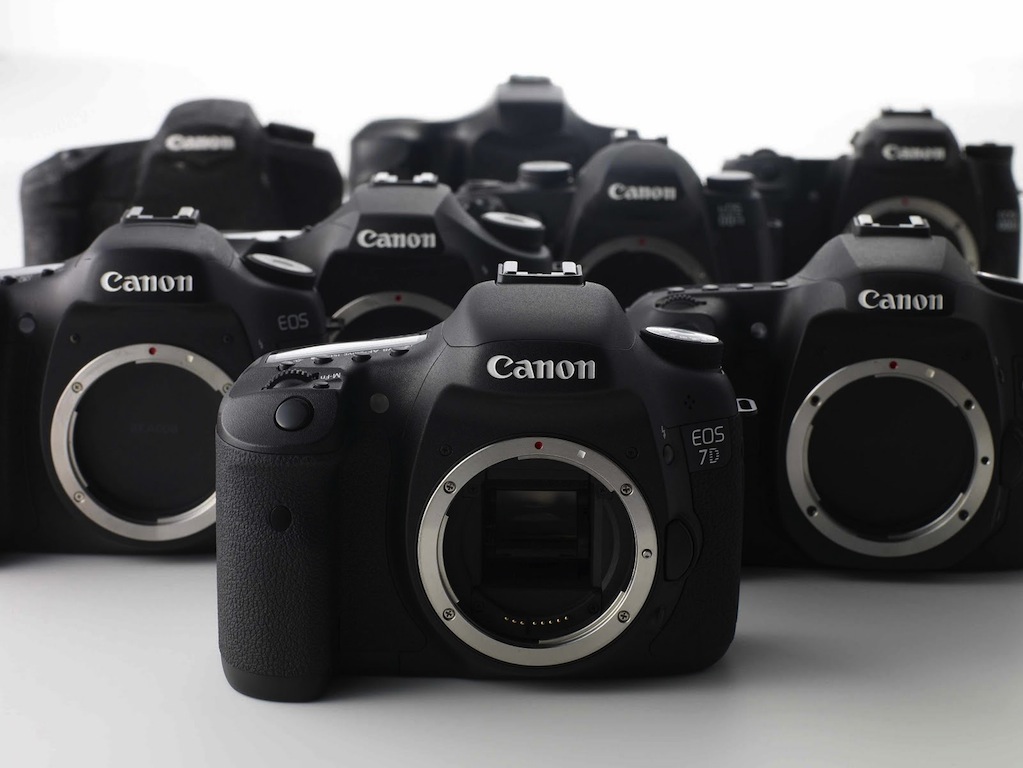
Our lives are intimately linked by photography. The camera is a mirror of what we do, of what we are... We are not passive subjects in the face of photography, quite the opposite. We all have a camera, no matter what type, with which to document what happens around us.
The cumbersome film cameras that our parents brought after a honeymoon trip to the Canary Islands have been retired in favor of compact cameras that, in turn, have been replaced by the digital ones found in mobile phones.
The digital phenomenon has had a boomerang effect on photography. They stopped buying cameras, printing copies, they became trivialized and escaped from the commercial apparatus in the beginning. But this phenomenon of zero-cost learning gave way to a second golden age for photography. You no longer went to the store to develop a roll of 36 photos: you carried a card with hundreds of them, and more and more cameras began to be sold. The trend was to go one step further and that step led to digital SLR cameras, DSLRs.
But what are SLR cameras? Reflex or SLR (Single Lens Reflex) are cameras with interchangeable lenses, behind which, in the body of the camera, is hidden a system of mirrors that, like a periscope, guide the image to the viewfinder at the back. What you “”see through the viewfinder is what the camera captures.
The SLR system, until quite recently, has been considered a system for professionals; Its complexity, ostentation and, above all, its price, made it accessible to few, especially those who were dedicated to the image business.
Photography is an increasingly long-lived art and certain types of cameras are on their way to being centuries old; This is the case of SLRs, whose first models date back to 1933 with the German Exakta. But it was not until the 1960s, during the Vietnam War, when the SLR system began to experience its golden age, with a Japanese camera, the Nikon F nicknamed “Iron” for its resistance.
For decades, the SLR system would undergo minor changes, small improvements, little by little it became more technical: advance motors, first autofocus systems, to end with the insertion of circuitry and microprocessors, but using photographic film in the same way as it did 60 years before.
In parallel, since the 1960s, researchers have been working on digital imaging, which after numerous prototypes, they began to market in the 1980s. The Sony Mavica or the Canon RC 701: the first, although fully operational, was not sold, and the second, at around $27,000 at the time, did so with very limited features. Due to price and characteristics, the reflex system was from its beginnings associated with the professional photography sector, with the journalistic sector to be more precise.
Kodak, a history of photography, the creator of the first camera for all audiences in 1888, invented Kodacrome, the definitive technique in color photography, and was also developing his own digital photography system, the DCS. Starting in 1987, Kodak began to make adaptations to Nikon and Canon equipment. The first suitcases attached by cables to a SLR were transformed into backrests with a handle, giving these first DCS greater maneuverability.
In 1999, the first digital SLR made entirely by a camera manufacturer went on sale, the Nikon D1. A camera that despite its price, its manufacturing defects and its low resolution, became the camera of all newspaper editorial offices. In 2001, Canon did the same with the EOS 1D and would be at the forefront of development in digital technology for almost a decade.
At first, the DSLR digital reflex system, due to its price of almost 7000 euros of the EOS 1D for example, was designed for the professional sector. Little by little, with mass production, the replacement of CCD sensors with the cheaper CMOS ones, digital SLR photography became cheaper. Simpler models were produced and the DSLR user model opened up until it reached the amateur who, by spending a little more than 300 Euros, could acquire equipment with features superior to those Nikon D1 or Canon 1D.
 Improved features
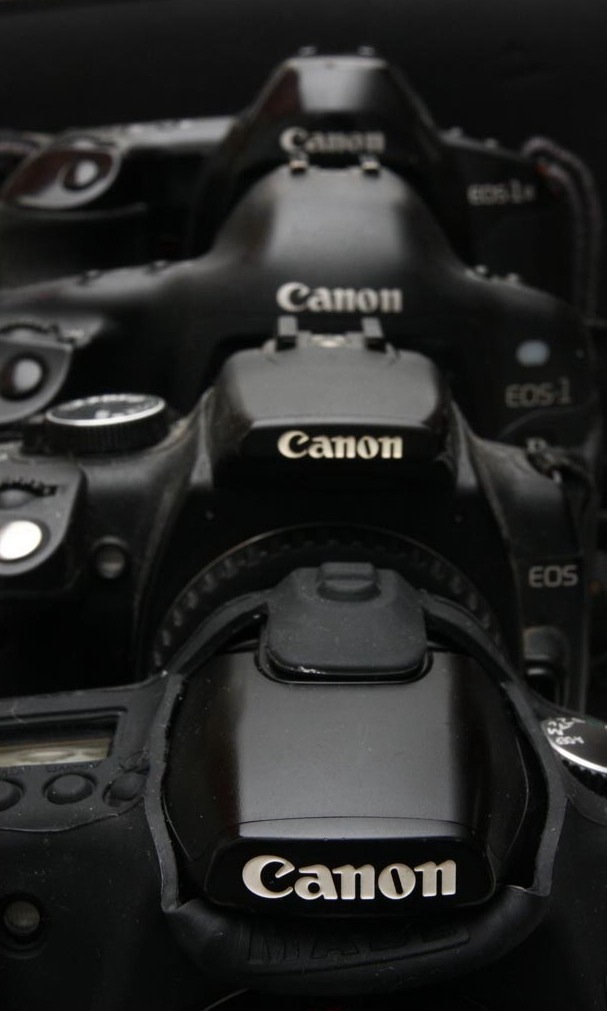
Over the last two decades of DSLR development we have worked hard to improve its features; such as its precision in focusing, the increase in image quality at high sensitivities or its resolution, from 2.7 megapixels we have gone to more than 24 of the Sony Alpha 900.
As in other industrial sectors, the advances obtained in its Pro ranges are subsequently applied in the lower ranges but, a few years ago, this trend has been reversed and, for the first time, a feature present since its beginnings in compact digital cameras is implemented in its older sisters: we are talking about video recording.
Video on SLR cameras, high resolution video, why? so that? as?
Surely this function was added in response to a simple why not? But the truth is that it is a useful functionality and already used regularly in the professional sector.
But all that glitters is not gold. The reflex camera has shaped its design after 80 years of history, use and experience. The position of the viewfinder, the grip, its controls, and the lens with its zoom and focus control rings, are designed to be handled in one way and for one purpose: taking photos.
Recording video with a SLR generates many problems; When we see three support points on the screen we change to two, promoting hectic shots; Zoom and focus control are manual (two controls for one hand that also serves to stabilize the equipment). Turning the dials to control the shutter speed or aperture produces popping sounds in the audio. After prolonged use, the sensor heats up, causing excess noise in the image and the equipment stopping when there is a risk of high temperatures. But, without a doubt, the worst of its problems is that, if it were a video camera, it would pay more taxes and make the product more expensive, so it has a very important limitation so that, technically, it cannot be considered as such. You cannot record clips longer than 29 minutes and 59 seconds or 4 Gigabytes per file.
These problems have led to the creation of an entire industry that supplies accessories to convert a camera that records video into a video camera that is not. In this way, if we compare a SLR, in its compact structure, with a video camera with analogous characteristics, by adding a structure with counterweights and shoulder support to provide stability for recording and comfort in its grip, we add viewfinders with a magnifying glass to attach to its rear screen to control the plane better, gears in the lens to manage focus efficiently, cinematographic sunshades, microphones and a long list of modular accessories, the reflex loses all its virtues, which are also its defects.
The curious thing about all this is that the brands that have created these video SLRs, which have provided them with professional features, have not bothered to provide them with accessories that facilitate their use and, given what we have seen, there is no simple solution. If we pay attention to the maxim that “every problem requires its tool”, the DSLR is a tool that can respond to very specific needs without replacing the entire current audiovisual infrastructure. It is a good alternative as a starter camera and more and more students are opting for this equipment to record their first short films.
Como segunda unidad, con una focal fija y planos estáticos para la grabación en sitios con poco espacio, será un complemento magnífico, tal y como prueba su uso en el último capítulo de la sexta temporada de House, o lo planos de la carreras en la película Ironman 2 o los de la más reciente Capitán América.
Como herramienta para el fotoperiodista que, además de tomar fotos de un acto, ha de grabar pequeños vídeos para publicar en su web también resulta útil. Pero fuera de estos pocos supuestos no parece la herramienta más adecuada.
At this point, and looking back at the complex evolution that the SLR system has had in its last eighty years, it is worth asking what its evolution should be in the future. 3D seems like the obligatory answer but, before introducing something new, it will be necessary to improve what already exists. If it is possible to automate the use of zoom and focus, cool the sensor, more efficient image stabilization systems or quieter control dials, it could be a great starting point so that the SLR video system is not a tool for very specific uses, but can go beyond the fashion, perhaps passing, in which we now find ourselves.
Fernando Blanco
Photographer and Professor of Photojournalism at UVA

Did you like this article?
Subscribe to our NEWSLETTER and you won't miss anything.
Related articles
 The LaLiga Clásico revolutionizes its technology to be a “blockbuster” and a “video game” with a record number of cameras
 Mediaset collaborates again with Alea Media to give life to the new series 'Escándalo'
 Showtime Series 'The Chi' Uses Blackmagic Design Cameras to Bring Chicago's South Side to Life
 PMD-750: the new Marantz wireless microphone system for DSLR cameras
 Marantz presents the PMD-706 professional 6-channel recorder for DSLR cameras
 Shure VP83: a compact, robust, portable microphone with integrated Flash memory designed for DSLR cameras
 Beyerdynamic MCE 85: a shotgun microphone specially designed for DSLR cameras
 Tascam DR-60D: a four-track recorder designed for DSLR cameras
 TVE will bet on connected television to give new life to prime time
 Carl Zeiss presents its entire portfolio of lenses for DSLR cameras at NAB 2013
 Ikan develops a 5” monitor designed for DSLR cameras
 Sachtler will discover at IBC Cine DSLR, a fluid head designed for DSLR cameras
 Light for DSLR Cameras by Frezzi Energy Systems
 New 'indie' proposals for DSLR and Handycam cameras