





Luces y sombras de la televisión del futuro: 3D y HD
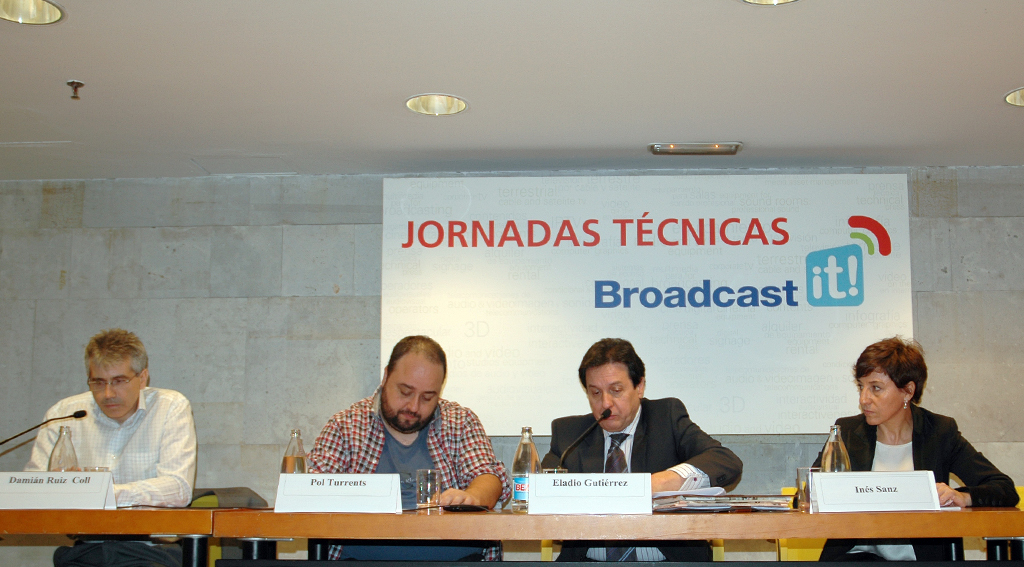
Dentro del programa de Jornadas Técnicas de Broadcast IT, organizado por IFEMA, se ha celebrado una mesa redonda sobre televisión digital en alta definición y 3D en la que se ha debatido sobre la televisión actual y la que viene, los avances tecnológicos y los contenidos digitales.
Tras el éxito del 3D en cines y el lanzamiento en 2010 de la primera generación de la TV 3D estereoscópica, aparecen nuevos paradigmas para la comunidad broadcast. La primera generación de 3DTV proporciona una buena solución para la radiodifusión de servicios 3D estereoscópicos utilizando la infraestructura HDTV existente, pero no es suficiente para proporcionar una experiencia 3D más eficiente e inmersiva. ¿Qué deberían hacer los proveedores de contenidos para poder transmitir 3DTV con resolución Full HD por ojo? ¿Cómo se podrían ofrecer servicios 3D compatibles con los actuales canales HDTV? ¿Cuáles serán las prestaciones finales de este nuevo sistema?
La relevancia del tema ha quedado patente por la gran afluencia de público que ha asistido a la mesa redonda ‘Alta Definición y 3D’, moderada por el consultor en Telecomunicaciones y Medios Audiovisuales Eladio Gutiérrez, donde se ha tratado de contestar estas preguntas mediante un análisis de las tecnologías candidatas para la radiodifusión de un sistema Full HD 3DTV y “service compatible”. Se han comparado por tanto las técnicas de codificación avanzadas, incluyendo SVC y MVC, desde un punto de vista tanto técnico como comercial. La compatibilidad con la primera generación de 3DTV y con la infraestructura HDTV actual serán aspectos clave, al igual que la eficiencia y la disponibilidad comercial.
El punto de vista institucional lo ha aportado Damián Ruiz Coll, investigador de la ETSIT- UPM-Madrid, que ha explicado los actuales formatos y estándares de captación de imágenes 3D en el entorno de la producción convencional y su evolución a lo largo del tiempo, desde la creación del SD en 1982 hasta el actual VHDTV. A este respecto, Ruiz Coll ha asegurado que no está de acuerdo con la tendencia general que relaciona aumento de resolución con aumento de tamaño de la pantalla.
El investigador de la UPM también ha hecho un repaso a las diferentes opciones de interfaces y formatos de almacenamiento HD y 3D, para lo que existen dos soluciones: la codificación independiente de vistas (Simulcast) y la codificación inter-vistas (MVC). Igualmente, Ruiz Coll ha abordado los actuales estándares de difusión DVB-3DTV, que, según ha comentado, suponen “un pequeño gran lío” a consecuencia de las diferentes normativas vigentes y el hecho de que las fases de estandarización sean bastante complejas.
La segunda generación de TV en 3D
Una vez resuelto el problema de la codificación, la directora de Ingeniería de Clientes de Hispasat, Inés Sanz, ha analizado la radiodifusión de la segunda generación de 3DTV y los servicios HD y 3D en la nueva era HBB. La representante del operador nacional de satélites ha explicado el proceso de implantación del 3DTV y del nuevo diseño de red específico de Hispasat, el Service Compatible, un servicio DTH vía satélite basado en el nuevo sistema, sobre el que se evaluarán las prestaciones finales y la calidad de servicio para el usuario final.
El sistema de comunicaciones por satélite Hispasat incluye 5 satélites colocados en tres posiciones orbitales: una posición transatlántica, 30º Oeste, en la que se ubican los satélites, Hispasat 1C, 1D, Hispasat 1E y Spainsat; una posición americana, 61º Oeste, en la que se ubican los satélites Amazonas 1 y Amazonas 2, y una posición oriental, 29º Este, en la que se ubica el satélite Xtar-Eur. La alta potencia de los satélites que componen el sistema permite ofrecer una óptima cobertura con la máxima flexibilidad a América, Europa y África, mostrándose como el vehículo ideal para todo tipo de servicios de comunicaciones por satélite. Además, el satélite también sería capaz de proporcionar acceso a Internet de alta velocidad.
Asimismo, Inés Sanz ha dado a conocer en la ponencia los diversos trabajos de I+D+i que Hispasat está llevando a cabo en relación con el 3D, como la colaboración desarrollada en el proyecto europeo JEDI (Just Explore Dimensions), en el que se investiga la evolución y desarrollo de las nuevas generaciones de 3DTV; el proyecto Sirena, que prepara el desarrollo de una nueva arquitectura de red para la distribución de contenidos multimedia avanzados; y el proyecto VH-HD-4V, que pretende desarrollar tecnologías que favorezcan el lanzamiento de un servicio de ultra alta definición en el entorno del hogar.
La directora de Ingeniería de Clientes de Hispasat ha resaltado que la demanda de tráfico en internet está creciendo exponencialmente y se espera que esta tendencia se mantenga, o incluso aumente, en los próximos años. La migración a los formatos HD y 3D, la evolución del consumo lineal y no lineal, y la multiplicación de las pantallas son otros elementos con una fuerte demanda de ancho de banda. Es más, los nuevos sistemas híbridos Broadcast-Broadband (HBB) requieren de la alta capacidad de los canales broadcast junto con acceso a internet de alta velocidad.
“Por tanto, entramos en una nueva era donde la demanda de ancho de banda se convertirá en algo masivo y que hará del uso eficiente e inteligente de los recursos un aspecto clave para el éxito. Las redes terrestres actuales (DSL, Cable, etc.) tienen limitaciones muy significativas para ofrecer contenidos de alta calidad en el hogar, y la modernización de las infraestructuras terrestres requiere grandes inversiones que sólo estarán disponibles en núcleos urbanos, dejando fuera a una parte de la población”, ha señalado.
Producción en 3D
Por último, Pol Turrents, especialista independiente en 3D certificado por Sony, ha aportado un punto de vista diferente, haciendo un repaso a las diferentes dificultades que surgen hoy en día a la hora de producir estereoscopía, donde el nivel de producción en nuestro país es ya considerable (Mediapro, Canal+, TV3, Digitea en Aragón…).
Según Turrents, uno de los grandes dramas al producir estereoscopía es que, al ser reproducida la imagen en diferentes pantallas, se ve con diferentes profundidades. Además, “cuando se producen eventos en 3D se hace pensando en cine, lo que nos limita muchísimo. Hoy en día es la complejidad más profunda que se nos plantea a la hora de rodar”, ha asegurado el director de fotografía especializado en cinematografía digital, que también ha comentado que el nivel de exigencia a nivel técnico y humano tiene que ser “altísimo”, al tiempo que pedía a los presentes que “no hagan experimentos”.
Did you like this article?
Subscribe to our NEWSLETTER and you won't miss anything.
Related articles
 Lights and shadows for linear television in 2025: drop in daily viewers and comeback in total viewers
 TV Azteca: the 8 keys that will define the future of television
 Luces y sombras del proyecto de Ley General de Comunicación Audiovisual
 José Manuel Pérez Tornero: “la televisión del futuro no se podrá llamar ni televisión”
 Hispasat advances the future of satellite television at IBC
 The 2.0.1 standard marks the optimistic future of hybrid television
 La televisión del futuro se da cita en Girona los días 17, 18 y 19 de febrero
 El presente y futuro de los informativos en televisión, a debate
 El futuro de la televisión… es televisión
 Abertis Telecom's commitment to the television of the future focuses on DTT and 4K
 Ericsson previews its vision of the television of the future at NAB
 Paul Lee abrirá la Jornada ‘El futuro de la televisión: La televisión Híbrida’
 Experts in audiovisual content analyze the future of television
 Luces y sombras de la nueva Ley General de la Comunicación Audiovisual