





Televisions become “ready” at CES
Every year there is a product that predominates over the rest of what is exhibited and predicts the market trend for the coming years. In this edition, smart televisions have been the protagonists.
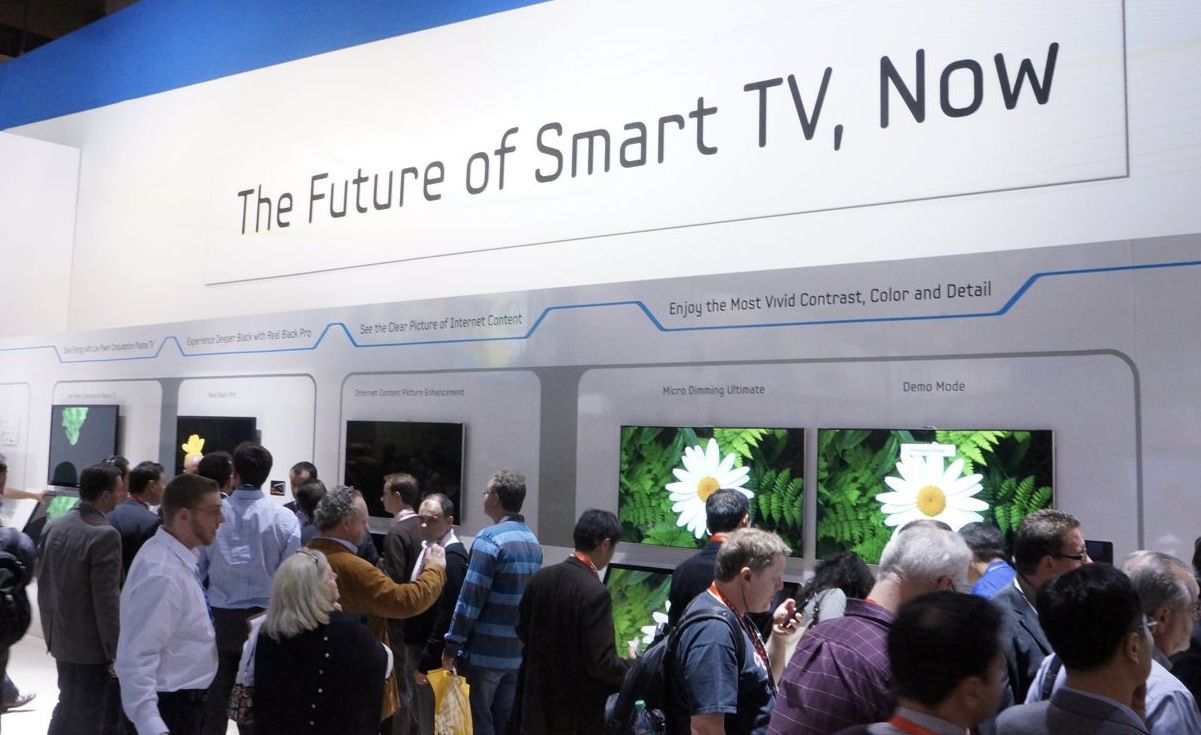
Like every year around this time, Las Vegas becomes the world capital of technology, and far from losing its importance after the change of dates of the erotic festival that was held in parallel in other years, the 2012 Consumer Electronic Show has a lot to teach.
Every year there is one product that predominates over the rest of what is exhibited and predicts the market trend for the coming years, in this edition the smart TVs.
Despite Google's fiasco with the Logitec Revue, it returns to the fray with new hardware, new software and, most importantly, the support of big brands to gain the push that this technology needs. Google comes twice to provide intelligence to our televisions; On the one hand, it brings its evolution of television software, Google TV 2, and on the other, the adaptations that other television manufacturers are making of their operating system for tablets, Android 4.0 “Ice Cream Sandwich”.
From the official side, Google has not only improved the TV, but it has done something very important which is to expand its alliance with the large television manufacturers to implement its system. Sony remains loyal to Google, which is now joined by other manufacturers such as Vizio, Samsung and LG. It is still curious that these last two brands, which have recently created their smart television systems with a growing number of applications, are now beginning to flirt with Google in this way.
From the unofficial side of Google, Lenovo makes the leap to televisions with its 55” LeTV based, not on Google TV, but on Android 4.0, although with the necessary adaptations for the television interface.
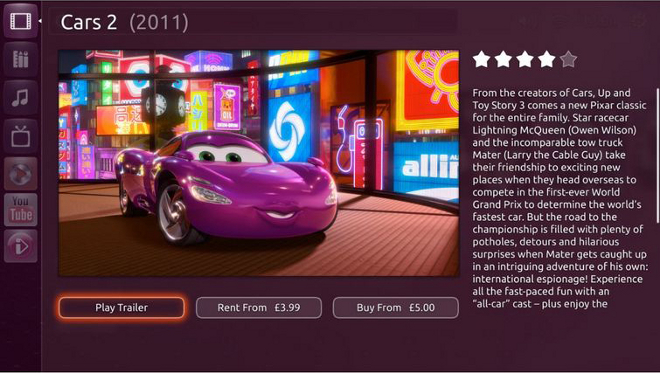
Perhaps of all these systems, the most surprising has been that of Canonical, creator of Ubuntu, the most popular Linux distribution that Ubuntu TV has presented, which, following the guidelines of its Unity interface, common in all versions of its distro, wants to make its way into this new battlefield. At the moment, the version presented works on a computer, controlled by a Boxee, but its purpose is to be integrated into future televisions.
If the developments in software for Smart TV have been considerable at CES, the hardware section has not been left behind either. Samsung is going to start equipping its televisions with dual-core processors, cameras that allow video conferencing with Skype, motion and sound sensors that, together with facial recognition, allow interaction with the user as an alternative remote control. Samsung has also thought about televisions without these capabilities thanks to the inTouch, an adapter that works under a modification of Android 2.3 and that incorporates a high-definition video camera, but whose use is restricted to little more than video conferencing with Skype.
Samsung is not the only manufacturer of adapters to provide interactive content to televisions; The popular Vizio has presented a whole range of adapters for televisions but perhaps the Sony devices should be highlighted. The Japanese manufacturer is one of the few that has remained faithful to Google since its beginnings, incorporating Google TV into its devices, but now the novelty is that it incorporates Google's evolution in Blue Ray players and multimedia adapters, thus allowing it to be connected to any television.
Without a doubt, the concept of what television is and the use we will make of it is changing by leaps and bounds and, obviously, the way of controlling it is also changing, which is why it is worth highlighting the efforts of the different manufacturers to evolve their remote controls. Samsung is not only going to implement control systems through voice and sound recognition, but like Sony and Vizio, they are incorporating complex remote controls that, as mini multimedia keyboards, incorporate a trackpad and a miniature Querty keyboard. Although perhaps LG's option is still the most evolved of all: the Magic Remote Querty is a controller that recognizes movement in the style of the Nintendo Wii console controls, which now includes a Querty keyboard.
All of these new products already have a price and will begin to be marketed in the coming months, so their arrival in homes is imminent. In a year, back at CES, although they will still be present, they will no longer be the star product of the fair; As in each edition they will have passed the baton to a new device that began to emerge a year before, that product will revolve around entertainment and communication and connectivity systems for the car. CES 2013 will migrate from the living room of our homes to the console of our cars in search of total device integration and after a year science will be a little less fiction.
Fernando Blanco
Photographer and Professor of Photojournalism at UVA and collaborator of the Digital Leisure and Entertainment Observatory (Killed)

Did you like this article?
Subscribe to our NEWSLETTER and you won't miss anything.
Related articles
 Ross Video solutions make the 2021 NFL Draft possible
 Yospace and the Scottish STV take stock of dynamic ad insertion
 Televisions and network operators come together in their defense of preserving spectrum for DTT
 EVS solutions make the first US Open possible in 4K
 JVC 4K cameras are now ready for underwater filming with Aditech
 The new version of Viz Multichannel improves its architecture and simplifies the use of playlists
 Only 27% of the channels that broadcast in SD do so with MPEG-4 compression
 SanDisk's new Extreme Pro CF cards, ready to meet the demands of the 4K world
 Viewers make more use of their connected television every day
 JBL systems enable crystal-clear sound on 'American Idol'
 Google's innovative glasses for augmented reality, ready for launch in 2014
 Canal+: when identifications become art
 The 3D mobile phones equipped by Sony are already in South Africa ready for the World Cup
 Apuntolapospo and Ovide BS and i2CAT make the first live 3D broadcast possible