





Miranda Open Days: ‘Be Ready for Tomorrow’
Bajo el eslógan ‘Be ready for tomorrow’ Miranda ha presentado en Madrid sus más recientes soluciones de monitorado y procesado de señales para estudios y unidades móviles, así como su propuesta de playout integrado, demostrando cómo es posible reducir la complejidad del negocio audiovisual, y migrar a flujos de trabajo más sostenibles, a medida que se incrementa el número de servicios y se mejora la calidad de toda la gestión.
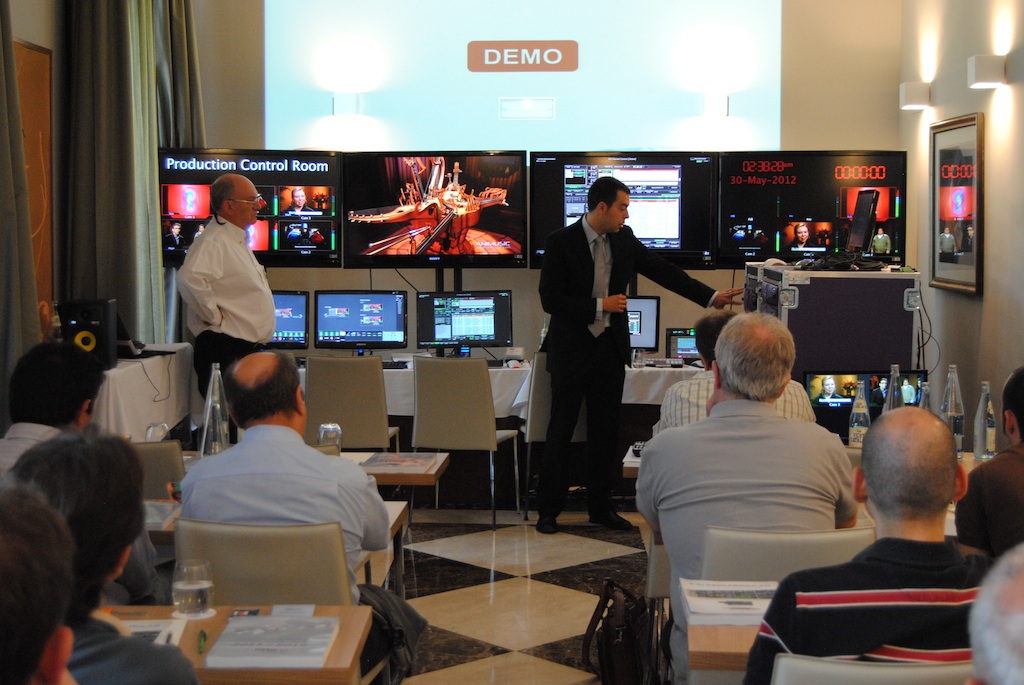
Miranda ha organizado este miércoles y jueves en Madrid unas jornadas de puertas abiertas que bajo el eslógan ‘Be ready for tomorrow’ han servido para que los profesionales conozcan de cerca las más recientes soluciones de monitorado y procesado de señales para estudios y unidades móviles, así como su innovadora propuesta de playout integrado.
Miranda ha demostrado cómo es posible reducir la complejidad del negocio audiovisual, y migrar a flujos de trabajo más sostenibles, a medida que se incrementa el número de servicios y se mejora la calidad de toda la gestión.
Óscar Juste, director comercial de Europa Occidental en Miranda, abrió las jornadas asegurando que los nuevos entornos multicanal, multidispositivo y multiplataforma así como las plataformas de distribución no lineal suponen la necesidad de contar con un flujo de trabajo que nos permite reempaquetar contenidos, transcodificar material multiformato, según cada canal de distribución, y poder llevar a cabo de forma sencilla y rápida varias versiones para cada canal o plataforma.
Según Juste, los retos a los que nos enfrentamos son la expansión en más canales y plataformas y la necesidad de incrementar audiencias (de ahí la importancia del branding para promoción cruzada de canales). Todo ello, desde un planteamiento que asegure la calidad de los canales y la reducción de costes operativos.
“Miranda propone una solución para simplicar todo este flujo con menos componentes móviles y equipamiento… reduciendo el riesgo adicional, la necesidad de contar con operadores diferentes, y con menor inversión y mantenimiento. El buque insignia del playout de Miranda es iTX que integra automatización, playout y branding avanzado”, ha asegurado Juste.
Uno de los pilares fuertes de iTX es la reducción del riesgo en operaciones críticas, para que antes del playout esté todo listo en cuanto a versiones y formatos para cualquier salida multiplataforma.
Por debajo, la capa de intraestructura de matrices e interfacing junto a un avanzado sistema de monitorado como Kaleido asegura un entorno único con todos los equipos interconectados.
Jesús Ruiz, director técnico de Crosspoint (importador en España de Miranda y uno de los integradores a nivel mundial con más experiencia en estos sistemas), ha comentado que “iTX es un playout lineal automatizado capaz de aunar servidor de vídeo, grafismo, branding, subtitulado y procesamiento de audio, todo ello en una arquitectura de sistemas simplificada.”
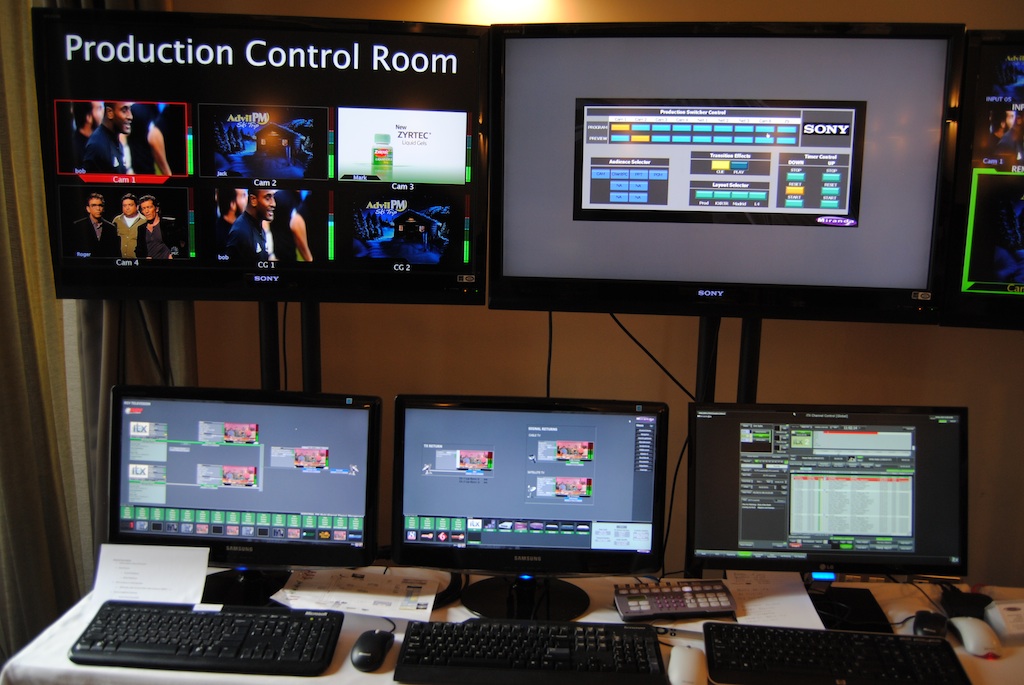 En cuanto a grafismo, iTX incluye grafismo enriquecido con el popular sistema Vértigo. Pero además, permite una integración con After Effects pudiendo así importar proyectos directamente lo que agiliza el uso de templates gráficos junto a efectos DVE. La posibilidad de integrar After Effects en iTX permite crear grafismo en muy poco tiempo mediante el uso de una herramienta muy extendida y conocida por los operadores con la ventaja de poder validar el gráfico desde cualquier browser.
La audiencia se fragmenta por lo que es muy importante fidelizarla con una imagen de marca potente, promoción cruzada de canales y potenciación de redes sociales para una experiencia más inmersiva. Para ello,Vertigo XG (ahora en su versión 2.3) es una solución integrada en iTX que permite ofrecer espectaculares tickers y otras formas de grafismo de primer nivel interactuando con diversas fuentes de vídeo o, incluso, social feeds en tiempo real.
En cierto modo, cabe asegurar que Miranda aúna los sistemas tradicionales de continuidad y multicontinuidad con el mundo del playout IT con el iTX Master Control. Integra matriz de vídeo, servidor de playout y automatización, master control y procesador gráfico. Así es posible combinar la robustez del master control tradicional con la escalabilidad que ofrece iTX.
Por otro lado, destacar también que iTX permite una configuración de dual channel, en una unidad de rack, sacando dos canales al aire con un servidor de vídeo en un único chasis. Además, ofrece otras posibilidades como codificación y decodificación Dolby Digital y E, playout multi-idioma o impresión de marca de agua…
A nivel de interfaz con el usuario, iTX ofrece dos modelos de cliente web: una configuración conectada por LAN (Full Desktop Client) o conectada por LAN o WAN (Smart Web Client). En el primer caso, tendríamos un control y manejo total de los contenidos y las playlist. En el segundo, manipularíamos proxies en un ámbito típico para producción y pre-producción, pudiendo estar en una localización remota alejada del almacenamiento central.
Tendencias en la producción en tv
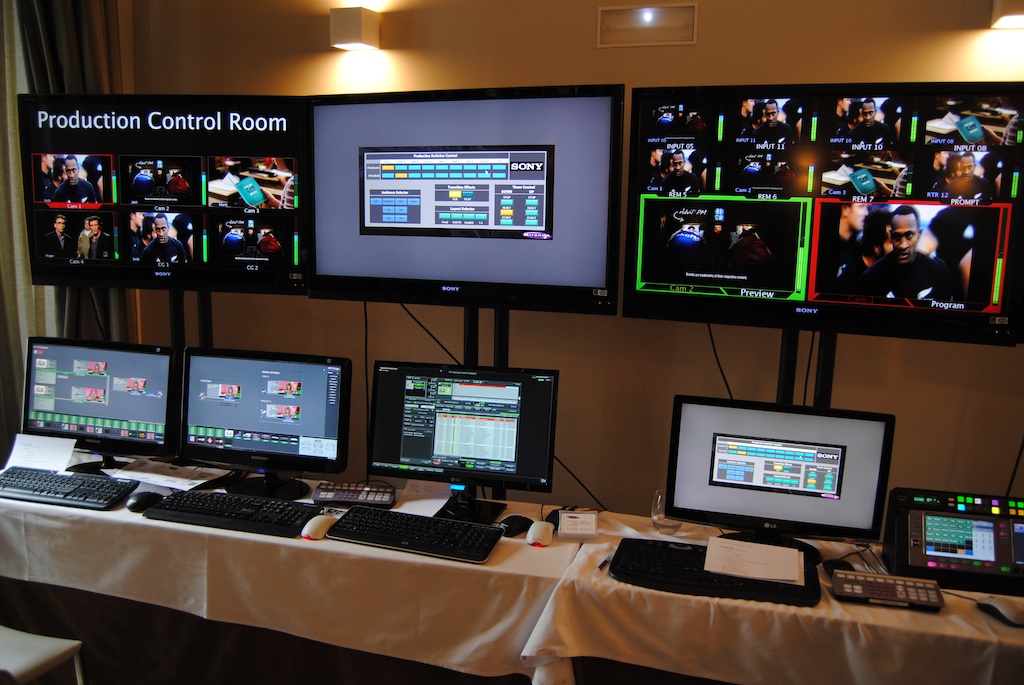
Jesús Ruiz, director técnico de Crosspoint, ha iniciado la sesión dedicada a las tendencias en producción, afirmando que “la preocupación de los broadcasters es la tv no lineal y los servicios over-the-top (OTT). Actualmente, la tendencia camina hacia un mayor número de directos y realities, un auge del 3D y la necesidad de contar con producciones más elaboradas capaces de hacer frente a una mayor competencia. El objetivo, en todo caso, siempre será mejorar la rentabilidad con más audiencia o reducir costes… con equipos que ocupen y consuman menos, que sean más fáciles de operar, y que den servicio a más canales”.
Este nuevo planteamiento en producción conlleva una importante complejidad en la infraestructura (matrices, multipantallas, mezcladores de producción de audio y vídeo…), en entornos totalmente nuevos como el 3D y señales en 3G.
Ante el incremento en el número de fuentes (tanto de cámara como externas) y elementos gráficos y animaciones para enriquecer la producción de vídeo, se hace imprescindible que todos los equipos, tanto de Miranda como de terceros, puedan interconectarse.
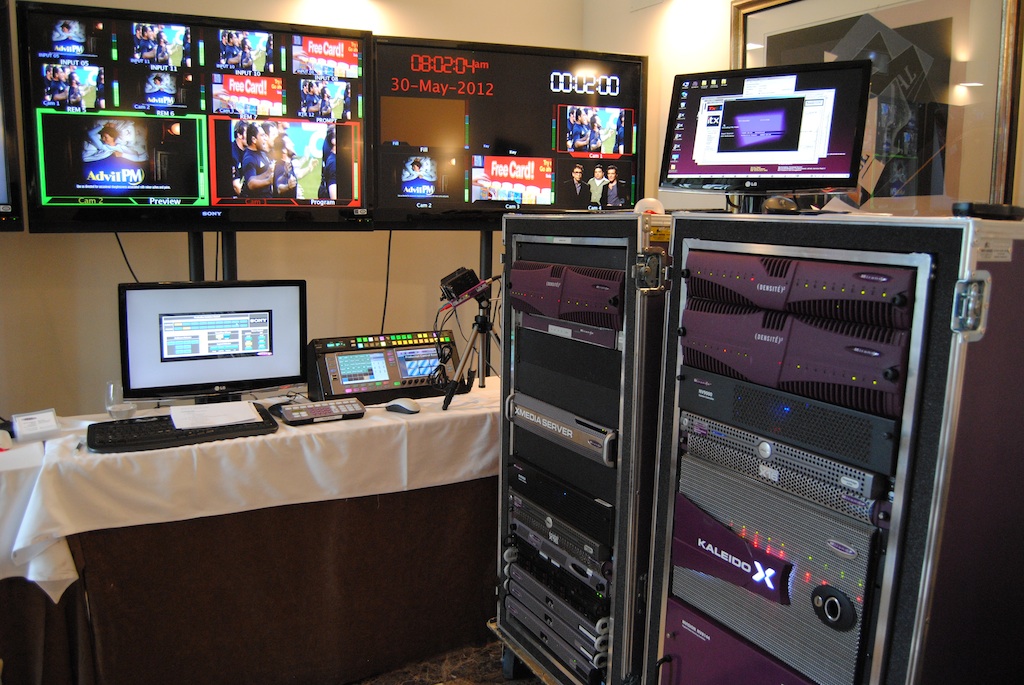
En este área, Miranda propone soluciones como Kaleido (multipantalla), matrices como la NV 8500, numerosos sistemas para procesado de video y audio, e interfaces modulares (Densité). Todo ello con un único integrador y con equipos que se intercomunican y comparten bases de datos.
A nivel de matrices, Miranda cuenta con la amplia familia Enterprise que van desde 144×144 (mod 8144) a la 1152×1152 (8576+). Es de destacar que este fabricante ofrece matrices rectangulares que cuentan con un mayor número de salidas para satisfacer las crecientes necesidades de monitorado.
En matriz híbrida, los sistemas NV8500 simplifican el entorno de producción tanto en el cableado de audio como de vídeo. Una solución tradicional que requeriría entre 3 y 5 racks (embebedores, desembebedores, enrutadores de vídeo, audio…), ocuparía un solo rack en una matriz híbrida, con un ahorro energético del 42%. Elimina los retardos de procesadores (latencia) y los inconvenientes generados por las reentradas en el sistema…
 El secreto: multiplexar AV a muy baja latencia. Con multiplexores externos y matrices independientes de audio y vídeo, se obtiene un retardo de unos 25 píxeles en vídeo mientra que en las matrices Nvsion Hybrid sería sólo de 20 píxeles. El delay del audiose reduciría de entre 40-80líneas a solo 1 línea con las híbridas de Miranda. Así, lograríamos un retardo de 0,03 microsegundos de desfase labial por muchas reentradas que se le da a la señal.
Es de reseñar que otros fabricantes ofrecen apariencia de matriz híbrida cuando no dejan de ser matrices de audio y vídeo dentro de un cofre. En el caso de Miranda, es realmente híbrida ofreciendo, además, redundancia total tanto de vídeo como de audio.
En cuanto a multipantallas, para hacerse una idea de la potencia de Miranda en este mercado basta decir que más de 4.400 monitores en todo el mundo se alimentan con los sistemas Kaleido. Sólo el año pasado, Miranda dio servicio a 40.000 entradas SDI, lo que supondría una cuota de mercado en torno al 27%.
Kaleido es una familia que va desde 16×2, 32×4, 194×12 a 1152×288, apareciendo ahora las tarjetas modulares (de 8×1 o 8×2 apilables) y Kaleido Solo (solo una entrada y sola una salida, admitiendo señales hasta 3 Gbps/HD o SD a HDMI o DVI con monitorización loudness EBU y A85).
En un cofre de 3RU con diez tarjetas modulares con un consumo de 300w, podríamos presentar hasta 80 señales 3 Gbps en una veintena de monitores.
“Los beneficios de Kaleido son claras: mayor velocidad de procesado, facilidad de operación y mantenimiento, flexibilidad y bajo consumo”, ha asegurado Jesús Ruiz.
Como colofón a estas jornadas, Miranda ha desplazado hasta Madrid a dos de sus especialistas en producto, Steve Brownsil y Peter Jarret, quienes han mantenido un intercambio de impresiones con los profesionales que han asistido a las jornadas y les han mostrado en vivo todas las peculiaridades de este potente flujo de trabajo.
[youtube]http://www.youtube.com/watch?v=Wcl_pN4W8mo[/youtube]
Did you like this article?
Subscribe to our NEWSLETTER and you won't miss anything.
Related articles
 Vamp gets its Halloween content ready with Blackmagic cameras
 Red Bee Media gets IP ready with Rohde & Schwarz Prismon multiviewer
 Sony will attend IBC under the motto 'Go Make Tomorrow'
 Samsung QLED TV, world's first 'CalMAN-Ready' televisions with HDR self-calibration
 Sony will show its latest technology at IBC under the motto 'Go Make Tomorrow'
 Miranda Technologies equips the new Champions League premium channel
 Red Bee Media will present the final conclusions of the 'Tomorrow Calling' program at IBC
 Angénieux Optimo 3D Ready Lens Package, everything ready to shoot in 3D
 Crosspoint supplies Miranda technology for the new multicontinuity of Channel 9
 Crosspoint presents the latest from Riedel, Miranda, AJA and Hi-Tech on Broadcast
 End-to-end monitoring with Miranda
 New Makito encoders with support for Haivision's Zixi Ready
ImaginArt announces in Spain the new Makito encoders with support for Haivision's Zixi Ready
New Makito encoders with support for Haivision's Zixi Ready
ImaginArt announces in Spain the new Makito encoders with support for Haivision's Zixi Ready
 Miranda buy OmniBus